

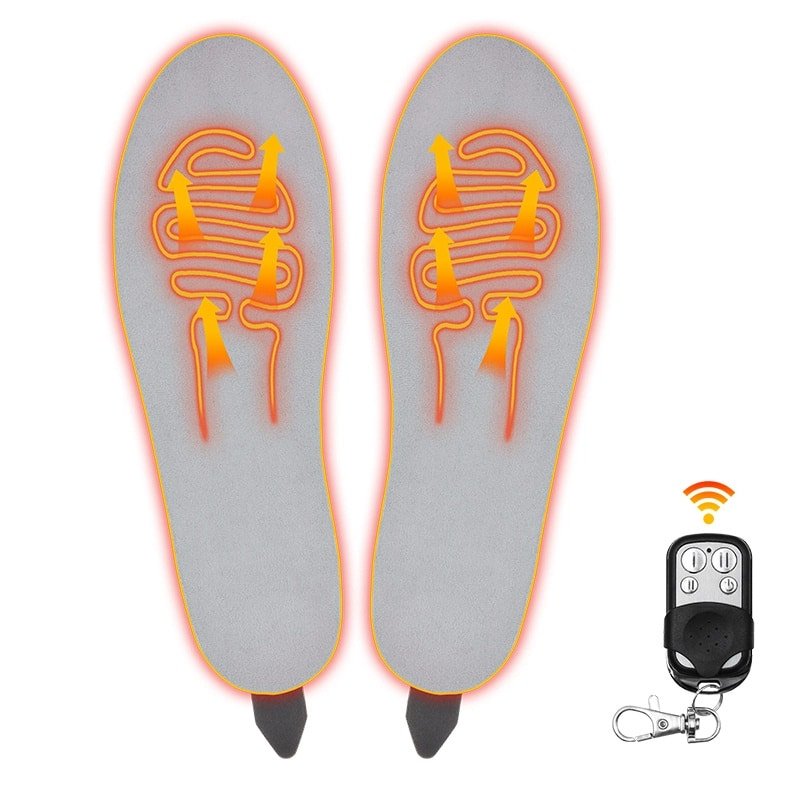
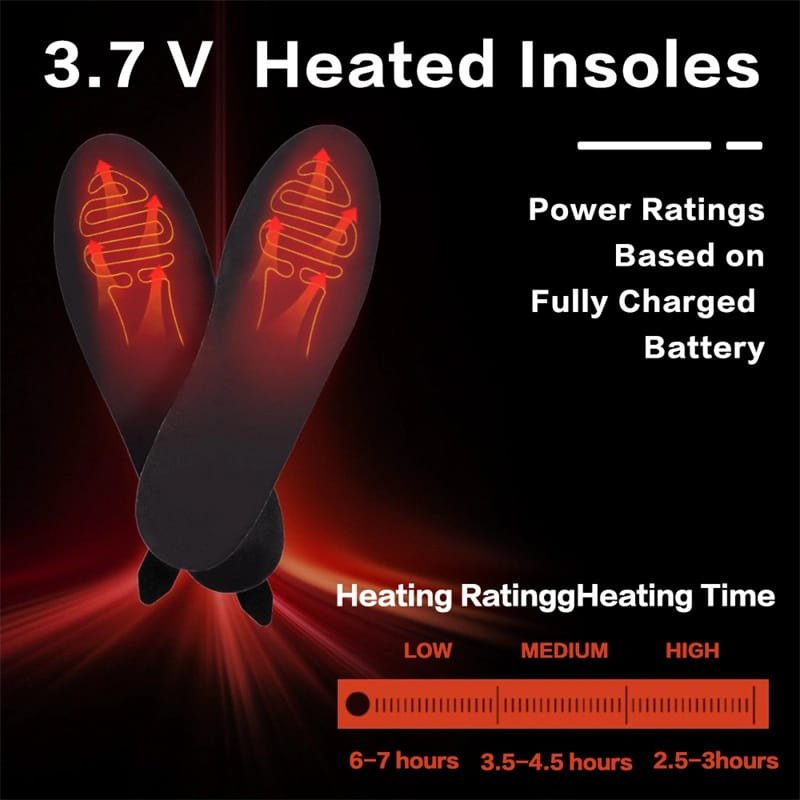
Hot insoles are also electronic wearable items, not footwear inserts. They incorporate rechargeable lithium battery, heating units, control circuits and in many cases remote or app-based solutions. This complicates considerably sourcing them as compared to the case of standard insoles since battery safety, electrical engineering, and international compliance has a direct impact on product safety, market access, and liability.
Most customers have an assumption that sourcing of the insoles with heating features is just like sourcing the regular insoles. As a matter of fact, electrical engineering is needed to incorporate heating systems and lithium batteries. The most typical sourcing errors are made when the buyers focus on the price and looks and neglect the engineering capability, battery safety standards, and regulations.
The sourcing of China-hot insoles involves engineering capacity assessment, battery safety combination, and compliance preparedness not merely contrasting the unit cost or sample looks.
For those exploring options, carefully researching sourcing custom heated insoles from China can help identify partners with the necessary technical depth.
Mistake #1 — Focusing Only on Unit Price
The cheapest unit price is usually an indication of severe tradeoffs which later emerge during production or post sales.
Customers who pursue low prices often find themselves with lower quality of the battery, they lack protection circuit, less duration of heating elements, and they have to bear the long warranty risks in the dark. Low-cost components might compromise on the cell grade, BMS (Battery Management System) functions, or material thickness in heating wires.
Such decisions result in an increased rate of failures, customer complaints, returns and possible liability problems. What seems like a saving in the short-term turns out to be a costly issue in the long-term.
| Low-Cost Indicator | Potential Risk |
| Extremely low battery cost | Safety compromise |
| Thin heating wires | Early breakage |
| No certification documents | Customs delays |
| Inconsistent samples | Mass production instability |
Senior sourcing experts understand that a premium price quoted by a competent supplier will probably yield a lower overall cost of ownership, in terms of reliability and reduced disruptions.
Mistake #2 — Ignoring Battery Safety Integration
Battery safety cannot be considered as a side effect of heated insole, it is to be considered at all.
The wearable products that utilize lithium-ion batteries are also subject to distinct pressures: foot pressure, temperature variations, exposure to moisture, and repeated charging. Unless properly protected, there is a threat of thermal runaway, overheating, fire or explosion even when the product is not in operation.
Key safety features include:
- Overcharge, over-discharge, short-circuit and over-current protection circuits.
- Detection of thermal and cut-offs.
- Good BMS to avoid cell imbalance.
- UN38.3 certification of safe transport (when the lithium batteries are shipped abroad) is mandatory.
The lack of these aspects may result in the failure of products, bans, or severe consumer accidents. Any brand that sells in regulated markets cannot compromise safety of batteries.
Mistake #3 — Evaluating Only Samples, Not Production Capability
Samples are often quite impressive and do not give a good reflection of what the large scale is like.
Most suppliers are fabricating prototyped polished modules with hand-assembled or high quality parts that cannot be sourced in quantity. When mass production is initiated, process variability, substitution of material or hasty QC discloses loopholes.
Examples of common problems are inconsistent heating, decreasing battery performance, bad stitching which exposes the wires or uneven heat distribution. Early shipments can be successful without the presence of stable processes, aging tests, and endurance validation and the latter batches can fail.
Before committing, buyers need to ensure that there is stability in the production-lines, in-house testing procedures and traceability procedures.
Mistake #4 — Overlooking Compliance Documentation
Compliance is not a choice and it defines the difference between products passing through the customs, becoming a bestseller on a large platform or being recalled.
The lithium-battery-heated insoles should be of several standards, but often the suppliers deliver incomplete or even obsolete forms.
| Compliance Document | Why It Matters |
| CE test report | EU market entry |
| FCC report | US compliance |
| RoHS | Hazardous substance restrictions |
| UN38.3 | Battery transport |
| MSDS | Logistics approval |
Brands that do not have complete technical files are subject to shipment holds or marketplace suspensions (e.g., Amazon), or post-market investigations. Ask and confirm original reports in approved laboratories.
Mistake #5 — Underestimating Engineering Communication
Heated insoles must have high technical consistency – imprecise specifications result in incompatible products.
Key areas include:
- Temperature stability changes in the firmware.
- Calibration of heating level in sizes.
- Programmable battery capacity.
- Remote, app, or manual control system integration.
The outcome of poor communication will be prototypes that are not in line with the requirements or that will require repeated revisions. Suppliers that have good engineering departments answer the technical queries fast, supply circuit diagrams, and propose experience-based optimizations.
Mistake #6 — Not Clarifying Warranty and After-Sales Responsibility
Unclear terms of warranty give rise to wrangles in case problems occur.
Customers do not pay much attention to the battery life anticipations (e.g., charge cycles), replacement options, or product traceability. Unless there is a clear allocation of the risk (who is covering defects, returns or failures in the field) the brands would end up absorbing the additional costs.
Specify the scope of warranty, response time and availability of spare parts in advance to safeguard margins and reputation.
Mistake #7 — Choosing Traders Over Engineering Manufacturers
The actual manufacturers are trading companies that are the middlemen.
Traders are convenient and diverse but do not have such a strong engineering connection, ability to customize and personalize, or observed control over quality processes. This causes delay in communication, batchiness, and lack of problem solving in the development.
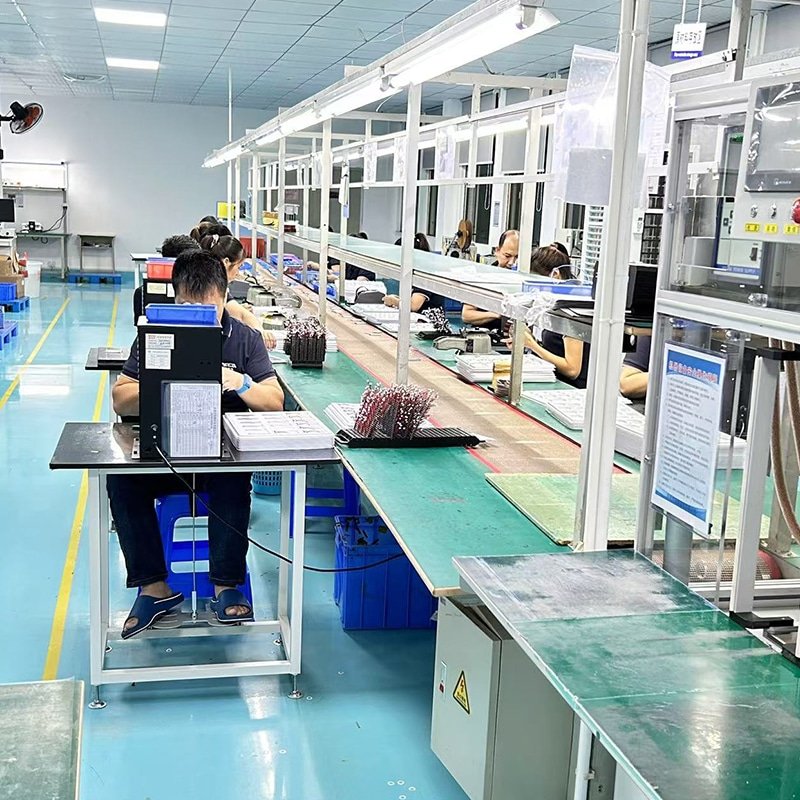
Complex insole requirements requiring heating and testing are more likely to be carried out in a factory with an in-house R&D and testing department, particularly when it comes to OEM work or a private label project.
How to Evaluate a Reliable Heated Insole Manufacturer
The strategic analysis is what differentiates between competent and risky partners. Use this checklist:
- Engineering team presence – Special electrical and firmware engineers to do custom work.
- In-house battery test- Cycle life, thermal and safety validation facilities.
- Availability of compliance documentation – Ready Availability of up-to-date CE, FCC, RoHS, UN38.3, and MSDS reports.
- Transparency of production capacity Clear line stability, monthly output, lead times.
- Processes of quality control — Specified incoming inspection, in-process inspection, aging inspection and traceability.
Request factory audits, sample batch testing, and similar client references to verify capabilities.
Conclusion — Strategic Sourcing Reduces Long-Term Risk
When purchasing heated insoles in China, one must consider a cross-examination of engineering skills, battery security incorporation, adherence preparedness as well as manufacturing strictness. Long-term safety, regulatory, and quality risks are reduced and the performance of products is stable with strategic supplier assessment.
Brands that concentrate on these issues instead of immediate savings create supply chains that are reliable and help them grow and secure the customers. The additional initial pain will be paid with reduced headaches and market niche.