
When purchasing heated insoles, the choice between a factory and a trading company significantly affects engineering integration, battery safety control, compliance documentation, and long-term product consistency.
Both factories and trading companies can supply heated insoles to brands, importers, and private label buyers. However, the two models differ significantly in engineering control and production authority. Heated insoles are not simple footwear accessories — they integrate rechargeable lithium batteries, heating elements, temperature controllers, and often remote or app-based systems. This added electronic and battery complexity increases risks related to safety, performance, and regulatory compliance.
Some buyers assume trading companies always offer better pricing due to their supplier networks. In reality, pricing transparency and control vary depending on product complexity. For technically complex products like heated insoles, engineering integration, battery safety management, and compliance documentation control often favor direct factory cooperation over intermediary trading structures.
What Is a Heated Insoles Factory?
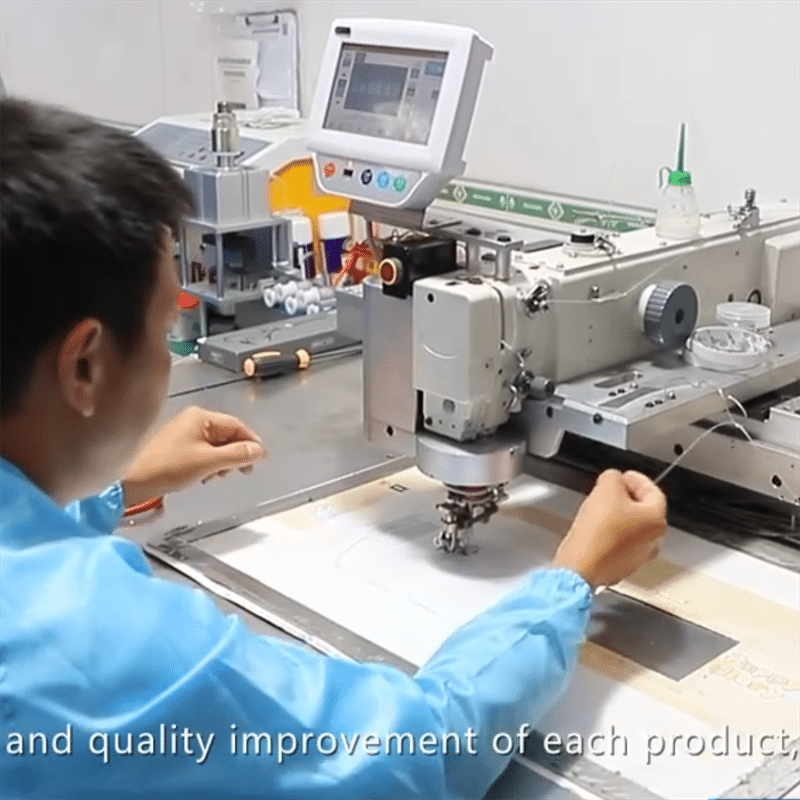
A heated insoles factory is a direct manufacturer that owns and operates its production lines, handling everything from component sourcing to final assembly and testing.
These facilities typically maintain in-house teams for electronic circuit design, heating element development, and battery integration. They perform their own quality inspections, endurance testing, and safety validations. This vertical control allows for precise adjustments during production and faster resolution of technical issues.
| Factory Capability | Impact on Buyer |
| In-house R&D | Customization flexibility |
| Direct production control | Quality consistency |
| Integrated testing | Safety validation |
| Process transparency | Risk reduction |
Working directly with a factory provides clearer visibility into how heating films, carbon fiber wires, or battery management systems are calibrated and assembled.
What Is a Trading Company?
A trading company acts as an intermediary, sourcing products from multiple factories and managing the supply chain on behalf of the buyer.
They aggregate offerings from various manufacturers, often handling communication, order coordination, and logistics. While they may have strong supplier relationships, they rarely control production directly or maintain engineering teams for product development.
| Trading Company Feature | Potential Limitation |
| Multiple factory sourcing | Reduced production transparency |
| No in-house engineering | Limited customization |
| Indirect quality oversight | Slower issue resolution |
| Price markup structure | Less cost clarity |
Trading companies can simplify sourcing for buyers who need variety or smaller volumes, but they introduce an extra layer between the buyer and the actual production process.
Engineering Integration: Why It Matters for Heated Insoles
Engineering integration is critical for heated insoles because poor design or assembly can lead to uneven heating, battery overheating, short circuits, or reduced product lifespan.
Key aspects include battery management system integration, heating element calibration, temperature control firmware, and safety validation testing. Direct factory cooperation allows engineers to fine-tune these elements during prototyping and production, reducing miscommunication risks.
For brands seeking true customization — such as specific temperature curves, app connectivity, or unique battery capacities — a factory with in-house engineering offers greater control. A custom heated insoles factory in China typically has the technical depth to handle these requirements effectively, whereas intermediaries may relay specifications without full authority to implement changes.
Pricing Transparency and Cost Structure
Direct factory pricing usually provides better visibility into unit costs, material breakdowns, and tooling expenses.
Trading companies often apply markups to cover their coordination services, which can obscure the true cost structure. While they may negotiate competitive rates through volume or relationships, the final price to the buyer includes intermediary margins.
| Pricing Factor | Factory | Trading Company |
| Unit price transparency | Higher | Lower |
| Tooling cost clarity | Direct | Indirect |
| Volume discount negotiation | Direct | Limited |
| Cost breakdown visibility | Detailed | Aggregated |
Hidden costs — such as rework fees for design mismatches or expedited shipping due to delays — can also emerge more predictably when dealing directly with the production source.
Quality Control and Production Consistency
On-site quality control at a factory enables real-time monitoring, aging tests for heating elements and batteries, and batch traceability.
Factories can implement detailed protocols, including over-temperature protection checks and final product burn-in periods. This helps maintain consistency across large runs, which is essential for private label brands aiming to build trust with end-users.
Trading companies rely on reports from their supplier factories, which can lead to variability if different plants are used for the same order. Long-term consistency benefits from a single-point production partner that owns the entire process.
Compliance Documentation and Certification Control
Compliance is non-negotiable for heated insoles due to lithium battery regulations and electronic safety standards.
Factories that produce these products often maintain ownership of CE, RoHS, FCC, UKCA, and UL test reports, along with UN38.3 battery transport documentation. They can provide technical files and support customs clearance more directly.
When working through a trading company, documentation may pass through multiple hands, increasing the risk of incomplete or outdated certificates. This can create delays or issues during import inspections, particularly in regulated markets like the US, EU, and Canada.
When a Trading Company May Still Be Suitable
For small trial orders, multi-category sourcing, or limited customization needs, a trading company can offer practical advantages.
They often accommodate lower MOQs, provide faster sampling from various suppliers, and handle market testing phases where buyers are still validating demand. In these scenarios, the convenience of one-stop coordination may outweigh the need for deep engineering control.
Key Questions to Ask Before Choosing a Supplier
Asking targeted questions helps evaluate whether a supplier operates as a true factory or relies on intermediaries.
- Do you have in-house engineering for heating systems and battery integration?
- Can you provide recent battery test reports (e.g., UN38.3, UL 2054)?
- Who owns the compliance documentation and certification reports?
- Where is production actually conducted, and can we audit the facility?
- How is quality validated before shipment (e.g., aging tests, functional checks)?
These questions reveal the level of control and transparency a potential partner can offer.
Conclusion — Complexity Determines the Right Supplier Model
The decision between a factory and a trading company depends largely on product complexity, customization depth, and compliance requirements. For electronically integrated products like heated insoles, direct factory cooperation often provides greater engineering control, pricing transparency, and long-term production stability.
Brands and procurement professionals should weigh their specific needs — from prototype development to scaled production — against the risks of reduced oversight. In high-stakes categories involving batteries and electronics, prioritizing engineering authority and direct manufacturing relationships tends to support safer, more reliable outcomes over time.