

Motorcycle riding subjects the feet to severe wind chill, particularly when riding at highway speed at which point the air ram the boots off its heat at a very high rate and the perceived temperature is much colder than the surrounding temperature. This long cold exposure requires warm insoles that can consistently work during the long rides. Most people believe that regular winter insoles used in the heat in their feet are equally good in riding a motorbike but the wind in the highway, constant vibration and the tightness of boots demand more advanced engineering.
Heat insoles used on motorcycles should be able to include a stable level of heat production, cold-resistant battery performance, vibration endurance and safety protection system so that they can perform effectively and efficiently during the long distance rides.
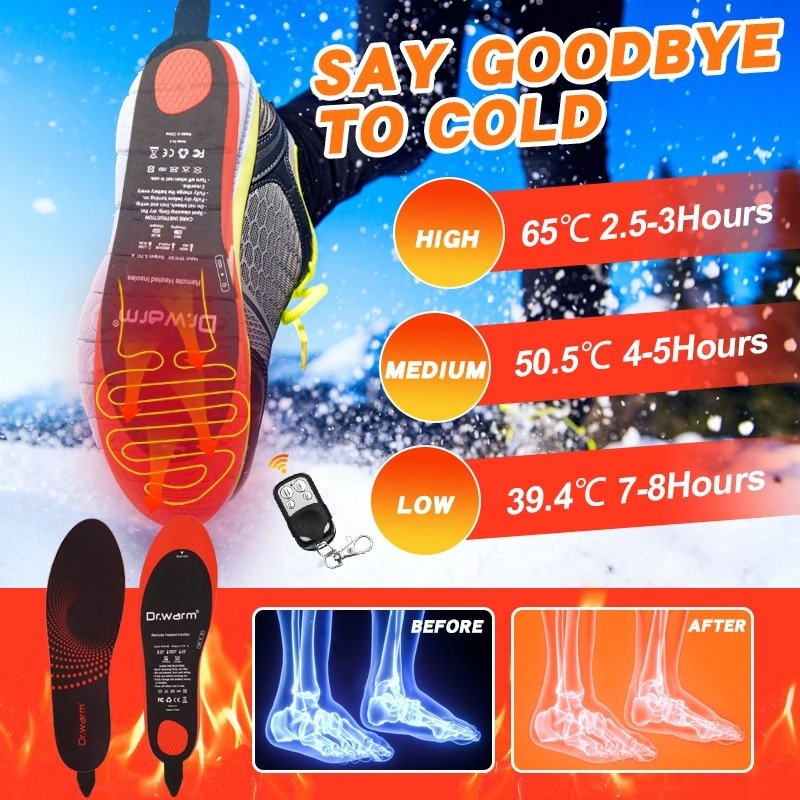
Wind Chill and Continuous Cold Exposure
When traveling with high speed on a motorcycle, cold stress on the feet of motorcycle riders is significantly exerted by the wind chill.
Even mild ambient temperatures are much cooler at highway speeds (5070 mph) as forced convection occurs. As an example, the ambient air at 50 o C (10 o C) may feel like 30 o C to 39 o C, depending on velocity, and the graph indicates that the perceived temperature can decrement by 10 or 20 o C or higher. This is multiplied by the effect of prolonged exposure during multi-hour rides since the natural heat retention in boots cannot occur because of the constant passing of air.
The issue of heat dissipation is a significant challenge: the standard insoles fail soon because the wind takes away the heat of the surface of the feet. Cold airflow also reduces battery efficiency as low temperatures add in-circuit resistance and decrease discharge capacity in lithium-ion cells, usually by 20-30 degrees centigrade at 0 C and by higher percentages at lower temperatures.
Cold weather insoles used in riding should thus be able to provide higher sustained power output and designs that reduce heat loss to ensure that these physics based requirements are met.
Heating Element Durability Under Vibration
Constant vibration of the engine and road makes the heating elements of the heated insoles on the riding boots under intense pressure.
Motorcycle engines and the imperfect roads create constant mechanical vibration that wears out wiring, connection and heating film due to time. Foot action in tight riding boots is repeated flexing of the insole which causes a higher risk of circuit break or delamination unless the materials are reinforced.
Flexible and uniform structure of carbon fiber or advanced film heating elements have the benefit of vibration resistance, as it contains fewer local stress points than a standard wire design. In such circumstances, good routing of wires (not sharp turns) and a strong lamination can be used to assure integrity.
Some of the engineering factors are outlined in the following table:
| Engineering Factor | Importance for Motorcycle Use |
| Vibration resistance | Prevent circuit fatigue |
| Even heat distribution | Offset wind chill |
| Reinforced lamination | Avoid internal separation |
| Stable wiring insulation | Maintain safety |
For brands and OEM developers seeking application-specific solutions, motorcycle heated insoles OEM solutions provide tailored engineering to address these durability demands.
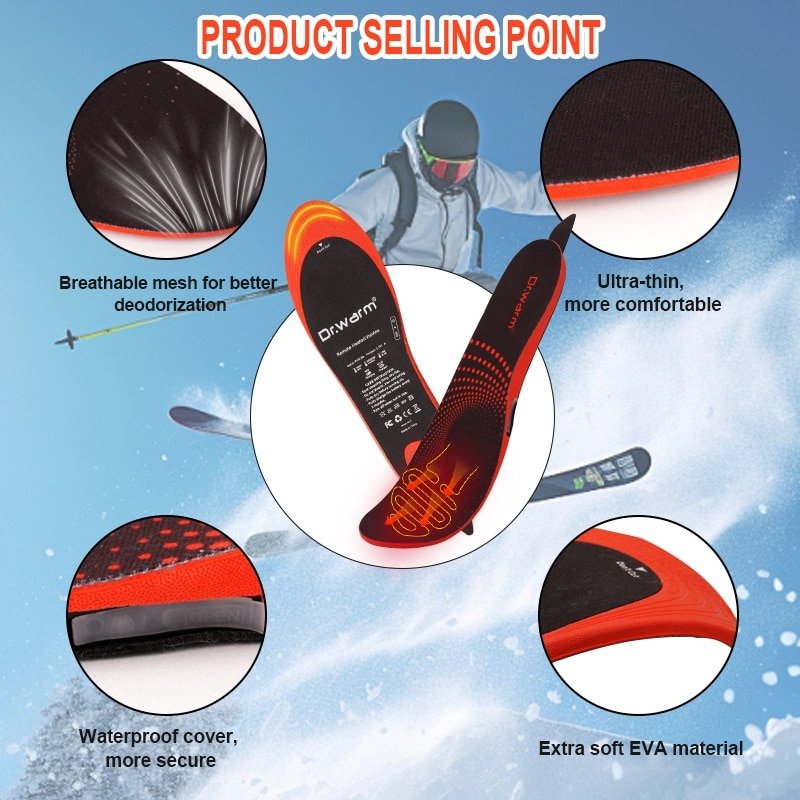
Battery Endurance for Long-Distance Riding
Long ride times demand batteries that can last 4-8 or longer hours without being seriously degraded.
In cold temperatures, lithium-ion batteries have lower rates of discharge and lower capacities to flow through the electrolyte (it becomes viscous) and the ion movement remains slower (capacity can decrease to 70 or lower at -10 degrees Celsius). In the case of motorcycle the same would be to plan higher capacity at the start to allow losses on both running time and temperature.
Protection circuits are used against over-discharge or shorting during vibration, and cold-resistant designs are used to stabilize output. Secure connectors are used in the disconnection of movement.
| Battery Consideration | Motorcycle Impact |
| High capacity cells | Longer ride coverage |
| Protection circuits | Safety during vibration |
| Cold-resistant design | Stable heat in airflow |
| Secure connectors | Prevent disconnection |
The following factors should be considered first in rechargeable heated insoles of bikers to prevent power failure in the middle of the ride.
Temperature Control and Accessibility
Sound temperature control is essential when the riders put thick gloves on and have limited access to it during movement.
They should be easy to use without taking hands off grips- remote controls (wired or wireless) are effective solutions to immediate changes. App-based monitoring can be done with Bluetooth integration but this is not as reliable in high-vibration, wind-exposed settings where connections can go dead.
More basic on/off or multi-level remotes tend to be more reliable in the actual riding environment than complicated systems can be. The compromise between features and accessibility and reliability is in favor of the latter.
Structural Fit Inside Riding Boots
Motorcycle boots require the use of insoles with low thickness with precise fit to prevent discomfort or pressure points.
Too much bulk means it reduces circulation and it forms hotspots, the inadequate sizing poses a problem when acceleration or braking is in progress. The profile (usually less than 5mm) is shaped so that it fits in the performance boots and anti-slip bottom layers are provided to prevent movement within the boot.
The equal distribution of pressure across the foot will also aid in the comfort of covering long distances and heat transfer will not be ruined.
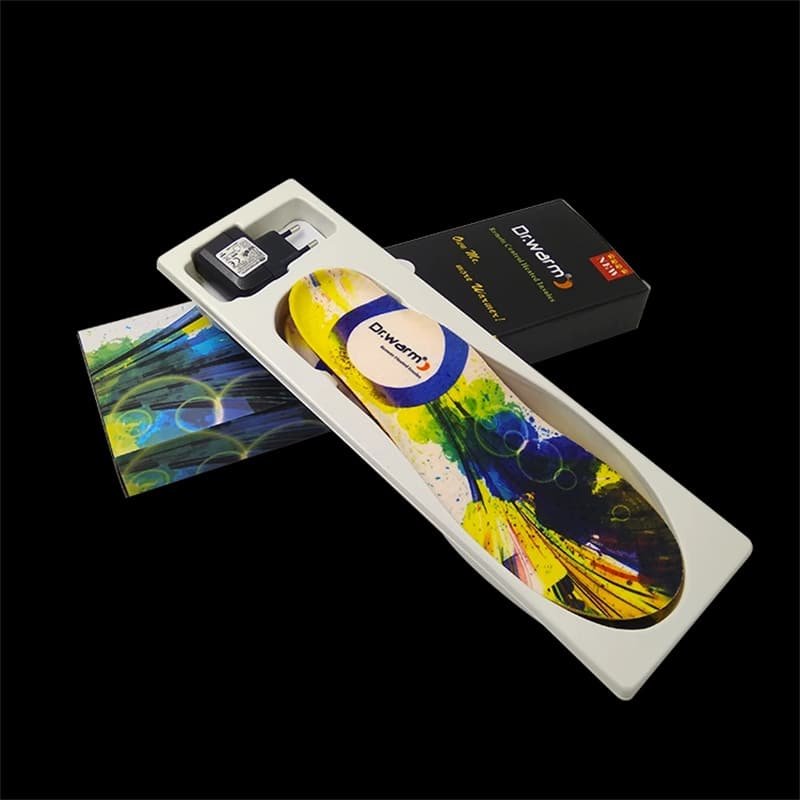
Moisture and Weather Protection
Water ingress is to be strongly resisted against exposure to rain, road spray and condensation.
Special wet-end layering and closed connectors ensure electrical safety under wet conditions. Good insulation is needed to avoid short circuiting and breathable but sealed materials diminish moisture accumulation internally which may deteriorate heating elements.
The sealing standards are industrial grade which helps to secure consistency in the operation in spite of weather conditions at the expense of the safety of the riders.
Common Mistakes Riders and Brands Make
The wrong choice of insoles will result in poor performance and even safety problems.
- High-speed riding on sports-oriented insoles does not take into account vibration or wind-specific engineering requirements.
- The excessive claim on maximum temperature does not consider the actual heat loss on the ground in the airflow.
- Neglecting vibration life leads to wiring or elements premature failure.
- Wearing over thick insoles on tight boots brings about discomfort and poor blood circulation.
Such omissions are usually based on general winter solutions to motorcycle specific demands.
Conclusion — Motorcycle Applications Demand Reinforced Engineering
Motorcycle rider insoles that may be heated should be designed with the capacity to withstand vibrations, maintain a stable battery and regulate heat generation in high wind chill values. Design tailored to application is important in long distances of safety and reliability. Such attributes as reinforced heating components, cold resistant batteries, control security, as well as weatherproofing make the difference between effective and generic solutions to the most challenging riding conditions.