

Foot warmers and heated socks are quite different types of heating technology – one of them is a rechargeable designed heating device, whereas the other one is a disposable or chemically generating heat source that may be used temporarily. Despite their similarities in terms of their objectives of counteracting cold feet in the event of the outdoors, work, or recreational scenarios, there is an enormous difference in their nature of heating, time, temperature regulation, and sustainability. It is believed that foot warmers and heated socks are the same, but they have a dissimilarity in the way they heat, in the time interval, and the sustainability of the procedure.
The decision between using heated feet socks or foot warmers is also one of time longevity, warmth control requirements, weather, and environmental requirements. On product development terms, this knowledge of differences aids brands in locating products appropriately in hot footwear segments, be it on winter sports, industrial use or extended exposure to the open environment.
Core Technology Differences
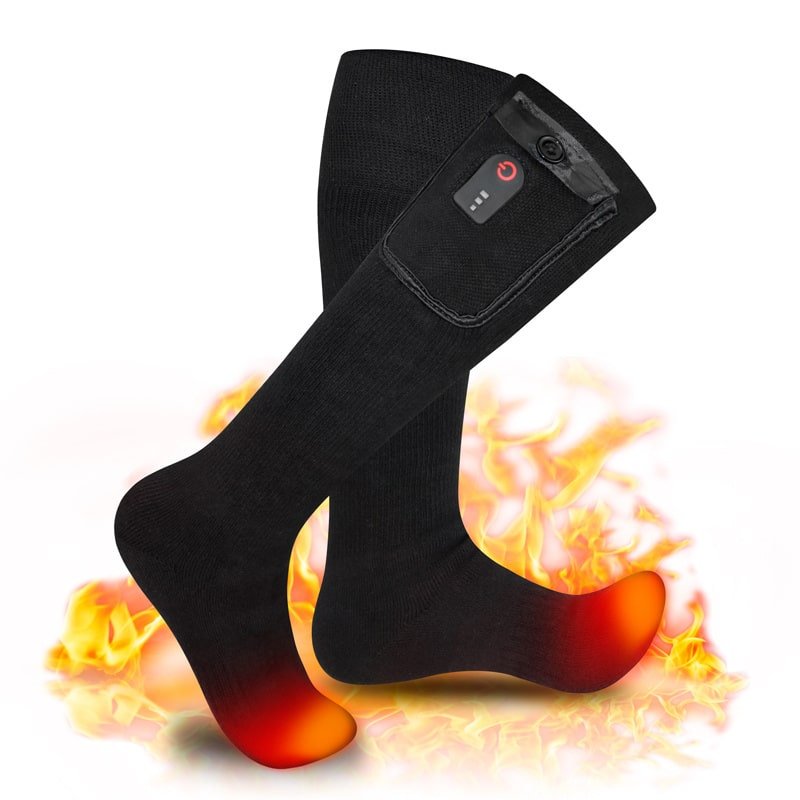
The basic difference is in the heat production and delivery method as the use of heated socks is based on the battery-powered electronic system, and a majority of the foot warmers are based on a single-time chemical reaction.
Heated socks Heated socks, sometimes called battery heated socks or rechargeable heated socks, are socks that incorporate thin resistive heating elements, typically carbon fiber or bendable wire, that may be woven into the sock fabric, typically a high concentration at the toes and forefoot to provide warmth where needed. These features are associated with small, rechargeable lithium-ion batteries (often on the cuff or in a pocket), the source of constant power. Ancient designs incorporate intelligent controllers to various levels of temperature and in other cases, app or remote connectivity.
By contrast, disposable foot warmers (also known as chemical toe warmers, air-activated packs) work by an exothermic oxidation reaction. Upon opening the sealed packet and exposing it to air oxygen will react with the iron powder, salt, water, activated carbon and vermiculite each contained in the pouch. This is a regulated form of rusting that produces heat in a gradual manner until the reactants are depleted. There are reusable versions that are less popular, and which still use similar chemical principles as opposed to electronics.
These fundamental differences affect all the functions of performance, including footwear integration to lifecycle processes.
| Feature | Heated Socks | Foot Warmers |
| Heating Mechanism | Battery-powered resistive heating | Chemical reaction (iron oxidation) |
| Temperature Control | Adjustable levels (typically 3–4 settings) | No control (fixed reaction curve) |
| Reusability | Rechargeable (hundreds of cycles) | Disposable (usually one-time use) |
| Integration | Built into sock fabric | Inserted/adhered in shoe or boot |
For brands developing heated footwear, partnering with a professional heated socks factory allows customization of heating element placement, battery capacity, and fabric integration to optimize performance.
Heating Duration and Temperature Stability
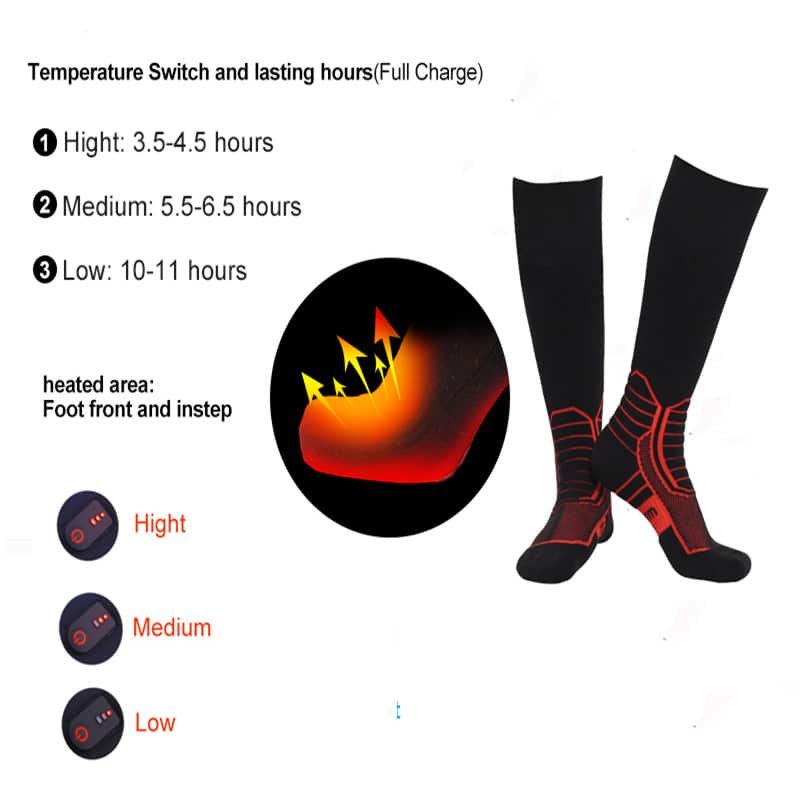
The heated socks provide regulated, adjustable heat during warm periods and foot warmers adheres to a predictable, but uncontrollable downward trend.
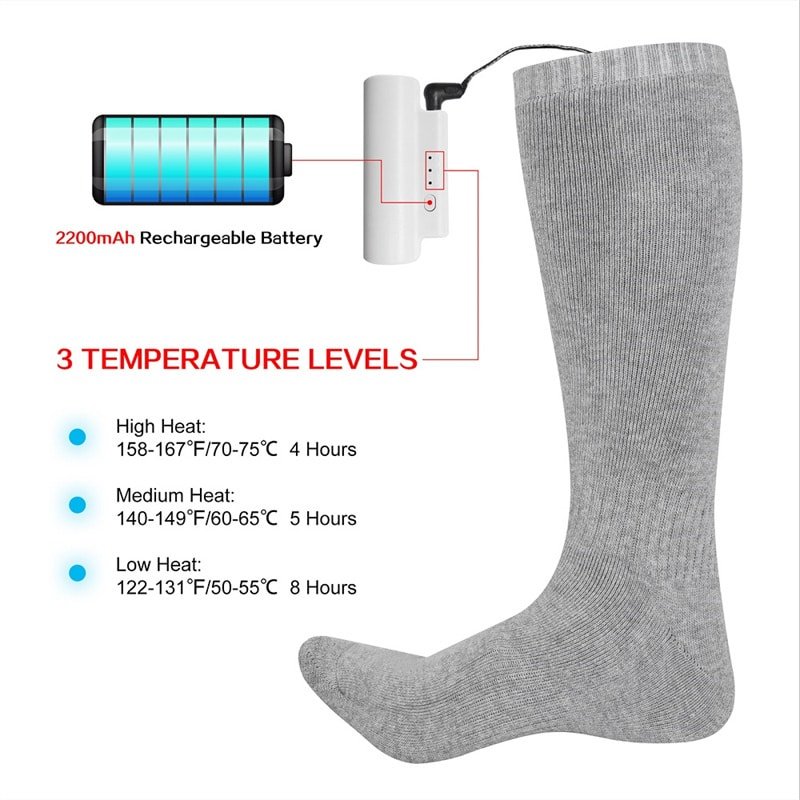
Runtimes in rechargeable heated sock depend on the battery capacity (500-2200mAh per socket typically), and the heat setting chosen. Many systems offer 8-10 hours of constant warmth on low settings, 5-7 on medium settings and 35 hours on high settings. The electronics allow a stable temperature which does not cause disastrous overheating of the towards a sporadic crash.
Foot warmers are typically used to serve a duration of 4-8 hours after it is turned on, yet heat production is produced in a bell shape: it reaches its peak (commonly within 15 -30 minutes) and then the rate of decrease as the chemical reaction becomes less vigorous. This results in vigorous initial warmth and subsequent ineffectiveness, and no extents of modulating intensity or duration of use.
| Aspect | Heated Socks | Foot Warmers |
| Runtime | Adjustable 3–10 hrs | 4–8 hrs (fixed curve) |
| Heat Stability | Regulated | Gradual decline |
| User Adjustment | Yes (multiple levels) | No |
Such stability renders battery powered systems more applicable in longer term activities where a consistent performance is of the essence.
Comfort and Footwear Compatibility
The ability of a heating solution to adjust to the foot and boot or shoe environment determines the comfort of the heated footwear.
Well designed heated socks are not bulky and the heating wire or film is spread evenly all over to prevent concentrations of pressure. Nevertheless, even slightly increased thermal insulation or the location of batteries may have a reduced fit in performance footwear such as ski boots, which have tight volume requirements. Properly constructed systems have flexibility and wicking fabrics to retain natural motion.
Disposable foot warmers attached to the insole, or in the toe box, add or remove variable bulk as to their thickness (usually 3-5mm). It may form localized pressure, limit the wiggle room of toes, or move during movement, which may affect circulation or even result in hotspots. Heightened volume can interfere with the entire fit and overall use in tight-fitting booting preferred in skiing or tactical use.
Through an engineering perspective, integrated warm socks usually provide a superior match in heavy-of-movement scenarios that are dynamic, whereas foot warmers warrant loose footwear where the space is present to hold the insertion.
Sustainability and Long-Term Cost
Rechargeable systems are more sustainable and cost-effective when compared to disposables with the technology after several uses.
Heated socks are a closed-loop product: once they have been purchased, they can be replenished using a USB charger or a conventional charger and complete hundreds of cycles (when taken good care of). The only way of waste is through eventual battery change or recycling at the end of the life.
Disposable foot warmers create continuous waste – with every use non-recyclable wrapping and also used up chemical packets are created. This amounts to quite a number in terms of environmental impact in one season of being used.
The cost versus usage swings radically with the first cost of heating socks being higher whereas the cost per use declines exponentially. Foot warmers seem cheap at a single purchase, but they tend to be expensive when they are that often replaced.
| Factor | Heated Socks | Foot Warmers |
| Reuse | Yes | No |
| Waste | Low | High |
| Cost per Use | Lower long term | Higher over time |
| Environmental Impact | Moderate (battery lifecycle) | Higher (disposable packaging/chemicals) |
Rechargeable strategies are beneficial to brands that target environmental awareness (or repeated usage cases).
Durability and Reliability
Heated socks engineered with the intent of improving the long-term reliability are better than its chemical equivalents.
Protective features of the heated sock include over-temperature warning, moisture shielding wires and battery control have been implemented to engage in short circuiting or decadence. Quality production encompasses flex cycle endurance testing, washability (on most models) and environmental sealing.
Foot warmers of disposable type have low-quality drawbacks such as the risk of contents leaking out in case of puncture, or when incorrectly stored, but with reputable brands the risks are reduced to a minimum. By its very design, single-use limits reliability, and there is no maintenance to keep the appliance alive it was not designed to be.
It is also a common problem of keeping moisture levels down in wet and damp conditions, although electronic systems have tighter insulation against sweat or external water intrusion.
Application Scenarios
This is because the right solution is in accordance with the time of activities, environmental requirements, and control factor needs.
Occasional or temporary cold exposure would prefer disposable foot warmers because it is easy to use and is directly activated without the need of charging.
Prolonged or prolonged situations are better fitted with heated socks; since its performance is sustained and flexible.
| Application | Recommended Option |
| Short Outdoor Event | Foot Warmers |
| Industrial Work | Heated Socks |
| Skiing | Heated Socks |
| Emergency Backup | Foot Warmers |
In comparison of heated socks to foot warmers during winter sports or working wear, in terms of reliability, rechargeable is better with many hours.
Common Misunderstandings
There are a few myths on product category assessments:
- Foot warmers are less expensive hence the best ones – Cost is less in the short term but in the long run costs and wastage make it not that cost effective.
- Modern designs have minimized the thickness of heated socks; the category does not dictate the bulk; engineering quality is important.
- The two are the same degree of warmth – Electronic regulation offers stability, whereas the chemical packs offer variable output.
- Overlooking the effect on the environment- The disposables add to waste, which is becoming a growing issue in creating a sustainable product.
Conclusion — Different Solutions for Different Needs
Foot warmers and heated socks have different functions of heating. This is because the correct decision will depend on the length of usage, the need to control temperature, environmental consideration and long-term product policy. In the case of brands coming up with a line of comparing products that have heated footwear, this understanding of the structural and functional differences can be used to position appropriately, that is, rechargeable electronic systems that enhance performance and sustainability, as opposed to chemical packs that provide convenience in the short run.