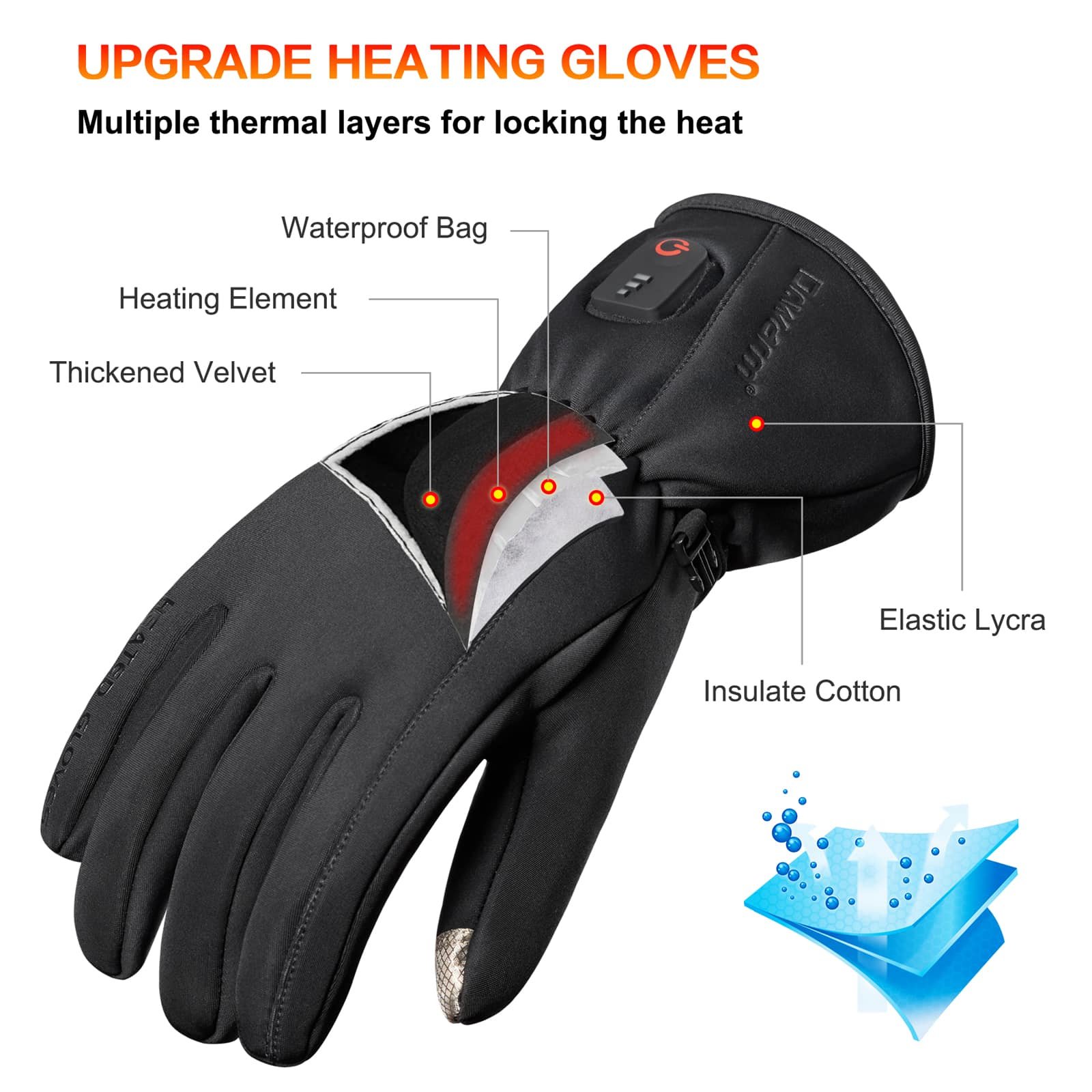

Introduction — Heating Elements Are the Core Technology Behind Heated Gloves
Heated gloves are not simple insulated gloves, they are a engineered system where the heating component represents approximately 90 percent of the warmth performance, and it is electrical impulses converting to directed heat to defeat freezing temperatures. Being an engineer working in the heating department of Dr. Warm in Dongguan, with more than 20 years of experience in designing products and 20 years in the testing department, an expert in materials science, and a teacher of outdoor gear, the response to how the right element can make gloves a lifesaver in -20degC wind chill is yes. There are hotspots or bad battery life on bad choices and evenly efficient, efficient warmth on good choices. This tutorial describes the functionality of heating elements in heated gloves, the material used, layout, and integration to make you appreciate the reason behind the popularity of this type of heating element in any pair of gloves.
How Heating Elements Actually Work — Simple Explanation
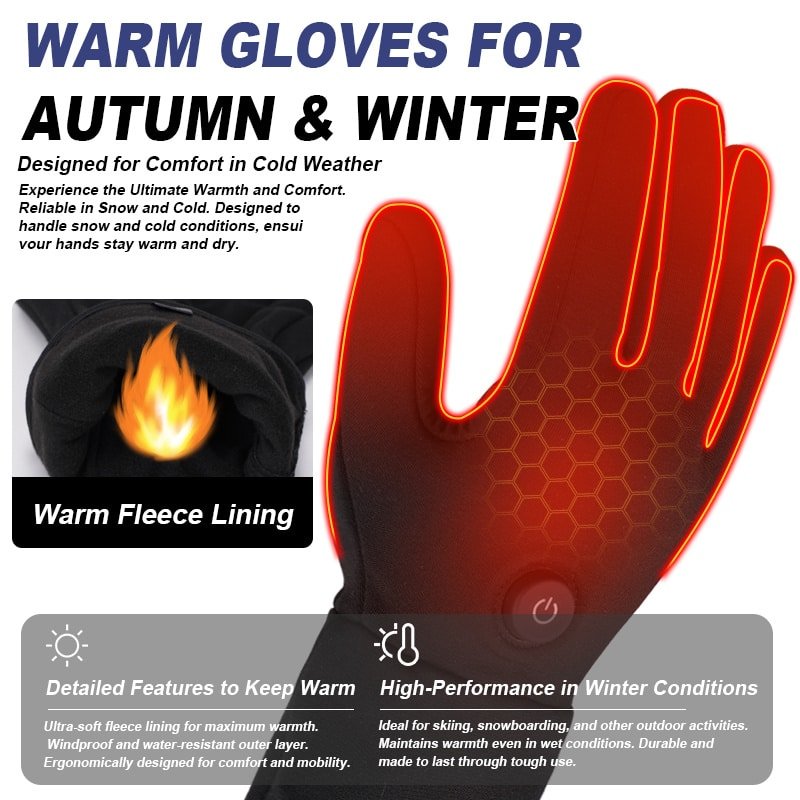
Fundamentally, a heating component in hot gloves is an electrical resistance-based technology that heats itself electrically by bypassing a battery through a conductive substance, thereby adding warmth to your hands. This is the basic information on our lab tests, in which we have optimized the coverage of the fingers evenly.
Electrical Current Flows Through a Resistive Material
This generates heat via electrical resistance (Joule heating)- electrons are struck in the material and this energy is then transformed into heat.
The Heating Element Converts Electrical Energy Into Heat
The choice of materials can define efficiency – high-resistance materials such as carbon fiber deliver controlled warmth without wasteful power consumption.
Heat Spreads Through the Fabric Layers of the Glove
Retention is regulated by Insulation-layers such as Thinsulate are used to hold the heat in and make sure that it does not escape into the air.
A Battery + Controller Supplies and Regulates Power
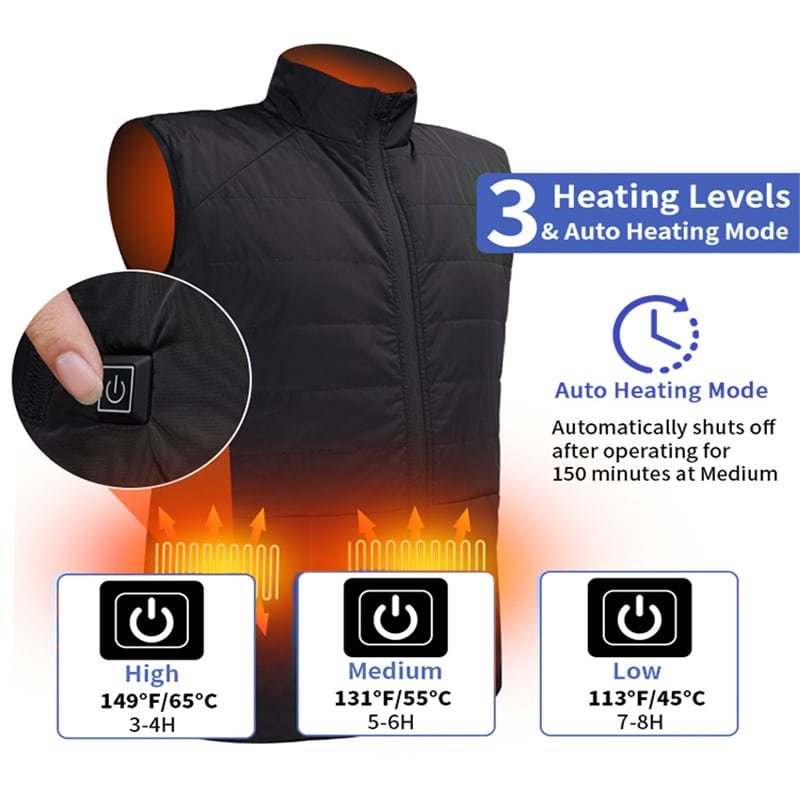
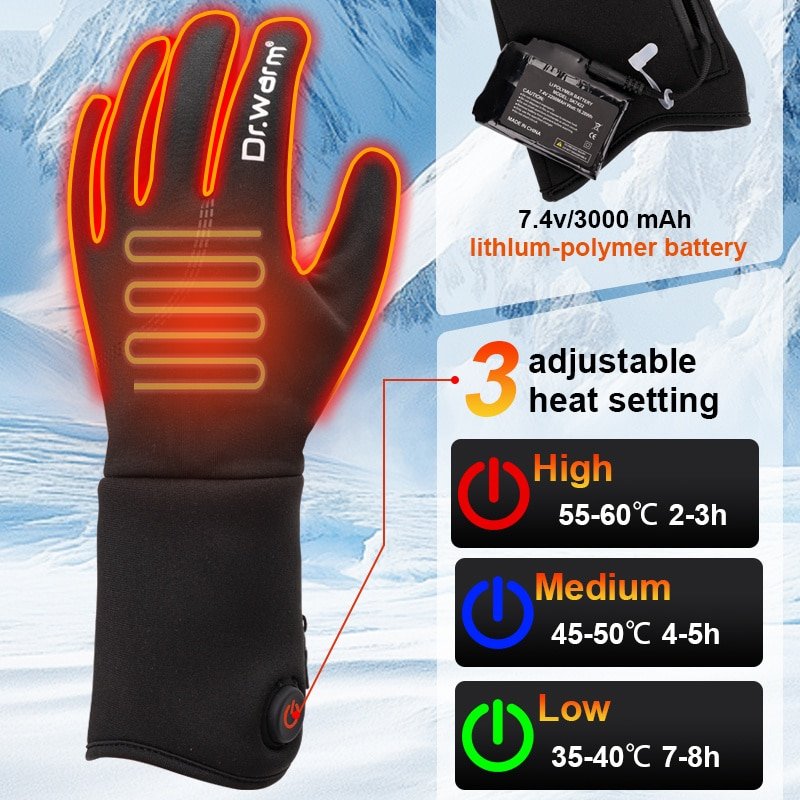
Voltage affects temperature and responsiveness—a 7.4V battery with PWM control fine-tunes output for safe, steady warmth.
The Three Main Types of Heating Elements Used in Heated Gloves
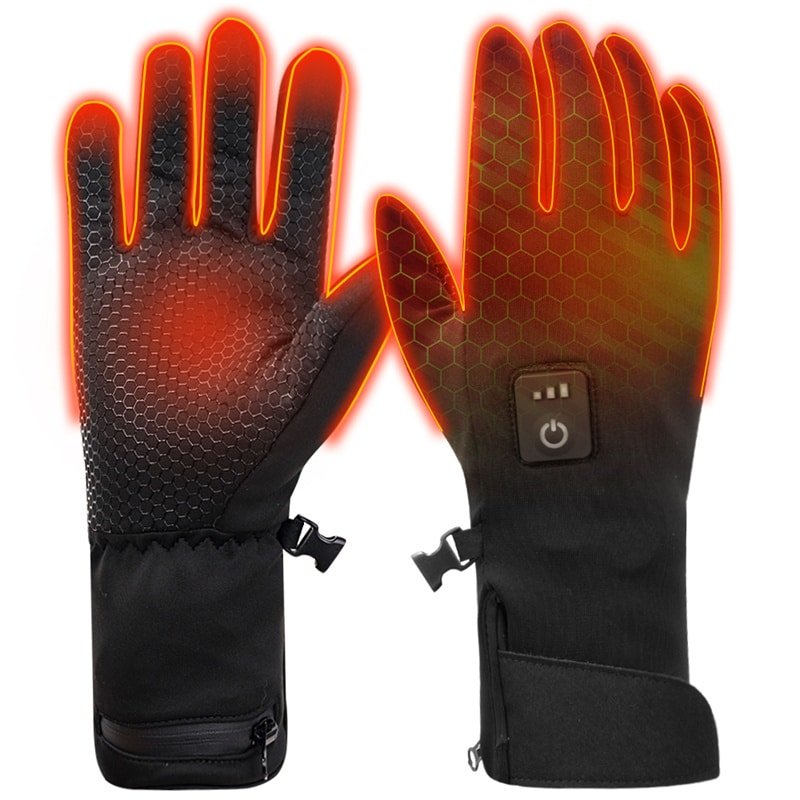
Heating sources differ according to the material, and each has its own peculiarities: heating wire is compared to carbon fiber in hot gloves there is a trade-off between flexibility and effectiveness. Since the engineering of prototypes of ski gloves, here is how they can perform in actual cold where heat disproportions can destroy a day on the ski resort.
1. Carbon Fiber Heating Elements (Most Common)
Tough and stretchable–bundles of carbon filaments stranded into patterns that are bent with fingers (5,000 cycles of flexing on bundles in our flex test), which produces reliable 45-55degC heat. Outstanding bending performance (appropriate to the finger joints) because filaments will not break, and therefore they can be used actively, such as holding poles. Even heat distribution and low hotspots, and low power consumption (15-25W) to extend battery life – standard feature of mid-range gloves in outdoor work.
2. Graphene Heating Film (Premium Option)
Very thin, quick heating, even heating better, a single layer of carbon atoms transfers electricity and heats in 30 seconds and uniformly across palms. Even isotropic heating compared to carbon fiber because of 2D structure, and uses less energy (10-20W draw) and conserves 20-30% battery. Laminated flat, can be pressed between fingers- this will feel seamless and will be ideal in a tight design on a commuting glove, however, it is more expensive which reflects the nano-tech.
3. Traditional Heating Wire (Budget Option)
Increased power consumption – nichrome or alloy wires can resist current to heat, but again at 20-30W, burn batteries. Easy to hot spots unless insulated, and too hard to bend fingers–wires will stiffen or cut in a curve. They are used in the entry-level models to provide basic warmth, but are not the best in the premium models, engineering-wise, it is simple and does not distribute evenly.
Why Heating Element Layout Matters in Heated Gloves
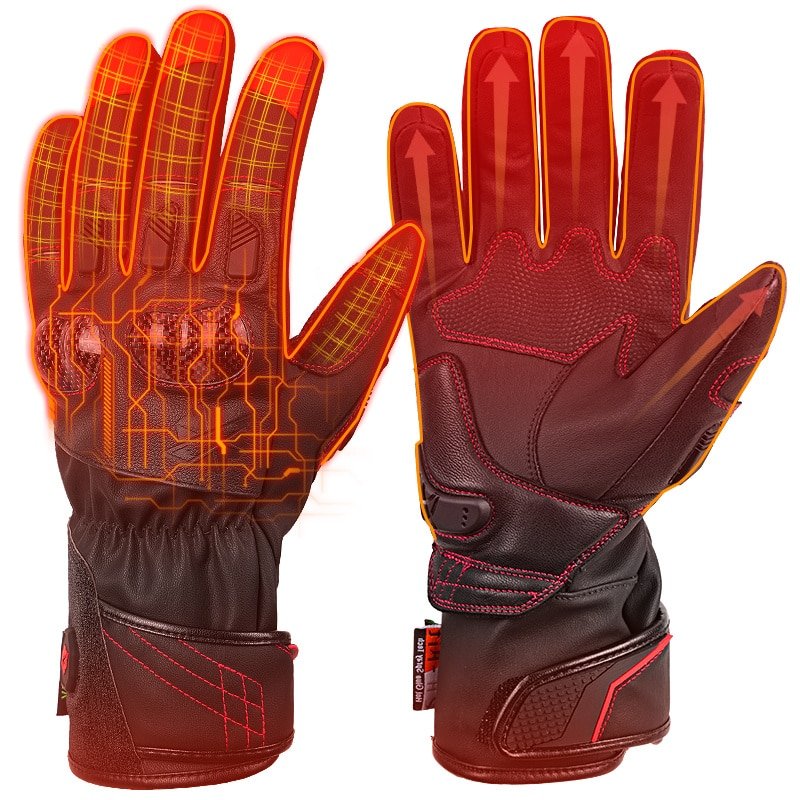
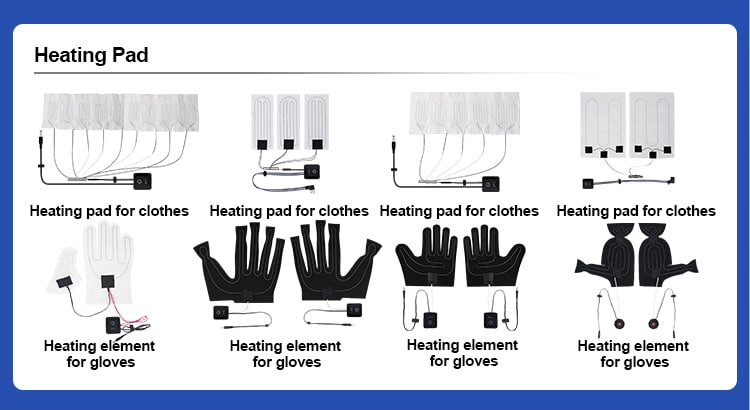
Heat distribution is determined by the design of heated gloves, bad design leads to cold fingertips, and this is what I observed in tests with cold thumbs on the hikes due to uneven paths. High-loss areas such as the fingers of the heated gloves should be covered by the heating element layout and engineering should be oriented towards flexing paths rather than failure.
Full Finger Heating vs Back-of-Hand Heating
Full finger = more costly and provides greater coverage; back of hand only = less costly and does not work well in extreme cold because the heat should radiate to the ends.
Palm Heating Options
Applicable with work gloves and motorcycle gloves that will be more grippy with added warmth but will also raise complexity in wiring.
Multi-Zone Heating Circuits
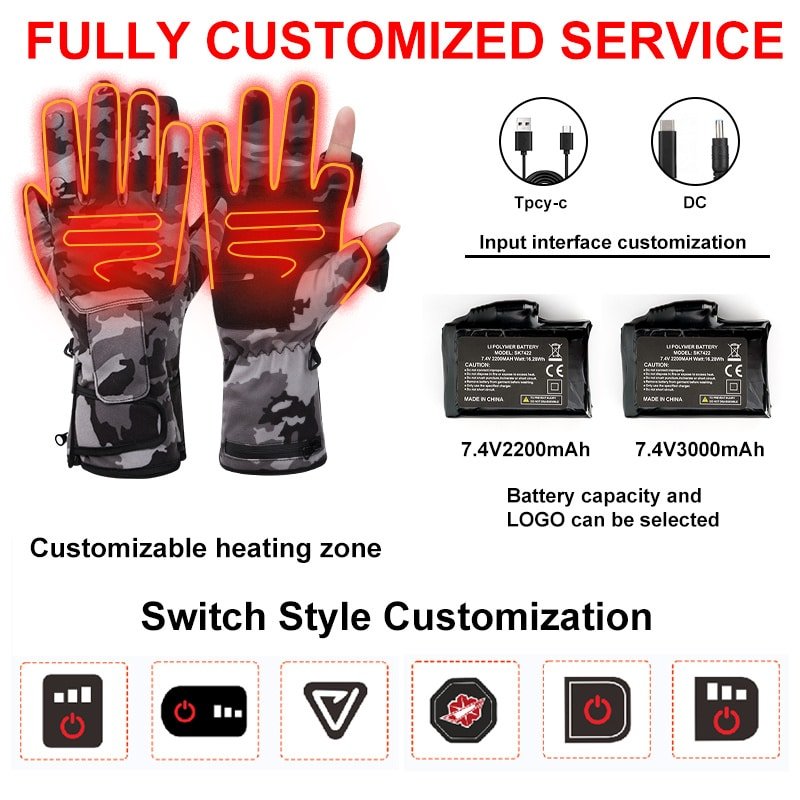
The poor circulation users will gain–independent zones will give finger-priority heat without the battery being overstrained.
Electrical Engineering Behind Heating Elements
Heating Heating depends on resistance – electrical resistance heating is based on the law of Ohm (P = I2R) where current in a high resistance material produces heat. As a result of our R&D, inefficiency is avoided by proper matching.
Voltage Determines Heat Output
5 V = mild with light use (30-40 deg C), 7.4 V = standard with winter gloves (45-55 deg C) and 12 V = extreme cold, motor cycle riders (up to 60 deg C) – higher voltages force more current through to accelerate the ramp-up.
Electrical Resistance Controls Heat Level
Less current = less heat–elements adjusted to 5-15 ohms leave things in balance.
PWM (Pulse-Width Modulation) Controls Temperature
Pulses current to control heat – 100 percent duty high, 50 percent medium, no constant draw.
Why Uniform Resistance Matters
Eliminates hot spots and burn risk-variable results in nonuniform temperatures, unlike graphene, which is uniform.
Battery Interaction With Heating Elements
Batteries provide flow–hand warming technology explained demonstrates that such efficient elements as graphene are able to provide the life span by 20 percent as the greater the resistance the better is the draw.
More Efficient Elements = Longer Runtime
Graphene > carbon fiber > heating wire- graphene requires 10-15W as much as carbon fiber.
Battery Flow Rate (Current Draw)
Increased heat mode = increased current0.5-2A at 7.4 V balanced operation.
Cold Temperature Effects
Under freezing bacteria can slow down by 20-40 percent- lithium ions laggard- insulated pockets help.
Connector Type Affects Safety
DC plug / magnetic plug / proprietary connector—magnetic prevents pulls in active use.
Safety Requirements for Heating Elements
Safety integrates throughout—temperature regulation in heated gloves uses sensors to cap at 60°C, as overheat in a project I engineered caused redesigns.
Overheat Protection
Temperature sensors regulate temperature NTCThermistors activate cutoffs.
Short-Circuit Protection
Eliminates defects caused by bends or moisture.
Flame-Retardant Layers
Insulation of elements–UL94-rated materials are ignition resistant.
Certifications
Integration of batteries CE, FCC, RoHS, UN38.3 battery standards– assures world compliance.
Advantages & Limitations of Each Heating Element Type
There are trade-offs to each of them: the energy efficiency of heating systems is in favor of graphene, but cost.
Carbon Fiber
Advantages: flexible, durable, comparatively cheap; disadvantages: a little more sluggish in ramp-up than graphene.
Graphene Film
Advantages: quickest to heat up, most homogeneous; disadvantages: most expensive when buying top quality lines.
Heating Wire
Advantages: the cheapest; disadvantages: limited flexibility, lumpy heating – do not use on active gloves.
How Brands Should Choose Heating Elements
Extreme cold gloves – graphene / 7.4V or 12V to work. Flex – sports gloves – carbon fiber full-finger. Work gloves – palm finger wiring (grip). Budget products – heating wire (not suggested in top-end lines)- conforms to market.
Common Misconceptions
Myths are deceiving- dismiss these based on user comments.
“More Watts = Better Heat”
Mistakenly, efficiency is more important to runtime.
“Heating Wire Is the Same as Carbon Fiber”
Flex and evenness performance is very dissimilar.
“All Heating Elements Heat Evenly”
Graphene is a better heat conductor than wire.
“Any Battery Works With Any Element”
The combination of voltage and resistance must be safe.
Final Conclusion — Heating Elements Are the Heart of Heated Glove Performance
Getting heating devices such as carbon fiber or graphene transform resistance into heat, and layout and voltage determine efficiency. Since electrical resistance heating involves heating, and temperature regulation in heated gloves, engineering can make sure that all the heat is safe and evenly distributed. Select depending on the necessity–graphene in case of high evenness, carbon fiber to be durable, and have a guarantee of warmness in cold conditions.