

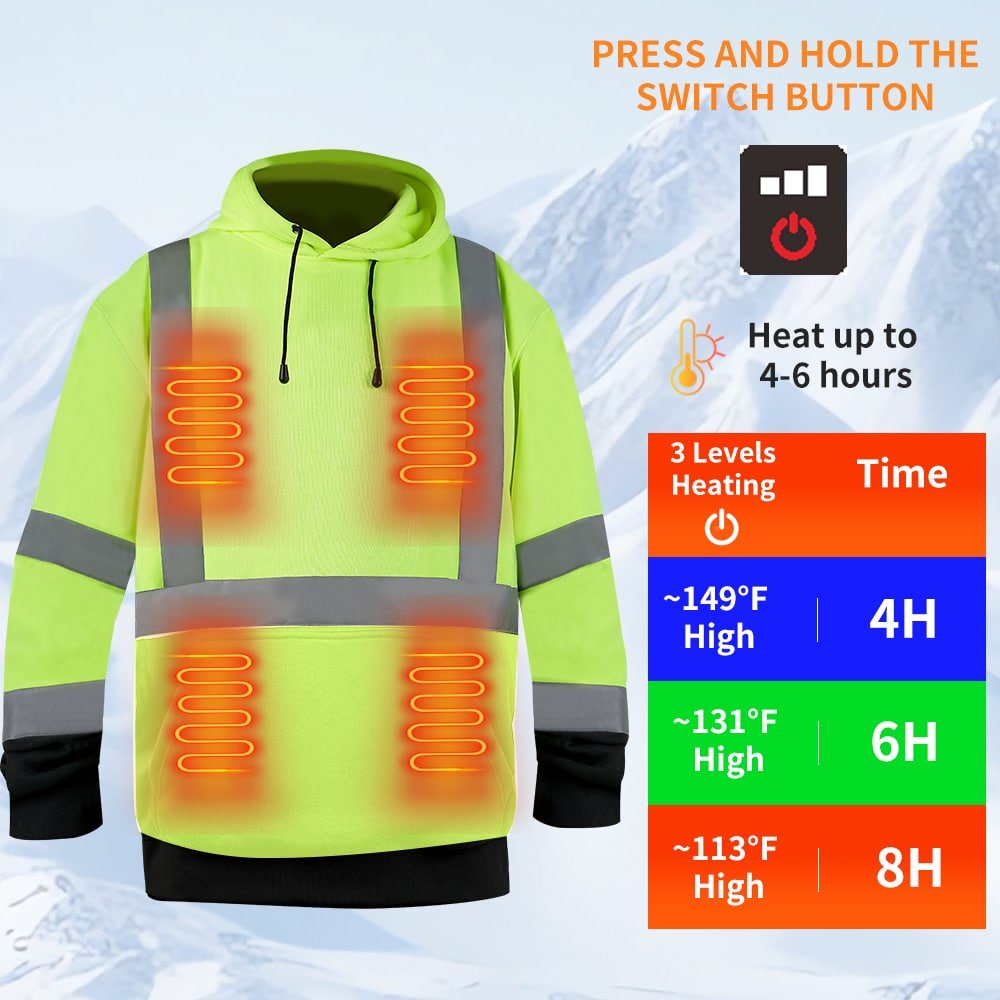
A heating element in wearable electric heating products is the main element that converts electrical energy into thermal energy to deliver specific warmth to the human body. It is the key process of the entire performance of the heated apparel and accessories because it defines not only the heat output but also the safety, efficiency, and comfort of the system. In principle, wearable heating is based on regulated electrical resistance to heat objects, in which an electric current is run through a resistive substance, which heats things by Joule heating. The general myth though is that the more the power rating, the better or safer the heating, the fact is that too much power without proper design may result in hot spots, ineffectiveness or even be unsafe. Rather, good wearable heating is focused on considerate design, such as material selection, design, and incorporation with control systems to provide consistent and stable functionality.
The Wearable electric heating products are based on regulated electrical resistance and thermal transfer with heating element performance being dependent on the choice of material, structural arrangement and system integration rather than power itself. This is the guiding principle in the engineering of the heated gloves, jackets, insoles, and other wearables, whereby precision is more important than brute force.
What a Heating Element Does in Wearable Heating Systems
Heating components constitute the foundation of any wearable heating system as they produce and provide heat in a controlled format appropriately to use in near-body applications. This means that, unlike heaters used in the home, where it is frequently desirable to have a high-volume heat supply in a large room, wearable heaters need to provide localized and low-intensity heat, which needs to respond to body movement and changes in the surrounding environment. This demands an emphasis on flexibility, low profile and energy efficiency to prevent bulky and uncomfortable looks. Controlled heating is vital in the local area since wearables will work directly in contact with the skin or clothing layers, and heat can be unevenly distributed resulting in burns and inefficiency, and the system should be able to balance battery life and user comfort.
| Function | Description |
| Heat generation | Transduces electrical power into heat energy. |
| Heat distribution | Warmths evenly over target regions. |
| Temperature response | Responds to PCBA control signals. |
| Safety interface | Works on protection systems to avoid overheating. |
The Physical Principle — Electrical Resistance and Heat Generation
The fundamental principle of heating components of wearables is Joule heating, in which electrical resistance transforms current into heat, which is directly proportional to the square of the current and the value of the resistance. This principle is characterized by the formula P = I 2 R (with P equal to power, I equal to current and R equal to resistance) explaining why resistance is more important than raw voltage in determining heat output, whereby a higher resistance can allow producing high heat at lower currents, lessening the strain on batteries. Assuring the ability to work within the voltage limits of the portable lithium batteries, normally 3.7V to 7.4 V, the relationship between current, resistance and heat ensures that the elements can operate within the voltage limits without excessive power consumption that would reduce run time or endanger safety.
| Parameter | Impact on Heating |
| Resistance (Ω) | Determines heat generation rate |
| Voltage (V) | Influences current flow |
| Current (A) | Directly affects heat output |
| Power (W) | Result of V × A |
Materials Used in Wearable Heating Elements
Choice of material has a direct bearing on the flexibility, durability and thermal performance of heating elements, and as such is a decisive factor to thank in the reconfigurability to the dynamic need of wearable applications. In wearables, the materials should be able to endure bending, stretching and repetition of use without significant changes of resistance. Such common alternatives are carbon fiber because it is lightweight and heats evenly, heating films because they can be very thin and integrated into fabrics, and metal wires because it performs well in harsh conditions. For deeper insights into wearable heating element materials,refer to the impact of such decisions on the overall system performance. Additionally, comparing carbon fiber vs heating film heating elements heating film heating elements will reveal some flexibility/heat uniformity trade-offs.
| Material Type | Key Characteristics | Typical Applications |
| Carbon fiber | Flexible, uniform heat | Gloves, jackets |
| Heating film (PET/PI) | Thin, lightweight | Insoles, socks |
| Metal wire | High durability | Industrial wearables |
The insights of heating element material and heating element resistance are vital in the consideration of resistance inheating element design for wearable electric heating products, as it ties directly into long-term reliability.
How Heat Is Transferred From the Element to the Body
In wearable heating systems, conduction is the main mode of heat transfer because direct contact between the heating component and other materials is an effective way of providing warmth to the skin. The layers of insulation are significant to reduce the loss of heat to the environment by making sure that the energy generated is concentrated within the building whereas the layering is necessary so that excessive build up is not experienced which may lead to discomfort. The asymmetrical transfer is usually caused by inappropriate positioning of the elements or material mismatch, and results in cold spots or local overheat, which points towards the necessity of careful engineering to ensure a uniform level of perceived warmth on different parts of the body.
| Factor | Effect |
| Element placement | Controls heat zones |
| Insulation layers | Reduces heat loss |
| Contact pressure | Affects warmth perception |
Exploring heating element layout and heat uniformity exploration could give more information about how these factors could be optimized to make the user happy.
How Heating Elements Work Within a Complete Wearable Heating System
Heating elements exist as a part of larger ecosystem, and they can not work without a smooth integration with other elements to ensure a stable operation. They are in close interaction with the Printed Circuit Board Assembly (PCBA) that regulates power, temperature sensors that provide real-time feedback and battery system to support long-term operation which makes the system a closed-loop system that dynamically adjusts heat production. This integration makes sure that the element is sensitive to the changes in the environment and the user feedbacks avoiding standalone functionality, which may cause inefficiencies or even failures. For a comprehensive view, see how heating elements integrate with PCBA and temperature control circuits.
Interaction with PCBA
The PCBA is the brain and it regulates the voltage and current to the heating element according to preprogrammed logic to ensure accurate control over the amount of heat.
Role of Temperature Sensors
In close proximity to the element are sensors which send feedback to avoid excessive heating and the system can regulate power flow when necessary.
Battery System Synergy
Power is provided by batteries, giving low-voltage DC, equal to the element resistance, to maximize runtime, and is provided with protection circuits to prevent over-discharge.
Control Logic — How Temperature Is Regulated in Wearables
The regulatory aspect is made up of controllers and sensors that can be used to determine the actions of heating element to achieve accurate temperature control depending on the limitations of the wearable. Heating elements react to control signals by changing the resistance or current passing through them, usually by pulse-width modulation (PWM) measures that switch power on and off at high rate. Simplistic constant power methods are prone to inefficiency under changing conditions, though more complex regulated heating methods use feedback and set point to achieve constant temperatures that provide higher efficiency in energy use and comfort. Wearable components of heating systems require this reasoning as fast reaction to body temperature or ambient conditions helps to avoid uncomfortable situations.
PWM vs. Analog Control
PWM provides digital accuracy to battery-operated systems, unlike analog-based approaches which can use additional power during idleness.
Feedback Loops
The sensor has a feed back to the controller that will alter the output to suit the desired levels of low, medium or high heat depending on the one chosen by the user.
Factors like heating element efficiency in heated clothing that also impact the effectiveness of the translation of this regulation to on-the-job performance.
Safety Mechanisms Built Around Heating Elements
Safety devices are directly designed around heating devices to reduce the risks due to electrical to thermal conversion at the vicinity of the body. Automatic over-temperature protection is provided by thermistors or fuses, which automatically disconnect the power in case the temperature is too high, and limits current circuits, which prevent too much current flowing and breaking components or causing fire. Encapsulation and wiring strength make sure that there is no direct exposure by providing insulation and short-circuit protection, which is addressed because of the inherent weaknesses of flexible wearables during movement.
| Protection Type | Purpose |
| Over-temperature cut-off | Prevents overheating |
| Current limiting | Protects battery and element |
| Insulation layers | Prevents skin contact risks |
They are essential aspects that cannot be compromised in electric heating components in cloth manufacturing where the safety of the user comes into conflict with the requirements of the operations.
Why Heating Element Design Matters More Than Power Rating
The power rating gives a false indicator to assess the performance of heating elements since the actual performance depends on the holistic design factors such as resistance matching layout. The high power can either enhance the problem of hot spots when the layout is not able to evenly spread the heat or may cause a premature failure without material durability. Resistance optimization in design and structural integration towards balanced warmth, which underlines that high working principle of wearable heating elements depends on engineering foresight and not exaggeration, reflects the emphasis in designs.
Layout Optimization
Strategic positioning does not create concentration points which results in even distribution.
Resistance Matching
Optimizing resistance to battery voltage is the most efficient use of battery voltage, avoiding the excess heat dissipation.
Failure Modes from Poor Design
Mismatches can be very problematic in terms of thermal runaway or shorter life expectancy, highlighting system-level issues.
Conclusion — Understanding Heating Elements Is the Foundation of Wearable Heating
The understanding of heating components is the foundation of the further development of wearable heating technology, and the physics, materials, and controls in interaction with each other are emphasized. The performance of wearable electric heating is not necessarily determined by the amount of power that an element of the heat system uses, but by the design, integration, and control of the heating elements. This approach to the system is durable, safe, and user-satisfying, and it can be used in a wide range of applications, including outdoor gear as well as industrial wearable products, which is why this approach can lead engineers to more robust solutions.