

No standard costs of custom insoles of heated insoles. These battery-powered products which are introduced with the help of intricate engineering, such as integrated heating components, lithium batteries and control mechanisms in contrast to normal shoe inserts. Technical specifications and scale of production are very important in the pricing as opposed to mere materials or branding.
Most customers make a wrong assumption that the sales price of customized heat insoles is determined only by the thickness of the insoles, the quality of the fabric, or the mere presence of a logo on the products. In actual sense, the heating technology, the integration of the lithium batteries, safety engineering and the entire design of production are the main cost drives. The heating technology, anti-battery safety engineering and production organization are the basic factors of custom heated insoles prices, rather than the superficial feature of customization.
In the case of brands, sourcing managers, distributors as well as private label startups that need to assess suppliers to make accurate budgets and risk mitigation strategies, it is imperative to figure out these variables when coming up with a line of heated footwear.
For a detailed look at full OEM processes, see our guide on custom heated insoles pricing and production.
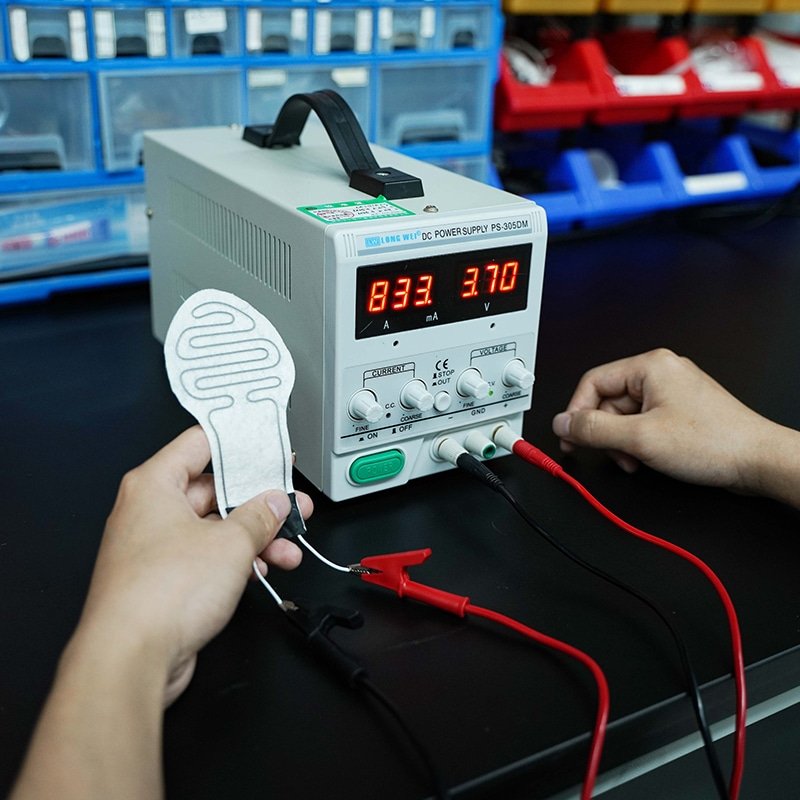
Major Cost Component #1 — Heating System Technology
The heating element is the center piece of any system with a heated insole, and the type of heating element will play a large role in determining performance and cost of production.
Various technologies provide different amounts of heat distribution, efficiency and longevity. More sophisticated would need more specific engineering and improved quality materials, which increases expenses.
Carbon fiber heating insoles are also more prone to better even heat distribution in the foot, under the toes and the forefoot, where the heat is most needed. Heating films provide very thin and flexible designs that fit well in slim insoles but simple wire systems apply to the entry-level models but may be inconsistent.
This is the comparison of the major types:
| Heating Element Type | Cost Impact | Performance Influence |
| Carbon fiber | Medium to High | Even heat distribution, better efficiency |
| Heating film | High | Thin, flexible design, uniform coverage |
| Wire heating | Lower | Basic models, potential hot spots |
Technical sophistication – e.g. multi-zone heating or power optimization – can add money, but better user experience and battery life. Smaller designs can seem less expensive at the outset, but can be inferior in terms of comfort in practice.
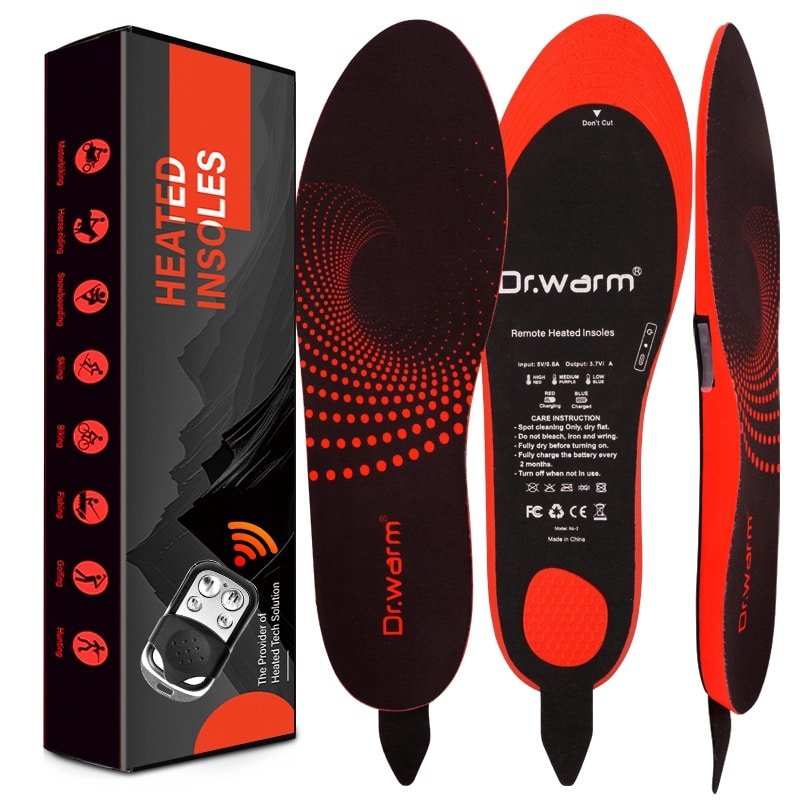
Major Cost Component #2 — Lithium Battery and Protection Circuit
One of the biggest variables in cost of OEM heated insoles is battery setup. Capacity, safety features and integration are of significant importance.
Greater mAh ratings increase heating time which is essential when working outdoors such as skiing or long working shifts in cold conditions. But increased size of batteries introduces weight, bulk and cost. Overcharge, over-discharge, short circuits and thermal runaway are avoided by protection circuits (PCBs), which cannot be compromised with regard to safety.
Temperature sensors provide precision, and strong holdings are used to shield the parts when they are used on a daily basis.
| Battery Feature | Cost Impact | Why It Matters |
| High-capacity battery | Higher | Longer heating time |
| Protection circuit | Essential | Safety compliance, prevents failures |
| Smart controller | Moderate increase | User control experience |
These are the components that make it reliable but add so much in the total price of the manufacture of the heated insoles. Not taking them or taking them minimally, will lead to recalls, safety concerns or subpar performance.
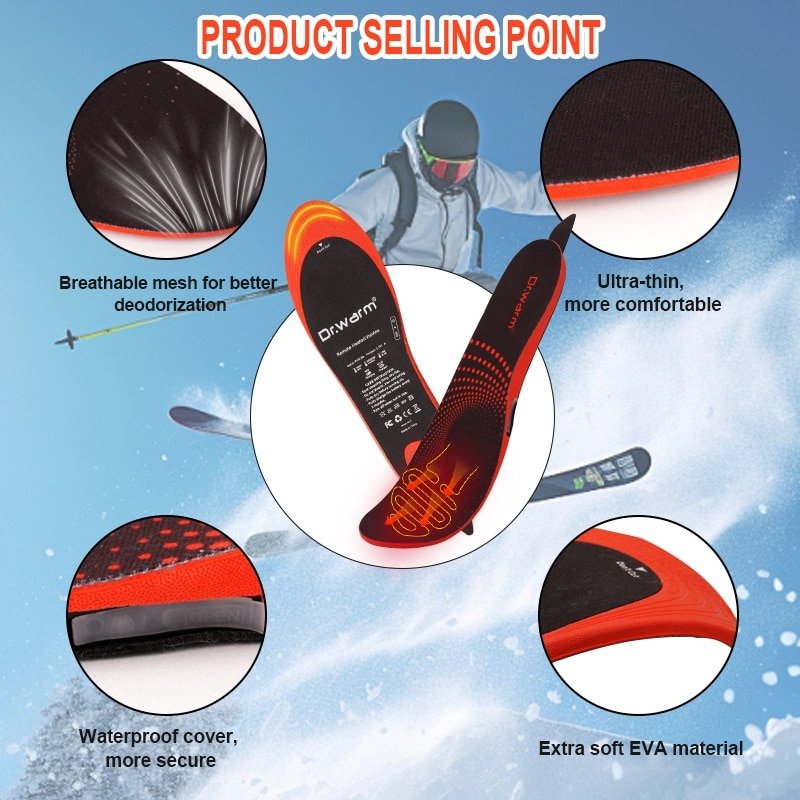
Major Cost Component #3 — Control Method and Smart Features
The manner in which users regulate the temperature has a direct impact on functionality and the structure of costs.
The simplest are basic manual switches which are least expensive. Remote controls bring on board the advantage of being wireless. The systems with the app connections and the use of Bluetooth will provide the accurate temperature settings, timers and tracks of usage but need the development of this firmware, the use of extra hardware and testing.
The engineering time, sourcing and assembly complexity of each upgrade layer, basic to app-controlled, also increase. Firmware and app compatibility imposes development cost particularly in cross-platform compatibility.
A common strategy is that brands targeting premium placement will include smart features, and a line of low-cost products will include manual although it will enable less expensive packages of private label heated insoles.
Major Cost Component #4 — Material Quality and Structural Design
The comfort, durability and heat retention depend on the insole base and overlay.
Basic EVA foam and offers standard cushioning at a reduced price. Multi-layer composites are made by using EVA together with insulating material to maintain warmth and upholding. Progressive designs would take the form of anti-slip bottoms, moisture-wicking topsheets and strengthened bonding to resist lessening flexing and laundry as well.
The structural reinforcements and lamination acts increase the processes and quality checks, increasing the cost but enhancing the life span of the products.
| Material Choice | Cost Level | Impact |
| Basic EVA | Lower | Standard comfort |
| Multi-layer composite | Medium | Better durability, support |
| Advanced insulation layer | Higher | Improved heat retention, longevity |
The quality of a material will provide less returns and complaints thus is a smart investment in the long-term performance of brands in the market.
MOQ and Production Volume Impact on Unit Price
The Minimum Order Quantity (MOQ) of heated insoles has a determining contribution to the per-unit economics.
Small runs with fixed cost There is low volume, but high fixed cost in tools, setting up and procurement of components and testing that is distributed in few units. With bigger orders, there is the ability to have economies of scale due to the ability to procure in bulk, to amortize the tooling, and to optimize the production schedule.
Prices can also be influenced by season in winter markets; low-production usually provides better rates. In the case of heated insoles factory China partners, larger unit prices decrease considerably on a large quantity, thus MOQs are usually several hundred to thousands of pairs.
Between scale breaks enable the brands to strategize the scaling process realistically.
Certification and Compliance Costs
Regulatory cost imposes an incremental cost particularly where it is battery-powered products.
The certifications related with CE, RoHS, FCC and UKCA include testing costs, paperwork and in some cases, third party audits by the laboratory. Additional costs are the lithium battery transportation compliance (UN38.3) and safety standards.
They are necessary to access the legal market in such significant markets as the US, the EU, and the UK. Any neglect or an underestimation of them can lead to shipment detentions, fines, or product recalls.
Hidden Costs Many Buyers Overlook
Senior sourcing teams are aware that first quotes often do not reflect all the costs. Some of the most disregarded factors entail:
- Battery aging and endurance testing – This takes time, but is very important in reliability.
- Rework on incomplete specifications – modifications in the middle of the production increases expenses.
- Redesigns on packaging – labeling and restriction of batteries are added.
- Shipping restrictions of lithium batteries, special handling and surcharges.
- Multi-sample iteration -Fit/Function Are typical of multiple sample modification cycles.
In the manufacturing realities, such realities are likely to become apparent during the production stage, where it is important to have effective communication, as well as seasoned partners.
Conclusion — Cost Reflects Engineering Depth, Not Just Materials
The manufacture of custom insoles is costly as it incorporates depth of engineering, safety, and industry. Brands which are cognizant of this pricing system are able to design sensible budgets, feature-focused key performance attributes, and create scalable hot product lines without affecting performance or regulatory viability.
When the emphasis is only made on the lowest unit price, this may cause a sacrifice on quality, safety, or durability. Budgeting strategically Balancing strategic budgeting and technology provides a superior way to achieve long term values in a brand and distributors of clothes in the heated apparel sector.