

Introduction — Why Temperature Control Systems Define the User Experience in Heated Apparel
The temperature control system is not merely a feature in heated clothing but rather the brain that keeps the user safe and efficient as well as the warmth applied in the appropriate way to the environment of the user. Being an electronics engineer who has worked in the heated gear industry over a decade, I have done the design of controllers of both workwear jackets and medical vests, and I have witnessed how an adequately designed system can turn an otherwise simple warmed up item into a cold-free companion. The comfort, safety, and battery life are all dependent on the controller controlling the power to the heating elements appropriately, whether it be avoiding overheating, maximizing the runtime or simply allowing the user to make the necessary adjustments without a hassle. The imprecise heat or depleted batteries are caused by the poor control, whereas the more advanced systems such as the app integration provide the precision, which feels like a natural response. Be it a heated jacket or glove temperature control system, knowledge of these systems allows a brand to know what garments works during the demands of the real world, be it an urban winter or the actual extreme outdoor activity.
The Three Main Temperature Control Systems Used in Heated Apparel
The fundamental principles of the operation of heated apparel controllers are three main systems, each with its inherent balance of simplicity, functionality, and technological advancement. Having tested prototypes on my factory floor, the following options can be offered to satisfy the needs of various user categories: basic to be reliable every day, remote to use hands-free, and app to be smartly customized.
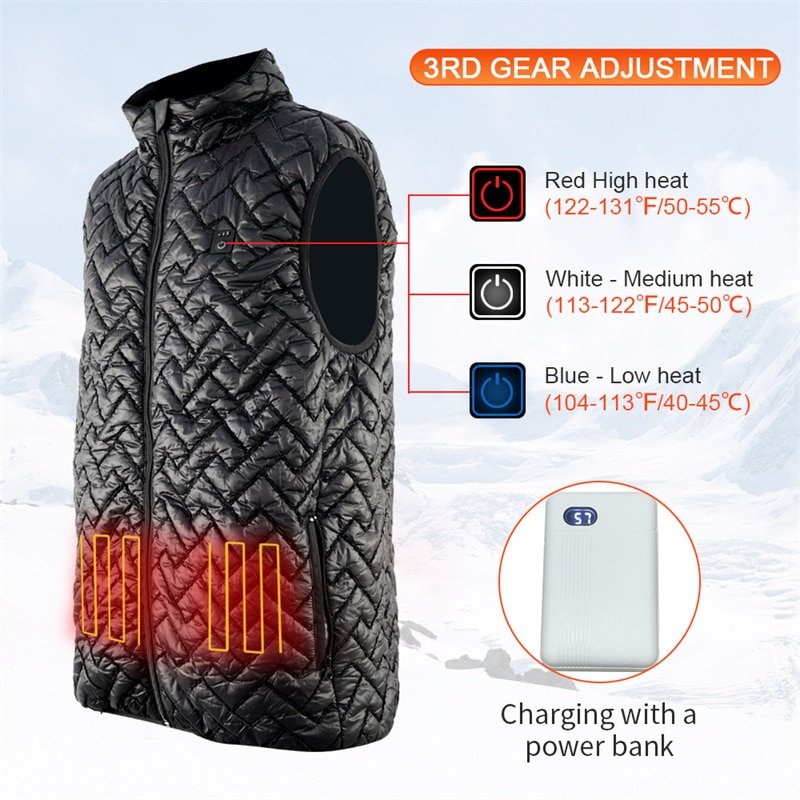
1 — Three-Level Button Switch (Most Common)
The three-level button switch has low / medium / high options that are easily accessible with one press button ideal in fast adjustments in mid-range gear such as jackets during commutes.
2 — Wireless Remote Control
A wireless remote control involves an electronic handheld one that is used to remotely switch, ideal where the garment is inaccessible, like in case of motorcycles.
3 — Smartphone APP Control
Smartphone APP control is associated with Bluetooth to provide granular settings, which are suitable when it comes to high-end products, and the user requires real-time monitoring and heat depending on the zone.
These systems place warm clothes in the range of low-cost basics to advanced technology wearables, selections being based on activity-switches to other simplicity in everyday wear, remotes to sports, and apps to technology lovers.
How Temperature Control Systems Actually Work (Technical Explanation)
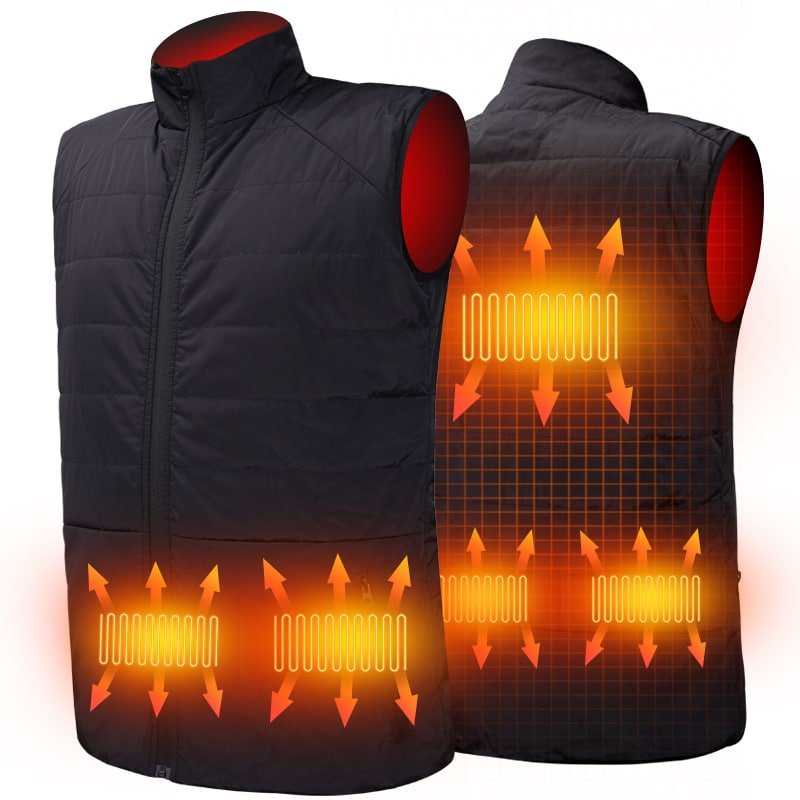
Getting deeper into engineering, temperature control depends on a small controller / PCB board which coordinates the power flow through a set of algorithms to keep the safe, constant warm. I have tweaked these to withstand the extreme conditions in my product designs of the heated workwear, where I have made sure that they withstand the voltage changes without breaking down their functionality.
The Controller / PCB Board
The PCB controller of the heated apparel is the main central, controlling the voltage and current, temperature and safety measures. It analyzes inputs of a user, be it a button, remote, or an app, and modifies the output to heating device, such as carbon fiber pads.
Voltage Step-Down or PWM Control
The majority of systems use PWM (Pulse Width Modulation) to pulse a variety of power at a high rate to simulate variable output: High at 100% duty cycle, medium at 60-70, low at 30-40. Or, constant voltage mode reduces battery voltage (e.g. 7.4V) to reduced levels, which gives both efficient regulation of heating elements without unnecessary draw.
Temperature Sensors (NTC / Thermistors)
Newer controllers also add NTC thermistors to provide real-time feedback to allow overheat overcurrent limiting (turning off at 60-70degC) and auto temperature balancing to allow the prevention of hotspots (particularly in multi-zone configurations).
BMS Safety Logic with Battery
The short circuit, overcurrent, over temperature and low-voltage cutoff protection is wired to the BMS which shuts down the system in case of anomalies, which is essential to me during my tests of equipment that will be used in moist or high impacts conditions.
Temperature Control System #1 — Three-Level Button Switch (Low/Medium/High)
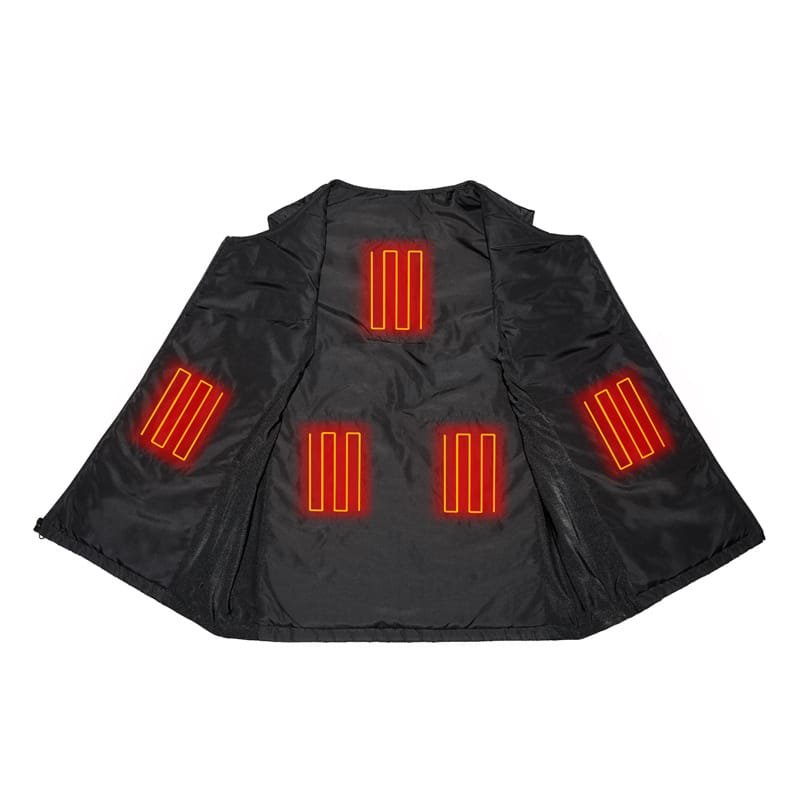
The workhorse of the heated apparel is the three-level switch heated gear, which is used in the countless jackets I have designed as reliable.
How It Works
The chest has a physical button, built in with modes, and the LEDs display the levels, with simple circuitry on the heating system control board that modulates power based on the button presses.
Advantages
It is easy and dependable, cheapest, simple to use on gloves, jackets, vests and can operate without phone, or accessories, and thus impossible to the users to use on gloves when prices increase.
Limitations
Offers are less accurate, less customizable, and has no high-level safety controls other than simple cutoffs.
Best For
Warm-up jackets, warm-up vests, warm-up gloves, and low-end, or inexpensive items, where getting the job done is more important than frills.
Temperature Control System #2 — Wireless Remote Control
Remote control heated jackets are convenient and not a complicated addition that is popular in my designs among active users.
How It Works
The wireless controller of the heated gear will be paired to the garment through a 2.4G / RF / infrared signal and the changes in mode will be directed to the receiver attached to the garment in most cases in the keychain size.
Advantages
Gloves can be used, enables use of heat without putting hands on the piece of clothing, and is used in sports and in motorcycles where the hands are kept on handlebars.
Limitations
The remote is easily lost, has a low range (10-20m), and depends on the stability of battery pairing which may fail in the areas of high interference.
Best For
Heated gloves, heated insoles, and socks, and on-the-go heated clothing available to motorcycles.
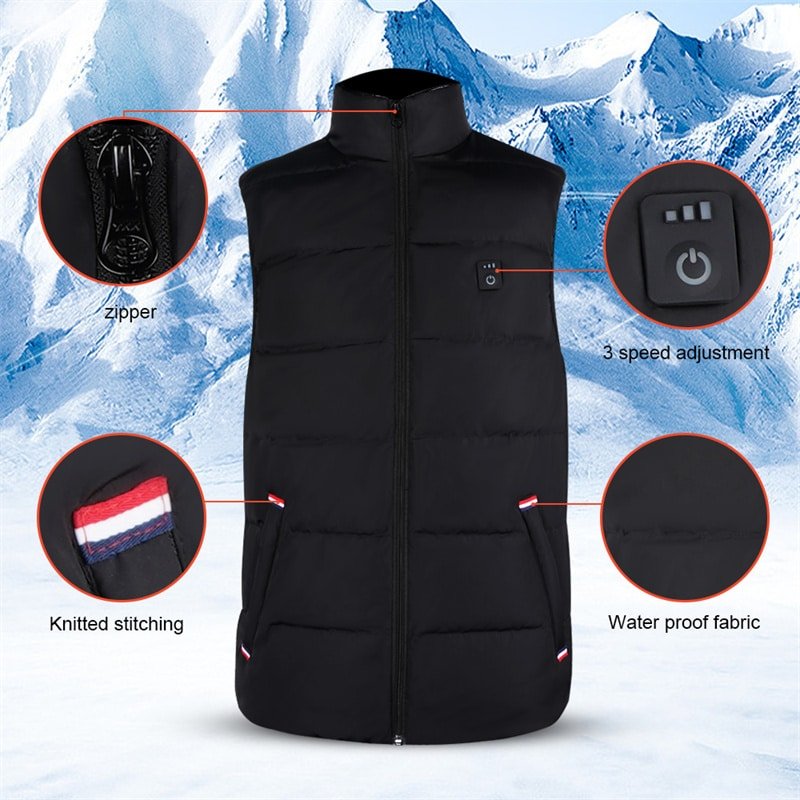
Temperature Control System #3 — Smartphone APP Control
To take the state of the art control, the APP control heated clothing uses mobile technology, which I have applied in the elite lines to control the user feedback accurately.
How It Works
The app connects to a smart heated jacket APP features controller using Bluetooth Low Energy (BLE) allowing remote control and data transfer.
Advantages
It has multi-zone independent control, real-time temperature display, accurate percent power adjustment, firmware and safety upgrades, fits perfectly in the premium brands that need to integrate with an app ecosystem.
Limitations
Most expensive, will need custom electronics, phone will use more batteries and must be eligible to be certified with Bluetooth.
Best For
High quality warmed jackets, multi-zone vests, medical warmed clothing, and smart wearables of the lifestyle where data-driven warmth is used as a defining feature.
Performance Comparison — Which Temperature Control System Is Best?
A comparison of these in both lab and field tests which I have done showcases a usability-technology trade off.
Ease of Use
Switch > Remote > APP–Switches are easy to use at any age; apps have to be configured.
Temperature Precision
APP Remote Switch–Apps have 1degC steps; switches are limited to coarse steps.
Reliability
Switch > Carbon Fiber based remote systems > APP-Switches are less prone to fail; apps are reliant on connectivity.
Cost
Switch Remote APP-Switches cost little; apps bloat 20-30%.
How Control Systems Affect Battery Life and Heating Performance
The controller directly affects efficiency-I have tuned systems to add to the cold weather shooting time.
Power Regulation Efficiency
The efficiency of PWM is determined by the controller chipset; high quality controller chipsets will reduce losses to 85-95% transfer.
Voltage Compatibility
5V works with simple switches under light heat, 7.4V is used to operate remotes effectively, 12V is used to improve applications under heavy usage, and battery voltage control is needed to control heated apparel.
Heat Stability
More stable temperatures = better controllers, and sensors will avoid the situation of different weather.
Choosing the Right System for Each Product Category
System fit is dependent on garment-based on my prototype testing of different lines.
Heated Jackets
APP or switch by tier–apps in for fashion-forward, switches in everyday.
Heated Gloves
Remote or switch of the temperature settings on heated gloves, which are prioritized towards dexterity.
Heated Vests
Switch or APP to add versatility.
Heated Socks & Insoles
Remote control suggested in adjustments that would be difficult to reach.
Industrial / Workwear Heated Gear
Tough environment high-reliability switch system.
Medical Heated Apparel
APP to provide accuracy to therapy.
OEM/ODM Engineering Considerations
In OEM projects that I have been in control, the build depends on the choice of controller.
PCB Layout & Heating Zones
The more the zones the more advanced control; there are up to 6 apps that can be used autonomously.
Waterproofing Requirements
Essential for gloves and jackets, and IPX4 + seals around the buttons or receivers.
Certification Requirements
CE / FCC / Bluetooth / RoHS / UN38.3 are used to guarantee compliance globally.
Compatibility With Heating Elements
Film responds quickly → great for APP; carbon fiber suits switch & remote control for steady output.
Common Mistakes Brands Make When Selecting Control Systems
Consultations suggest that one should not use APP control on low-budget products (complicates too much), imprecise controllers (heat will be unstable), neglecting Bluetooth certification (no sales), placing buttons on awkward locations (annoying to users).
Final Recommendation — Which Temperature Control System Should You Choose?
Finally, choose when needed: Switch = most reliability, least expensive due to the general appeal, Remote = best when it comes to gloves/socks in active use, APP = best when it comes to higher-end fashion or multi-zone performance wearables where technology enhances the experience. Personally, in my engineering opinion, begin with the user scenarios, prototype in a real situation, and you will create a piece of heated clothing that provides your client with the same amount of warmth, safely, and devoid of gimmicks.