
Whether you choose a good OEM heat clothing manufacturer or not, in China, this can make or break the success of your product, given that the market is booming all the way to 2026 with market demands of high-tech and safe heated clothing. My experience sourcing and developing heated apparel lines in European and North American brands over 15 years has shown that it is essential to focus on factories that have experience in electronics integration, battery safety, and quality control, otherwise the heating will not be of high quality, compliance will be violated, and even a recall will be the result of overheating. Manufactured products meeting certifications such as the CE, FCC, RoHS, UL, and UN38.3 cannot be freely sold in the market, and knowledge of the logic behind manufacturing prevents such product errors at a very high price. This guide begins with the reasons why the right partner is important, moves into the criteria of evaluation, starts the comparison of heating technologies, the description of the OEM/ODM process, the pitfalls, and concludes with the communication tips, cost breakdowns, and a final checklist. Heat jackets, or heat gloves: whatever you are making, these tips will guide you through the big manufacturing world of China to find safe, quality items that will distinguish themselves in the winter sports markets, working wear markets or even day to day markets.
Why Choosing the Right OEM Heated Clothing Manufacturer Matters
The warmed apparel sector is already in the boom with an estimated income of 2.5 billion world wide by the year 2026 as per statista, however, this may end up in tragedies when one collaborates with the wrong factory such as inability to regulate the heating, the battery bursting, or even the custom department rejecting it. A trusted heated apparel OEM/ODM can guarantee that your products are safe, work in extreme temperatures and can be scaled-up with demand- think of having a ski brand, whose gloves were overheating due to bad wiring, causing a costly recall and negative publicity. Above all, safety: It is certified that the batteries will not leak or short-circuit, heating components will spread the heat evenly, and the materials will not be damaged by water without losing their breathability. As practice shows, factories without their own R&D tend to compromise by heating elements made of carbon fibers or lithium batteries, which results in unreliable operation or even non-compliance and entry barriers to such markets as the EU or the US. Performance is closely related to user trust-poor quality gear does not work in actual situations such as a jacket becoming cold halfway through the ride of a motorcyclist. The selection of a strong QC and export history factory will help avoid risks, minimize lead times and access the efficiency of China to produce at a low cost. Finally, the appropriate partner makes your dream come alive with battery-powered heated clothes ready to enter the market that will increase brand loyalty and sales.
Key Factors to Evaluate When Choosing an OEM Heated Clothing Manufacturer in China
To assess manufacturers, it is necessary to look deep into their potentials, and China has thousands of them, yet only the fraction of them succeed in producing heated gear because of the integration of textiles and electronics. These are logical criteria that can be used to filter.
Technical Capability
Find factories that have specialized engineers to do the heating system integration. They are supposed to do the work of custom PCB design of temperature controllers and element mounting. Request case studies: One of them could be how they made carbon fiber heating elements even in jackets with 120-140degF and no hotspots. It is something that is common in factories in Dongguan when it comes to my projects, just that they come with in-house labs where voltage testing is done.
Manufacturing Experience & Specialization
Require 5 or more years in heated clothing, not in clothing in general – specialization of either heat jacket manufacturer or manufacturer of heated gloves China will show they know wiring flex to provide mobility. Check assembly lines: Specialized electronic assembly prevents contamination. One of the brands which I would recommend was to avoid a general factory that would not do the insulation of gloves properly and therefore the sweat would accumulate.
Testing & Safety Standards
Demand extensive QC: Tests of endurance (10,000+ cycles) of heating elements, battery drop tests, and waterproof tests. Good factories have reports, which are provided by third-party tests since these are labs such as SGS.
Certifications: CE, FCC, RoHS, UL, UN38.3
These are requirements: CE in EU electrical safety, FCC in US emissions, RoHS in material restrictions, UL in general integrity and UN38.3 in battery transport. Your products of electric heated clothing factory will be seized without them. A 2024 project had a factory that missed shipment due to missing UN38.3 verify originals.
Material Selection & Quality Control
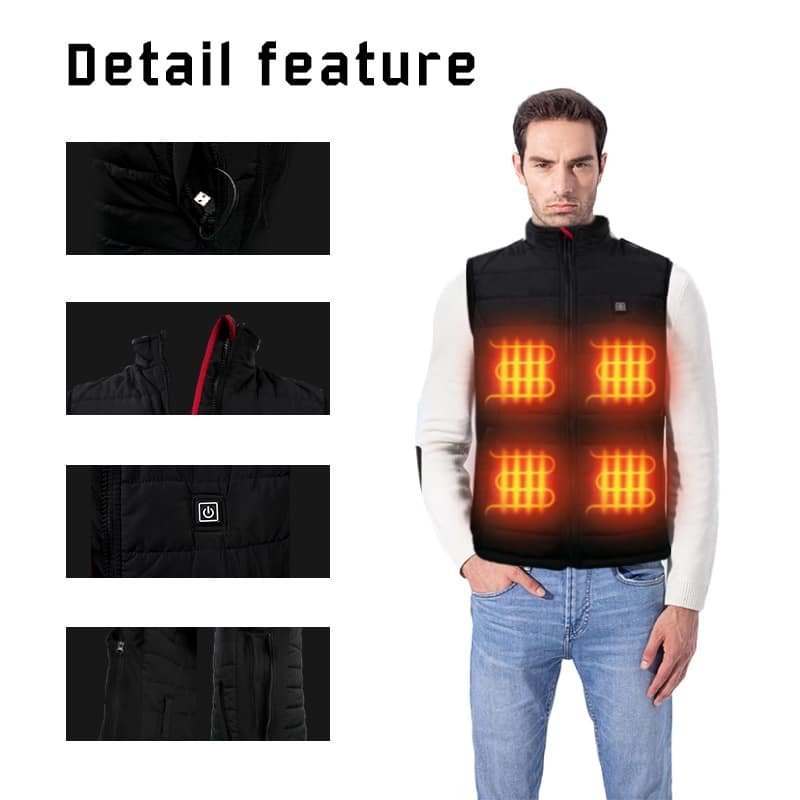
Best factories obtain Thinsulate or Gore-Tex equivalents insulation, and IQC on incoming materials. Search AQL sampling on production. In the case of custom heated clothing supplier, the aspect of waterproofing will be maintained during rain tests.
OEM/ODM Customization Capabilities
Vigorous prototyping R&D-ODM-design your own, OEM. Assess MOQ adaptability (300-1000 units) and lead times (8-12 weeks). One of the factories that I worked with in Shenzhen developed vests controls that were customized, reducing the dev time.
Small MOQ vs Large-Scale Production
In the case of startups, low MOQ (500 units) is desired to test markets, and high-capacity line (10,000+/month) is preferred scale-based. Negotiations during off-season reduce thresholds.
Delivery Time & Supply-Chain Stability
Evaluate component sourcing- batteries of suppliers are not sluggish. Vertical integrated (in-house PCB) factories are more stable.
Heating Technology Comparison: Which One Should Your Manufacturer Use?
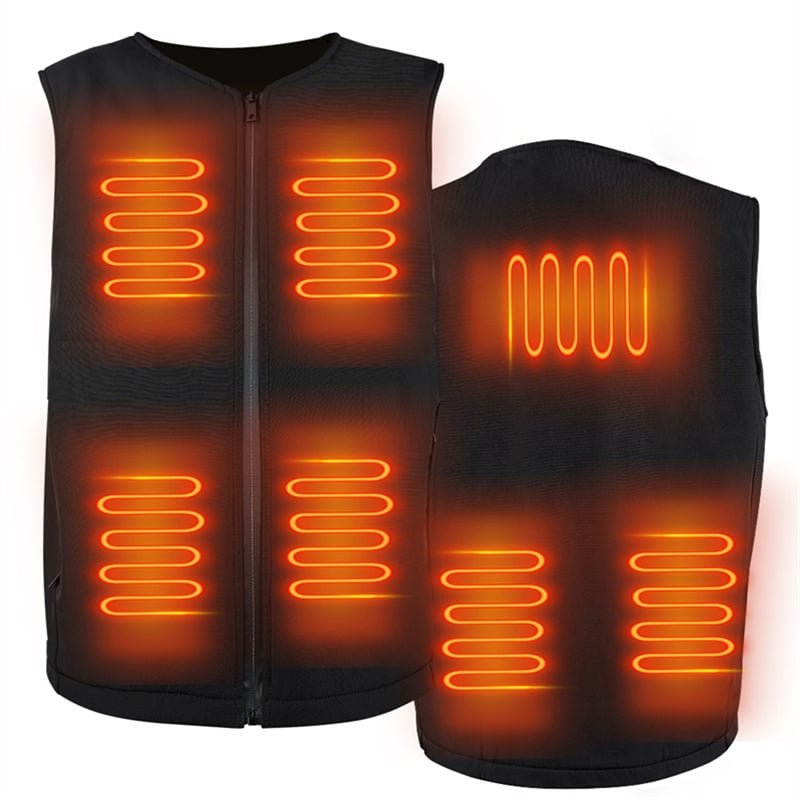
Performance is determined by heating tech–your factory is important in this regard. Carbon fiber heating fibers are thin and smooth, which are suitable to gloves (advantages: can withstand 100,000 bends, disadvantages: cost per unit costs 5-8). Graphene (heating film) is lightweight and it is efficient to use in jackets (advantages: heats quickly, disadvantages: brittle in impacts, $6-10). Basic vests can be heated using wire (advantages: localized heat, disadvantages: stiffness, easily broken, 2-4 dollars). Test against: Carbon in dynamic sport (even 120degF in gloves), film in slim work (efficiency 130degF in socks), wire in low end (basic 110degF in pants). A China good heated clothing manufacturer provides all, and even tests to determine uniformity. Carbon, in comparison to wire, was better than wire in flex, which has no hotspots.
What to Look for in a Factory’s OEM/ODM Process
An effective process means a smooth development–see these steps. Technical consultation: Factory analyzes your requirements and makes feasibility evaluation, recommending some changes such as 7.4V batteries to balance. Prototype development: 2-4 weeks on samples, heat (e.g. 100-140degF ranges) testing. Sampling: Multi-cycle fit/function-check wiring durability. Electronic: Overheat (shuts off at 150degF), battery life (4-8 hours). Quality control: AQL tests, aging tests. Mass production: Scaling production lines with in-line QC. Experience shows that factories that have ISO9001 adhere to this reasoning, which minimizes defects.
Common Mistakes Buyers Make When Choosing a Factory
Buyers do not pay much attention to the depth of R&D and do not result in good customization such as a brand receiving rigid wire instead of flexible film, which results in the failure of gloves. Lack of consideration of certifications will lead to shipment being blocked- one client lost 50,000 on non-UN38.3 batteries. Abstract specifications result in incompatibility, such as low temperature in extreme sports. Price selection will encourage QC reduction which will lead to uneven heating. Failure to audit causes traders to claim to be factories, procrastinate repairs. Visit or video tour in sourcing of heated clothing.
How to Communicate Specs Clearly with a Chinese OEM Factory
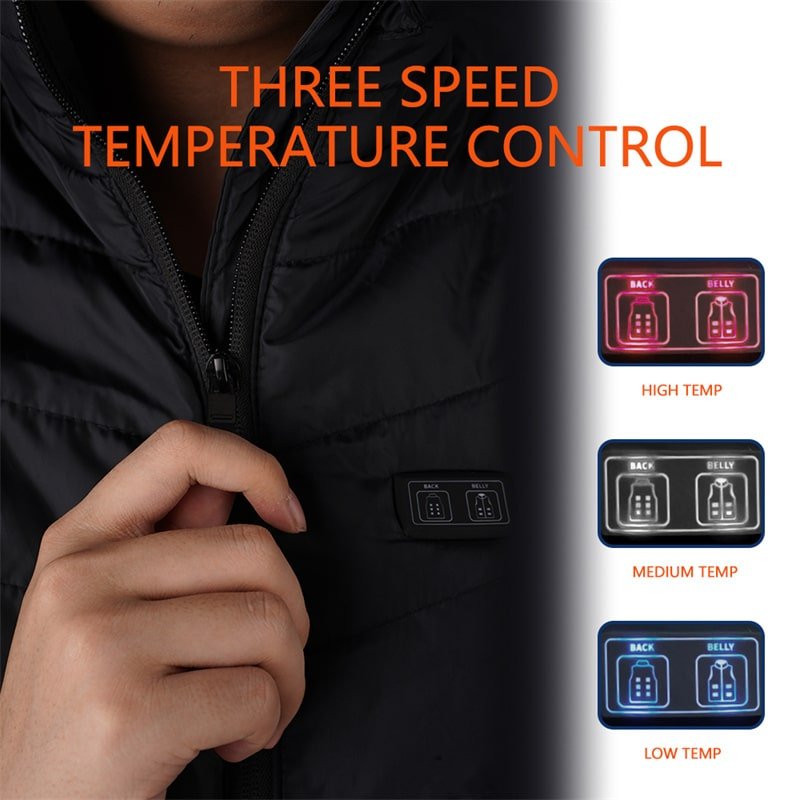
Well defined specifications avoid confusion- use a tech pack that contains drawings. Heat temperature settings (low 100degF, high 140degF), battery capacity (2000-5000mAh, 7.4V), type of fabric (nylon softshell), mode of control (app or remote). Provide examples or sources. In the case of heated apparel OEM/ODM, zones (fingers on gloves) and tests (flex 5000 cycles) must be specified. Call translators, written English papers. This prevented revisions in projects.
Cost Structure: What Influences OEM Heated Clothing Pricing?
Prices are between 20-80/unit which are component led. Heater (carbon fiber $5-10), batteries (Li-ion $8-15), insulation/fabrics (nylon+Thinsulate $10-20), controls (app $10-15). Certifications increase start-up costs by $2-5K. MOQ lowers per-unit (500 units $50, 5000 $30). Custom (ODM $5K+) labor and tooling. In the case of heated jacket manufacturer, complicated areas increase by 20 per cent. Negotiate with volume.
Final Checklist for Selecting the Best OEM Heated Clothing Manufacturer
Check the following action plan:
- Technical Capability: Internal R&D? Heating/battery expertise?
- Experience: 5 or more years in heated gear? Client references?
- Certifications: CE/FCC/RoHS/UL/UN38.3 checked?
- QC System: AQL testing? Lab equipment?
- Individualization: OEM/ODM flexible? Low MOQ options?
- Production: Capacity is equal to needs? Lead time realistic?
- Communication: Engineers on hand? Clear specs process?
- Cost & Terms: Open breakdown? Payment flexible?
- Audit: Factory visit planned? Supply chain stable?
This is a sourcing checklist that is part of my sourcing toolkit that has assisted in identifying partners of durable safe heated apparel.