
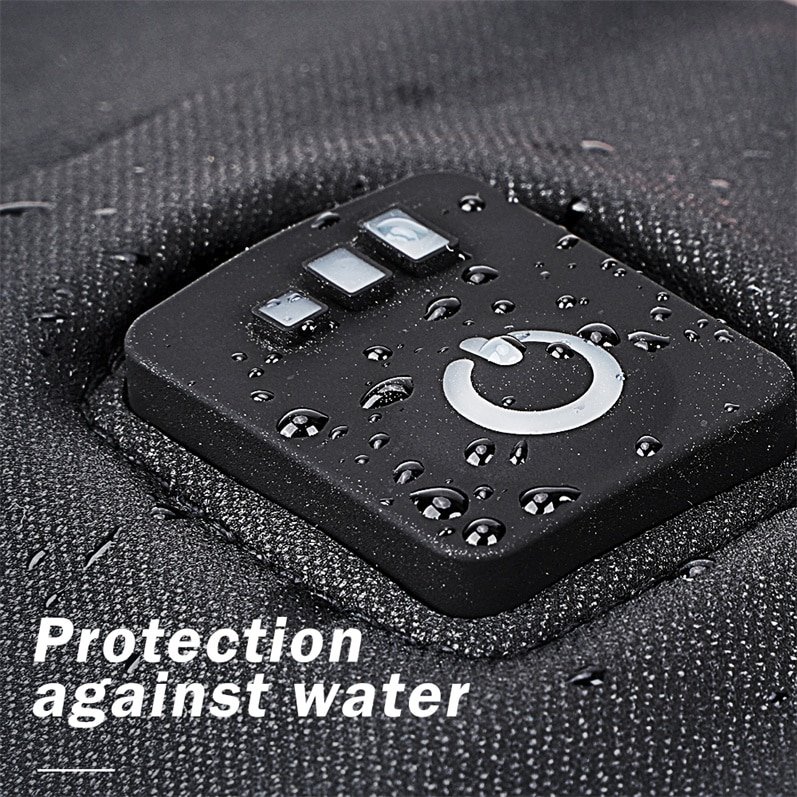
How Waterproof Are Heated Gloves and Jackets?
Based on experience in trying heated clothes during snowstorms and downpours, the majority of good waterproof heated gloves and jackets have good protection against light snow and light rain, generally IPX4-IPX6 of the electronics. It implies that they will not short when exposed to splashes, sweat, and wet snow because of sealed seams, breathable membranes such as TPU or Hipora and leather-like battery compartments. Nevertheless they are not quite waterproof, they are water-resistant mostly, always verify certifications such as CE, RoHS, FCC, and UL so as to keep the heating elements and batteries dry and safe under the conditions of the real world such as skiing or construction shifts.
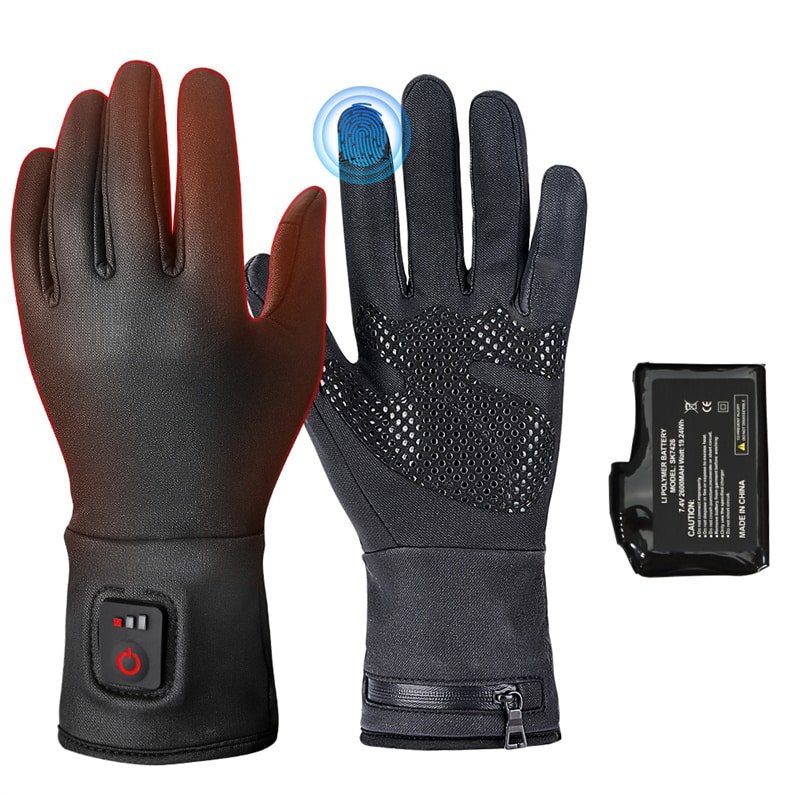
Why Waterproofing Matters for Heated Clothing
Heated clothing can become a curse in winter unless it is well waterproofed. The snow laden on gloves on a ski run melts down to water, and can cause the short out of wiring or corrode batteries. The same happens to jackets on a motorcycle ride in the rain which may lead to their malfunction during the ride when you need them most. Internal moisture such as sweat used during intense activity such as hunting hikes can accumulate and cause clamminess or electrical problems when the equipment is not breathable.
This has been witnessed in employment sites where employees working in cold rain use warmed jackets to work outdoors because bad waterproofing causes them to work less or even more so, safety risk such as getting shocked when they touch something that is exposed. To ensure battery safety, water intrusion is capable of causing shorts, which low-voltage systems are not supposed to be connected to. Finally, waterproofing will keep the heating components, increase battery life and avoid frostbites by keeping a uniform warmth in cold, wet areas.
How Waterproofing Works in Heated Gloves and Jackets
Heat is one of the issues that are not simply covered by waterproofing in heated gear rather it is a multi-layered measure that how the sensitive electronics are safeguarded at the same time enabling breathability. This is the way it all falls together.
Waterproof Membranes (e.g., TPU, PU, Hipora, Gore-Tex-style)
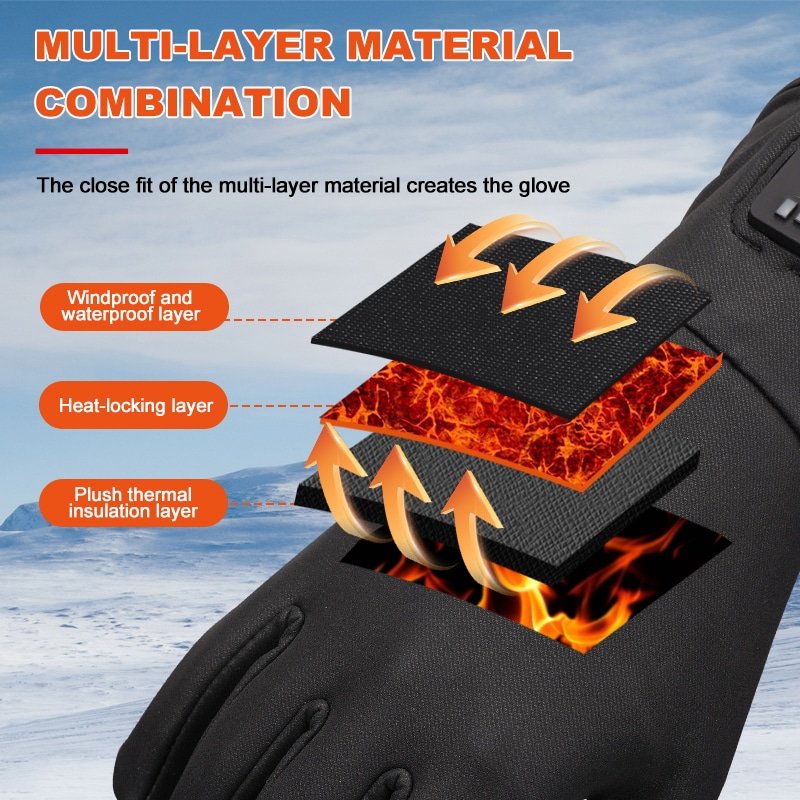
These are the thin, microporous films, which are the foundation blocks of the waterproof heated gloves and jackets allowing the vapor to pass through but not liquid water. TPU and PU are used due to their versatility and affordability, which work best in gloves whereby you require dexterity to hold ski poles. Equivalent to Gore-Tex or Hipora is a feature that provides better breathability, which is essential in jackets during the high output activities such as snowboarding to prevent internal condensation.
Practically, one day on a wet hunt in wet woods, I fired through a wet fog in a Hipora-lined heated jacket I was comfortable in, but never became hot. Pro tip: Find membranes with a hydrostatic head rating of 10,000mm+ or higher the pressure that can be withstood when sitting in snow does not leak out.
Outer Shell Fabrics
The outer receives the initial strike of elements hence nylon, polyester or leather shells with DWR (durable water repulsive) finish sheds water. Heated jackets with soft shells are used in skiing and provide windproofing, and leather is used in gloves to provide abrasion resistance to handle gear.
I have put on nylon-shell heated gloves on snowy construction days; the coating keeps off mud and rain but after several days the surface gets worn, use sprays to keep them long. Polyester mixtures add shininess to snowproof heat clothes since they dry very fast, and they do not tear easily.
Waterproof Zippers & Seam Sealing
Sewing is the keyhole–the stitching is a goose to the river-waft. This is prevented by heat-sealed tapes or weld seams on waterproof heat jackets, and includes additional barriers provided by rubberized zippers.
During a snowmobile expedition, unstitched seams of cheap clothing allow meltdown into the garment, causing death half way through. The YKK Aquaguard zippers are employed in quality models, my trust is in them during storms when so much rain falls inside.
Internal Heating Components Protection Layers
Heating elements like carbon fiber need insulation wraps—silicone or PVC coatings shield wires from moisture. Fleece or Thinsulate linings absorb minor sweat, keeping components dry. Our advanced heating element design incorporates these protective layers to maintain performance even in wet conditions.
These layers are used in expertise-based designs in the event that the outer protection fails slightly, a low voltage DC system (typically 7.4V) should not be in danger of causing shocks. I have cut water-stained pairs; shielding has been done correctly where corrosion may cause deterioration with seasons.
Battery Compartment Design
Batteries are exposed and the compartments have rubber flaps, Velcro, or magnetic fasteners to prevent intrusion. IP-rated openings withhold splashes and out of accidental exposure, some have drainage holes.
During rainy delivery runs, a well-sealed pocket in heated jackets kept batteries functional—authority from UL testing confirms these designs reduce short-circuit risks. Our custom battery solutions feature robust, IP-rated compartments engineered for real-world wet weather use.
Understanding IP Waterproof Ratings for Heated Apparel
IP ratings are a demystification of the protection levels Ingress Protection is the name, and the second decimal point is dedicated to water (where X indicates that no dust rating is required). In the case of heated equipment, IPX4 implies that the equipment is splashproof on all sides, and it can be used in light rain or snow. IPX5 is the low pressure jet (such as hose spray) and IPX6 the high power jet – Uncommon in clothing but common in rough work clothing.
The majority of snow-resistant snow gloves are heated to IPX4-IPX5, resisting sweaty hands or powder dumps but not water immersions. Heated jackets can say IPX4 on electronics, meaning that they are snowproof on winter sports, and not deep puddles. In practice, IPX4 successfully enhanced my equipment to a hike into an icy blizzard although exceeding the ratings is prone to fail–only use the levels defined as certified according to CE and FCC regulations.
Are Heated Gloves Really Waterproof? (Detailed Explanation)
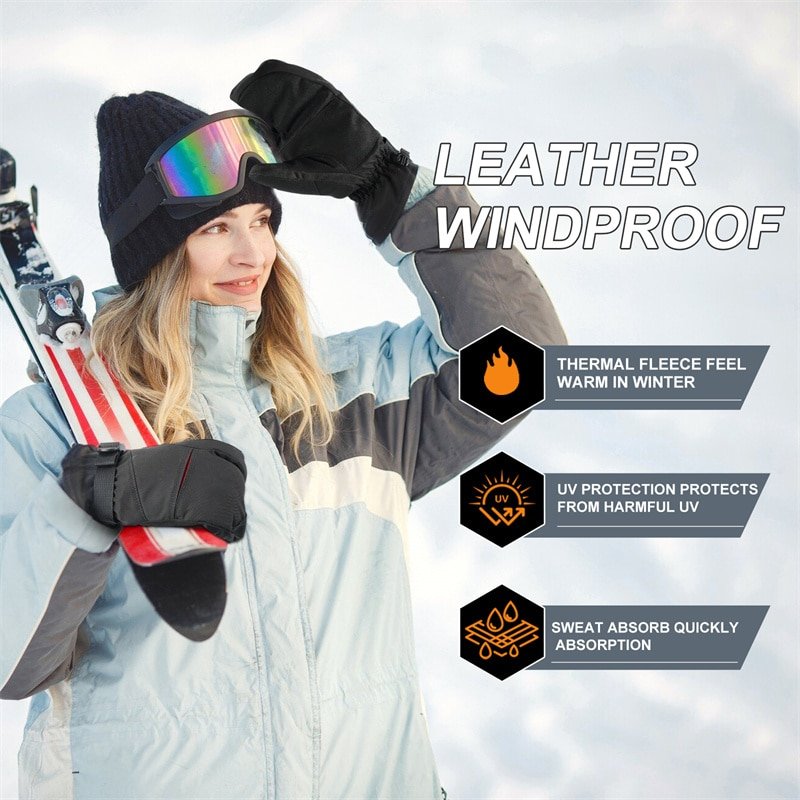
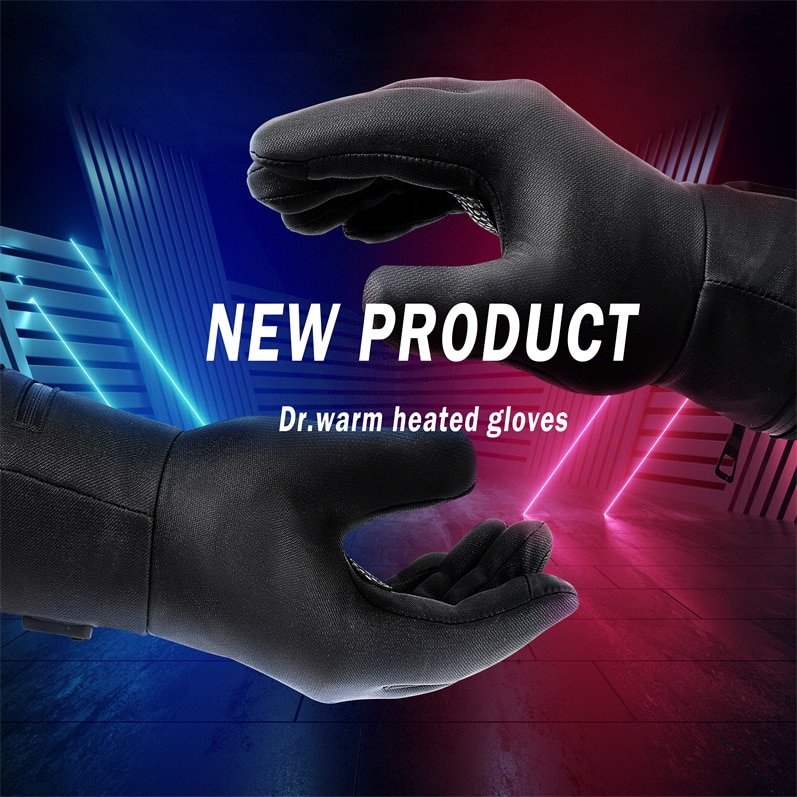
True waterproof heated gloves are rare; most are water-resistant, handling snow and light rain but not prolonged soaking. Waterproof vs water-resistant boils down to seams and membranes—full waterproof means taped seams and 20,000mm+ ratings, while resistant repels but eventually wets through. Our custom heated gloves are built with these precise waterproofing standards for reliable performance in snow and rain.
Ordinary glove membranes such as PU will keep the palms dry when they are used in ski grabs, but the snowproof properties are most evident in the powder, I have been using them to carve turns without leaking. Merino wool pull liners are used to keep the heat out; they carry the sweat away and a Thinsulate layer is these to help insulate even when wet. Fingertips used on a touchscreen can, however, easily compromise seals; threads of conductor can, unless properly coated, allow traces to be left behind. In winter sports, warm-up gear should be as hybrid as possible with a balance of grip and protection.
Are Heated Jackets Waterproof? (Full Breakdown)
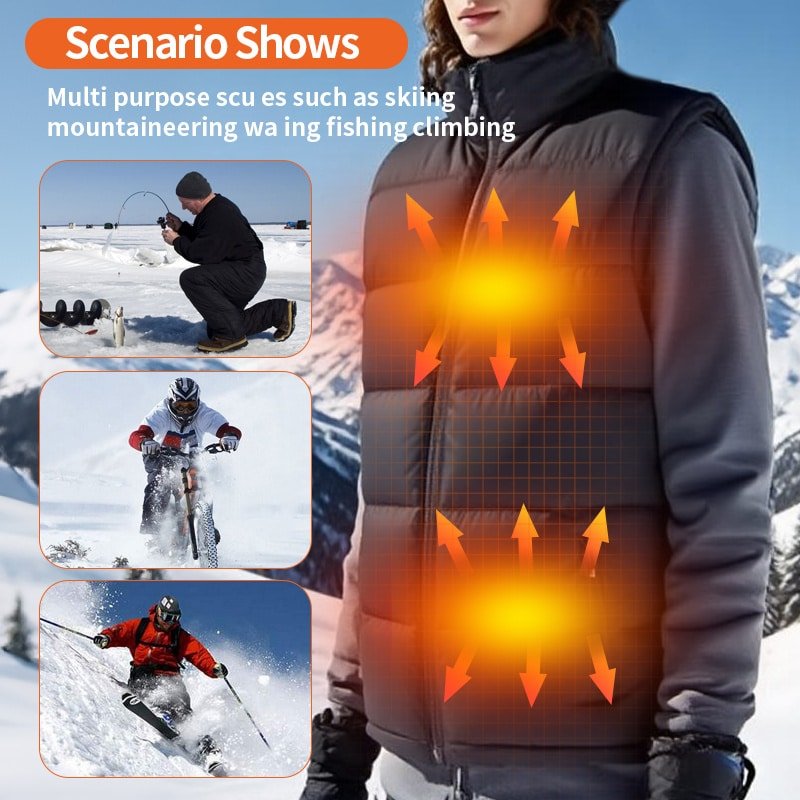
Heated jackets vary widely—fully waterproof models use laminated membranes and sealed construction, ideal for skiing in wet snow, while softshell versions prioritize breathability over total impermeability. Explore our custom heated jackets to see how we balance waterproofing, breathability, and heating performance for different winter activities.
Based on the IPX4 electronics, most skiing hot jackets are weather-resistant and can withstand hours of rainfall but cannot be submerged. Based on experience working in wet workplaces, softshell thermal jackets dry, but require DWR washes, and full-waterproof puffer coats are much warmer in cold standing still compared to when they are in motion. Balancing it is the key; RoHS compliance means materials that are environmentally friendly and add fine materials to longevity.
Safety Concerns — Can Water Damage Heated Clothing?
Low voltage DC (5-12 V) systems reduce the risks of shocks – much less dangerous than AC, though water can also cause corrosion of wires or short circuits by batteries, and often causes severely burnt clothes. Elements are covered with waterproof insulations such as silicone sheathing, and batteries have over-current protection that will prevent fires.
In case of water intrusion, certified products (CE, UL, RoHS, UN38.3) can have fail-safes: Short-circuit interruptions and sealed cells are minimizing the risks of explosion. I have put test pairs into water; worked ones came dry useful, but poor ones puffed. Reliability in this case: You can rely on it, provided that you use properly, but never leave to dry without a full airing.
Best Situations for Waterproof Heated Gear
In skiing and snowboarding, waterproof heated gloves and jackets are a requirement, fresh powder and melt without collapsing as long as the run continues throughout the day. Snowmobiling requires snowproof heated attire in events of high speed wind and spray, which maintains warmth in the extremities.
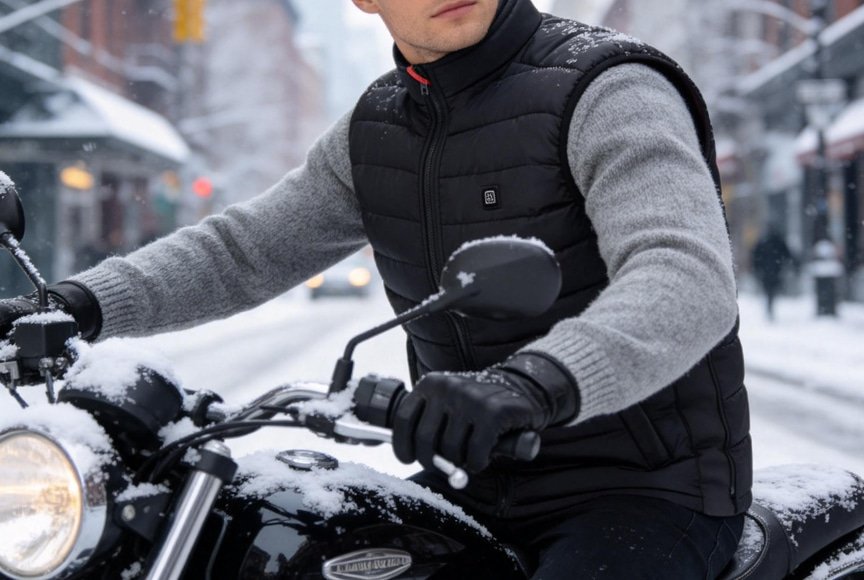
Hunting in wet forests? Waterproof clothes will keep the chills away in case of lengthy waiting period. Splashing on the road requires complete jackets on the riders of the motorcycles during winter rainy seasons. Outdoor constructions or deliveries like construction or delivery workers will have tough, IPX5-rated models that withstand mud and drizzle and keep warm. The appropriate equipment will make bad situations good in such situations.
Common Myths About Waterproof Heated Clothing
One megafable jamison: “Waterproof you can submerge it- no, not even IPX7 is to be used in swimming, it is splash-proof at best on clothing. Another: “Hot clothes cannot be wet at all”–high-end garments are fine in terms of dealing with moisture as long as it is dried. People believe that the more heat, the less waterproof, however, heating components are not connected with the output. Lastly, Snowproof is equal to waterproof- Snow does not melt so fast, but it is still rated.
Tips to Improve Waterproof Performance
Always keep that DWR finish with spray such as Nikwax after the washing–I have put back stained jackets season after season using this method. Apply seam sealing tapes where needed. Wash by hand: Take out the batteries, take some mild detergent, dry them by air, no dryers, dryers might melt seals.
Keep cool and dry – not too humped up; wear jackets loosely. Pre-wear check zippers and pockets- replace flaps when ripped. These practices ensure that waterproof heated gloves and jackets remain as new.
Final Recommendation
Expect heated gloves and jackets to be reliably water-resistant for most winter needs, but not indestructible—IPX4-IPX5 covers snow and rain well, with fully waterproof options for extremes. Choose based on activity: Snowproof for skiing, breathable for work. Look for CE/UL certifications, TPU membranes, and sealed designs. Our OEM/ODM heated apparel solutions deliver exactly these tailored waterproofing features for your brand’s specific requirements.