

The decision in favor of either OEM or ODM heated insoles is a matter of choice of a fundamental trade-off: OEM offers more control over product design and differentiation but requires more specifications and more direct involvement, whereas ODM offers faster times to market with less complex upfront demands because of the standard of the proven design.
The distinction is a common misv-perception among many buyers, which is that it is superficial, e.g. adding a logo, when, in fact, OEM and ODM represent very different development tasks, engineering depth and risk levels.
OEM is suitable when the brand needs to differentiate its products and offer technical customization whereas ODM can be applied when the brand needs to move quickly and has limited product development needs.
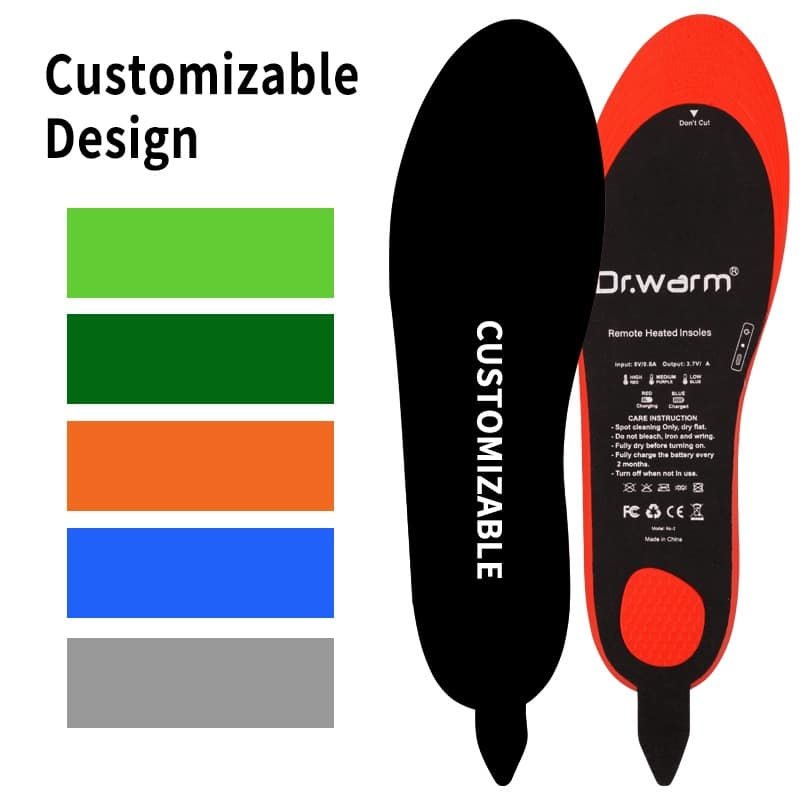
Understanding the Core Difference Between OEM and ODM
The main difference is about the owner and the driving force of the product design process.
In OEM heated insoles, the brand makes detailed specifications, such as heating element map, battery capacity, temperature zones, controller logic, and materials, and manufacturer makes precisely to that specification. This model puts the brand squarely with design ownership.
In ODM heated insoles, the manufacturer provides ready designed insoles (which are usually based on their existing platform designs) that the brand can choose, make a few alterations (such as branding, color or small features modifications), and sell under their brand.
Here is a clear comparison:
| Factor | OEM Heated Insoles | ODM Heated Insoles |
| Product design ownership | Brand-controlled | Manufacturer-provided |
| Customization flexibility | High | Moderate |
| Development time | Longer | Shorter |
| Engineering input | Brand-led | Manufacturer-led |
| Risk level | Higher (if specs unclear) | Lower (proven design) |
This structural variation has a direct impact on all factors such as prototype life clubbing to the unique final products in the competitive temperature footwear industry.
In case of brands that seek to choose between customized manufacturing solutions, OEM heated insoles solutions provide the framework to achieve precise technical outcomes aligned with specific market needs.
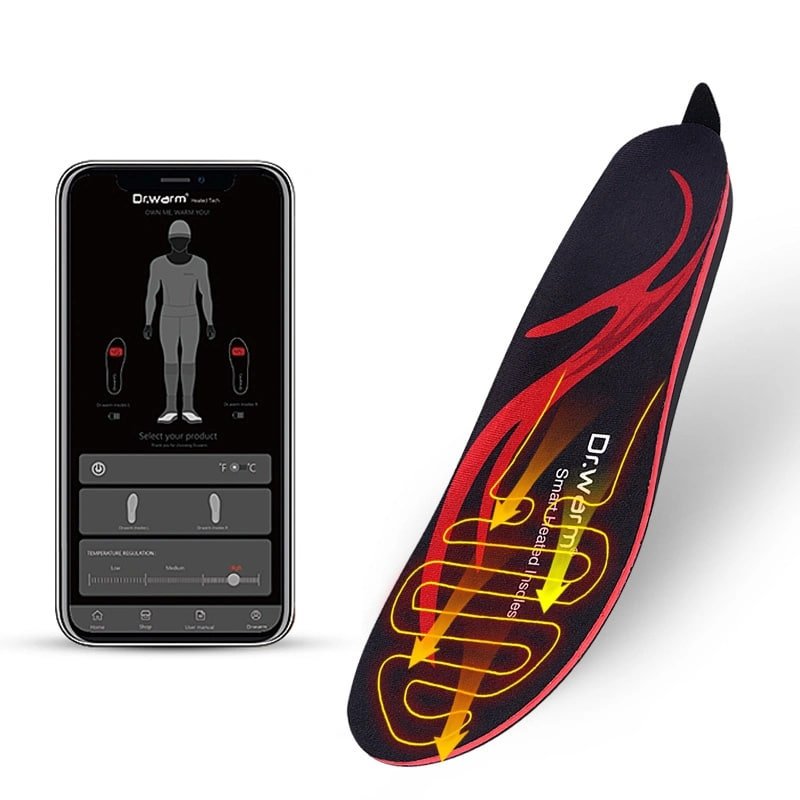
When OEM Heated Insoles Are the Better Choice
OEM is better when a brand wants to develop indeed differentiated heated insoles that can be singled out in an already heavily-saturated category.
The most advantageous brands are those that seek specialty heating areas (forefoot and arch warming, and unique battery capacity extended operating capabilities), personalization of battery capacity, built-in apps (emphasizing temperature regulation), or special material (use in winter work, during extreme cold, or in high performance skiing).
OEM allows:
- Use all-customized heating structure layouts to maximize the warmness distribution without hot spots.
- Custom-made battery modules of particular voltage, capacity and safety.
- Special temperature feedback, such as multi-stage heating, or variable feedback.
- Premium positioning and customer loyalty support features that are brand-exclusive.
OEM can be an interesting prospect especially to established brands, which possess product know-how (or R&D alliances) whose intellectual property rights can be safeguarded over extended periods and it allows the company to differentiate products with a uniform approach across product lines.
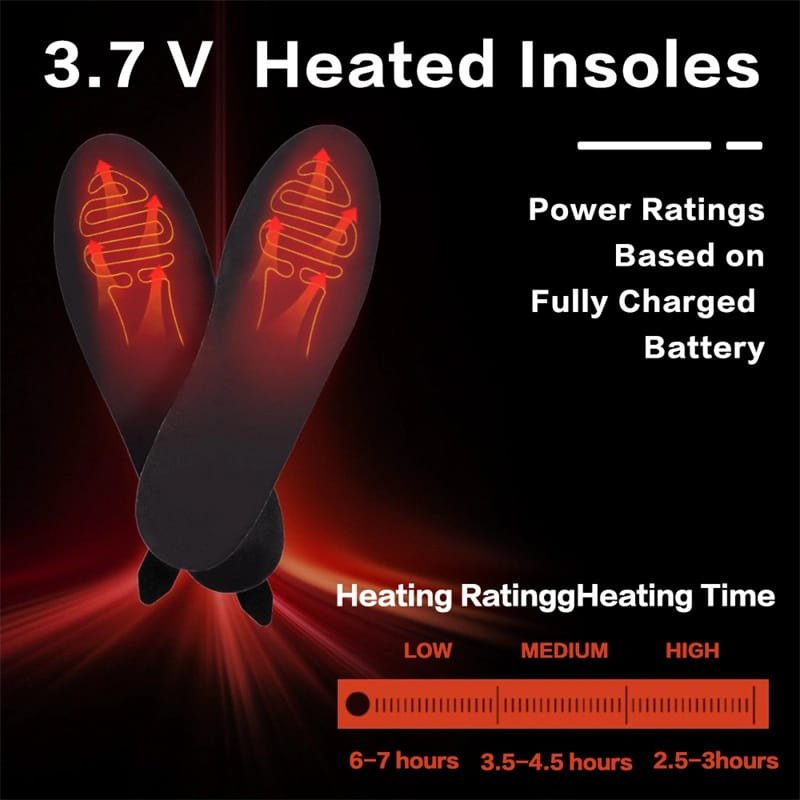
When ODM Heated Insoles Make More Sense
ODM is more feasible in the cases where the brand is new to the category of heated insoles and the engineering facilities are not very extensive or when the speed to market is an issue.
ODM is favored by new brands, new start-ups, or new distributors dealing with seasonal collections since it reduces the risk of initial development and speeds up the time to market.
Key advantages include:
- Repeatedly tested designs that have already undergone endurance, safety, and compliance tests.
- Less time required to get sample approval and revision.
- Reduced preliminary engineering and equipment cost.
This model is applicable in the conditions of small inner technical teams, short launch cycles (winter retail cycles), or the desire to sale first and believe in the market reaction afterwards before appropriate commitment to full custom development.
The primary trade-off is decreased structural maneuverability, significant modifications to heating framework, battery mix, or base architecture might not be achievable without converting to an OEM model.
Cost, Lead Time, and Risk Comparison
The decision to use OEM versus ODM is more of a risk-management and resource-allocation choice than a choice regarding a design.
OEM generally comes with a greater initial payment in design validation and tooling and may also result in reduced unit costs at scale and greater differentiation. ODM is predictable and fast but possible to impose on scalability over time in competitive segments.
| Consideration | OEM Model | ODM Model |
| Tooling cost | Higher | Lower |
| Development timeline | Longer | Shorter |
| Unit cost | Potentially lower at scale | Stable but less flexible |
| Compliance responsibility | Shared | Manufacturer-led |
| Differentiation level | High | Moderate |
Heated product through experience demonstrates that vague specifications in the OEM case may result in expensive rework due to ambiguity, whilst in the case of ODM, there are already validated platforms which limit unexpected costs in the certification and final high volume production.
Engineering Depth and Quality Control Considerations
OEM arrangements sometimes need more intensive engineering interaction to provide the final product with high-reliance in the real-life environment.
Brands will have to be active in:
- Heat test of heating components to confirm cycle life and evenness in the heat distribution.
- Circuit protection validation of battery to avoid overcharge, overheating and short-circuit hazard.
- Footwear environment over-temperature and moisture-resistance tests.
Consistency in mass production becomes a vital issue, especially when it comes to heating-film or carbon-fiber components or wiring integration – minor differences can have an impact on performance in an entire batch of thousands.
ODM models transfer a large part of this burden of validation to the existing process of the manufacturer, which can facilitate quality verification to the base, although it may need brands to check the compatibility of the base with their desired safety and performance levels.
Common Misunderstandings About OEM and ODM Heated Insoles
There are a number of myths when it comes to sourcing:
- OEM is not necessarily quality, better quality as it is determined by the process, materials and testing rigor of the manufacturer, rather than the model itself.
- ODM is not the most common generic products – Some ODM platforms also include sophisticated heating technology and could be customized to allow robust branding to be achieved.
- Low price does not imply inexpensive engineering depth – ODM can take advantage of high-technology pre-existing systems that have gone through rigorous engineering tests.
- Speed-to-market cannot take the place of safety assessment – Even with custom ODM, brands have to make sure they are up to standards, such as CE, RoHS, and battery safety requirements.
Conclusion — The Right Model Depends on Your Brand Strategy
The issue of OEM or ODM heated insoles is a strategic choice that must concur with the development resources of your brand, the desired level of differentiation and the tolerance of technological engagement.
OEM has the ability to provide the control needed in long-term positioning in brands that are oriented at developing distinctive product lines and with high technical development. Individuals who need faster availability, reduced complexity levels, and reliable performance can realize faster output with ODM.
These structural differences allow one to make informed sourcing choices that allow the construction of stable and scalable offerings of heated insole that reflects market demands whilst controlling the risks of developments.