

In e-commerce, packaging design has much more pressure compared with traditional packaging of retail. Production is subjected to single parcel sales, order fulfilment technologies, and direct to customers delivery, which all increase the risk of damage, escalate costs, and initial impressions. The role of packaging as a branding tool has been accorded a lot of attention by many e-commerce brands, considering it an investment in branding without minding its effects on transportation costs, breakages, and efficiency.
Effective e-commerce packaging design balancing structural, cost and pre-unboxing is achieved. As a system outside of individual components, packaging is helpful in scalability of operations, as well as saving the margins and customer satisfaction.

Why E-commerce Packaging Design Has Unique Requirements
E-commerce packaging should be able to survive distribution facts which retail packaging hardly faces. In the retailing sector, product is shipped in large quantities as pallets and handled in a controlled manner; in e-commerce, products are handled individually as parcels and are subjected to rough sorting, multiple handlings and stresses associated with the last mile delivery.
Everything changes with the change towards parcel shipping. Packages are more likely to be shaken during transit, dropped many times as they pass through the sorting bills, and compressed when loaded into the trucks or fulfillment centers. Automated systems require the dimensionality to not allow jam or surcharges. Packages that can be resealed without the appearance of being tampered with are necessary so that the returns will look in good shape.
The following list contains the main factors that can be outlined:
| E-commerce Factor | Packaging Design Impact |
| Parcel shipping | Higher impact and vibration |
| Fulfillment automation | Dimensional consistency critical for handling |
| Returns handling | Durability and reseal logic essential |
| Customer delivery | First-impression packaging matters |
These variations imply that e-commerce packaging will not replicate retail boxes easily. It has to be designed to fit in the real-life situation of a parcel and must be affordable at scale.
How Packaging Structure Affects Shipping Cost in E-commerce
E-commerce shipping pricing is directly influenced by packaging structure, which is mostly provided on dimensional weight pricing. Drone Express such as UPS, FedEx and others, charge on whichever is more, actual or calculated dimensional weight (of length, width and height divided by a divisor such as 139 in the US). Large or incompetent designs increases the charges on light products.
Large boxes will cause dimensional charges and convert low-weight packages into high-priced parcels. Unutilized space is demanding of additional filler material, extra weight wise and expensive. Poor construction enhances the probability of damages, result in re-shipment which triples or quadruples the logistics costs.
Structural decisions that are common to make and cost implications would involve:
| Structural Decision | Cost Impact |
| Oversized box | Higher dimensional weight |
| Excess void space | Increased filler cost |
| Weak structure | Damage and reshipment cost |
These issues are reduced by optimized, compact structures. Right-sized packaging minimizes dimensional weight charges, reduces filler requirements, and decreases general fulfillment costs, which are essential in the boards of healthy margins in competitive e-commerce markets.
Designing Packaging for Protection in Parcel Shipping
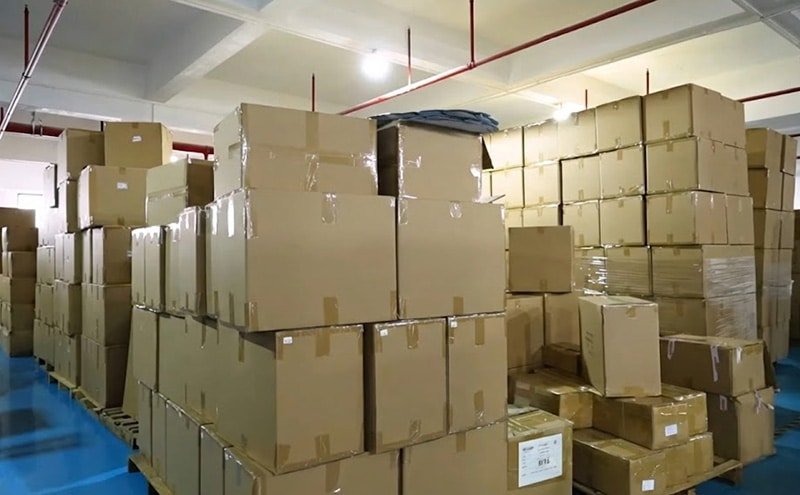
The first step towards effective protection in e-commerce is to be aware of hazards of parcel shipping and design it appropriately. Packages are subjected to multiple drops (in most cases due to conveyor heights), stacking compression, and continuous vibration during the transit process. Damage to products because of these forces will only be overcome by packaging without excessive material consumption.
Main guidelines to effective but strong security:
- It is recommended to use ones with the right sizes of exterior boxes to minimize interior movement and decrease momentum in drops.
- Use shock absorbing cushions including corner protectors, foam insertions or molded pulp trays, to avoid bulky cushions.
- Compression strength design with reinforced walls or fluting direction is parallel to stack orientation.
- Reduce empty space, so that products will not shift, which increases damages of vibration.
- Scaling Test Before scaling Before scaling, validate performance by simulating drops, vibration, and compression (ISTA protocols)
High levels of protection minimize the rate of damage and this in turn decrease the return costs, replacement shipping and customer dissatisfaction. The aim is adequate strength with no redundant material in inflation of dimensional weight.
Unboxing Experience: Why Structure Matters as Much as Graphics
The experience of unboxing in e-commerce is based on structural sequencing, not on graphics as such. Although sight generates anticipation, the actual movement of opening, how layers unfold, components come together, and how the product comes into being so beautifully are the factors that determine perception and drive them to buy the product again.
Frame elements governing the experience: simple open elements drive satisfaction, whereas unobtrusive inserts generate a feeling of discovery. In line with stability in orders gives reliability more strength than unique-once designs. Unnecessarily elaborate mechanisms make customers frustrated and sluggish in fulfilling them.
For brands seeking professional support, custom packaging design services can help integrate structural logic with practical manufacturing needs.
A carefully designed unboxing balances the delightful and useful experience, transforming an otherwise mundane delivery into a pleasant brand experience without making operations complex.
Balancing Cost Efficiency and Customer Experience
Investing in high end packaging kills margins and low investment damages costs of returns. The particular balance that is required in e-commerce is a calculated balance where the structure facilitates protection and experience without being overly costly.
This raises the prices of the materials or complex reveals, which is costly in terms of units and dimensional weight, and puts a strain on profitability of high-volume SKUs. Minimalist designs have a risk of increasing the rate of damage that provokes returns that cost more than the initial shipment of processing and reshipment.
Observation within the experience has indicated that balanced designs such as compact, defensive and sequentially considerative enhance lifetime customer value. Less damage means less refund, reduced labor involves faster fulfillment and steady unboxing leads to loyalty. The sugar question is in designs that work well throughout the supply chain without a lot of frills.
Common E-commerce Packaging Design Mistakes
Some e-commerce brands compromise on their operations as a result of preventable packaging errors. Such mistakes are usually caused by the unrealistic approach towards the logistics priorities at the expense of appearances.
- Shaping the look rather than delivering reality – The emphasis on the look without references to the parcel strains, will result in serious damage.
- You must not pay close attention to dimensional weight pricing Oversized or air-filled boxes cause unwarranted carrier surcharge.
- Making unboxing processes complex – More layers or complex processes make fulfillment more complicated and frustrate customers.
- Not subjecting packaging to actual shipping conditions – Drop, vibration, compression tests are not done lead to unexpected live transportation.
Early avoidance will help in the prevention of recurring costs and aid in a smoother scaling.
Conclusion — E-commerce Packaging Design Is a System Decision
The packaging design in e-commerce is going to influence all phases, such as shipping price, product protection, efficiency of fulfillment, and the customer experience. Considering them individually introduces inefficiencies and cost concealments.
Efficient e-commerce packaging combines organization, bottom-line management and unwrapping into one, manufacturing mindful system. In the development of packaging as a scalable asset instead of a repeated liability, dimensional pricing, operations flow, and parcel realities are considered. Those brands that take it like that continue to maintain a margin, minimise damage and gain trust that becomes long lasting customer trust.