

Production of private label heat socks is not restricted to having a logo added, but designing it, integrating a heating system, testing batteries, quality control and manufacturing it over and over again. At the beginning, many brands believe that developing a personal label with heated socks will only require picking a product off the shelf and putting its own label on it. As a matter of fact, it is much more technical in reality: the success presupposes the systematic engineering testing, the effective component combination, and the manufacturing planning to achieve the identical performance with every batch.
The success of a stable and scalable program of personal label heated sock production requires regulated production system, heating technology expertise, and repeatable quality verification procedures. These factors are not paid attention to, and within no time, brand trust can be destroyed because of such problems as uneven heating, battery failures, or other problems with wash durability.
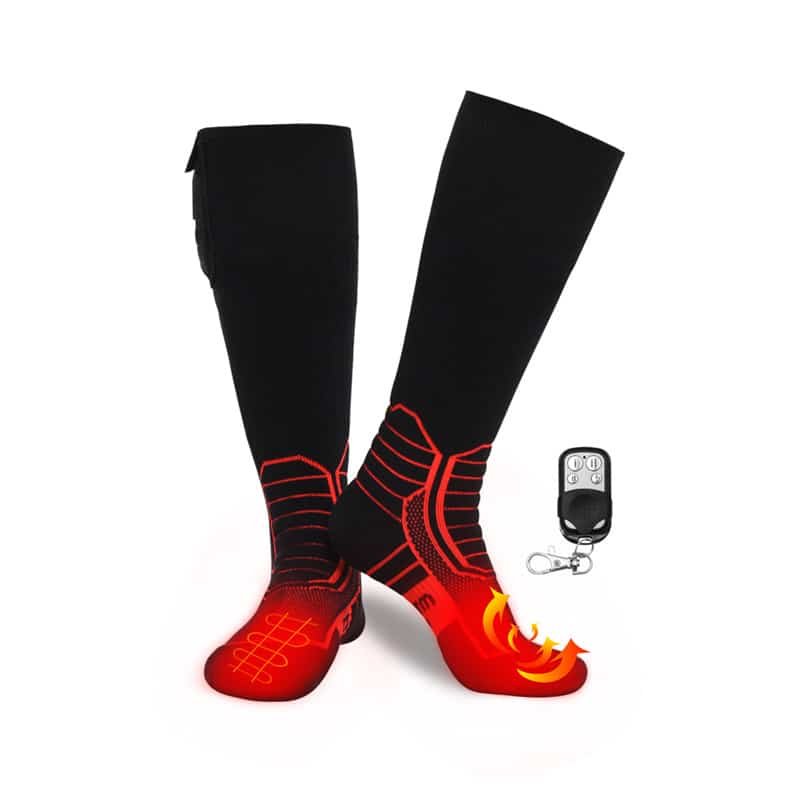
Step 1: Product Definition and Technical Specification
Setting of clear technical specifications is the basis of any successful run of the production of private label heated socks.
This is the first step in which there must be close interaction between the brand and manufacturer to ensure that product objectives and manufacturing feasibility are matched. Some of the major decisions are the intended use case, be it a skiing, outdoor work, daily winter, or special tasks such as cold-storage conditions. Every application has an impact on decisions regarding heat output, operating time and longevity.
Some of the critical areas of specification are:
- Heating zones – Deciding the parts of the foot that are heated, either using a concentration of heat on the toes as a result of standing on a cold floor, or spreading the heat over the entire foot as a result of making a step onto a hot floor.
- Battery capacity Battery capacity varies with the desired run time (typically 4-10 hours based on the level of heat) versus added weight and bulk.
- Type of control — Choose one of the basic button controls, remote operation, or integration of smartphone apps to adjust the settings.
- Composition and knitting structure — Focusing on either breathability as an active item or higher insulation in the case of a static cold item, with the knit able to fit in embedded heating items without loss in fit or comfort.
- Size range — Since this has men, women and unisex products, this will cater to the target market in terms of size.
| Specification Area | Key Considerations |
| Heating Zones | Toe-only vs full-foot |
| Battery Capacity | Runtime vs weight |
| Control Type | Button, remote, app |
| Fabric | Breathability vs insulation |
| Size Range | Target market fit |
Such initial decisions have direct influence on down stream engineering and cost. To learn more about matching specifications to production capabilities, see our guide to private label heated socks production.
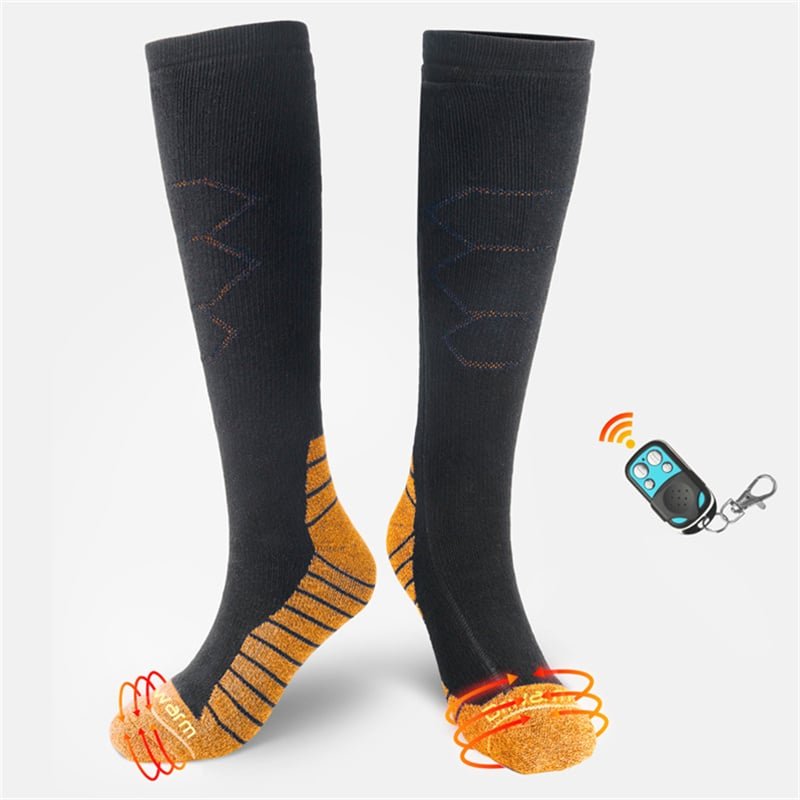
Step 2: Sample Development and Heating System Integration
Validation of an engineer early in the development of the sample eliminates expensive revisions when mass production starts.
The phase is aimed at incorporating the heating system into the sock system without compromising comfort, flexibility and safety. Heating elements (most typically ultra-thin carbon fiber wires or flexible heating films) are mounted in strategically positioned spots to provide uniform heat without forming pressure points or limiting motion.
Engineers chart the wiring routes in order to prevent strain during flexing (particular at the ankle and toes), develop secure battery interfaces (typically snap-on or pocket-mounted close to the cuff), and test initial temperature mapping. Experimental versions are subjected to heating tests to ensure that they are stable, do not form hotspots, and are compatible with the knitwear.
| Integration Area | Engineering Focus |
| Heating Element | Even heat distribution |
| Wiring Structure | Durability under flex |
| Battery Connector | Secure attachment |
| Temperature Testing | Stability and safety |
Comprehensive prototype testing at this stage is an assurance that the design of the customized production of the heated socks works reliably before making a decision to tool or place bulk material orders.
Step 3: Material Sourcing and Component Coordination
Regular sourcing of materials and components removes variability which might be experienced in successive output.
Some of the sourcing done includes ensuring that the dye batches used are controlled to ensure no change in colour, that the heating modules used are of high quality with consistent values of resistance, certified rechargeable lithium battery and consistent and reliable controllers. All the components suppliers are assessed in terms of compliance and reliability of delivery.
The packaging material is coordinated early enough to suit branding needs where labels, hang tags, and boxes are received at the right time.
| Component | Risk Factor | Control Method |
| Fabric | Color inconsistency | Batch approval |
| Battery | Safety compliance | Supplier audit |
| Heating Module | Performance variation | Pre-production testing |
| Packaging | Print deviation | Proof confirmation |
Good coordination in this case facilitates easy access into mass production as well as reducing defects caused by poor coordination of the components.
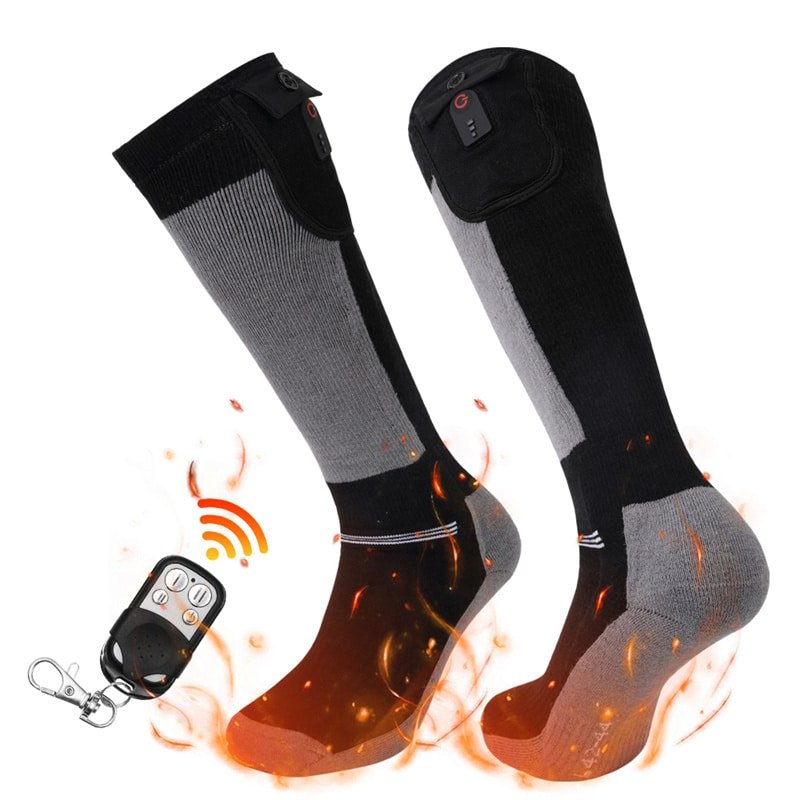
Step 4: Mass Production Workflow
Sequencing of production lines is controlled to produce all pairs of the same color of heated socks.
After approval of samples, the process of mass production is very specific:
- Knitting – Automated circular knitting machines are utilized in the production of the base sock structure with a given set of yarn blends forming areas where channels with heating elements can pass.
- Insertion of heating elements – The carbon fiber wires or films are laid with great control in a pre-existing pattern either during or after knitting.
- Wiring and soldering – Wiring and soldering of connections between heating elements, controllers and battery interfaces is soldered with strain relief, to withstand the repeated flexing.
- Battery assembly — Rechargeable battery packs are also installed in special pockets or mounts, and protection circuitry is also added.
- Functional testing – Both pairs are turned on and zones of heating are checked to confirm that they turn on properly under different settings.
- Aging test – During an aging test, the item (e.g. socks) is subjected to long powered periods (usually 24-48 hours) to replicate actual use and to detect early failures.
- Final check-up Visual and dimensional inspection would be done to check the stitching, placement of brand names and the general quality.
Tight control- using standardized workstations, training of operators and within process checks determine whether all the batches have the same heating performance and structural integrity.
Step 5: Quality Control and Compliance Testing
Strict testing standards are used to ensure safety and reliability of the product of any production scale.
In addition to the in-line checks, batches are completed and verified by compliance and durability. This involves electrical safety test to CE and RoHS, battery protection circuit test, over temperature cut off and repeated wash tests to ensure that heating elements and wiring are not damaged.
The sampling is based on the statistics (AQL standards) to represent full lots.
| Test Type | Purpose |
| Overheat Test | Safety validation |
| Battery Cycle Test | Longevity |
| Flex Test | Durability |
| Aging Test | Stability |
Repetitive testing will help in keeping the standards of wearable heating manufacturing constant even when production is increased.
Step 6: Packaging, Branding, and Repeat Orders
The last stages of branding and packaging are branding strategies that entrap brand identity but aid long term consistency.
The logo embroidery or heat-transfers are positioned with a high level of accuracy so that it does not misalign. Documentation Documentation contains instructions on how to use the system, charge, and care depending on the unique setup. Retail packaging such as boxes, hang tags or pouches is proved and cut to suit approved artwork.
Specifications, approved samples and test records are carefully documented so that repeat orders can be calibrated to exactly match prior orders to reduce time variation.
Common Challenges in Private Label Heated Socks Production
There are a bunch of traps that often spoil the private label programs in cases where technicality is not taken into consideration.
- Miscalibration of engineering complexity – Trying to solve the problem of heated socks as regular apparel results in the neglected issues of integration.
- Modifying design during production – Mid-run changes of heating or controls may need re-tooling and can slow down schedules.
- Disregard of battery certification schedules – It can take months to obtain Safety certifications (UL, CE); otherwise, it is a chance to be subject to compliance difficulties.
- Over-customising without volume planning -Very specific features add to costs unless accompanied by adequate order quantities.
It is better to take these up in advance at the time of planning.
Conclusion — Process Stability Defines Private Label Success
The business of producing heated sock privatelabel is essentially based on engineering, and the ability to combine heating elements, manage batteries and reproducibility of the production process. Programs are successful when brands have a complete grasp of the process of the heated socks manufacturing process, the alignment of personalized requests to engineering facts, and a desire to adhere to the same production standards in several seasons. This organized strategy does provide credible performance which will achieve the brand credibility in the competitive wearable heating market in the long term.