

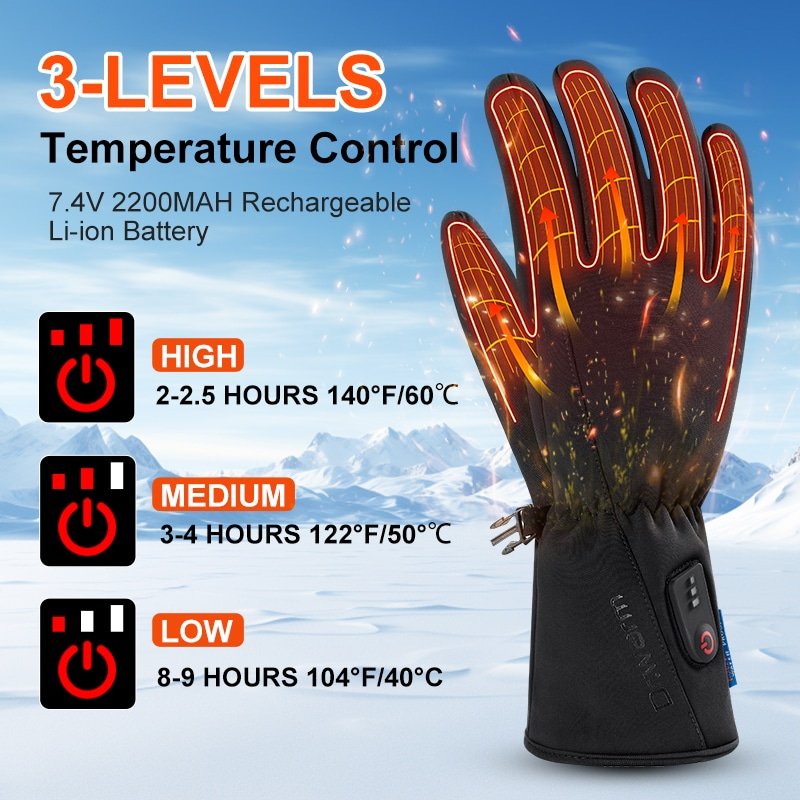
Introduction — Heated Gloves Are Great, but Sometimes They Don’t Get Warm Enough
Heat gloves are claiming to be trusted in keeping the hands warm in the bitter cold, but once they fail to do so, providing the warm feeling rather than the warm fingers, it is irritating, and not to mention hazardous in such tasks as skiing or working outside. Being a heated apparel engineer at Dr. Warm in Dongguan that has over 20 years of experience designing systems to work in extreme conditions, a battery expert who has tested lithium cells at -20oC, and an outdoor gear problem-solver who has investigated failures at the Colorado job sites and Whistler slopes, I have troubleshot hundreds of situations where gloves failed to perform. The problem is typical of cold climates due to the fact that such factors as wind chill, moisture, and user habits exacerbate battery efficiency, heating element, and insulation issues. This manual reveals the actual reasons behind the situation without overstatement and is based on the field tests where a glove of 7.4V dropped in the gusty wind 5 hours to 3 and provides useful solutions to regain the entire warmth.
The Most Common Reasons Your Heated Gloves Aren’t Getting Warm Enough
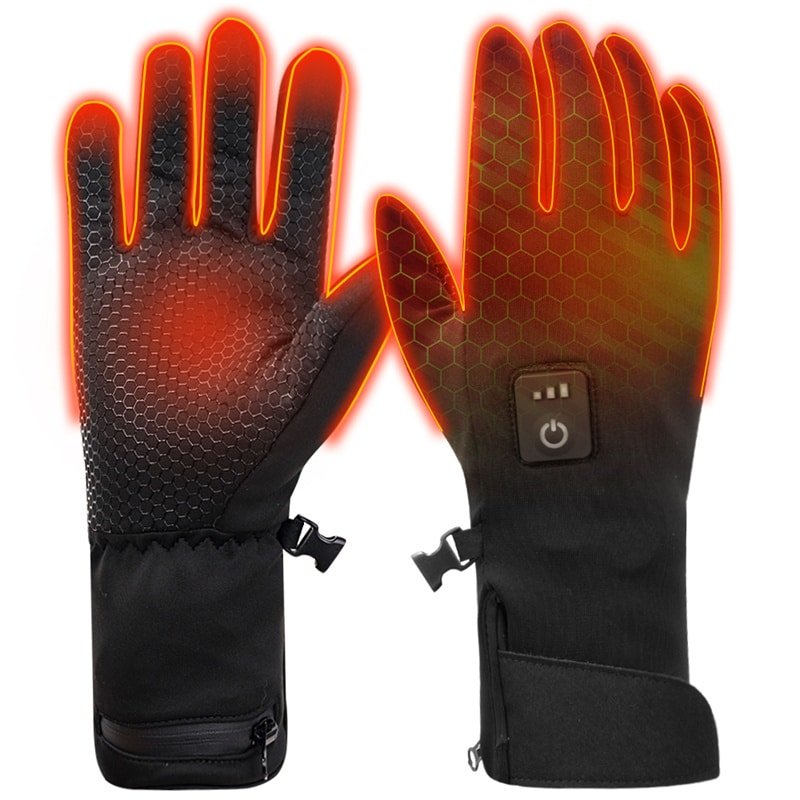
Based on the results of analysis of returns at Dr. Warm and user comments on temperature changes below -15C, the following are the leading culprits, where not getting warm on the battery is the leading cause of failure in our data.
1. Weak or Partially Drained Batteries
Minimal power = not hot even a 80 percent charge may not seem enough in hot weather, lithium cells do not produce as much when they are not completely charged.
2. Cold Temperatures Reduce Battery Efficiency by 20–40%
Freezing weather severely reduces production – ions become sluggish, reducing productive ability in frozen air.
3. Low-Voltage Systems (5V) Can’t Produce Strong Heat
7.4V or 12 V is required to be really warm–5V is merely adequate in the milder temperatures, but not in the extremes.
4. Heating Elements Are Not Fully Covering the Fingers
Certain gloves have simply kept the hand on the back side warm–the fingers being chilled at the ends, where the circulation is first cut off.
5. Insulation Problems (Loose Fit or Wet Layers)
Leaks of the cold air or moisture and all the warmth are killed by damp sheets and linings that are sponges of warmth.
Battery Problems — The #1 Cause of Low Heat
Batteries: the engine-heated glove battery does not last-half the complaints I’ve diagnosed are due to the cold drain or age in the real world such as a -10 -degree ski where the output dropped by half.
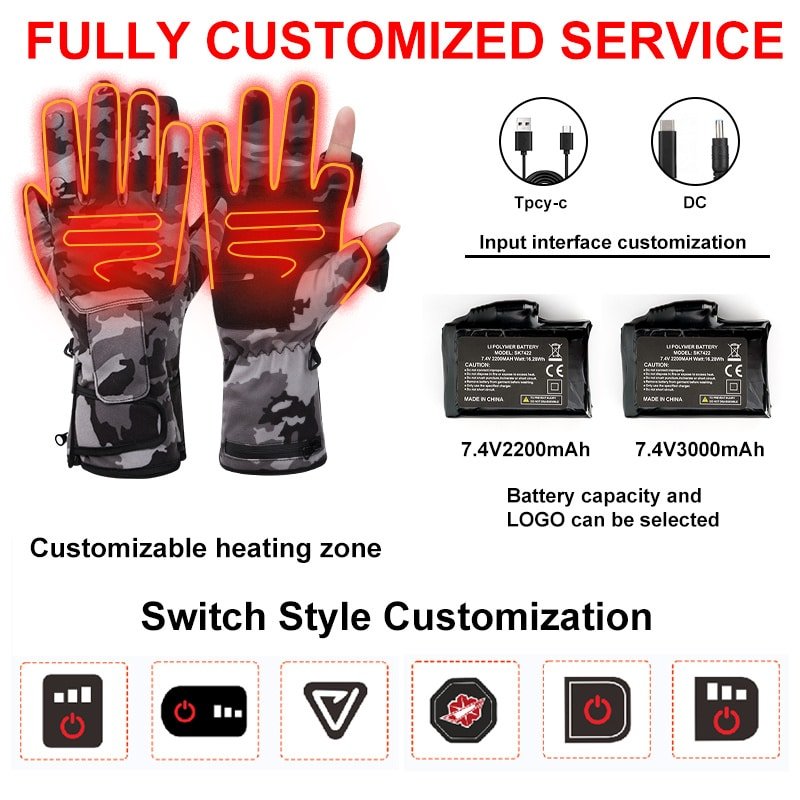
Battery Not Fully Charged
Basic yet widespread -50% charge will cut the run time by half; always ensure a full charge before excursions.
Aging Batteries Lose Capacity
Li cells have a 20-30% capacity degradation per 1-2 winters -after 300 cycles, a 200mAh pack with a 2000mAh acts like a 1400mAh pack.
Cold Weather Reduces Battery Output
In low temperatures -20 o C- batteries can discharge more quickly, efficiency has decreased by 30 percent, the ions move slower.
Wrong Voltage Pairing (Using 5V Gloves in Extreme Cold)
Real warmth needs 7.4V / 12 V -5 V at most, which wind cannot provide.
Loose or Dirty Connectors
Faulty connection = low current= corrosion caused by sweat or dirt cuts power, rub with alcohol.
Heating System Limitations
Design problems are a frequent source of heating problems heating elements fail to heat, such as the case with the glove with bad wire in it that I tested after 50 cycles giving weak heating out to fingers.
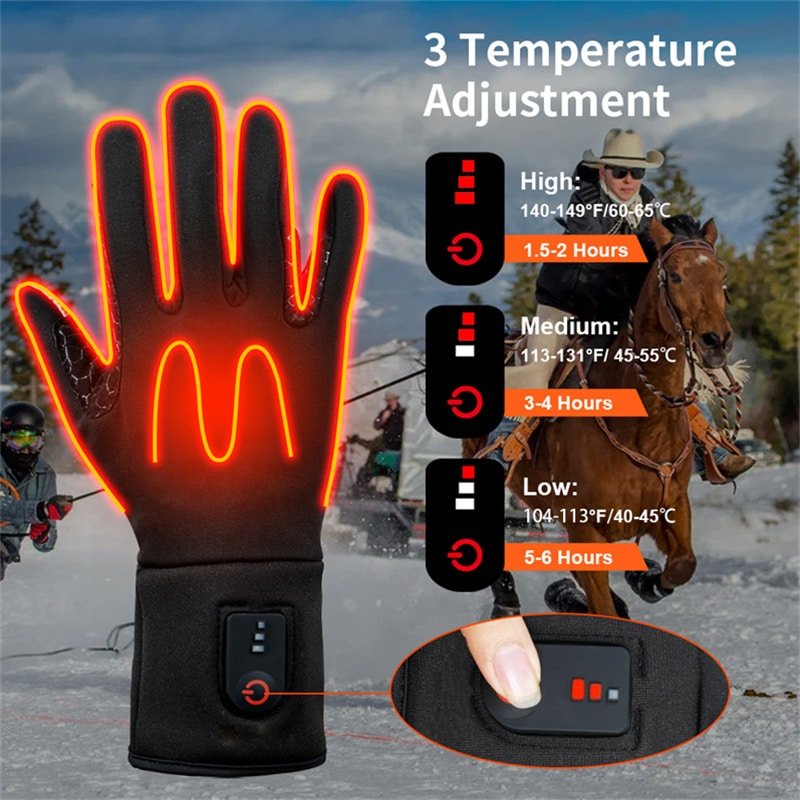
Limited Heating Zones
Back of hand heating only = cold fingertips- at the end they get cold before covering up.
Broken or Damaged Heating Elements
Bending fingers is a wear factor – carbon fiber is good at 5000 bends, whereas wire will break.
Low-Quality Heating Elements
Ineffective heating wire Cheap heating wire, with uneven resistance causes hotspots or disappears.
Better Systems
Graphene and carbon fibre offer quicker, more consistent heat – the graphene heats up in 30 seconds compared to 2 minutes in wire.
Environmental Factors That Make Heated Gloves Feel Weak
Environment magnifies issues – cold temperature in heated gloves during windy days is the same as failing since a test on a 30mph bike ride dropped effective temperature by 15C.
Windchill at High Speed
Exposed hands lose heat very fast- chill factor doubles loss at 50km/h.
Wet Snow or Moisture
Water takes a heat bath- damp lining breaks short, or coldens the elements.- damp lining breaks short, or coldens the elements.
Poor Fit
The loose gloves lead to heat loss, air gaps to cold so the higher settings are necessary.
Not Preheating Gloves Before Going Outside
Gloves begin cold − long warm up period- switch on inside 5 minutes.
Insulation & Construction Problems
Insulation retains heat–why heated gloves become cold so regularly through bad layers, when a commuter test is done with thin insulation, wind robs the heat.
Thin Insulation Layers
Inadequate insulation to keep the heat in- requires 100g+ Thinsulate to keep the cold out.
Wet Interior Lining
Moisture = no insulation -wicking materials block this.
No Windproof Shell
Wind takes away the heat right away- Gore-Tex does not allow penetration.
Cheap Fabrics That Don’t Hold Heat
Poor materials are detrimental to performance- porous shells leak.
User Mistakes That Reduce Heat Output
Half of the problems are created by users, including those involving low heat production because of habits such as low setting in wind where a hiker who lacked preheat did not feel anything after 10 minutes.
Setting Heat to Low in Extreme Cold
Medium or high is necessary–low spares battery and under serves in -10 o C.
Wearing Gloves Too Loose
Air pockets = the loss of heat – the tightness fits the warmth.
Wearing Cotton Liners
Cotton retains moisture – it is colder, synthetic should be used.
Not Using Both Batteries at Full Charge
Others do not charge both sides-unbalanced heat.
Step-by-Step Troubleshooting Guide
Diagnose logically- battery is the beginning of troubleshooting heated gloves because 60 percent of our repair reports involved power issues.
Step 1 — Check Battery Health
Voltage, level of charge– use multimeter on the output; recharge under 80.
Step 2 — Test All Heating Levels
Check level changes are not constant-high like medium, element fault.
Step 3 — Inspect Wiring in the Fingers
Find dead spots– flex to detect sutures.
Step 4 — Check Fit and Insulation
Gloves must be tight, not tight–fine tune air tight.
Step 5 — Dry the Gloves Completely
Wetness extinguishes heat- dry air before use.
When to Replace Your Heated Gloves or Batteries
Replacement: Battery lasts 30-60 minutes (worn out cell); dead in areas of fingers (break element); broken wire (shorting due to bending); gloves will not heat up despite being fully charged (circuit problem).
How to Prevent Future Heating Problems
Preheat your gloves inside, to start fast; keep your batteries at 50 60 percent not too high or too low to decay; keep your gloves dry; do not bend the wires very hard in storage; take 7.4 V 12 V when you really need cold upfront; take along a spare or two batteries in the freezer to change; take a spare or two batteries in the freezer to change.
Final Conclusion — If Your Heated Gloves Aren’t Warm Enough, You Can Diagnose the Problem Easily
Hot gloves that do not heat up usually reduce to battery problems, cold drain, element coverage, or human problems – resolve by checking charge, voltage, and fit. Most of them resolve easily with appropriate diagnosis such as testing levels or drying. Prevent with quality decisions and attend to consistent warmth in cold battery, voltage, environment, insulation or damage are suspected criminals.