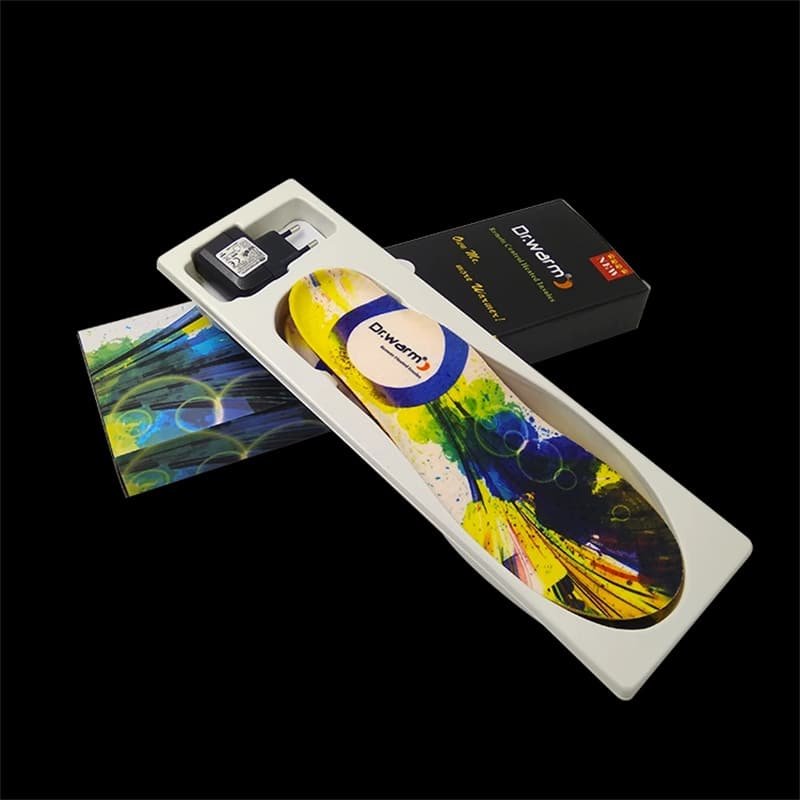

Quick Answer — What to Look for When Buying Heated Insoles
When buying heated insoles, look for several areas where they stand out to provide the best combination of reliably warm, without inconvenience: they should have carbon fiber heating elements to ensure the heat is evenly distributed, have at least 2200mAh battery capacity to run 4-6 hours at medium power, be able to adjust the temperature with a remote control or app, and fit the profile of your actual shoes. Safety certifications such as CE, RoHS, FCC, and UN38.3 should not be ignored as a measure of ensuring that it will not overheat or cause shortages. My experience with these in freezing job sites and mountain trails has shown that the most comfortable yet durable heated insoles are those which are breathable and do not trap moisture, this means that feet should be kept dry and snug which makes them the perfect winter foot warmers to anyone who is going out to fight the cold. Working with a professional manufacturer for custom heated insoles can help you access models precisely engineered for these real-world conditions.
How Heated Insoles Work (Simple Explanation)
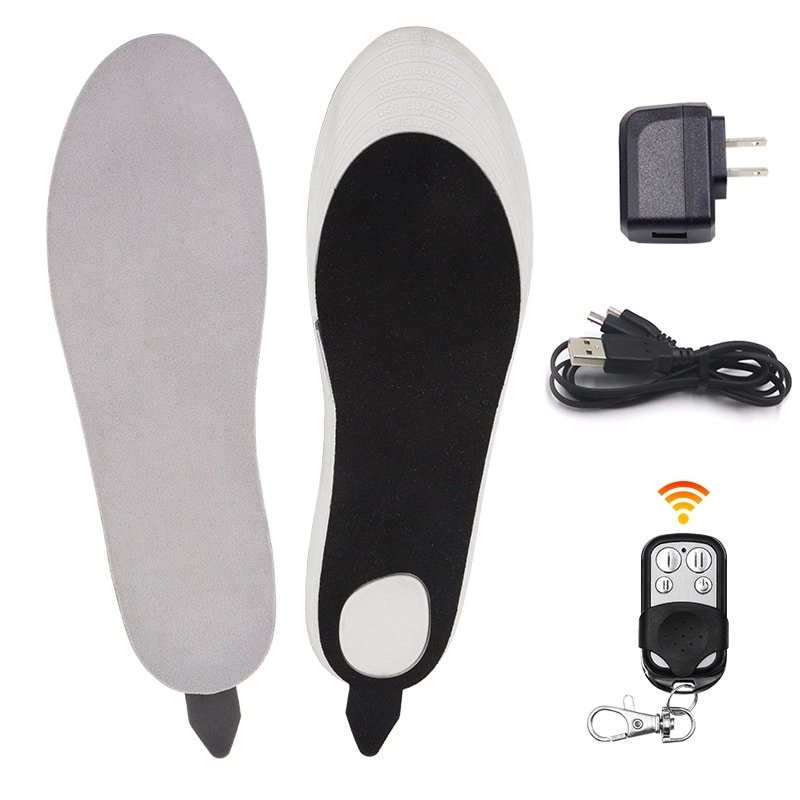
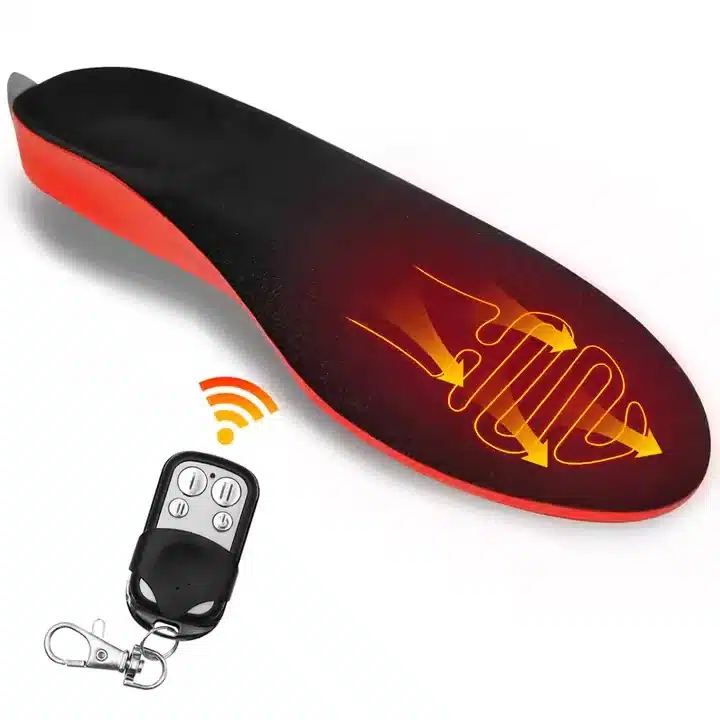
The heated insoles are ingenious little gadgets that can be inserted in your shoes or boots to offer you an on-demand heating feature with the help of electric heating components that work with some rechargeable batteries. These components, which may be carbon fiber heating elements, thin conductive films or even flexible wires, are woven into the fabric of the insole at the core and create heat when current passes through them, and these components are referred to as electrical resistance. Carbon fiber can be lightweight and flexible, uniform, warm, whereas films are slim, whereas wires are older technology and targeted in heat but may be bulkier.
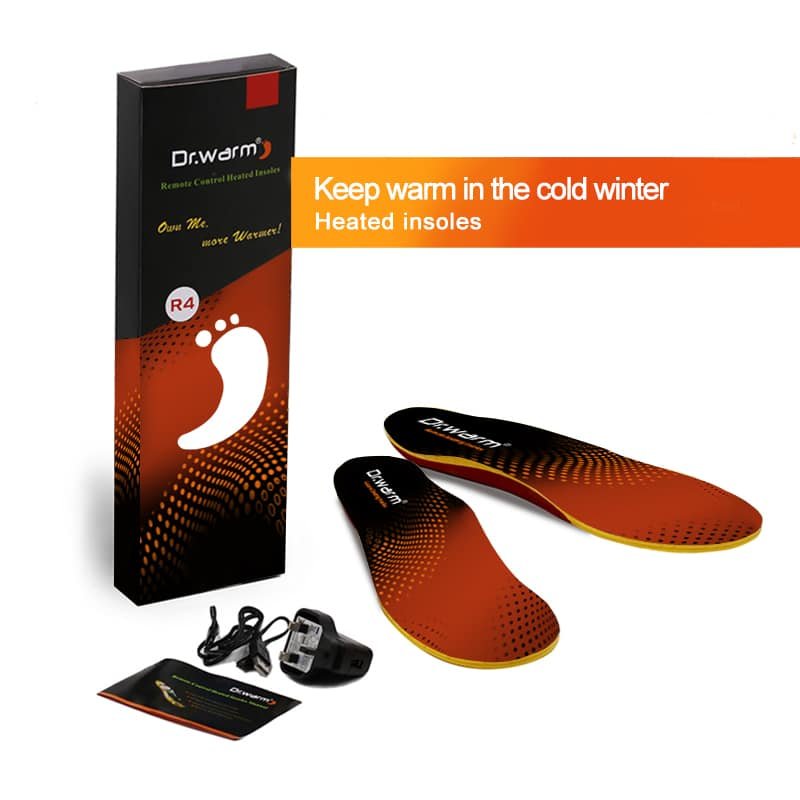
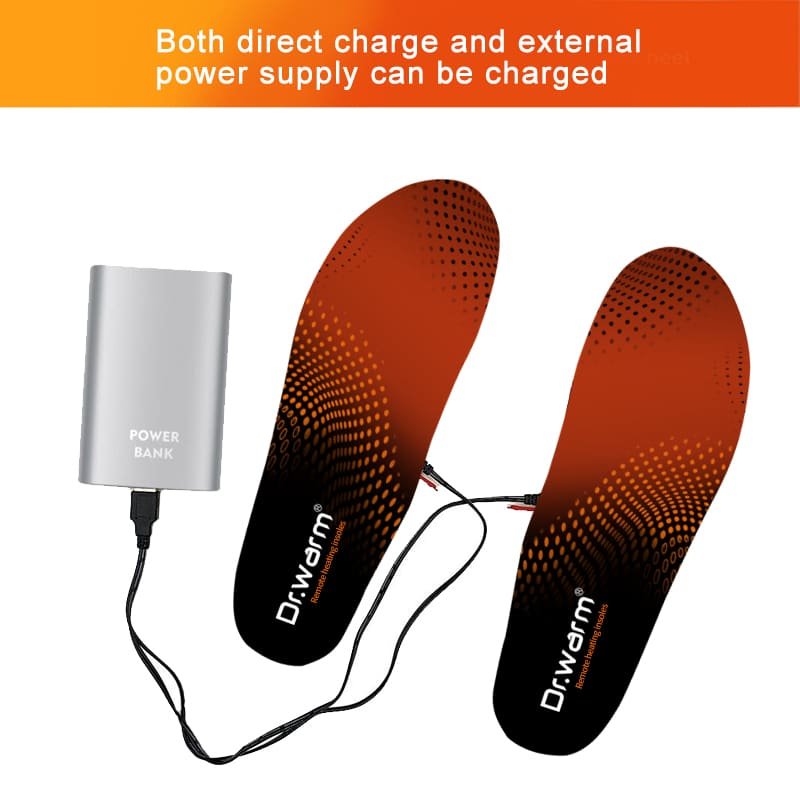
Lithium-polymer batteries provide power either integrated into the device to ensure a clean fit or external packs that can be attached using wires to allow easy changes. The temperature is managed using easy buttons on the insole edge, a remote control that is wireless, or even an app using Bluetooth that allows you to adjust the settings using your phone. In practical applications, such as on a lengthy hike, this would actually allow you to crank the heat on during a chilly morning and turn it off as the day heats up, all without the system using much power to shorten the battery life.
Key Features You Should Look For
The key to the selection of the appropriate heated insoles is all about the consideration of details that can suit your lifestyle, be it skiing downhill or merely going to work in the rain. This is what I have learned, and is the most important when I dissect models and subject them to paces of many different conditions.
Heating Technology & Warmth Distribution
The warming technology dictates the level of effectiveness of the heating to your feet. Find full-length coverage which warms the toes, forefoot, and even the heel because when you are cold, generally the extremities go numb first. Elements made of carbon fiber are well suited to this, as they do not have hotspots like wire systems that may deposit all the heat in a few spots.
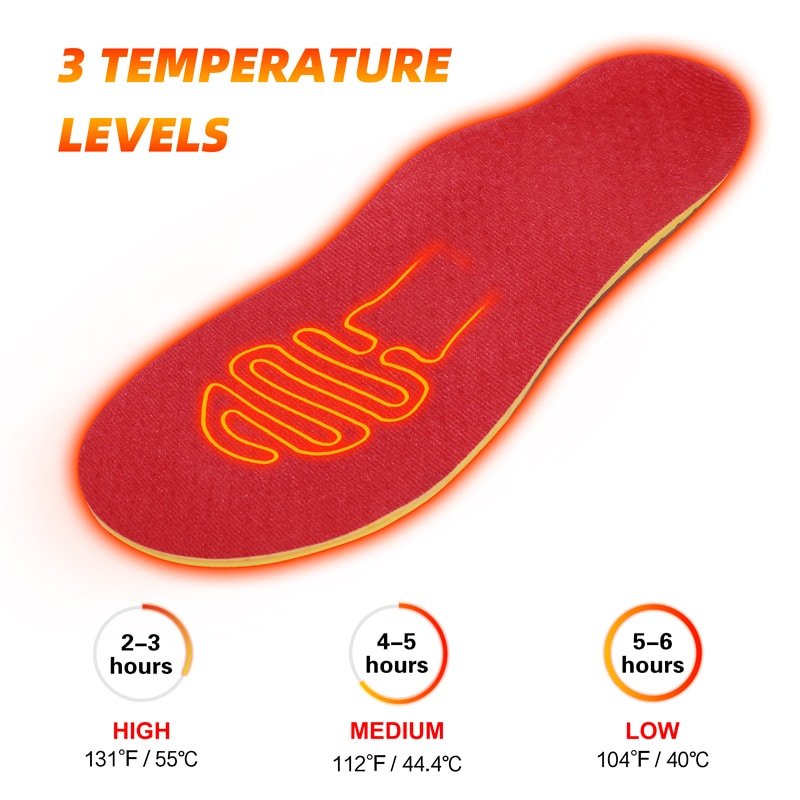
In my case with the use of electric heated insoles during ski trips, distribution ensures that that numb-toe feeling is not experienced after spending hours on the lift. Efforts should be made to get models with a maximum of 140-150degF on high, but they must have areas of moderate comfort- excellent in battery heated insoles where the efficiency conserves energy.
Battery Capacity & Heating Time
The size of the battery is correlated with the length of time you will remain warm. A 1500mAh battery should last 2-4 hours on medium, good enough to do short trips, whereas the 2000mAh can do 4-6 hours or longer on low, and the 3000mAh can do 6-8 hours or more on low. Selecting the right battery capacity for heated insoles is one of the most important decisions for reliable performance in cold environments, and the 3000mAh can do 6-8 hours or more on low. Actual conditions such as low temperatures depilitate time-batteries perform better when it is cold under freezing.
These I have tested in cold-storage warehouses: A mid-range 2200mAh pack in heated insoles lasted me one shift on low temperature, but when it got hot, it dropped my battery in a few hours. Compare the run times in both environments during shopping; it is essential in the choice of insoles buying guide.
Temperature Control Levels
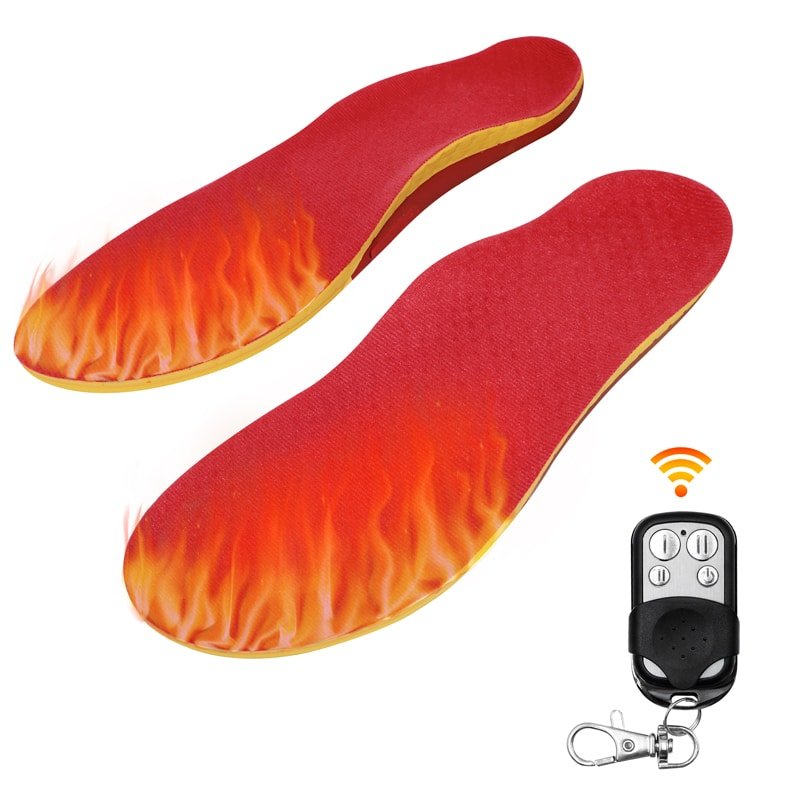
A variety of controls is everything–a simple model has 2-3 levels with the help of in-board buttons, whereas higher-quality models have a remote or an application to make accurate and non-removal adjustments. Bluetooth connectivity is brilliant in implementation of quick changes, with auto-shutoff frequently to save power.
I have also coached outdoor enthusiasts and observed how the features of an app controlled heated insole can keep the feet dry by adjusting it between 100degF low and 150degF high. This flexibility is essential in changing activities such as hiking where weather changes rapidly.
Materials & Comfort
The materials involved to wick sweat and pad steps are important in terms of comfort. EVA or memory foam which are breathable are compatible with moisture-resistant tops to avoid clamminess. Do not use low-end synthetics that trap odor, instead use antimicrobial linings.
During daily wear the most comfortable heated insoles to use in skiing had soft padded bases which did not feel unnatural underfoot even after many miles. This holds them as winter foot warmers you have forgotten you are wearing–all-day requirements.
Fit & Cut-to-Size Design
The right fit means that the heat does not bunch up due to improper fit. Most are available with trim lines to do the custom sizing-measure your insoles and cut with guidelines to shoes of any size between the size of 5-14. The compatibility issues: Slim shapes are appropriate to sneakers, and thick to boots.
I have even made one pair, which fits the motorcycle rider; it was a good cut-to-size design that did not have to slip and at length, this made it safer to ride on. Always examine thickness to curb congested toes in snug footwear.
Waterproof & Weather Protection
Winter is wet, and you want insoles that have closed electronics and waterproof finishes – IPX4 or better can resist splashes and sweat. This shields wiring against corrosion in snowy or rainy weather.
In slush trekking, non-waterproof models would short, whereas the strong ones continued. In case of heated features of insoes, such kind of resilience is essential in the extreme weather.
Safety Features
Safety must not be a later consideration-demand more overheating protection, which limits the temperatures and automatically disconnects, and demand short-circuit protection in the circuitry. Product certification such as CE on general conformity, RoHS on eco materials, FCC on electronics and UN38.3 on battery transportation safety is confidence building.
Certified battery heated insoles were never dangerous in lab-style home tests and use in the field, as compared to dubious imports. These standards give comfort to the ordinary users.
Durability & Daily Wear Performance
Flexible wiring also makes it durable against flexing, such as carbon fiber which can endure 100,000 flexes before breaking. Anticipate 200-300 charge cycles to visible degradation, and hardened edges that will not wear out easily.
According to the response of industrial workers, hardened insoles performed well through seasons when properly maintained whereas thin ones ripped off easily. Focus on models that have long-term warranties.
Best Use Cases for Heated Insoles
Warm insoles are a gloss to people who are exposed to cold. Snowboarders and skiers adore them because their feet are warm during powder days and they do not have to get frostnip when they are off. Many athletes turn to high-performance heated insoles for skiing that combine excellent warmth with a slim profile. Hikers and trekkers will enjoy variable warmth in the trails that require taking more than an hour, notably in unpredictable altitudes.
Riders of motorcycles are using them when they commute in the wind and cold-storage workers in industries are using them in the freezer with extended batteries. Bus waits are handy to everyday commuters and those who have problems with circulation or Raynauds get their relief without the bulk. They can simply be said to be good winter warmers of the energetic lifestyle.
Common Mistakes to Avoid When Choosing Heated Insoles
The most common mistake is to take a wrong size, so always measure and cut down to size, so as not to cause discomfort or lack of heat transfer. The neglect of battery life will result in chills at mid-day; charge to the duration of your outing.
Omission of certifications is a threat to safety and therefore, check stamps. Purchase of non-waterproof models is a death sentence in wet winters–I have seen a few of them go down the drain after a single storm. Lastly, ignoring reviews will result in missing the actual durability information; balance requirements with user stories.
How to Maintain Heated Insoles for Longer Life
Have your heated insoles last longer by charging batteries at room temperature, without completely discharging them: 20-80% cycles. Follow our detailed guide on how to maintain heated insoles to maximize their lifespan. Avoid overvolts by using the given charger.
Wipe on wet towel, do not submerge. Flat in cool dry place not in the sun. Check monthly on wiring of frays and change batteries after 300 cycles. These habits prolong life according to my habits of maintenance of my gears.
Final Recommendation
The selection of heated insoles is reduced to budget, surrounding environment, and activity: Using 2000mAh as the basic heating potential, the insoles can cost as little as $50; moving up to mid-range 80-120 with a remote control works well with skiers. Brands interested in developing their own line should consider OEM heated insoles solutions with full customization options. When it is so cold, save no expense in purchasing app-connected, high capacity pairs that can be worn all day. Put a premium on fit, safety certifications, and even heat–test in your shoes, should you have them. With those considerations, you will come across electric heated insoles that will turn cold feet into a thing of the past as you proceed through the season of winter.