
In wearable heating devices, carbon fiber and heating film elements are more likely to be used based on the application needs, structural limitations, and performance concerns than they are on the popularity of a material.
To the extent that the electric heating apparel and accessories both carbon fiber and heating film technologies are mature and reliable. None of them is universally better than the other; each of them is more effective in some situations. There are special engineering considerations in wearables: heating elements need to provide a stable amount of warmth using low voltages (usually 712V), they should be flexible enough to pass through thousands of movements, they should be in painless contact with the body, and they should be able to withstand repeated washings without failures.
Another myth is that all the heating quality depends on the choice of the material. As a matter of fact, system design (both layout, power management, insulation and controller integration) contributes much more in real-life performance. The sections below deconstruct the following differences to enable informed engineering decisions.
Overview — Two Common Heating Element Technologies in Wearables
The wearable heating market is dominated by carbon fiber and heating film since it is more efficient, safe, and manufacturable compared to the older material such as metal wires.
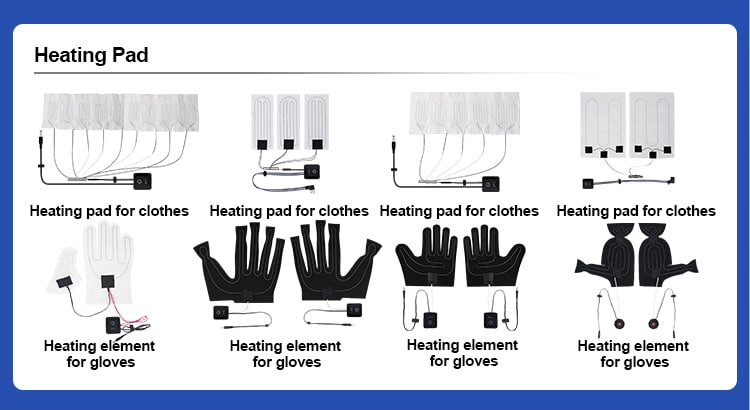
Elements made out of carbon fiber utilize conductive fibers (usually in yarn or woven form) which produce heat when current is applied to them. Heating film, in contrast, is based on a thin conductive coating (printed carbon-based ink or other materials) onto a flexible substrate, such as PET or PI film, which provides the effect of surface heating.
These two technologies have been adopted as industry-leading products, such as the heating of jackets, gloves, insoles, and socks, because of the lightweight design, low-voltage compatibility, and compatibility with textiles.
Such a comparison on a high level is as follows:
| Aspect | Carbon Fiber | Heating Film |
| Flexibility | High | Very high |
| Thickness | Moderate | Very thin |
| Heat uniformity | High | Very high |
| Typical use | Apparel panels (jackets, vests) | Insoles, socks, thin layers |
Material Composition and Structural Characteristics
The carbon fiber elements typically have greater mechanical strength in dynamic applications, whereas heating film has better thinness and surface coverage.
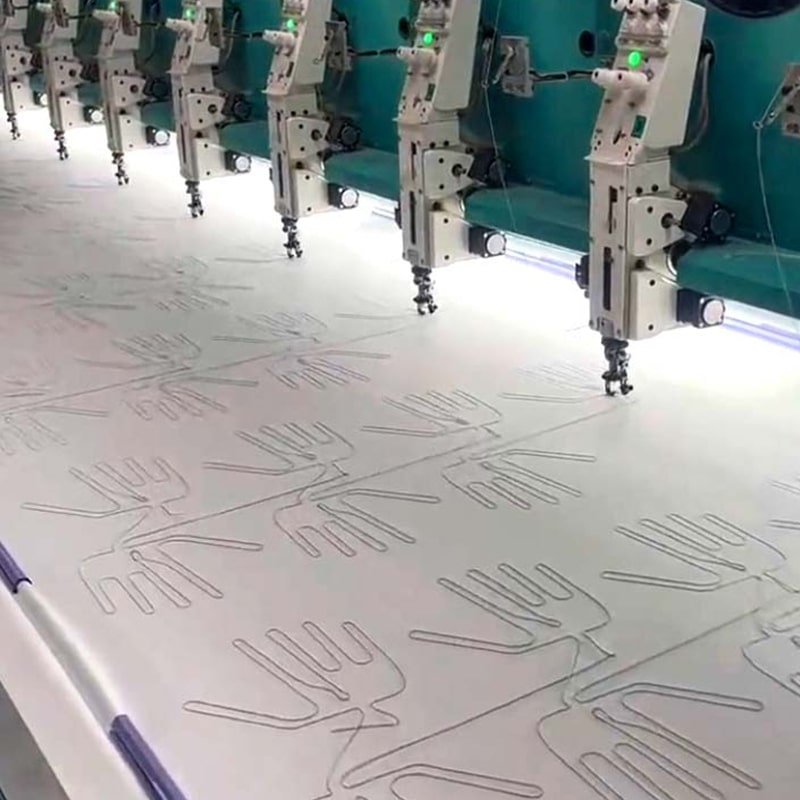
Carbon fiber heating elements are made by assembling into bundles or yarns, carbon fibers (made by polyacrylonitrile precursors), which are frequently woven into a piece of fabric or mesh. That filamentary structure provides them with natural tensile strength and limits them to withstand bending repeatedly without breaking down in an apeocalyptic manner.
Heating film elements contain a conductive layer (usually printed carbon or other brands of such inks) on a polymer substrate (PET polyethylene terephthalate) or PI (polyimide). This forms a planar spread of heating instead of the fibers.
These structural variations have direct mechanical behavior implications carbon fiber has a yarn based architecture where it is tolerant to stretching and twisting whereas heating film has a thin-film architecture where it is tolerant of ultra-low profiles but may be more susceptible to delamination with extreme shear.
| Feature | Carbon Fiber Element | Heating Film Element |
| Conductive medium | Carbon fibers | Printed conductive layer |
| Substrate | Fabric / mesh | PET / PI film |
| Bending tolerance | High | Very high |
Heat Distribution and Comfort Performance
Heating film generally provides a more uniform heat transfer throughout larger regions, lessening the chances of there being hot spots, however carbon fiber has better performance when laid in panels with care.
Carbon fiber heat distribution relies on the fiber pattern- woven or bundled types are good at distributing heat, but may exhibit slight dispersion in case of uneven spacing of the fibers. Continuous constantly spread heating film spreads heat more evenly by its nature, resulting in a smoother thermal gradient over the skin.
In applications close to the skin, this is the most important to the comfort of the wearer. Carbon fiber is more textile-like in its feel and heating film is extremely smooth and almost undeeply felt, as it is thin.
To gain a better understanding of layout strategies, see our guide on how heating element layout affects heat uniformity and comfort.
| Factor | Carbon Fiber | Heating Film |
| Uniformity | Good | Excellent |
| Local hot spots | Possible | Minimal |
| Skin feel | Soft | Very smooth |
Electrical Characteristics and Efficiency Considerations
Both technologies are highly efficient, though heating film can have more accurate control over power, as it has a stable resistance profile.
Flexibility in temperature control Carbon fiber elements have high resistance stability at flexing, which allows their flexibility. Current flow is very consistent and power fluctuation is minimal by heating film, which has a very constant resistance.
With battery-powered wearables, this can be translated to consistent run time: they are both efficient (usually above 95% electrothermal conversion), but system-level considerations such as controller design are more important.
Explore additional details in our article on key factors that affect heating element efficiency in heated clothing.
| Parameter | Carbon Fiber | Heating Film |
| Resistance stability | High | Very high |
| Power control | Flexible | Precise |
| Efficiency consistency | High | Very high |
Durability, Flex Life, and Washability
Carbon fiber is known to be good in high flex and high movement but heating films are good when well covered against moisture.
The high-strength and flexible fibers of carbon fiber make it resistant to mechanical fatigue, which can be tens of thousands of bends. Heating film provides similar or improved flex life in a planar use but can cause layer breakages unless encapsulated.
Wash resistance is related to encapsulation: both can be well performed with good sealing, but the fiber structure of carbon fiber is naturally resistant to abrasion.
For practical design tips, refer to how to design washable heating elements for heated clothing.
| Aspect | Carbon Fiber | Heating Film |
| Flex cycles | High | Very high |
| Wash resistance | Good | Good (with sealing) |
| Failure mode | Fiber break | Layer delamination |
In making integration decisions, by the time of making decisions, consider overall heating element design trade-offs early in the process.
Integration Constraints in Wearable Product Design
The heating film is transparent in space-bound designs because it has a very thin volume, whereas carbon fiber is applicable in designs that require softness and textile.
Thickness has effects on layering: the very thin profile of heating film (usually <0.2mm) is appropriate as an insole or base layer with no bulk. Carbon fiber is made a bit thicker, which is easily incorporated into the panels used in apparel through sewing or bonding.
Fabric-like feel of carbon fiber has an advantage in sewing, whereas heating film needs lamination or adhesive bonding.
Application-Based Recommendations (Not Generalized)
The superior heating component, however, is always about the needs of the product in particular, not one material is superior in all types.
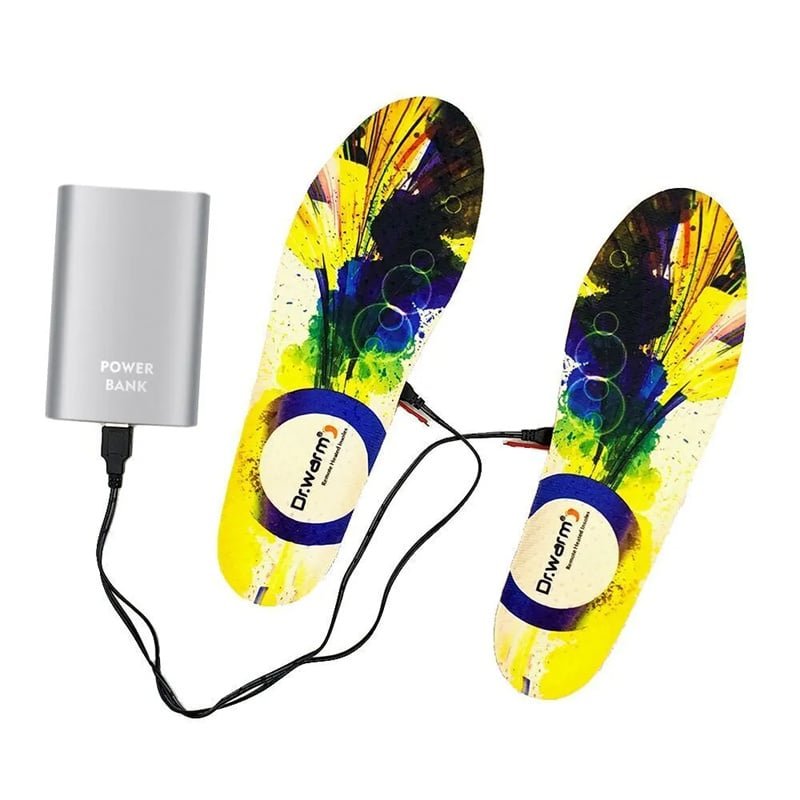
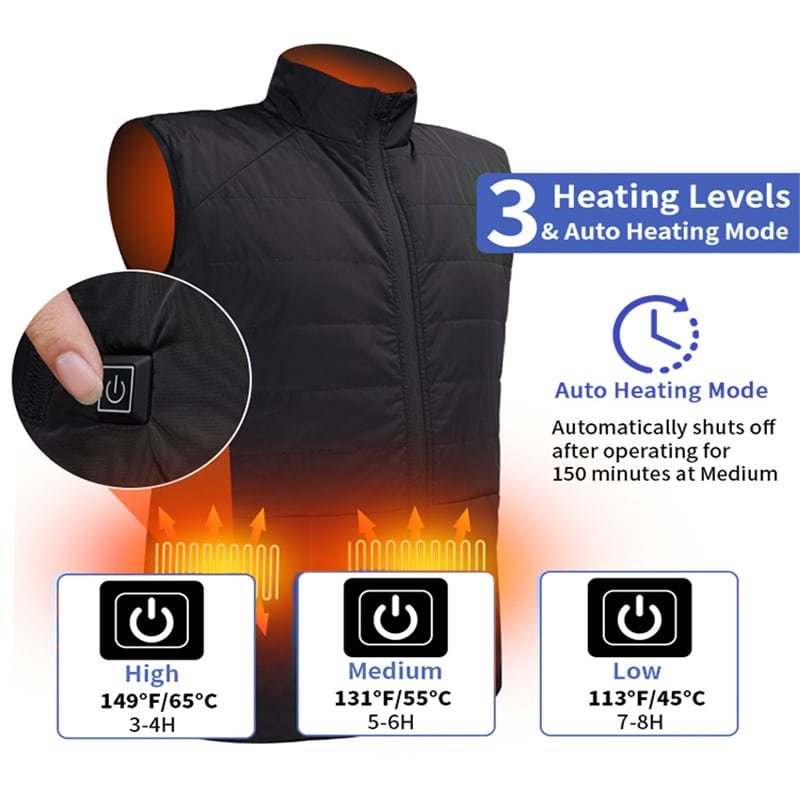
Carbon fiber can be the best in the case of softness and strength that is required by heated jackets or vests. Heating film is better suited to thin-profile applications such as insoles or socks because its low-bulk properties are uniform.
| Application | Preferred Option | Reason |
| Heated jackets | Carbon fiber | Softness, flexibility |
| Heated insoles | Heating film | Thin profile |
| Heated socks | Heating film | Uniform heat |
| Workwear | Carbon fiber | Robustness |
Conclusion — Choosing the Right Heating Element Requires Context
In wearable heating products, application context, structural constraints and performance priorities should guide the selection of carbon fiber or heating film heating elements as opposed to the labels of the material.
Effective results would be achieved as a result of the assessment of the complete system of power delivery, thermal management, user experience, and manufacturing viability. With a one-to-one matching of the element to the use case, the engineers will be able to reach an optimum level of comfort, efficiency, and durability in the heated wearables.