

Every winter, thousands of people search for heated gloves to keep their hands warm on the slopes, on the job, or on the trail. But one question stops many from buying: are heated gloves actually safe?
The short answer—yes, when they’re built right. The real concern isn’t heated gloves themselves. It’s the battery inside them.
Where the Danger Comes From
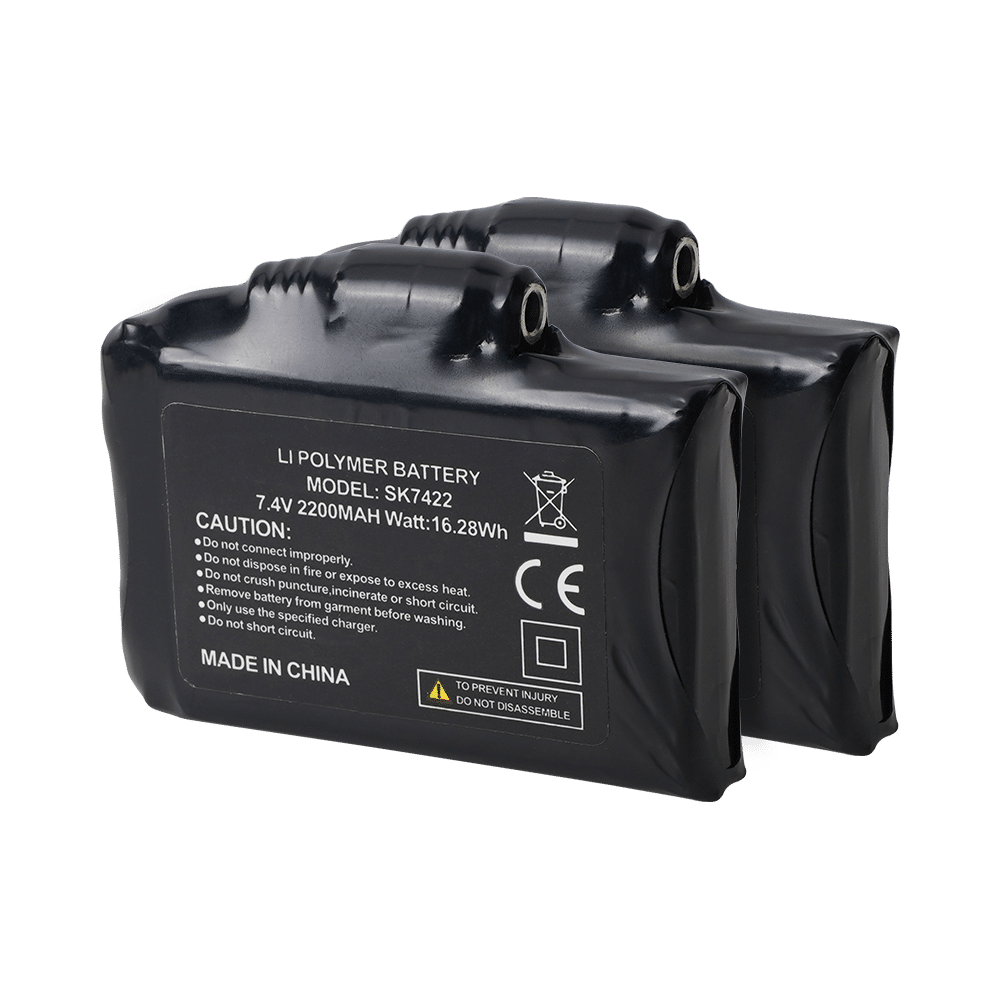
Traditional heated gloves use standard lithium-ion batteries—the same chemistry found in old phones and laptops. These cells contain a liquid electrolyte that’s flammable. If the battery is punctured, overcharged, or exposed to extreme heat, that liquid can ignite.
That’s why you see news about battery fires. It’s not the glove that fails—it’s the liquid electrolyte.
Semi-Solid-State Batteries: A Different Chemistry
At Dr. Warm, we’ve moved beyond that risk. All our heated gloves, socks, and insoles now use semi-solid-state batteries.
Unlike liquid electrolyte cells, semi-solid-state batteries use a gel-based or solid composite electrolyte. This means:
- No free-flowing liquid fuel inside the cell—if the casing is damaged, there’s nothing to leak or ignite
- Higher thermal stability—the battery resists heat buildup even under heavy discharge
- Structural integrity—the semi-solid electrolyte holds the cell together, reducing the risk of internal short circuits
This isn’t a marketing claim. It’s a fundamental chemistry difference that removes the primary failure mode of conventional lithium-ion packs.
Thermal Management: Stopping Heat Before It Starts
Even with safer chemistry, a battery still generates heat during use. That’s why thermal management matters just as much as the cell itself.
Dr. Warm gloves use a multi-layer thermal management system:
- Smart temperature controller—automatically regulates output to prevent overheating; 3 heat levels with auto-shutoff
- Heat-dissipating lining—distributes warmth evenly across the hand, so no single spot reaches dangerous temperatures
- Insulated wiring—all internal connections are sealed against moisture and mechanical stress
The result: the battery never runs unchecked, and heat never concentrates in one area.
Certified Beyond the Minimum
Safety claims need proof. Here’s ours:
| Certification | What It Covers |
| GB 47372-2026 | China’s new mandatory safety standard for power banks—covers electrical safety, mechanical abuse (crush, nail penetration, drop), thermal abuse, and environmental tests. Stricter than UN38.3 alone. |
| CCC Certification | China Compulsory Certification—mandatory for all mobile power products sold in China from April 2027. Includes factory quality audits, not just sample testing. |
| UN38.3 | Transport safety—altitude, thermal shock, vibration, short circuit, overcharge. The baseline most suppliers stop at. |
| CE / FCC / RoHS | European & US electromagnetic compliance;Restriction of Hazardous Substances—no lead, mercury, or cadmium. |
| ISO 9001 | Full quality management system across manufacturing, not just the final product. |
Most heated glove suppliers carry UN38.3 and a self-declared CE mark. We carry nine layers of certification—including standards that haven’t even become mandatory yet.
The Bottom Line
Heated gloves are safe when three things are true:
- The battery chemistry eliminates the fire risk → semi-solid-state, not liquid electrolyte
- The thermal system prevents overheating → smart controllers + heat distribution
- The certifications prove it → tested under real abuse conditions, not just shipping rules
Dr. Warm meets all three. That’s why we can say with confidence: our heated gloves are safe—not as a promise, but as a tested, certified fact.
Looking for heated gloves you can trust? Explore the Dr. Warm heated glove collection — built with semi-solid-state batteries and certified to the world’s strictest safety standards.