

When you source heated apparel—gloves, socks, insoles, or jackets—the battery inside is the single most critical safety component. A poorly manufactured lithium-ion pack can overheat, leak, catch fire, or even explode. Yet many suppliers cut corners on certification, shipping products that barely meet minimum legal requirements.
At Dr. Warm, we don’t just meet the bar. We clear it by a wide margin.
This article breaks down the battery safety standards we comply with—and why our certification stack is stricter than what most European, American, and competing Asian manufacturers follow today.
The Problem: Most Suppliers Stop at UN38.3
The vast majority of heated apparel factories obtain only one battery certification: UN38.3. This is the minimum requirement for shipping lithium-ion batteries by air. It covers:
- Altitude simulation
- Thermal cycling
- Vibration and shock
- Short circuit
- Impact and crush
- Overcharge and forced discharge
That’s it. UN38.3 says the battery won’t explode during transport. It says nothing about long-term safety, material toxicity, environmental resistance, or real-world abuse scenarios.
Many suppliers stop here and call it “certified.” They add a CE mark (self-declared, often untested) and an FCC label (basic electromagnetic compatibility), and ship to global buyers.
This is not enough. And in China, it’s no longer legal.
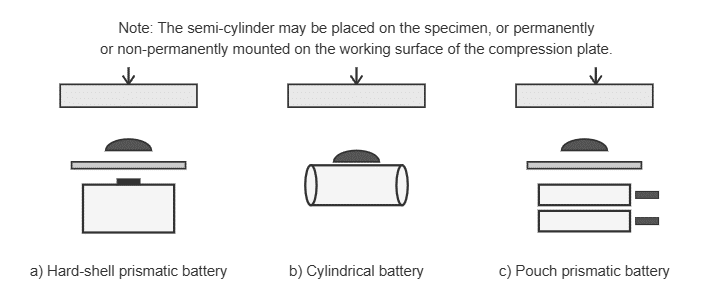
China’s New Mandatory Standard: GB 47372-2026
On March 31, 2026, China released GB 47372-2026, the Safety Technical Specification for Power Bank. Effective April 1, 2027, this standard becomes mandatory for all mobile power products sold in China—including battery packs used in heated apparel.
What GB 47372-2026 Covers
This is not a single-point test. It’s a comprehensive safety framework covering 10 major categories:
Why This Is Stricter Than Western Standards
Key differences that make GB 47372-2026 the toughest:
- Thermal runaway propagation — GB 47372-2026 requires that if one cell enters thermal runaway, the system must prevent propagation to adjacent cells. Neither CE nor FCC mandates this.
- Material safety testing — Heavy metals, halogen content, and magnetic impurities in battery materials are tested. No Western battery standard requires this level of material scrutiny.
- Single-fault analysis — Every critical component is tested for failure mode. If any single component fails (protection IC, fuse, MOSFET, connector), the system must remain safe. Western battery standards test some fault conditions, but not as comprehensively.
- Smart communication protocol — GB 47372-2026 mandates standardized communication between charger and battery for intelligent power management. No CE or FCC requirement covers this.
The Full Certification Stack: What Dr. Warm Batteries Meet
We don’t pick one standard and call it done. Every battery pack in our heated apparel products complies with the full stack:
What This Means in Practice
When you buy heated gloves or heated socks from a typical supplier, the battery inside has likely passed UN38.3 and maybe a self-declared CE. When you buy from Dr. Warm, the battery has passed:
- 3 Chinese mandatory national standards (GB 47372, GB 31241, GB 4943.1)
- CCC compulsory certification (factory audited, products tested annually)
- International transport, EMC, and environmental standards
- Quality management system audit
That’s 9 layers of certification versus the typical supplier’s 2-3.
How Most Competitors Cut Corners
Real-World Safety: What These Standards Prevent
Why This Matters for Your Brand
If you’re a brand sourcing heated apparel, battery safety isn’t just a compliance checkbox—it’s a liability issue.
1. Product Recall Risk
A single battery fire incident can trigger a product recall. In the US, CPSC recalls cost an average of 500,000−5M. In the EU, the GPSR (General Product Safety Regulation) can hold the brand—not the factory—liable.
2. Marketplace Compliance
Amazon, Walmart, and other platforms increasingly require battery safety documentation. Products without CCC, UN38.3, or CE documentation face removal.
3. Air Shipping Compliance
Airlines and logistics providers require UN38.3 test summaries. Without proper documentation, your products can’t ship by air.
4. Brand Reputation
One viral video of a heated glove catching fire can destroy a brand. Proper certification is your insurance policy.
5. Regulatory Future-Proofing
The EU Battery Regulation (2023/1542) and US federal battery rules are tightening. GB 47372-2026 is already ahead of these coming requirements. By sourcing from a manufacturer that meets the strictest standard today, you’re prepared for tomorrow’s regulations.
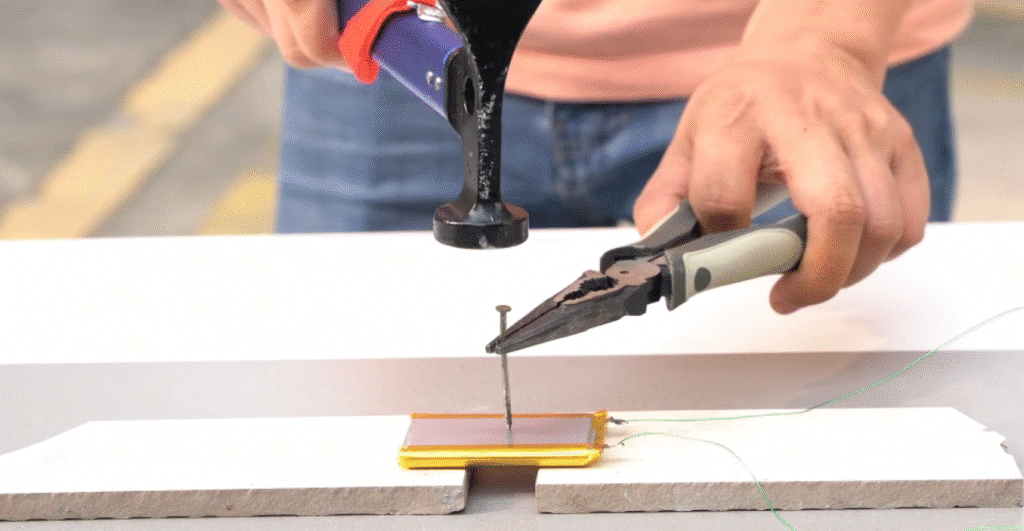
Our Battery Testing Process
Every Dr. Warm battery model goes through this testing pipeline before mass production:
- Cell Selection — Only Tier-1 cells with GB 31241 certification
- BMS Design — Custom protection circuit with 5-layer safety: overcharge, over-discharge, overcurrent, short-circuit, temperature
- Prototype Testing — Full GB 47372-2026 test suite (electrical + battery + material + environmental)
- Third-Party Lab Certification — CCC, CE, FCC, UN38.3, RoHS submitted to accredited labs
- Mass Production Quality Control — Every batch sampled for:
- Overcharge test
- Short circuit test
- Drop test
- Temperature cycling
- Capacity verification
- Annual Factory Audit — CCC requires annual surveillance audits to maintain certification
FAQ: Battery Safety Compliance
Q: Is GB 47372-2026 mandatory for export products? A: It’s mandatory for products sold in China starting April 1, 2027. For export-only products, it’s not legally required—but Dr. Warm complies voluntarily because the standard represents the highest safety benchmark globally.
Q: Do you provide test reports to buyers? A: Yes. We provide UN38.3 test summaries, CCC certificates, CE conformity declarations, and FCC compliance documentation with every order.
Q: Can I customize the battery specification? A: Yes. We offer custom battery solutions (capacity, voltage, form factor) with full re-certification. MOQ from 300 units.
Q: What’s the difference between GB 31241 and GB 47372-2026? A: GB 31241 covers the lithium-ion cell and battery pack level. GB 47372-2026 covers the complete power bank system—including the enclosure, charging circuit, communication protocol, and material safety. Think of GB 31241 as the “engine” standard and GB 47372-2026 as the “entire vehicle” standard.
Bottom Line
Battery safety is not where you want to save money. The difference between a UN38.3-only battery and a fully certified GB 47372-2026 battery is the difference between “probably won’t explode in transit” and “proven safe under every realistic abuse scenario.”
At Dr. Warm, we invest in the full certification stack because our brand partners sell to end users who trust them with their safety. That trust starts at the manufacturing floor.
Need battery safety documentation for your heated apparel line? Contact our team for full certification reports and custom battery solutions.