
Inside a 6,000 m² Heated Apparel Plant: Lines, Capacity and QC
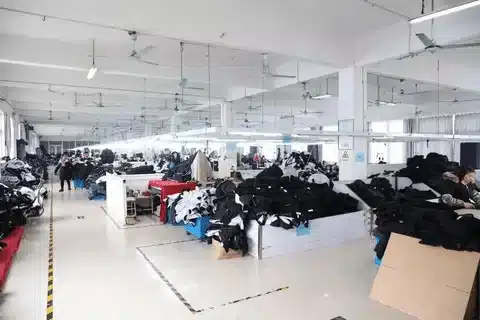
Dongguan Ditewang Intelligent Technology Co., Ltd. operates a 6,000 m² main plant for garment production and a separate 2,074 m² electronics assembly workshop, with 3 production lines, 12 main machines and a workforce of 56. These are the numbers buyers should use when judging whether a factory can handle their programme — not the square footage quoted in a brochure. This walkthrough explains what happens in each area and where the capacity limits actually sit.
The two-site layout is the first thing to understand. Garment assembly and lithium battery work have different requirements, and keeping them in separate buildings is a deliberate control decision rather than a matter of convenience.
What happens in the 6,000 m² main plant
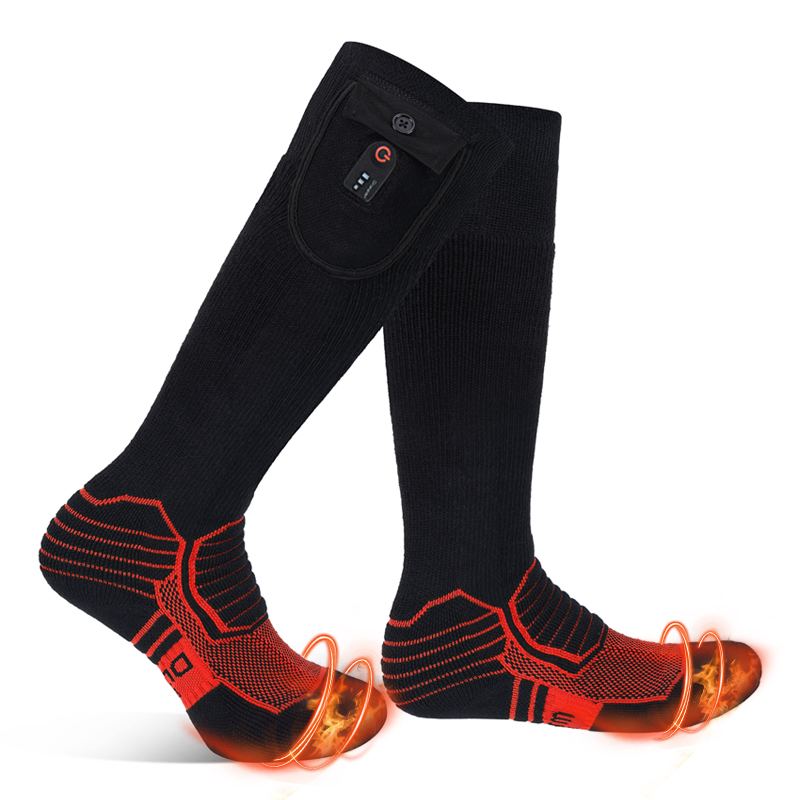
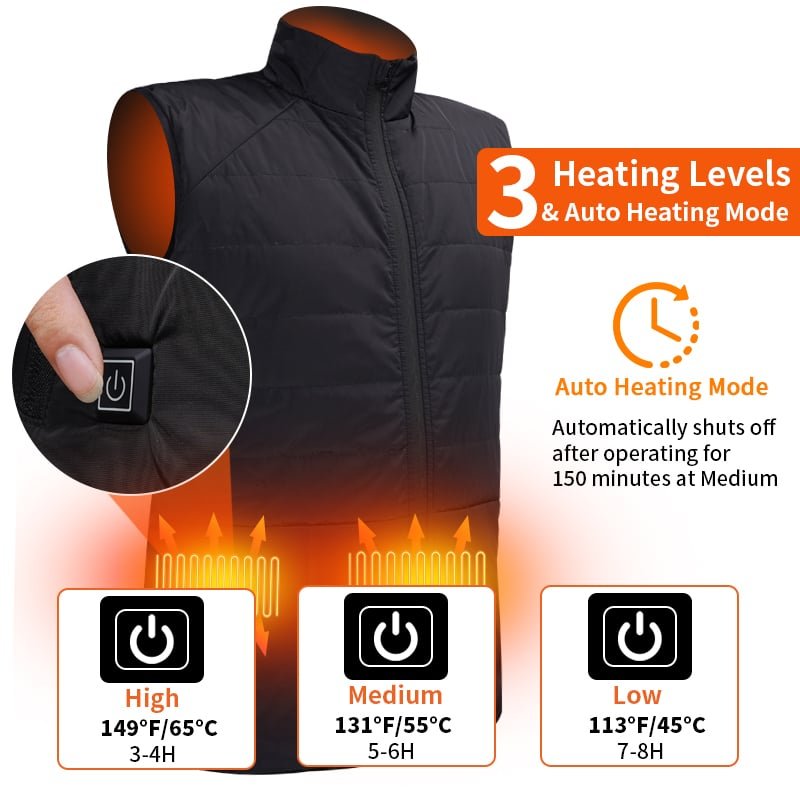
The main plant handles fabric inspection, cutting, sewing, heating-element placement, final assembly and packing for heated gloves, socks, insoles, jackets, vests and underwear. The workflow follows the garment product groups: base layers and accessories move through one set of stations, while outerwear such as jackets and vests uses a different seaming and lining sequence.
Three areas matter most during a capacity discussion:
- Fabric inspection and cutting. Fabric is checked before cutting, and panels are cut by model and size group. Mixing size groups at this stage is the most common source of downstream sizing complaints.
- Sewing stations. Each station has a documented work instruction, because a heated garment has additional steps around element placement and wire routing that a normal garment line does not.
- Final assembly and packing. The battery is fitted at a controlled stage, and finished goods are packed by destination market so documentation stays with the correct configuration.
When a buyer asks how many units a line can produce per month, the honest answer depends on the product. A heated glove and a multi-zone jacket are not interchangeable on the same station, so capacity is planned by product mix rather than by a single headline number.
What happens in the 2,074 m² electronics workshop

The electronics workshop develops and assembles heating elements, battery packs, control boards and wiring modules, separated from the garment floor because lithium cell handling and testing require controlled storage and housekeeping. This is where the difference between a heated apparel manufacturer and a sewing contractor becomes visible.
The workshop covers four functions:
- Heating element development and production. Element layouts are designed for the garment zone and the target temperature range of the specific model.
- Battery pack assembly. Cells are matched, protected by the BMS circuit and assembled into packs configured to the order rather than to a fixed standard capacity.
- Controller and wiring assembly. Control boards and connection modules are built and checked before they reach the garment line.
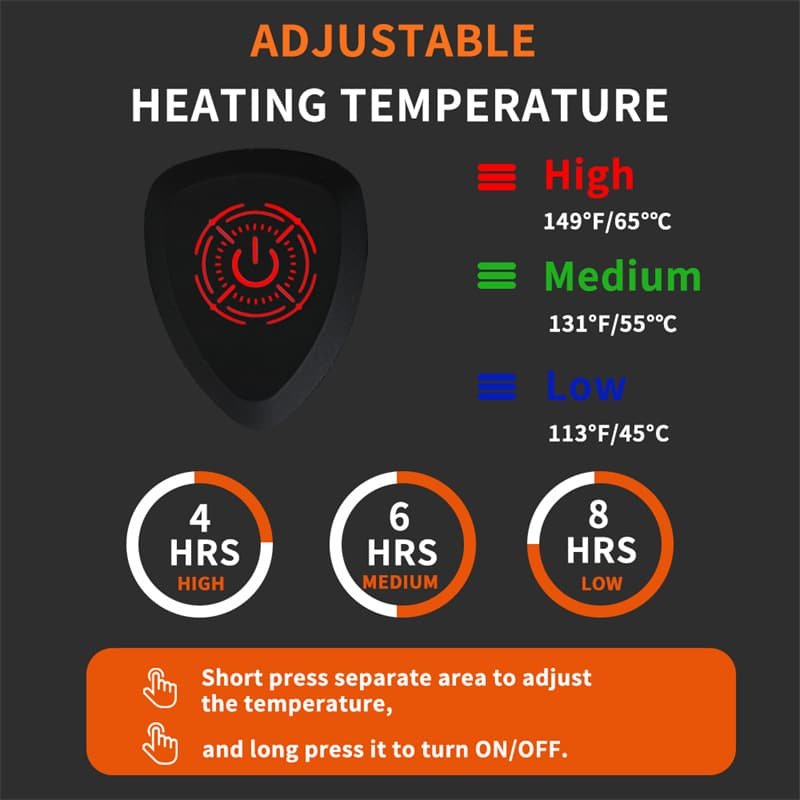
- Testing. Heating uniformity, overheat protection, charge cycles and bending durability are verified before components are released to production.
Because the electrical work happens in-house, design changes during sampling can be made by the engineering team rather than passed to an outside module supplier. That shortens development, and it means the same team that designed the system is available when a production issue appears.
3 lines and 12 main machines: what the numbers actually mean
Three production lines allow parallel programmes without mixing batches, and 12 main machines cover the core cutting, seaming, element-placement and assembly operations across those lines. Line count is not a claim of output; it is a claim about how many orders can be run independently at the same time.
With a workforce of 56, the plant is sized for controlled OEM and ODM programmes rather than mass-market volume. That is a deliberate choice. A factory chasing the highest possible unit count usually cannot support the sampling, documentation and model-specific testing that private-label heated apparel requires.
What this means for planning:
- OEM programmes using an existing platform can move quickly because patterns, element layouts and control logic are already validated.
- ODM programmes building a new product require engineering time before a line is committed, because the heating layout and battery configuration must be validated together.
- Mixed programmes are scheduled line by line, so a rush order on one product does not displace the quality checks on another.
For a closer look at how development paths differ, see our OEM/ODM page and the heated gloves manufacturer overview.
Where QC is built into the line
Quality control in heated apparel happens at four points — incoming material, element placement, electrical function and final packing — and each point must be recorded against the model and batch. A final inspection alone cannot catch a heating element placed in the wrong zone, because the garment will still look correct from the outside.
The four checkpoints:
- Incoming material. Fabric, cells and control components are checked before release to production.
- Element placement. Position and routing are verified during assembly, not after the garment is closed.
- Electrical function. Heating levels, controller response and battery behaviour are tested on the finished unit.
- Final packing. Model, configuration and destination-market documentation are matched before the carton is sealed.
Each checkpoint generates a record. A supplier who can produce those records for a random batch is demonstrating a system; a supplier who can only show a final inspection report is demonstrating a moment. Our quality control checklist sets out the same checkpoints in detail.
How seasonality shapes the production calendar
Heated apparel production peaks from July to October for winter delivery, so a programme that needs goods on shelf in October should be in sampling during spring. This timing catches buyers off guard more often than capacity does. The factory can run parallel programmes across its 3 lines, but only if those programmes are booked before the seasonal rush begins.
The pattern is consistent across North America and Europe: orders placed late in summer compete for the same production slots, and sampling that could take 7 to 30 days in March takes longer when every line is committed. Battery procurement follows the same cycle, because cells configured to a specific order need lead time of their own.
Planning backwards from the desired delivery date is the reliable approach. Allow 50 to 60 days for ODM development if the product is new, 20 to 25 days for OEM production on an existing platform, and up to 45 days for mass production once specifications are locked. Add buffer for shipping documentation, particularly when lithium batteries are involved. A buyer who starts this calculation in August will not make an October shelf date, regardless of how much capacity the factory claims.
Lead times and MOQ by development path
Sampling takes 7 to 30 days, OEM production 20 to 25 days, ODM development 50 to 60 days, and mass production is completed within 45 days; MOQ starts at 1 unit for stock items, 100 units for OEM and 500 units for fully custom ODM. These windows assume the buyer confirms specifications, artwork and battery configuration before the production slot is reserved.
The most common cause of delay is not factory capacity — it is a late change to the battery specification or packaging artwork after sampling. Because battery capacity is configured per order in our programmes, changing it late affects the technical file as well as the physical pack. Confirming these details at sample approval is worth more than compressing the production schedule later.
Seasonality matters too. Heated apparel demand peaks ahead of winter, and production slots fill earlier than buyers expect. A programme that needs shipment in October should be in development during spring, not in late summer. Our factory floor can support parallel programmes, but only when they are scheduled in advance.
What to ask when you visit
Ask to see one line running, one battery pack being assembled and one batch record pulled at random — those three requests tell you more than a full presentation. A prepared demonstration shows what a factory wants you to see. A random batch record shows what the factory actually does when nobody is preparing for a visit.
Useful questions include:
- Which line will run my order, and who signs off each checkpoint?
- Can I see the test record for the exact model and battery configuration I am buying?
- How are finished goods separated by destination market?
- Who makes the engineering decision when a heating layout needs to change?
The answers should come from the people who do the work, not only from the sales team. A factory that is comfortable putting an engineer or a line supervisor in front of a buyer is usually a factory with nothing to hide. For the wider context on factory versus trading company, see our factory page.
Frequently asked questions
How large is the production facility?
The operation has two separate sites: a 6,000 m² main plant for garment production and a 2,074 m² electronics assembly workshop for heating elements, battery packs and controllers. They are listed separately because they serve different processes.
How many lines and staff does the factory have?
Ditewang operates 3 production lines with 12 main machines and a workforce of 56. Line count indicates how many programmes can run independently; output depends on the product mix, since a glove and a multi-zone jacket use different stations.
What are the MOQ and lead times?
MOQ is 1 unit for stock items, 100 units for OEM and 500 units for fully custom ODM. Sampling takes 7 to 30 days, OEM production 20 to 25 days, ODM 50 to 60 days, and mass production is completed within 45 days.
Can battery capacity be changed for my order?
Yes. Battery capacity is configured per order rather than fixed. Standard voltage groups are 3.7V, 5V, 7.4V and 12V, with 24V available as a custom build. Confirm the final configuration at sample approval, because it affects both the pack and the technical documentation.