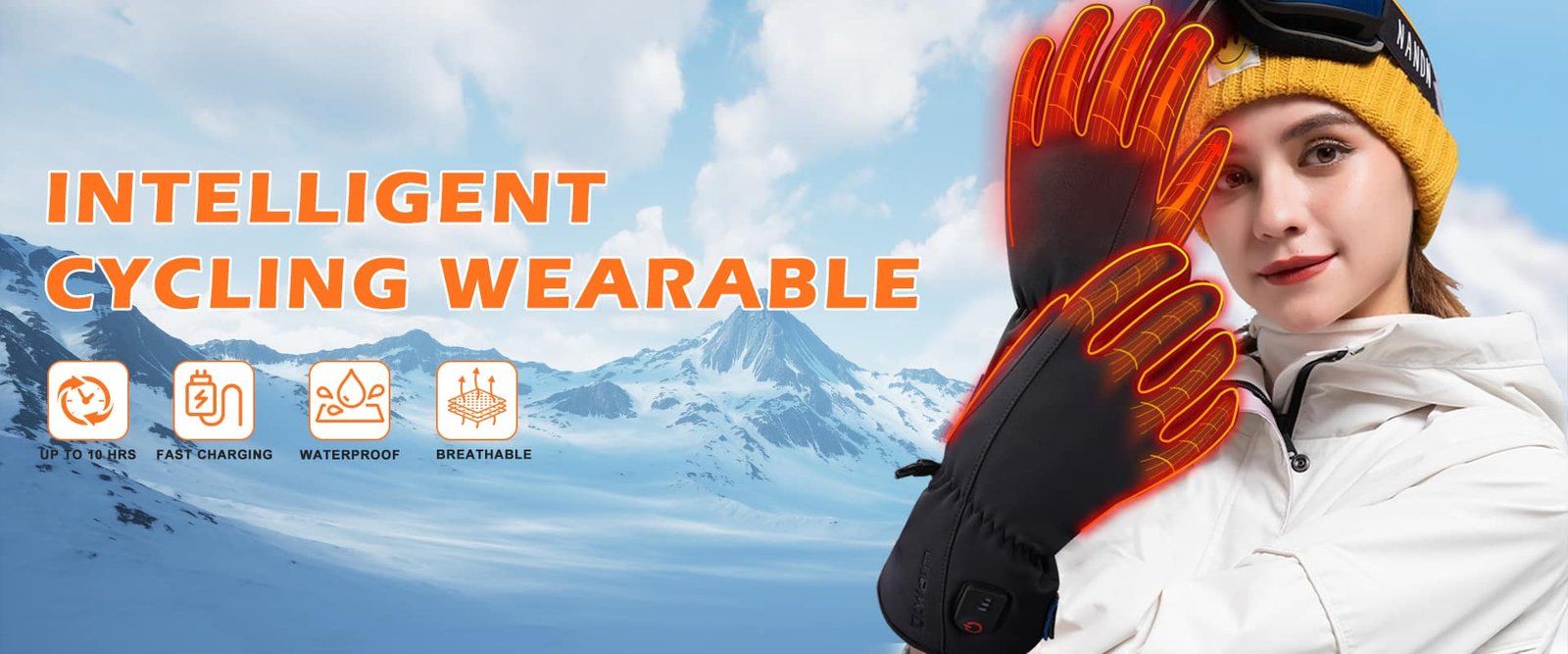

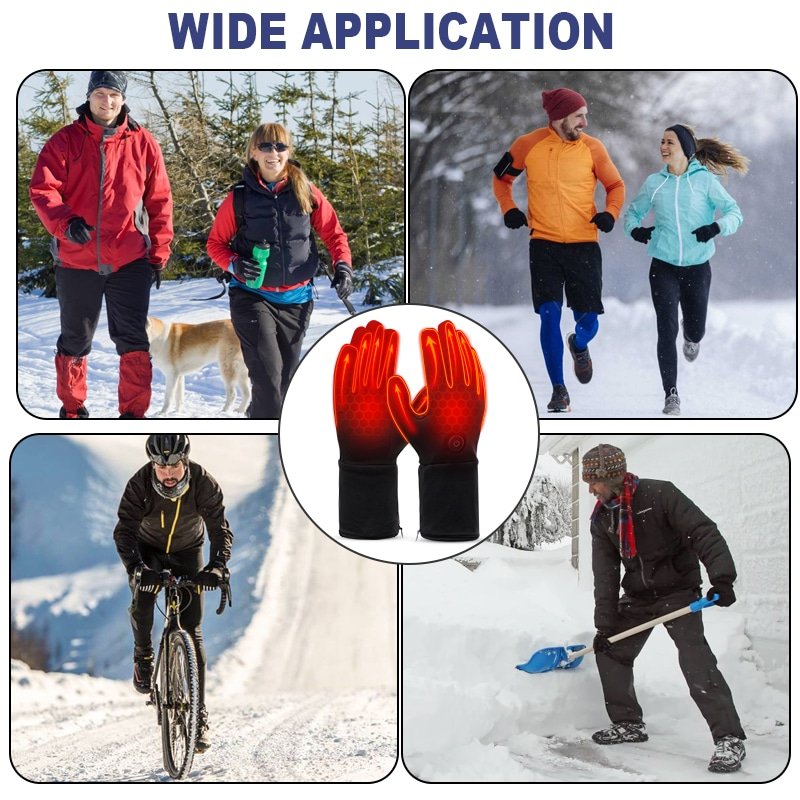
Introduction — Skiers and Snowboarders Face Extreme Cold, Wind, and Wet Snow
Skiing and snowboarding expose hands to brutal conditions: high-velocity cold wind drops felt temperature to –30°C, wet snow sprays constantly through garments, and poor circulation plus pole use numbs fingers until t For the full snow-sports setup beyond gloves, see the best heated snow gear.hey slip or get injured. Winter-gear reviewers who have tested hundreds of pairs on Vail blacks and Whistler bowls, heated-apparel engineers at Dr. Warm in Dongguan since 2013, specialists in custom heated gloves built for extreme conditions, and enthusiasts with thousands of slope runs have all seen regular gloves fail here. Heated ski and snowboard gloves answer with built-in technology, but the wrong pick still leaves hands frozen mid-ride. As winters stiffen, the right pair is a must — not just to survive, but to grip, perform, and enjoy the mountain.
What Makes the Best Heated Gloves for Skiing and Snowboarding
Based on our tests of Dr. Warm cold-chamber and field test of 40mph wind that would cause failure on groomers, the best performers had the following commonalities- they prioritized these features to prevent failures in the mid-slope region where moisture killed electronics or cold killed batteries.

High Heat Output for Sub-Zero Windchill
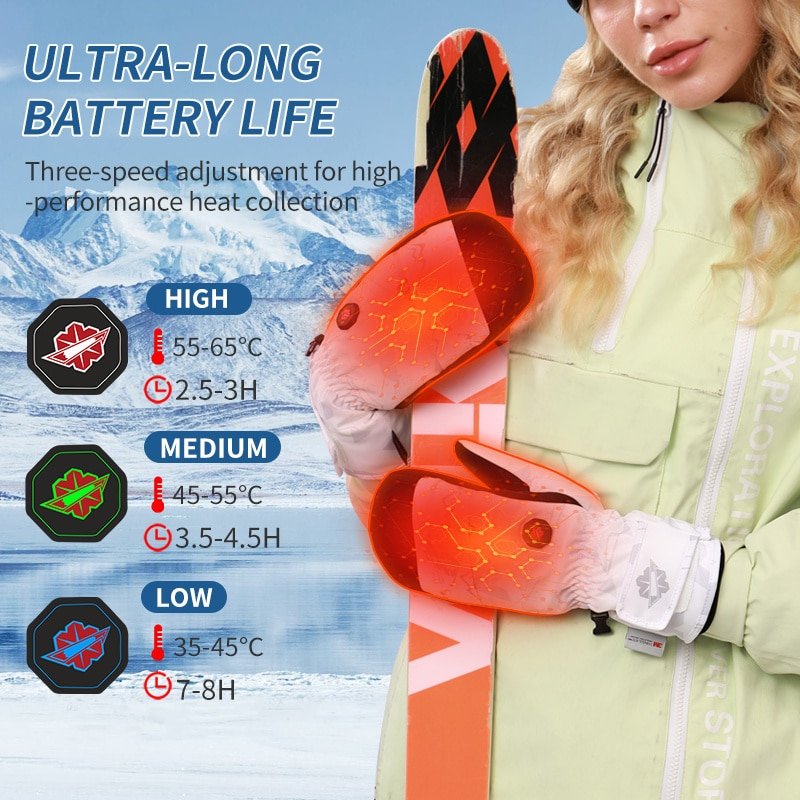
Wind 20-50 mph severely decreases the temperature of hands–gloves should provide 45-55C to overcome rapid cooling on lifts/runs.
Full-Finger Heating (Including Fingertips)
Important in holding ski poles and binding- adjustments- make extremities circulate to control.
Waterproofing for Constant Snow Contact
Waterproofing is important to snowboarders in particular to prevent leaks and powder as a result of falls.

Strong Battery Runtime (7.4V or 12V)
Should be able to work on a full day (3-5 hours in cold weather).
Dexterity + Protection
Ski-lovers require pole grip, snowboarders impact protection–flexible designs that are not too bulky to maneuver.
Skiing vs Snowboarding — Different Demands for Heated Gloves
Skiing and snowboarding are cold but their requirements are different: skiing needs the poles to have precision grip whereas snowboarding implies more falls and strain on the wrist since gloves used in mixed groups influence whether everyone gets the day they want.
Skiers Need Grip Precision
Flexibility + full-finger heating is required to stay in touch in changing ground conditions: pole handling.
Snowboarders Need Impact Protection
More falls – stronger palms and much tough shells of miraculously long life to take the impact without cutting.

Snowboarders Have More Snow Contact
Needs enhanced waterproofing of deep powder immersion.
Skiers Deal With Higher Wind Speeds
Heated gloves need stronger insulation + heat output to combat descent chill.
Key Features to Look For in Heated Ski & Snowboard Gloves
Necessities should fit mountain conditions waterproof heated gloves in snow that are breathable to avoid sweat freezing, which turns a backcountry outing into a nightmare once the gloves get heavy and wet.
Heating Element Types
Graphene heating film-swiftest, even in recovering speedily on lifts.
Carbon fiber heat coils-optimal flexibility in turns.
Heating wire(budget)–acceptable, and even, but spotty, omission acceptable by professionals.
The right heating element design determines how evenly and efficiently heat reaches the fingertips during high-speed runs and lift waits.
Heating Zone Layout
Heating of the full fingers; core heating of the back of the hands; optional heating the palm; binding is important when the thumb is heated.
Insulation Levels
Thinsulate, synthetic loft, fleece-Thinsulate (100-200g) has no bulk to prevent movement.
Waterproofing Technology
GORE-TEX, Hipora, IPX waterproof membranes GORE-TEX- breathable seal to spray.
Battery Performance & Runtime for Skiing/Snowboarding
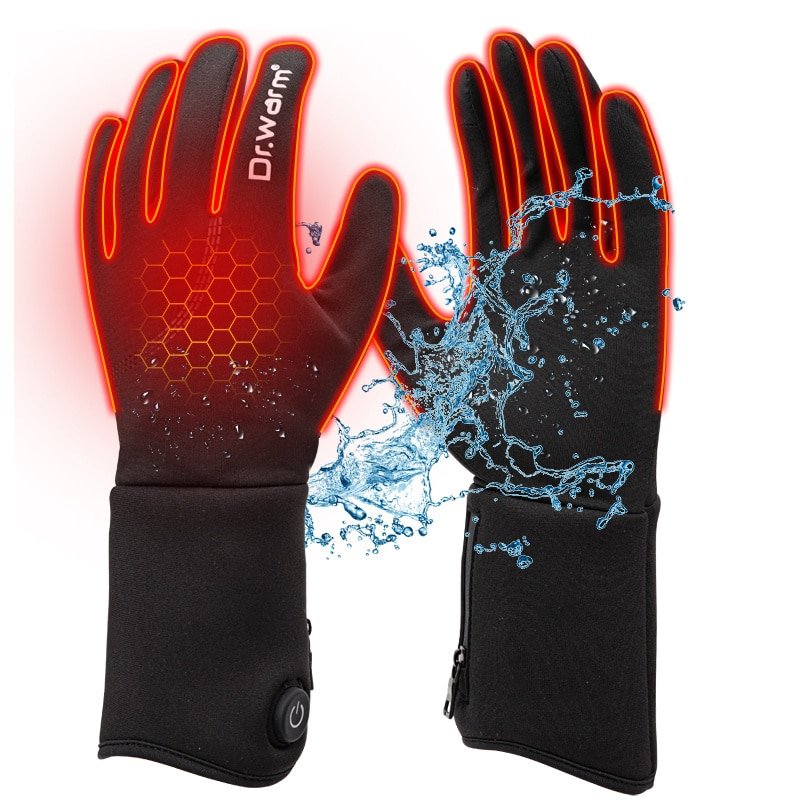
Batteries have to resist the cold–battery heated ski gloves with insulated packs are better in the wind, with a 7.4V test on a windy chairlift demonstrating that the 4-hour medium time is 4 times longer than the 3-hour no time. Reliable battery solutions with proper insulation and capacity are essential to maintain consistent heat throughout a full day on the mountain.
Voltage Options
7.4 V = balance standard, 12 V = extreme cold or high altitude, rapid heat.
Real Runtime
Breezy: 2-3 hours; moderate: 3-5 hours; light: 5-8 hours- wind shortened by 20%.
Cold Weather Battery Loss
Cold reduces the runtime by 20-40%3 lithium slows at -10degC.
Battery Placement
Cuff pockets are easy to reach because they are waterproof.
Best Heated Gloves by Category (No Brand Names)
These categories address the needs, such as heated gloves to use in extreme cold on skis must be as insulated as possible, due to the tests of Dr. Warm in other terrains.

Best Overall Heated Gloves for Skiing & Snowboarding
Heat, waterproofing, dexterity, battery life- 7.4V graphene to provide a balanced heat in both mixed conditions.
Best for Extreme Cold / High Alpine Conditions
12V system, heavy insulation, palm heating–countering thin air 50degC+.
Best Long-Lasting Battery Gloves
Rechargeable batteries or high capacity -8 or more hours low in case of marathons.
Best Heated Mittens for Skiing & Snowboarding
Good to the maximum warmth of cold-sensitive skiers–bundled fingers keep the heat in.
Best Lightweight Heated Gloves
Full range finger movement + medium-range warmth-carbon fiber of groomers.
Best Budget Heated Ski Gloves
Value Acceptable waterproofing + high heat-7.4V wire.
Heating Technology Comparison
Flexibility is required of technology: carbon fiber heated gloves are most flexible during turns.
Graphene Film
Advantages: quick, slim, flat heat; disadvantages: more expensive–even wind.
Carbon Fiber
Pros: adjustable, heavy-duty; cons: slower ramp- perfect on moguls.
Heating Wire
Advantages: low cost; disadvantages: are hard, ineffective–apprentice to serious skiing.
Fit, Grip & Protection
Fit influences control- skiing gloves that have finger heating must feel natural.
Pre-Curved Finger Construction
For pole control–mimics grip.
Knuckle & Palm Reinforcement
Of particular use to snowboarding falls- absorbs impact.
Wrist Guard Compatibility
Snowboarders commonly wear wrist protection– elongated cuffs are put on over.
Safety Features Skiers & Snowboarders Should Expect
Protection avoids problems- overheat control is important in falls.
Overheat Protection
Hot spots prevention sensor-based.
Waterproof Battery Housing
Survives deep snow.
Certifications
CE, FCC, RoHS, UN38.3 for compliance.
Wiring Bending Test
Wiring Bending Test Important in terms of durability -3000-5000 cycles. Professional PCBA design ensures the circuits remain flexible and reliable after thousands of flexes from gripping poles or absorbing falls.
Real Mountain Conditions & Recommendations
The circumstances are different–powder snow requires gloves that are made of strong waterproofing.
For Beginners
Comfort + waterproofing + battery life-easy controls should be the priority.
For Advanced Riders
. Requires good heating + grip + durability- faster runs.
For Backcountry Skiers
Warmest/maximum battery+ multilayer waterproofing-isolation.
For Snowboarders
Impact resistance + waterproof palm-prints–tricks.
Common Mistakes When Buying Heated Gloves
Shun these- heated gloves used in extreme cold skiing require questioning.
Choosing 5V Gloves Not Designed for Winter Sports
Insufficient in cold.
Not Checking Heating Zones
Leaves tips cold.
Ignoring Waterproof Ratings
Shorts in snow.
Buying Gloves Too Bulky for Pole Grip
Hinders control.
Underestimating Battery Drain in Cold Weather
Runtime shortens in wind.
Buyer’s Guide — How to Choose Heated Gloves That Perform on the Mountain
Choose 7.4V / 12V for power. Make sure grip is heated with the fingers. Use snow waterproof membranes first. Medium medium level runtime. Test dexterity in ski poles. Select the insulation to match your climate – Thinsulate.
Final Conclusion — The Best Heated Gloves for Skiing and Snowboarding Provide Heat, Waterproofing & Performance
The most advanced gloves to use in skiing and snowboarding combine the heat of graphene with the snowproof and dexterity to overcome the wind, moisture, and cold. Always balance on 7.4V or go to extremes with 12V, so it is safe to ensure all-day running. Winter sports will be more fun with the right pair, the choice will be made depending on your style to perform optimally. Brands developing performance-focused ski and snowboard gloves can leverage complete OEM/ODM solutions to customize heating systems, waterproofing, and fit for mountain conditions.
Frequently Asked Questions
Why do snowboarders need a different palm from skiers?
Because they use it differently. A skier loads the palm through a pole grip; a snowboarder plants, pushes and falls on it, often on ice and often at speed. The palm needs abrasion resistance and a little padding, and the wrist needs support that survives repeated impact rather than a light strap.
Can one pair cover both skiing and snowboarding?
Yes, if it is built as an all-mountain glove: full-finger heating, a reinforced palm, a membrane that handles wet snow and enough flex to grip a pole. The compromise sits in weight and feel — a pure racing glove is more precise, a pure park glove is tougher, and the all-mountain pair is slightly worse at both.
Does a wrist guard fit inside or outside the glove?
Inside, over the liner, with the glove over it. That sequence protects the wrist without putting the guard between the heating element and the skin, and it keeps the glove’s own closure working as designed. It does mean sizing up, and it means the cuff has to be specified long enough to close over the guard.
What changes for backcountry and touring?
Breathability matters more than maximum heat. Uphill effort produces sweat that has nowhere to go inside a sealed glove, and a damp lining is colder on the descent than a dry one. Touring setups usually favour a lighter glove with a lower output and a spare pack, over a heavy glove run at full power.