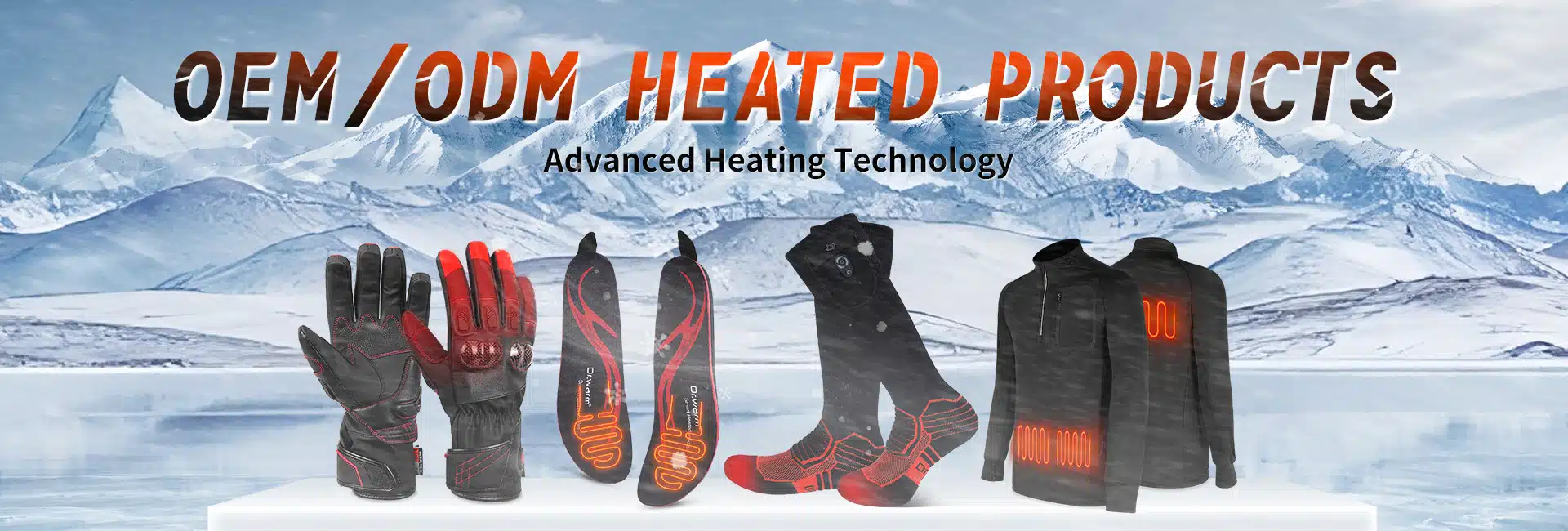

OEM heated jackets stand apart from standard outerwear because MOQ, cost, and lead time are driven primarily by heating system complexity, battery integration, and production process requirements—not by garment fabrication alone. MOQ often stems from minimums in fabric rolls, custom heating elements, and battery procurement batches. Costs reflect the added electronics (heating films or wires, controllers, batteries) alongside shell construction and assembly. Lead times extend due to sampling revisions, safety testing, and coordinated component sourcing.
OEM heated jacket production timelines and pricing are primarily determined by electronic integration and manufacturing complexity rather than standard garment construction alone. For brands or sourcing managers planning a private label heated jacket line, transparency from the factory on these elements helps avoid surprises and supports realistic budgeting.
When evaluating partners, look for those with in-house capabilities in heating circuit design and battery assembly—an experienced OEM custom heated jacket manufacturer typically provides clearer breakdowns and fewer hidden variables.
What Determines MOQ for OEM Heated Jackets
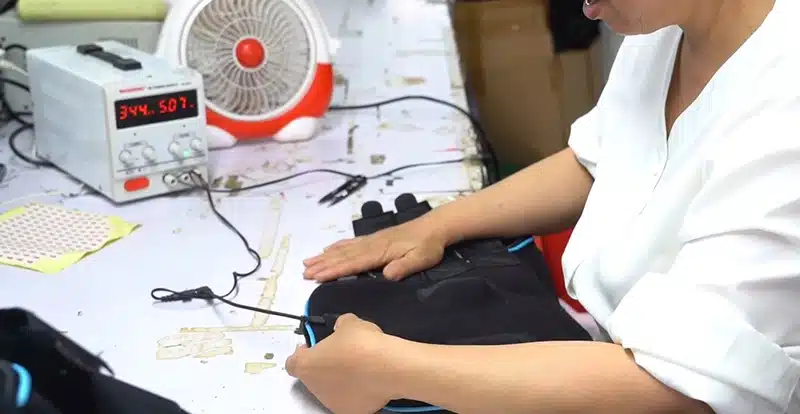
Minimum order quantities (MOQ) for OEM heated jackets rarely mirror those of basic apparel because suppliers must balance component sourcing constraints with production efficiency. As a working baseline, OEM production built to your specification starts at 100 pieces, while full ODM development — where the pattern, heating layout and tooling are created for you — starts at 500.
Several interconnected factors set the MOQ threshold:
- Fabric sourcing minimums — Outer shell materials (e.g., waterproof softshell or insulated polyester) often come in dye-lot minimums of 500–1000 meters, forcing smaller runs to accept higher per-unit fabric waste or premiums.
- Heating element customization — Carbon fiber films or wire layouts require setup for cutting patterns and lamination; unique zone designs or shapes push MOQ upward to amortize setup costs.
- Battery module procurement — Lithium-ion packs with specific capacities (e.g., 7.4V/2200mAh) or protection circuits are ordered in batches; suppliers avoid low volumes to maintain quality consistency.
- Controller programming requirements — Custom firmware for temperature levels, APP integration, or remote pairing needs development and flashing setup, which factories amortize across larger runs.
| Factor | Impact on MOQ |
| Fabric sourcing | Supplier minimum (often 500–1000m rolls) |
| Heating system customization | Tooling / pattern setup requirement |
| Battery configuration | Batch limitation from cell suppliers |
| Private label packaging | Print / labeling minimums |
These elements explain the gap: branding applied to an existing stock design can begin from a single piece, a basic color or logo change on a current platform stays near the OEM floor, and new heating zones with a custom battery specification move the order into ODM territory.
Cost Structure Breakdown for OEM Heated Jackets
Heated jacket costs break down differently from conventional outerwear, with electronics and integration often comprising 30–50% of the total manufacturing expense. The garment shell (fabric, insulation, sewing) forms the base, but heating components drive the premium.
Key cost drivers include material grade, component quality, and compliance testing. In mass production, per-unit costs drop significantly as fixed setup expenses spread out, but the heating system remains the largest variable.
| Cost Component | Description |
| Outer shell fabric | Material grade (polyester, softshell, waterproof/breathable ratings) |
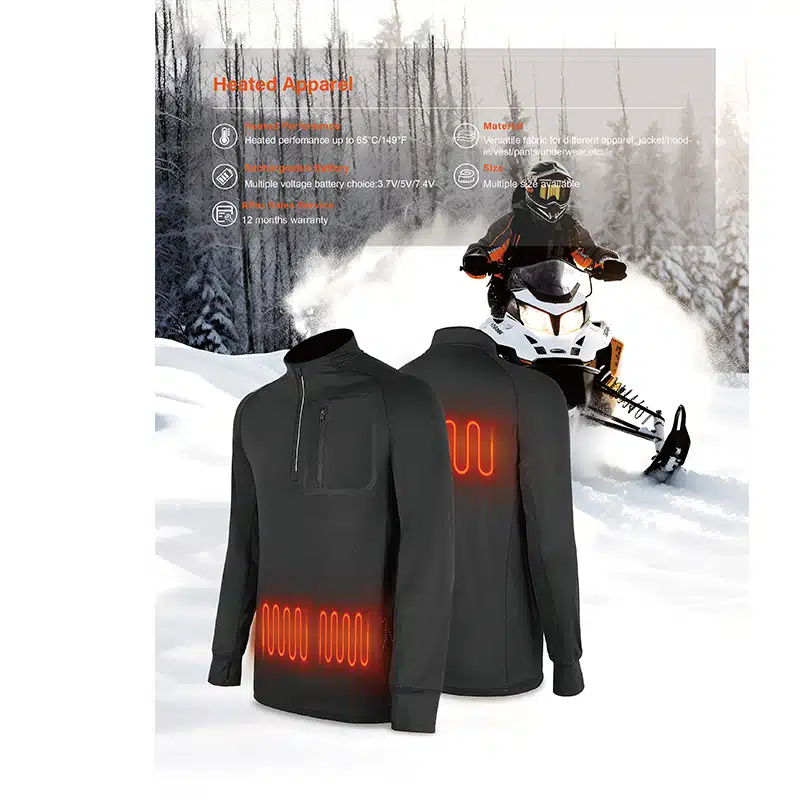
| Heating elements | Carbon fiber / heating film (uniformity, durability, power draw) |
| Battery pack | Capacity & protection (mAh, cycles, BMS safety features) |
| Controller system | APP / Remote / Switch (firmware, PCB complexity, user interface) |
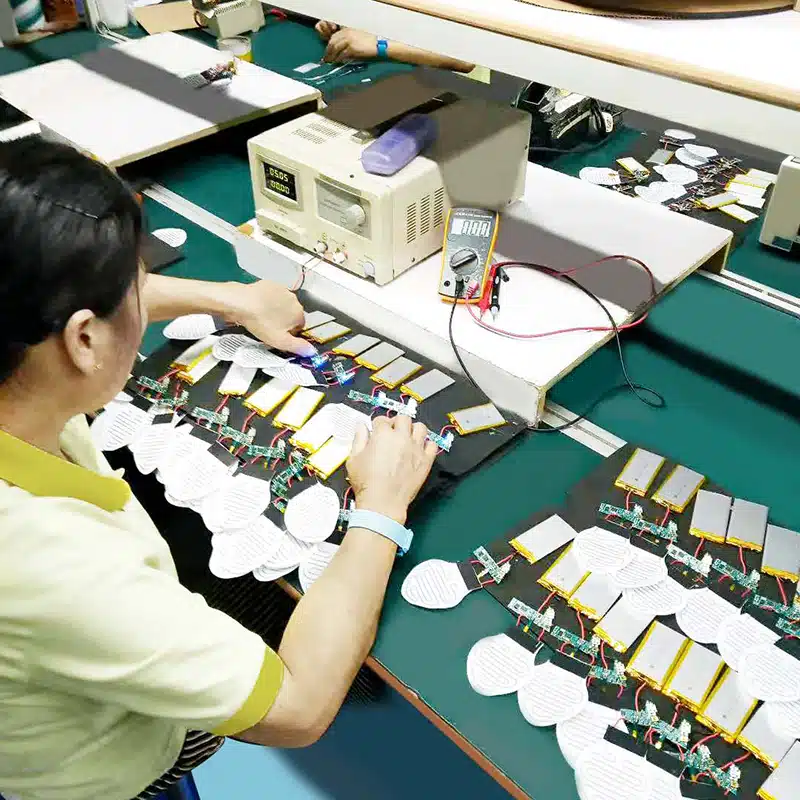
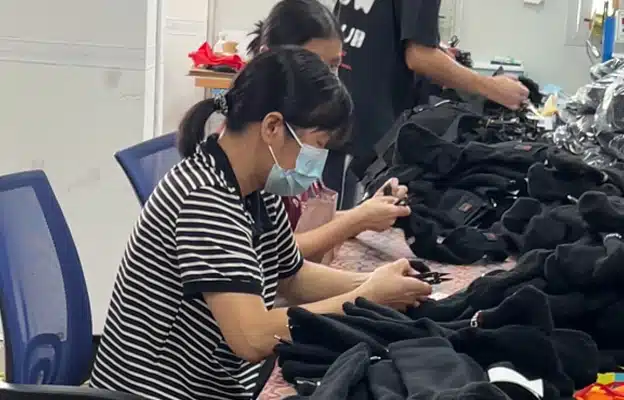
| Labor & assembly | Wiring integration, garment sewing, precise placement to avoid shorts |
| Testing & QC | Safety & endurance tests (over-temperature, cycle life, washability) |
Heating system integration—elements, wiring, controllers, and batteries—frequently accounts for a significant percentage of total cost, often 35–50% depending on features like multi-zone heating or smart controls. Standard jackets avoid these layers entirely, which is why heated versions carry a clear premium even at scale.
Sample Development Cost vs Mass Production Cost
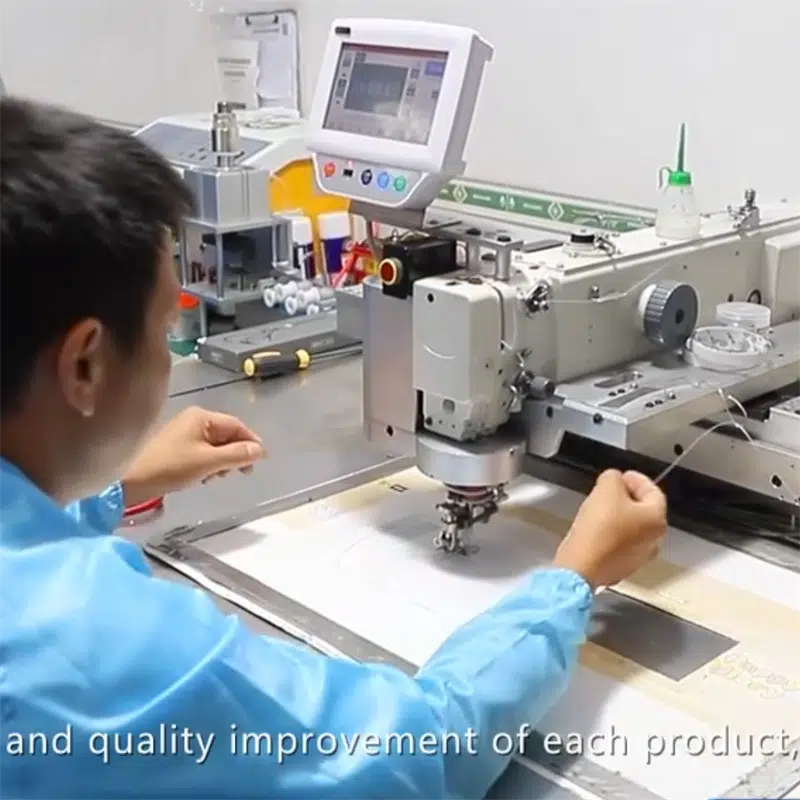
Sample development for OEM heated jackets costs substantially more per unit than mass production because it absorbs one-time engineering, tooling, and testing expenses without volume amortization.
Prototyping involves creating custom heating layouts, sourcing small-batch batteries, programming controllers, and conducting initial safety checks. Mold or cutting die charges for unique patterns, plus multiple revision rounds, further inflate the price—often 3–10× higher than bulk unit cost.
In contrast, mass production spreads these fixed costs (R&D time, tooling amortization, initial compliance testing) across hundreds or thousands of units, reducing per-piece expense dramatically. Buyers should budget separately for sampling (typically $80–300 per sample, depending on complexity) while viewing mass runs as the point where economies emerge.
Lead Time Explained: From Concept to Mass Production
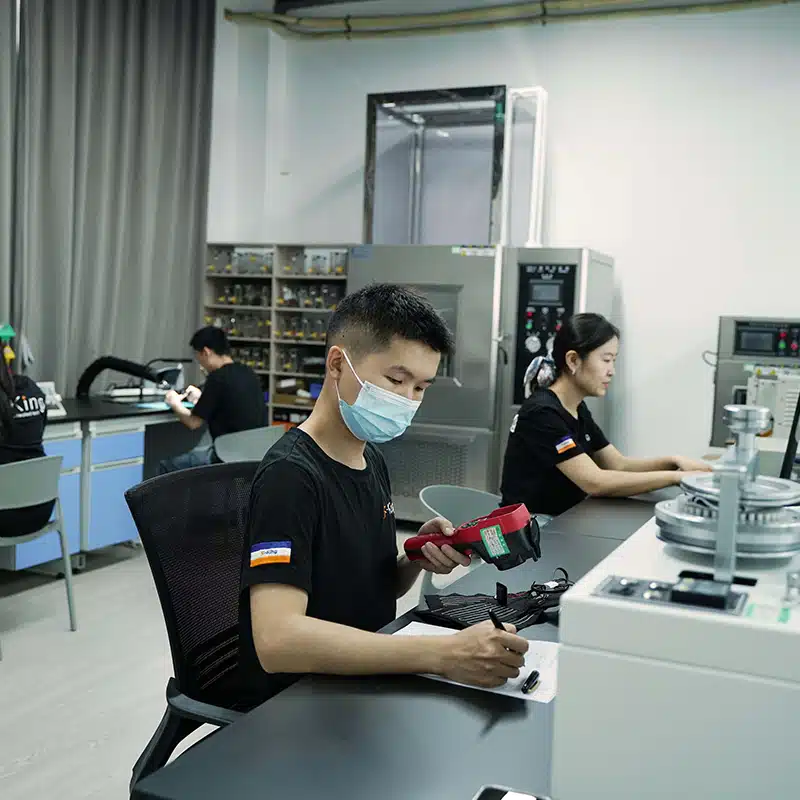
Lead time for OEM heated jackets extends beyond standard apparel timelines due to phased electronic validation and component coordination. Realistic planning prevents rushed decisions that compromise quality or safety.
Typical breakdown:
| Stage | Typical Time |
| Design confirmation | 1–2 weeks |
| Sample production | 2–4 weeks |
| Testing & revisions | 1–2 weeks |
| Mass production | 30–45 days |
Battery compliance (safety certifications, aging/cycle tests) and over-temperature protection validation frequently add days or weeks if revisions arise. Coordinated sourcing of heating films and batteries can also create bottlenecks if suppliers face backlogs.
Why Heated Jackets Take Longer Than Standard Jackets
OEM heated jackets require extended timelines compared to non-heated equivalents because electronic integration introduces steps absent in conventional garment manufacturing.
- Wiring assembly — Precise routing and insulation to prevent shorts or movement damage during wear and washing.
- Battery integration — Secure pocket design, connector durability, and charging port placement.
- Thermal performance testing — Verifying even heat distribution across zones under various conditions.
- Over-temperature protection validation — Ensuring controllers cut power reliably to meet safety standards.
These processes demand iterative lab testing and potential redesigns, adding complexity that standard cut-and-sew apparel skips.
Common Cost & Timeline Misunderstandings
Many sourcing teams encounter surprises when moving into OEM heated jackets due to assumptions carried over from basic outerwear.
- Expecting fashion jacket pricing — Electronics and testing add layers ignored in standard quotes.
- Ignoring battery compliance cost — Certifications (CE, RoHS, UL) and safety features increase expense.
- Underestimating testing time — Endurance cycles and thermal mapping extend validation phases.
- Confusing trading company quotes with factory pricing — Intermediaries often hide true component and labor breakdowns.
Clear factory communication on these points helps align expectations early.
Conclusion — Planning Determines Profitability
Successful OEM heated jacket projects hinge on realistic planning around MOQ, transparent cost structures, and achievable timelines. Transparent communication with the supplier reduces delays from misaligned specifications or last-minute changes. Engineering alignment on heating zones, battery specs, and compliance needs prevents costly overruns during sampling or production. Finally, realistic MOQ planning—factoring in component minimums—ensures stable supply and avoids cash-flow strain from over-ordering or rushed small runs.
By approaching sourcing with a clear understanding of these manufacturing-driven factors, brands position themselves for consistent quality, on-time delivery, and healthier margins in the competitive heated apparel market.
Frequently Asked Questions
Why do electronics set the timeline rather than sewing capacity?
A sewing line is elastic — you add operators or a shift. Electronics are not. A pack has a cell lead time and a batch size, a controller has to be programmed and flashed per variant, and every one of those steps has a test that cannot be compressed without losing the ability to trace a failure. The garment is the last thing to be late, not the first.
What keeps unit cost down without cheapening the product?
Standardising what the customer never sees. One pack platform across two or three jacket styles, a shared controller, and a common element cutting pattern save more than a thinner shell ever will — and they do not change the perceived quality at all. What you should not standardise is the zone layout, because that is what the wearer actually feels.
Why does a sample cost so much more per unit than production?
Because a sample absorbs the whole program’s non-recurring work into one garment: pattern development, element layout trials, firmware flashing setup and the first round of testing. None of that is repeated on unit two thousand. Judging a supplier on sample price is therefore comparing a development invoice with a production invoice, and the two are not the same product.
What usually causes a delivery slip on a heated jacket order?
A late specification change, almost every time. Changing a colour is cheap until the fabric has been dyed; changing a pack is cheap until the cells are ordered. The second most common cause is a component substitution made without telling anyone, which surfaces at final test as a batch that heats differently. Both are avoided by freezing the spec in writing before purchase orders go out.