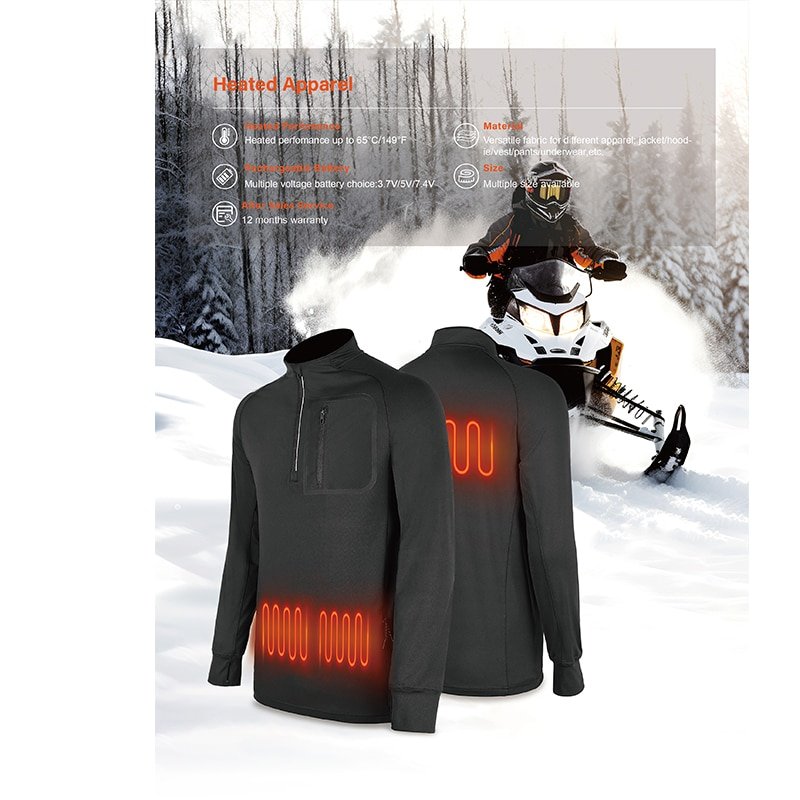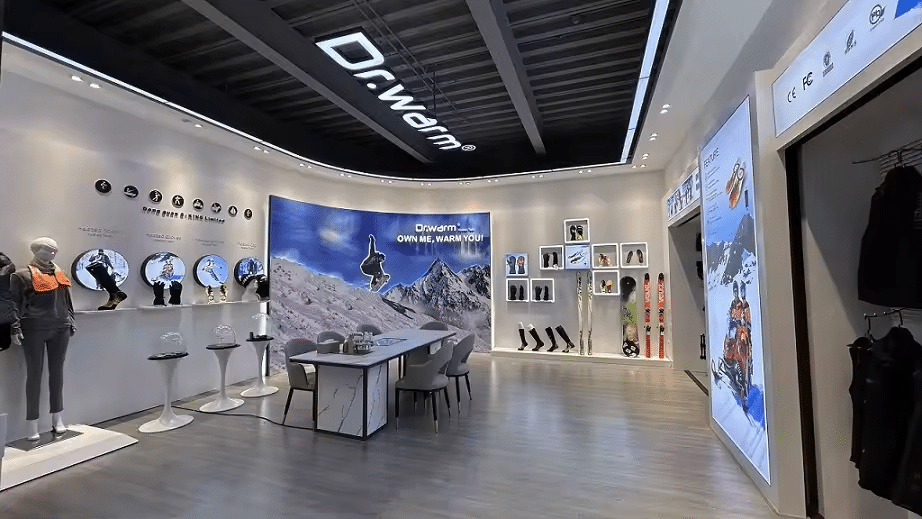

The development of OEM heated jackets is a structured engineering and manufacturing process that integrates heating systems, garment construction, battery safety, and quality validation before mass production begins. Unlike standard apparel, heated jackets combine electronics with textiles, demanding precise coordination across disciplines. OEM heated jacket development process involves multiple iterative stages where heating performance, user comfort, durability, and regulatory compliance must align. A successful OEM heated jacket project depends on disciplined coordination between heating system engineering, garment construction, battery integration, and quality validation before entering mass production.
Brands and sourcing managers often underestimate the complexity, assuming it’s simply adding heating pads to a jacket shell. In reality, poor planning in early stages leads to costly revisions, safety issues, or inconsistent performance in the field. The full workflow—from initial concept to scaled production—typically spans 4–9 months, depending on customization level and revision cycles.
For brands exploring full capabilities in this space, understanding the custom heated jacket manufacturing process provides deeper insight into how integrated factories handle both electronics and garment assembly under one roof.
How long does it take, in numbers
Buyers ask this first and most guides answer it last, so here it is up front. The duration of a custom heated jacket program is set by one decision made at the brief: whether the project reuses a proven heating platform (OEM) or engineers a new one from a concept (ODM). Everything below follows from that.
| Phase | Typical duration | What it depends on |
|---|---|---|
| First sewn sample | 7–30 days | How much of the heating platform is reused from a proven base |
| Compliance and safety validation | Runs alongside sampling | Target markets fixed at the brief, not after tooling |
| OEM production run | 20–25 days | Customizing an existing platform: materials, zones, branding |
| ODM full development | 50–60 days | New product engineered from a concept to a producible design |
| Bulk production and shipment | Within 45 days of the approved sample | Includes the pilot batch before the main run |
| Warranty | 12 months | From delivery, on every production run |
Three numbers carry most of the answer. 7–30 days for the first sample, because that window is where platform reuse shows up. 20–25 or 50–60 days for production, because OEM and ODM are different jobs, not fast and slow versions of the same one. And 45 days from approved sample to shipment, which holds for both paths. Programs that quote one number for both paths are quoting the faster one.
Stage 1: Concept Definition & Product Positioning
A clear product positioning at the outset prevents misalignment later in development and keeps the project within realistic engineering and cost boundaries.
This initial stage focuses on translating market needs into technical specifications. Without defined parameters, subsequent engineering becomes inefficient.
Key decisions include:
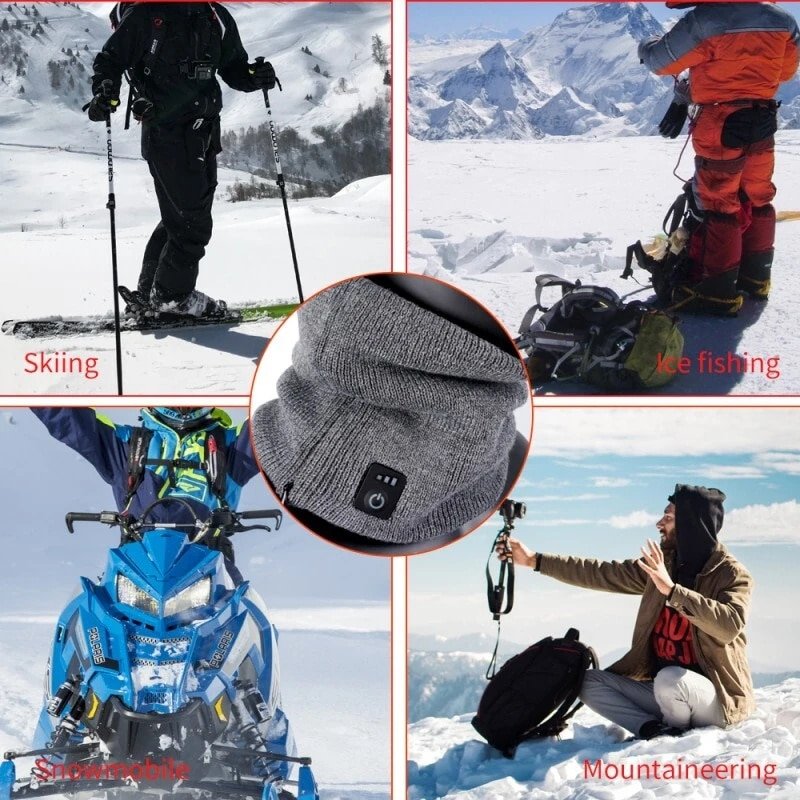
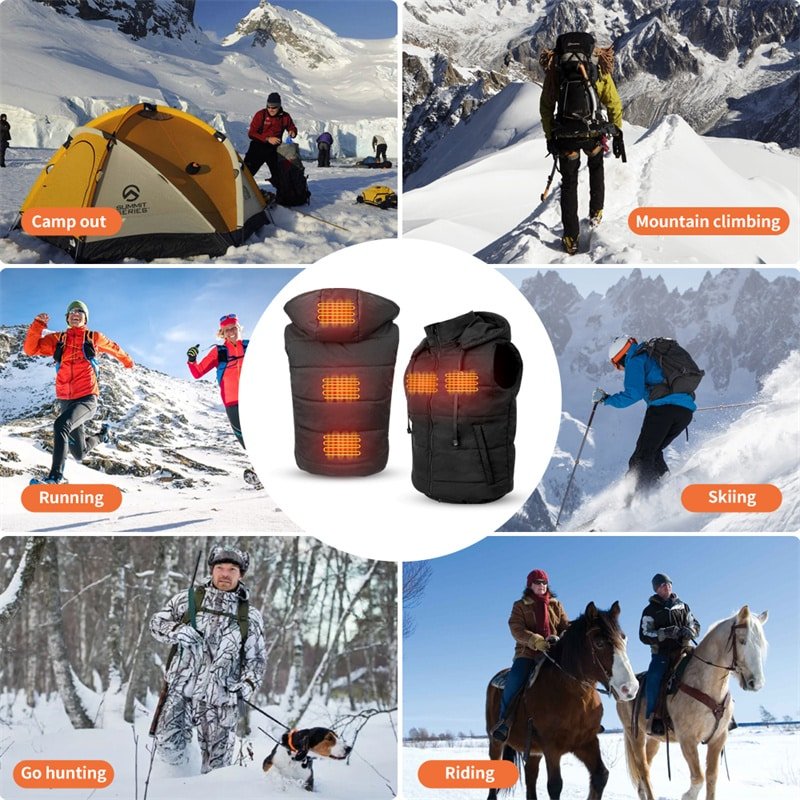
- Target market identification — Determines usage conditions (e.g., high-mobility sports vs. stationary industrial work), influencing heating intensity, runtime, and durability requirements.
- Heating zone selection — Prioritizes core body areas for efficient warmth without excess power draw.
- Fabric type selection — Balances insulation, breathability, weight, and compatibility with heating elements (e.g., softshell for flexibility or padded for extreme cold).
- Control system decision — Affects user interface and integration complexity.
| Decision Area | Key Consideration |
| Market segment | Sports / Industrial / Riding |
| Heating zones | Core / Back / Chest / Sleeves |
| Control system | Button / Remote / APP |
| Battery capacity | Runtime requirement |
These choices form the technical brief that guides all downstream work. Misjudging runtime needs, for example, can force redesigns when prototypes reveal insufficient heating duration.
Stage 2: Heating System Engineering
Heating system design is the technical core of any OEM heated jacket, where electrical and thermal performance must meet user expectations while maintaining safety and efficiency.
Engineers calculate power requirements, select components, and map layouts to ensure even heat distribution without hotspots or excessive battery drain.
Critical elements include:
- Heating element selection — Carbon fiber or flexible film elements are common for their thin profile, uniform heat, and wash durability.
- Wiring layout design — Routes must avoid stress points, allow movement, and integrate safely with garment seams.
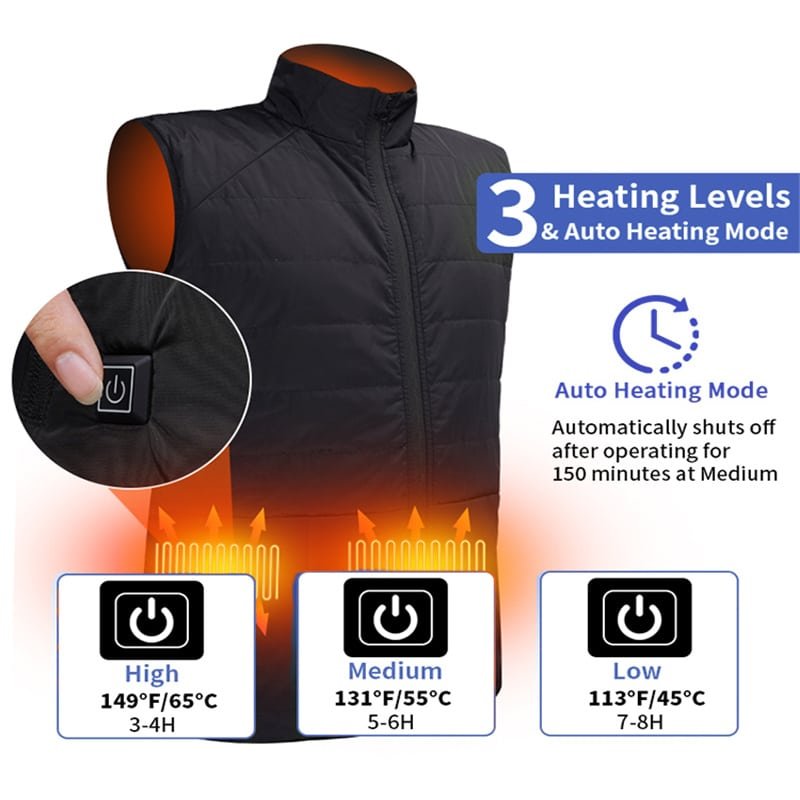
- Power calculation — Determines voltage, current, and total wattage based on zone area, desired temperature rise (typically 30–50°C above ambient), and runtime targets.
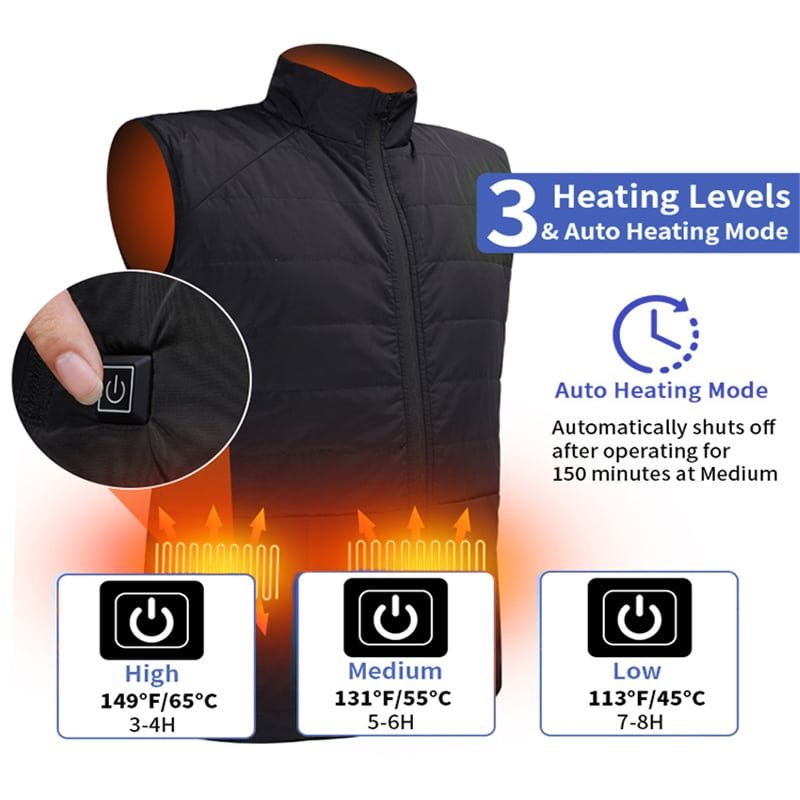
- Controller configuration — Includes temperature regulation, overheat cutoff, and user-selectable levels (low/medium/high).
| Engineering Component | Purpose |
| Heating element | Generate heat |
| Wiring routing | Stability & safety |
| Battery pack | Power source |
| BMS integration | Protection control |
Power calculations often use basic formulas: total power (W) = voltage (V) × current (A), with adjustments for efficiency losses and thermal resistance of fabrics. Over-specifying leads to heavier batteries; under-specifying results in poor performance.
Stage 3: Garment Structural Design & Pattern Making
Garment engineering must accommodate the heating system without compromising fit, mobility, or aesthetics—requiring modifications to standard patterns.
This stage bridges apparel design and electronics integration.
Key considerations:
- Pattern modification for heating layout — Adjusts seam allowances and panel shapes to embed elements securely while preserving drape.
- Battery pocket positioning — Places packs in accessible, balanced locations (often lower back or side) to minimize bulk and weight shift.
- Seam reinforcement — Strengthens areas around wiring and connectors to withstand repeated flexing and washing.
- Connector routing — Ensures sealed or low-profile connections between heating zones and controller/battery.
Patterns are digitized, and initial mock-ups (using non-heated fabrics) verify fit before committing to heated prototypes.
Stage 4: Sampling & Prototype Testing
Prototyping turns concepts into tangible products, revealing real-world issues that simulations cannot predict.
Sample production begins once patterns and heating layouts are finalized. Typically, 2–5 rounds occur:
- First sample focuses on basic assembly and heating function.
- Subsequent samples refine fit, heat distribution, and controls.
Testing includes:
- Thermal performance testing — Measures temperature uniformity across zones using thermal cameras or sensors at various ambient conditions.
- Fit testing — Evaluates comfort during movement (e.g., arm raise, bending) to ensure no pulling on wires.
- Revision cycles — Common issues like uneven heating or stiff areas lead to pattern tweaks, element repositioning, or controller adjustments.
Each cycle adds 2–4 weeks, emphasizing the need for clear feedback loops between brand and factory.
Stage 5: Compliance & Safety Validation
Safety validation is non-negotiable for heated jackets, as lithium batteries and electrical components introduce risks like overheating or short circuits.
This phase confirms the design meets standards before scaling.
Key validations:
- Battery safety testing — Includes overcharge, short-circuit, and thermal runaway scenarios.
- Overheat protection validation — Verifies automatic cutoff at preset thresholds (typically 45–60°C).
- Certification preparation — Gathers data for CE, RoHS, FCC, or UL submissions.
- Documentation readiness — Compiles test reports, schematics, and user warnings.
| Validation Area | Purpose |
| Thermal test | Prevent overheating |
| Electrical test | Short-circuit prevention |
| Battery cycle test | Longevity |
| Label review | Regulatory compliance |
Passing these gates unlocks production approval.
Stage 6: Mass Production & Quality Control
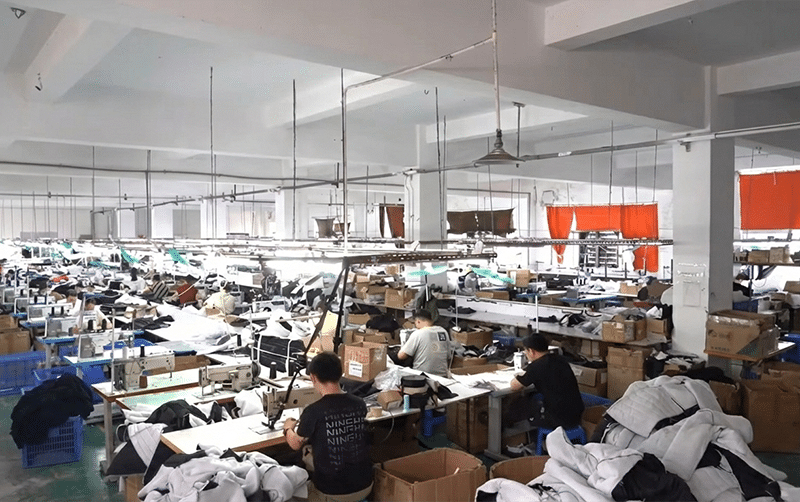
Mass production shifts from single units to thousands, requiring stable processes to maintain consistency.
This final stage includes:
- Component sourcing — Secures approved suppliers for heating elements, batteries, and fabrics with lead-time buffers.
- Assembly line setup — Sequences sewing, wiring integration, and electronic assembly to minimize defects.
- In-line inspection — Checks at key points (e.g., after wiring attachment) catch issues early.
- Final product aging test — Simulates extended use (charge-discharge cycles, thermal cycling) on samples from each batch.
| Production Control | Function |
| Incoming inspection | Material verification |
| Process QC | Assembly consistency |
| Final inspection | Performance validation |
| Aging test | Stability confirmation |
Discipline here—through statistical process control and random sampling—ensures reliability across large runs.
Conclusion — Process Discipline Defines Product Reliability
OEM heated jackets are engineered systems, not modified garments. A structured development workflow reduces technical risks, controls costs, and delivers consistent performance season after season. By following disciplined phases—from precise concept definition through rigorous validation to controlled mass production—brands achieve products that perform reliably under real-world conditions. This manufacturing approach prioritizes long-term stability over shortcuts, resulting in safer, more durable heated jackets for end users.
Frequently Asked Questions
How long does a custom heated jacket take from concept to mass production?
A first sewn sample typically takes 7 to 30 days, depending on how much of the heating platform is reused. An OEM program — customizing a proven platform — typically runs 20 to 25 days of production after sample approval. A full ODM development, engineering the product from a concept, typically runs 50 to 60 days. Bulk production ships within 45 days of the approved sample, including the pilot batch, and every product carries a 12-month warranty.
Where do heated jacket projects usually lose time?
At the transition between a working prototype and a producible one. The prototype proves the heat works; the producible version has to be sewn the same way a thousand times, with the wiring routed so no operator can get it wrong and the pack pocket sized so the pack cannot be inserted backwards. That step is engineering, and it is routinely left out of the plan.
When does compliance work start?
At the brief, not at the end. The target markets decide which standards the pack and the finished jacket have to meet, and some of them constrain the design — cell choice, protection topology, label placement and the technical file contents. Discovering a certification requirement after tooling means either a redesign or a market you cannot ship to.
Can mass production start as soon as the sample is approved?
Not responsibly. Sample approval confirms the design; it does not confirm the process. Before the run you want the production fixture and the test sequence signed off, a pilot batch measured against the sample, and an agreed definition of what a reject looks like. Skipping that is how the first shipment arrives with heat that is right on the chest and cool on the back.