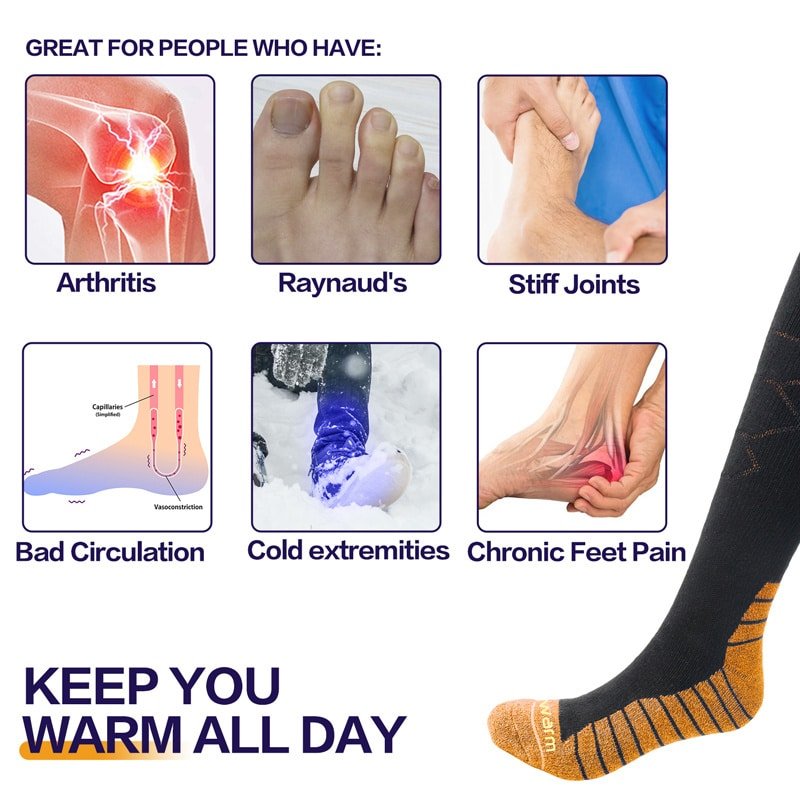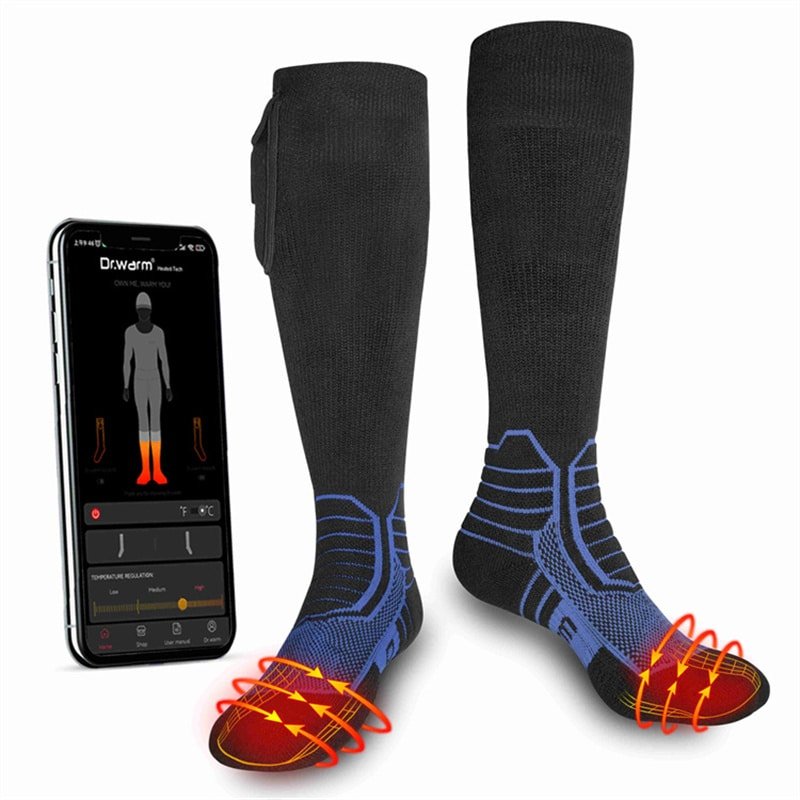

Heated Socks for Medical & Circulation SupportThermal warm socks may offer a level of warmth to aid circulation-friendly comfort by the use of low-intensity, regular heating in a consistent manner. Nevertheless, to users with congestion difficulties, the focus should be on moderated and consistent notes of heat production as opposed to cozy warmth intensity. The priority of design to be used in these applications is safety, unquestionably the paramount priority.
It has been believed by many that any heated sock would be beneficial in situation involving circulation but this ignores the significant variance. Applications with the circulation focus require more stable, and the temperatures of the applications are lower to reduce dangerous situations such as the variation of temperature and overheating.
To circulatory sensitive customers, warmed up socks should provide uniform low degree of warmth with inbuilt battery safeguards and content safety care.
If you’re developing or sourcing products in this space, consider exploring medical-grade heated socks solutions to align engineering with these priorities.

Understanding Circulation-Related Cold Sensitivity
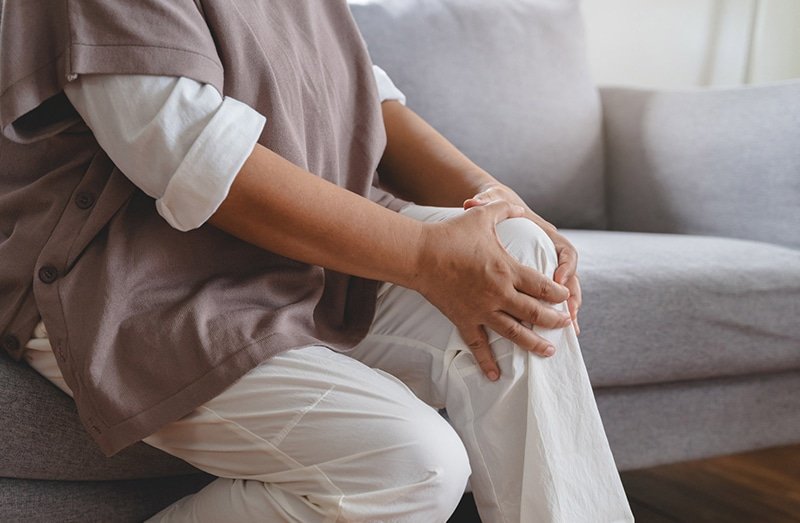
The cold sensitivity to circulation is usually associated with the decreased outdoor blood circulation, and feet are highly sensitive to cold systems.
As blood flow is reduced, the blood flow to the extremities such as the feet is reduced and hence the extremity feels cold all the time. There is also a high likelihood of heightened sensitivity of users to even tiny variation in temperature as abrupt changes can be uncomfortable or disruptive. With sensitive cases, the more danger is in case of excessive or improper heat.
Constant stable lightness is mandatory so as not to bring in any unwarranted variables to create comfort. It allows even distribution of thermal across the foot.
| Condition Factor | Design Implication |
| Cold Sensitivity | Gentle, steady heat |
| Reduced Circulation | Even heat distribution |
| Skin Sensitivity | Soft, hypoallergenic materials |
| Limited Mobility | Extended runtime |
These considerations lead product engineers to produce product designs that are more concerned with consistency as opposed to power.
Temperature Control Requirements for Medical Applications
In circulation-based heated sock centres, the process of temperature control revolves around low setting and stable production to prevent extremes.
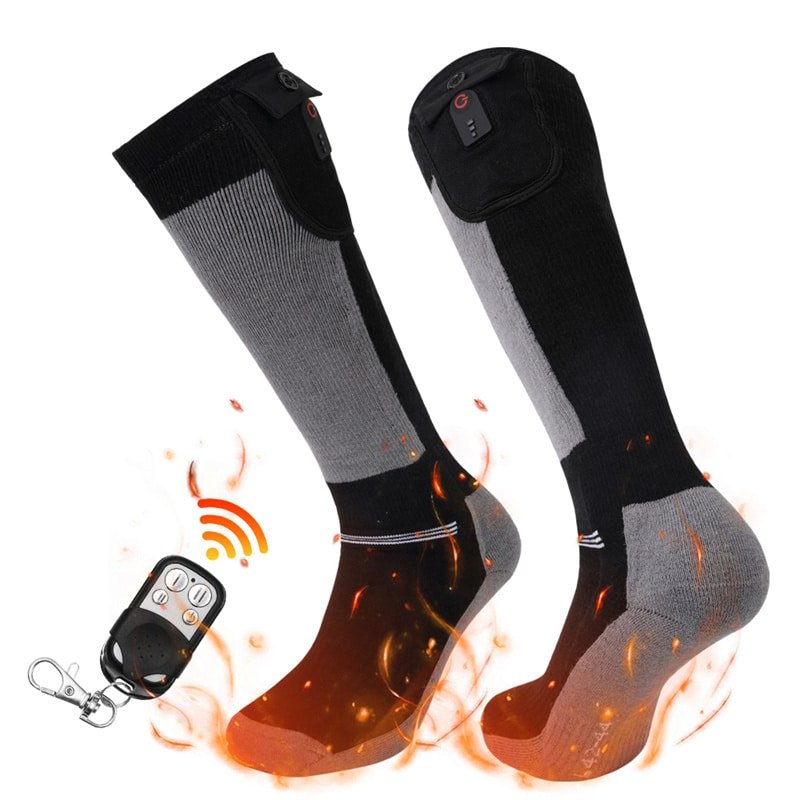
With the use of precise multi-level control users are able to choose and adjust a range of gentle warmth usually those settings that are lower than those of recreational or high activity models. You can also have automatics and that is a protective factor since it will shut off even when it is left unattended. The heating elements have thermal sensors that identify the temperatures of the surface and control the output to remain within safe limits.
| Feature | Importance |
| Low Heat Range | Prevents overheating |
| Stable Output | Reduces temperature fluctuation |
| Auto Shut-Off | Safety compliance |
| Thermal Monitoring | Protects sensitive skin |
Probably the most common method of providing this stability in controllers is PID (proportional-integral-derivative) style regulation implemented by engineers.
Preferred Temperature Ranges
Sometimes the designs designed to these purposes often restrict the maximum production to scales that promote comfort but do not need exorbitance- usually stopping short of many recreational levels.
Battery Safety and Protection Systems
Any trustworthy heated sock is based on battery safety, particularly when the end-users can be less sensitive or are less mobile.
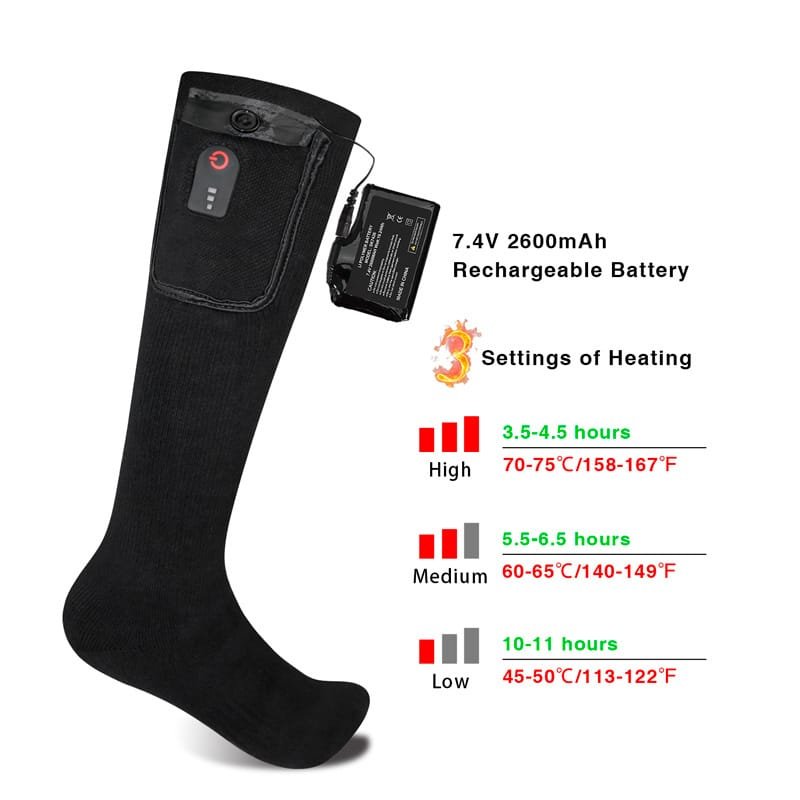
The presence of a strong Battery Management System (BMS) is a must. It controls voltage, current and temperature to avoid overcharge, over-discharge or thermal runaway. Overheat protection circuits automatically switch off the power in case of anomalies and short-circuit prevention isolates errors. The lower-voltage (usually 5V to 7.4V), systems minimize inherent risk over more highly-voltage systems.
Redundancy of safety can be considered as a key feature like the dual-layer protection and fail-safe shutoffs which is instrumental in offering many barriers to failure modes.
Material Selection for Skin Comfort
The search of skin comfort is another factor that promotes the use of materials in the choice of heated socks that are to be used in sensitive applications.
Hypoallergenic Swabs would lower chances of irritation during prolonged wear. The inner is lined with a textile of soft fabrics usually of brushed or plush, so as to project minimal friction against sensitive skin. Moisture-controlling garments get rid of perspiration to avoid dampening which may enhance the irritation. Breathability will make sure that there is no accumulation of heat.
Key Textile Considerations
- Use low-irritant certified OEKO-TEX or close equivalents of the same.
- Add a smooth building to get rid of pressure points.
- Choose sturdy but mild outer clothes so that they can be washed.
These are factors that make the interface skin-friendly.
Heating Zone Placement for Circulation Comfort
As a way of achieving balance in delivery of warmth, strategic placement of heating zones ensuring it is where it is most required is included.
The warmth that is provided by the toes targets the extremities, which tend to become cooler since they are distant to core circulation. The balanced thermal coverage is facilitated evenly through the forefoot. Keeping the hotspots low-intensity will avoid localized overheating and a gradual transition among the foot will be made more even with a graded temperature field.
| Heating Zone | Circulation Benefit |
| Toe Area | Addresses cold extremities |
| Forefoot | Balanced warmth |
| Arch | Optional mild support |
| Heel | Minimal intensity |
This zoned design coincides with anatomy of natural feet via heating.
Durability and Safety Testing Considerations
Durability testing is conducted to see whether the performance and safety of heated socks can be ensured during the whole time period.
Thermal stability testing ensures that the testing output is consistent over a series of testing cycles. On-going low-heat sustained exercises replicate prolonged usage. Checks on wash durability include confirmation that heating elements and wiring can be used repeatedly and not degraded by the laundry. The insulation checking procedures eliminate unwanted heat loss/transfer.
Manufacturers are also liable to strict procedures such as strenuous aging and fault test, to ascertain long-term dependability.
Common Misconceptions About Medical Heated Socks
A number of myths exist against the use of heated socks when it comes to circulation-related scenarios.
- Thermostat should be set higher because more heat is conducive to a comfortable environment– There are numerous instances where overheating proves to be disruptive to a comfortable environment instead of beneficial. Stability is more significant than temperature.
- Ignoring safety limits -Neglect of safeguards provided elevates unreasonable dangers.
- On medical comforts with outdoor sports models – Recreational designs usually focus on higher temperature that cannot be used in other delicate applications.
- Ignoring material sensitivity- Standard fabrics can enter irritation during the prolonged use in close contacts.
By solving these, it becomes more informed that they will make a decision.
Conclusion — Safety and Stability Come First
Circulation comfort heated socks should be manufactured with a focus on sustainable low level warmness, battery management mechanisms and skin friendly substance to provide responsible and controlled warmth.
Special attention on engineering precision, such as accurate temperature control, endangered safety mechanisms, and well-considered material selection, ensures that a developer will come up with a product that will provide the optimal comfort and maintain the maximum level of safety. This strategy promotes comfort of the user in harsh low temperature environments without venturing into the unknown not yet known lane.
Frequently Asked Questions
Is a heated sock a medical device?
No. A heated sock is a garment that provides warmth. It does not diagnose, treat or prevent any condition, and it should never be marketed as doing so — wording like improves circulation or relieves symptoms belongs to a regulated device with clinical evidence behind it. What a sock can honestly claim is steady, comfortable warmth for feet that feel the cold.
Why does lower, steadier heat suit cold-sensitive feet better?
Because the goal is a comfortable baseline, not a fast warm-up. High output over a small area creates contrast the wearer notices as discomfort, and it drains the pack quickly, which means the warmth disappears halfway through the day. Moderate output spread over the whole foot is easier to keep on for hours, and easier for the wearer to forget about.
What should the control limit protect against?
Loss of sensation as much as overheating. A wearer who cannot feel a hot spot reliably will not move away from it, so the design has to assume the feedback loop is missing rather than depend on the user noticing. That means a hard ceiling at the element, a cutoff that does not rely on the app, and a default level that is comfortable rather than impressive.
Which material choices matter most for sensitive skin?
What touches the skin, and what it releases under warmth and moisture. A soft, breathable inner face, seams routed away from pressure points, and materials that meet RoHS and REACH rather than just feeling acceptable on a bench. Warmth accelerates anything the fabric gives off, which is why material screening belongs in the specification rather than the marketing copy.