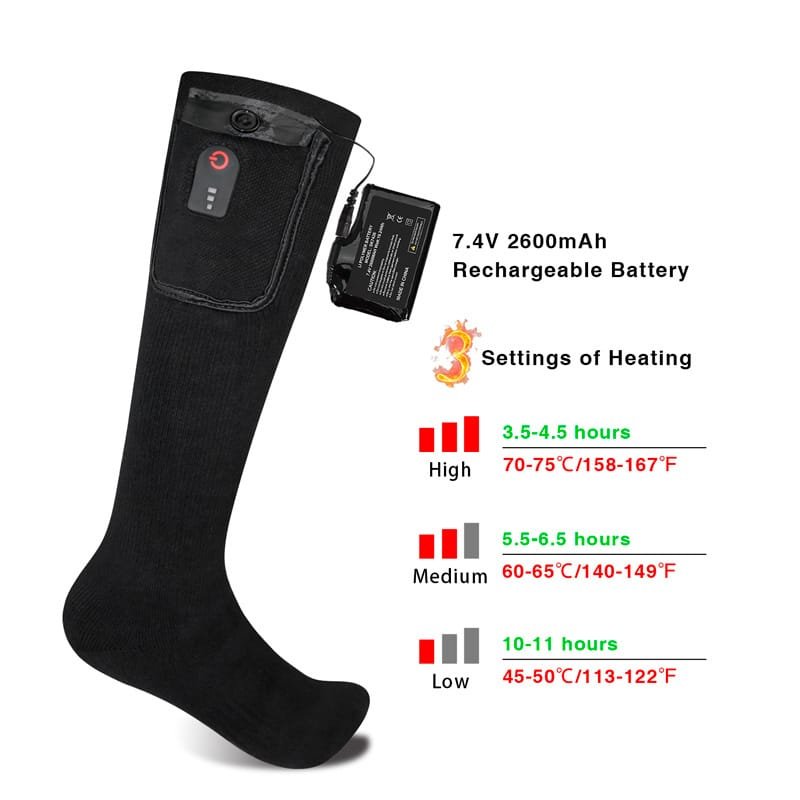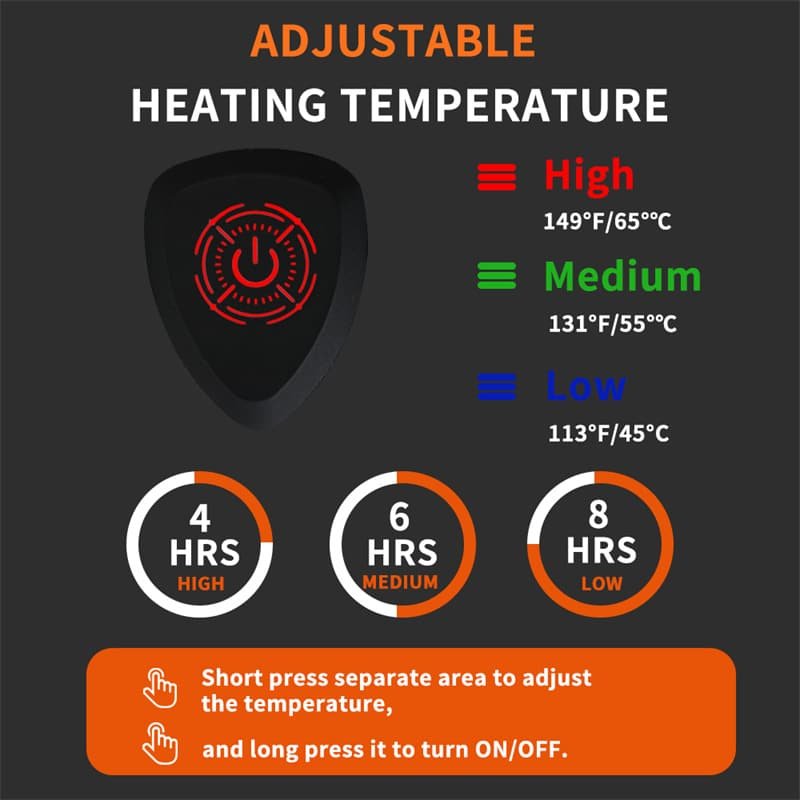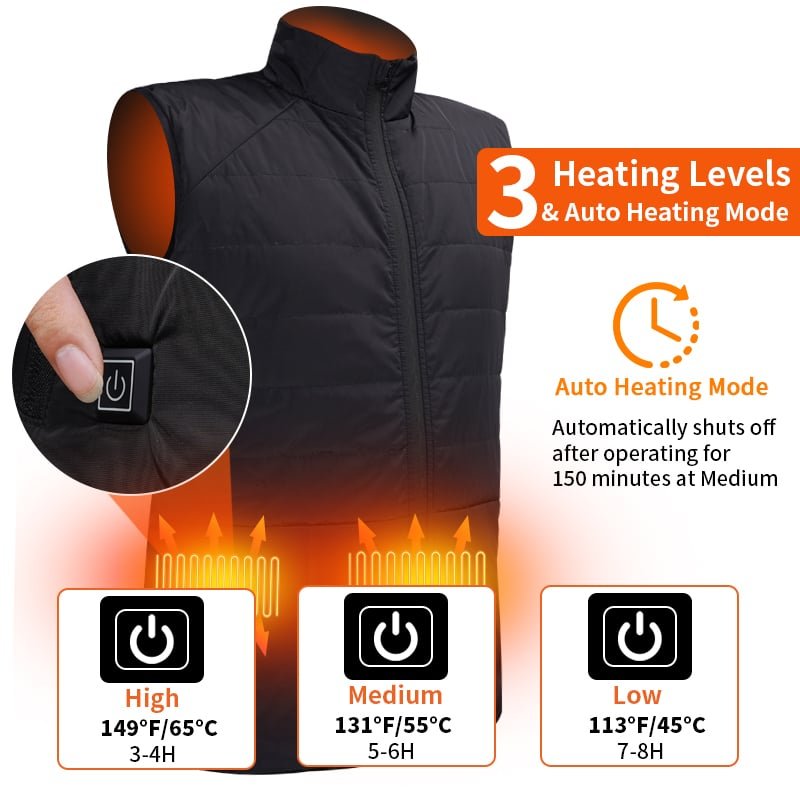

Exporting heated clothing to the US or EU comes down to one non-negotiable: certification. A compliant heated garment typically needs CE and RoHS for Europe, FCC for the United States, and UN 38.3 for the lithium battery everywhere. This guide explains what each certification actually covers, why customs, retailers and platforms require it, and exactly which documents you should ask a manufacturer for. We are a heated apparel manufacturer in Dongguan, China, and this is the certification framework we work with on every export order.
Why Heated Clothing Needs Certification at All
Heated clothing sits in two regulatory worlds at once: it is a wearable textile and an electronic product with a lithium battery. That combination triggers rules from three directions:
- Electrical safety — the heating elements, wiring and controller must not overheat, short-circuit or fail under normal use
- Electromagnetic compatibility (EMC) — the electronics must not interfere with other devices
- Chemical and material rules — restricted substances in fabrics and components
- Battery transport — lithium batteries are classified as dangerous goods for shipping
A certification is a documented, third-party check that a product meets the relevant rule for a specific market. Without the right documents, shipments can be held at customs, refused by retailers, or blocked by online platforms.
EU Market: CE Marking, RoHS and REACH
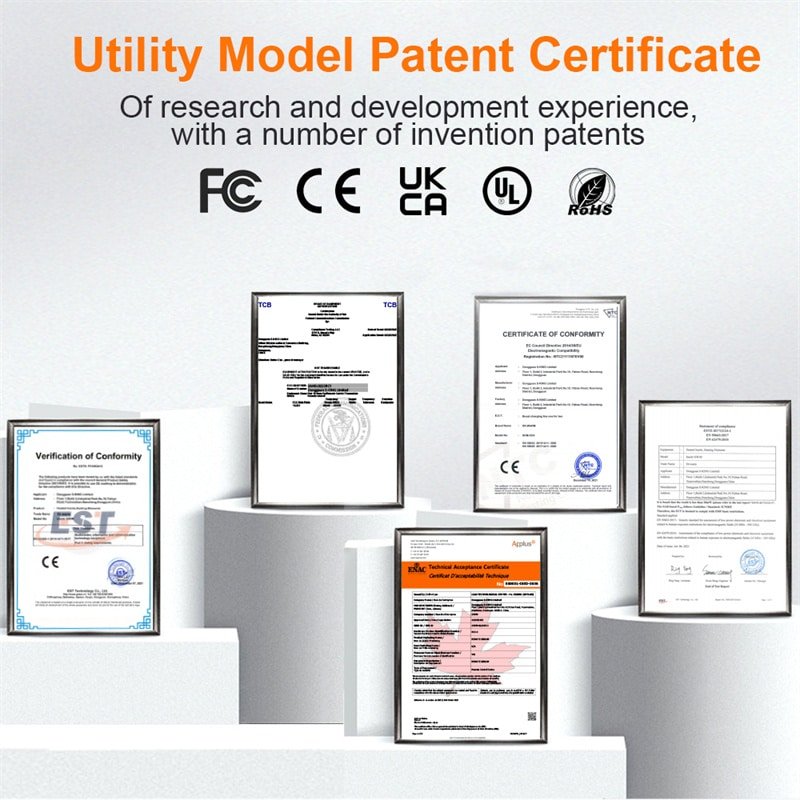
For the European Union, the mandatory baseline is CE marking, which for heated apparel covers the Low Voltage Directive (2014/35/EU) and the EMC Directive (2014/30/EU). RoHS restricts hazardous substances in the electronic components, and REACH governs chemicals in the textile materials. These two sit on different parts of the same garment and are measured against different baselines; our REACH and RoHS breakdown covers what that means for the documents you request.
| EU requirement | What it covers | Status |
| CE marking | Electrical safety + EMC (Low Voltage & EMC Directives) | Mandatory |
| RoHS | Restricted hazardous substances in electronics | Mandatory |
| REACH | Chemical safety of fabrics and materials | Increasingly expected by retailers |
A CE mark is only valid if the product genuinely meets the directive it claims to comply with — the mark is self-declared but must be backed by real test evidence, which is where many low-cost suppliers fall short.
US Market: FCC (and UL Testing for Batteries)
For the United States, FCC Part 15 compliance is mandatory for any device that emits electromagnetic signals — which includes the electronic controllers in heated clothing. There is no single mandatory US safety certification for battery-powered heated apparel. FCC Part 15 applies to the electronics, while UL testing of the battery pack is voluntary but is requested by most major US retailers before they will list the product.
| US requirement | What it covers | Status |
| FCC Part 15 | Electromagnetic emissions compliance | Mandatory |
| UL (battery pack testing) | Battery pack safety | Voluntary, but requested by most US retailers |
If your target is US retail, treat UL battery-pack testing as a practical requirement, not an option — most big-box and online retailers will ask for it before listing your product.
UN 38.3: The Battery Rule That Applies Everywhere
UN 38.3 is the international certification for lithium batteries in transport, covering air, sea and land freight. Without a valid UN 38.3 test report, a shipment of heated clothing with batteries simply cannot be shipped by air or sea — which effectively blocks market access regardless of the destination.
UN 38.3 testing covers eight sections (T1–T8):
| Test | What it simulates |
| T1 | Altitude simulation |
| T2 | Thermal cycling (hot/cold) |
| T3 | Vibration |
| T4 | Shock |
| T5 | External short circuit |
| T6 | Impact / crush |
| T7 | Overcharge |
| T8 | Forced discharge |
This is why battery certification is a core part of our export process — and why any supplier that cannot show a UN 38.3 report for the exact battery they ship should be treated as a red flag.
Quality System Certifications That Matter in Practice
Beyond product-level certification, buyers increasingly check the factory’s own quality systems. These are not market-access requirements, but they indicate how consistently the factory can reproduce a certified product:
- ISO 9001 — quality management system covering production, inspection and traceability
- ISO 13485 — quality management for medical devices, relevant where heated products are positioned for therapeutic or circulation-support use
- TUV test reports — third-party testing evidence from TUV laboratories
DR.WARM’s manufacturing facility holds ISO 9001 quality system certification, and our heated products carry CE, FCC, UL and UN 38.3 documentation for export.
Manufacturer Insight: What Buyers Should Actually Ask For
Here is the part most certification guides skip, because it comes from the factory side of the table.
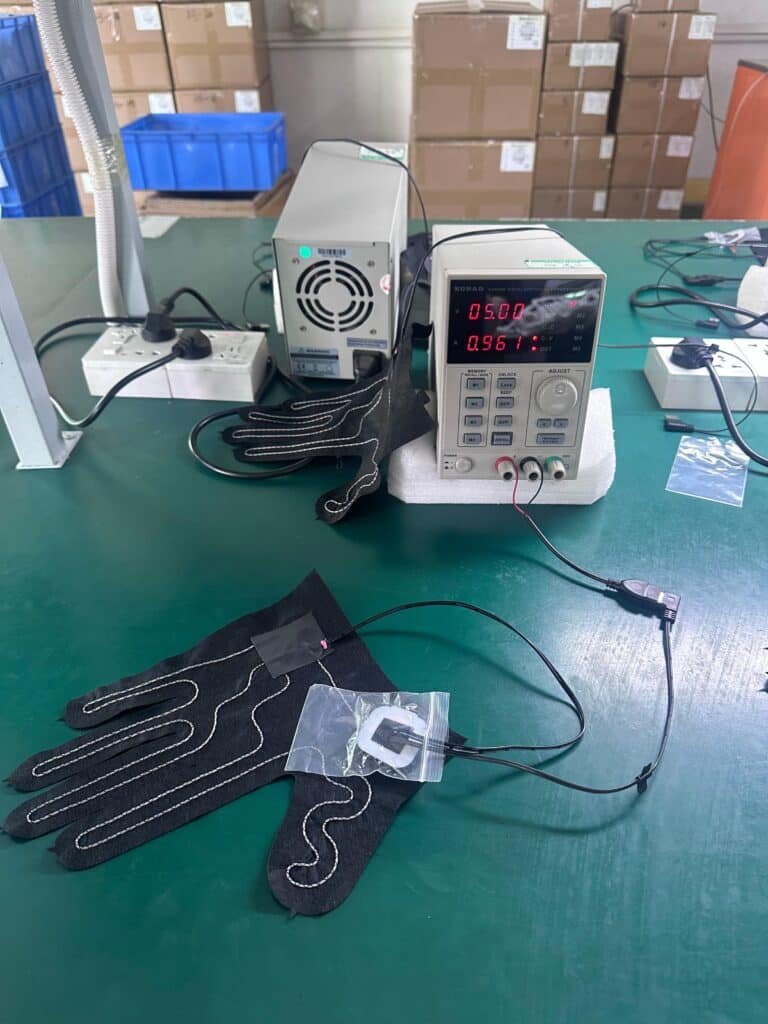
A certificate is not the same as a test report. A certificate is a summary document; the test report contains the actual test data for a specific model. Always ask for both.
When a supplier shows you a certification, check three things:
- Model match — does the certificate list the exact model you are ordering? Certificates are model-specific. A certificate for a different glove or a different battery does not cover your product.
- Date — is the certificate still valid? Certification documents and test reports have validity periods, and expired paperwork is a common gap.
- Issuing body — is the laboratory or certification body recognized for the target market (e.g., a notified body for CE, an NRTL for UL)?
Also be aware: “we will have the certification soon” is the biggest red flag in this industry. Full product certification — UN 38.3 plus product safety testing plus documentation — takes weeks to months and cannot be rushed around a launch date. A serious supplier plans certification into the development schedule, not after the order is placed.
Brands starting a heated clothing line from scratch should treat certification as a fixed cost in the plan, not a final hurdle.
Finally, every model change matters. Changing the battery, the heating circuit or the controller can invalidate existing certification and require re-testing. Confirm with your supplier which of your configurations are covered by which reports — before you commit to a purchase order.
Certification Checklist for Buyers
Use this as your sourcing checklist when evaluating a heated apparel supplier:
| Market | Required documents to request |
| EU | CE declaration + test report, RoHS report, REACH statement (if required by your retailer) |
| US | FCC test report, UL test report for the battery pack |
| Any (batteries) | UN 38.3 test report matching the shipped battery model |
| Factory level | ISO 9001 certificate (and ISO 13485 if relevant to your product) |
Five questions to send any manufacturer before you order:
- Which certifications cover the exact model I am ordering, and can you share the test reports (not just the certificates)?
- Are the certificates currently valid, and when do they expire?
- Does the UN 38.3 report match the battery model in the product you will ship?
- If I change the battery, heating circuit or controller, what re-testing is required and who covers the cost?
- Will certification documents be included with my shipment?
FAQ
What certifications does heated clothing need for Europe?
CE marking is mandatory (covering electrical safety and EMC), together with RoHS for electronic components. REACH compliance is increasingly required by EU retailers.
Is UL certification required for the US market?
UL testing for battery packs is technically voluntary, but in practice it is requested by major US retailers before they will list or stock battery-powered heated apparel. Treat it as a requirement.
What is UN 38.3 and why does it matter?
UN 38.3 is the international test standard for the safe transport of lithium batteries, covering eight tests from altitude simulation to forced discharge. Without a valid UN 38.3 report, battery shipments cannot be transported by air or sea.
Can I sell heated clothing without certifications?
You may be able to sell small volumes, but customs, retail channels and online platforms will increasingly block or penalize uncertified products — and the liability for a battery or electrical failure sits with the importer. Certification is not optional in practice.
How long does certification take?
Product-level testing and documentation typically take several weeks to a few months depending on the scope, and UN 38.3 for a new battery model adds its own cycle. Plan certification into your development timeline from day one.
Conclusion
The certification set for the US and EU is well defined: CE + RoHS for Europe, FCC for the US (with UL battery-pack testing for retailer compliance), and UN 38.3 for the battery everywhere — with quality systems like ISO 9001 supporting repeatability. The difference between compliant and non-compliant sourcing is not knowledge, it’s evidence. Ask for the test reports, verify they match your model, and confirm the dates before you place an order.
Need certification documents with your quote? Start an OEM/ODM conversation →
Related reading: What Brands Should Prepare Before Developing a Custom Heated Product