

Packaging is where a private-label heated product stops looking like a generic import and starts looking like a brand. Done well, the box, the tag and the insert do the selling in a retail aisle or a crowded marketplace listing. Done badly, packaging becomes the line item that quietly blows the budget and delays the shipment.
This guide covers the realistic options for heated apparel packaging, where the MOQs actually land, and the export-packing requirements that especially affect lithium-battery products.
Why Packaging Matters More for Heated Apparel
A heated jacket or pair of gloves carries electronics, a battery pack and often an instruction manual. That changes the packaging brief in three ways:
- It must protect more than fabric. The battery and controller need protection against impact and moisture, not just the garment.
- It has to explain the product. Heat levels, charging, washing and safety warnings all need somewhere to live – usually a printed insert or a QR code.
- It sells a premium price point. At higher retail prices, buyers expect the unboxing to match what they paid.
The Main Packaging Options
Retail Boxes
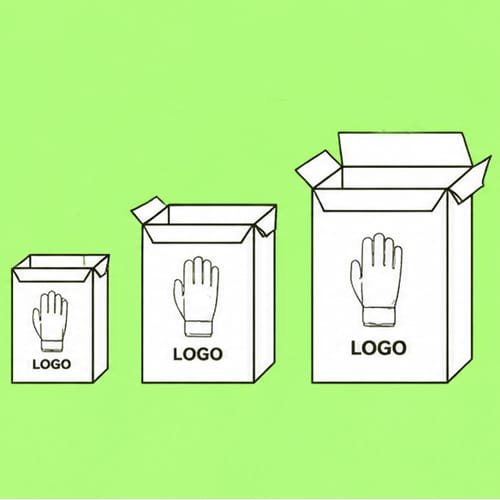
A printed folding carton or rigid box is the standard choice for retail and Amazon-style listings. Folding cartons are lighter and cheaper and print well; rigid boxes feel more premium but cost more, weigh more and increase freight. Most heated apparel sits comfortably in a well-designed folding carton with a window or a printed product image.
Gift Boxes
Gift packaging suits seasonal ranges – heated gloves and scarves sold as presents. A gift box usually means heavier board, a magnetic or ribbon closure, and an interior tray that holds the battery and cable in place. It is the fastest way to lift the perceived value of an accessory.
Hang Tags
Small, cheap and disproportionately effective. A branded hang tag can carry the logo, the heat-level explanation, the care instructions and a scannable code for the full manual. For products sold on a peg or hung in a display, the tag often does more visible work than the box.
Inserts and Manuals
Every heated product needs clear instructions. A folded printed insert covers setup, charging, heat levels, washing and safety warnings in the buyer’s language. For multi-market ranges, pair a compact printed insert with a QR code that opens the full multi-language manual online – it cuts printing cost and keeps the physical insert clean.
Poly Bags and Master Cartons
Inside the retail box, a poly bag protects against dust and moisture. Master cartons are the shipping units that move the retail boxes in bulk; their size, strength and labelling matter far more to cost than the retail box does, because they drive freight volume.
Printing Processes and What They Suit
The print method follows the quantity and the artwork:
- Offset printing – best for larger runs and photo-quality artwork; highest setup cost, lowest per-unit cost at volume.
- Digital printing – economical at low volumes and for short, frequently changing ranges; ideal for testing a new design.
- Flexo printing – common on corrugated master cartons; simple, durable and low-cost for line work and text.
- Foil stamping and embossing – premium finishes for logos on gift boxes; adds cost per unit and is usually reserved for high-value items.
The MOQ Trade-Off
This is where most packaging budgets are won or lost. Custom-printed packaging carries its own minimum order quantity, separate from the MOQ of the product itself. The tension is simple:
- Lower packaging MOQ means higher unit cost and often fewer finishing options.
- Higher packaging MOQ means cheaper units but more cash tied up in boxes – and boxes that become obsolete if the design changes next season.
A practical approach for a first production run: use digital printing on a modest quantity to keep the commitment low, pair it with a well-designed hang tag and insert, and move to offset on the second or third reorder once the design is proven. If a printed box MOQ is genuinely out of reach, a neutral box with custom branded stickers and tags delivers most of the shelf presence at a fraction of the risk.
Export Packing Requirements
Heated apparel that ships with a lithium battery pack attracts extra rules, and ignoring them is one of the most common causes of delayed shipments.
- Battery transport compliance. Lithium batteries must meet UN 38.3 testing for transport. If packs ship inside or alongside the product, the carton markings and documentation must be correct.
- Carton strength and weight. Master cartons need to survive stacking in transit; heavier heated garments and battery packs mean the board grade and stacking limits matter.
- Labelling and barcodes. Retail barcodes, country-of-origin marks and any marketplace-specific labels should be confirmed before printing, not after.
- Moisture protection. Long sea freight calls for liners or desiccant where humidity is a risk, especially for electronics.
Confirming these with the factory during sampling – not after the packaging is printed – is what keeps a season on schedule.
Lead Time and Packaging
Packaging rarely delays a shipment on its own, but artwork approval does. The typology to plan around: custom packaging adds time at the front end for design, proofing and printing, while the garment production runs in parallel. Building sampling in early – typically 7-30 days depending on the depth of customization – leaves room to approve packaging artwork before mass production, which for a typical heated apparel order runs around 45 days.
Frequently Asked Questions
What is the MOQ for custom printed packaging?
It depends on the method and the item. Digital printing allows low minimums and suits first runs; offset printing needs a larger quantity to be economical; hang tags and inserts are usually the cheapest items to customize at low volume. The packaging MOQ is separate from the product MOQ.
Can I get custom packaging if my product order is small?
Yes. A neutral box paired with custom hang tags, stickers and inserts is the standard route for smaller orders – it delivers branded shelf presence without committing to a large box run.
Does packaging affect shipping cost for heated apparel?
Significantly, through master carton size and weight. A smaller, tighter carton reduces the volume shipped, which lowers freight more than any saving on the retail box. Rigid gift boxes add both cost and weight, so reserve them for premium items.
Planning a private-label range? See how our OEM/ODM process handles sampling, packaging development and mass production under one roof. We have supported brands’ packaging and private-label projects since 2013.