A heated wearable carries a battery, a control circuit and a heating element inside a garment that a person wears against the body. That combination is what makes it valuable, and it is also what creates product liability exposure that a normal piece of clothing never has. This article sets out where that exposure sits in the supply chain, which tests genuinely reduce it, and what should be agreed in writing before a production run begins. It is written for brands and sourcing teams as a planning framework, not as legal advice — jurisdiction-specific questions belong with qualified counsel in your target market.
Who Carries Liability for a Heated Wearable
The first thing to understand is that liability does not follow a single party. It generally follows the product as sold to the end consumer, and it can reach every entity in the chain that played a part in putting it there.
The brand. The brand whose label is on the product is usually the most visible target, regardless of who manufactured it. Selling a product under your own name means owning the consequences of how it performs.
The manufacturer. Where a defect traces back to design, materials, assembly or testing, responsibility can extend to the factory that produced the unit.
The importer and distributor. In many markets the importer is treated as the responsible party for compliance, because that is the entity that placed the product on the market.
The component supplier. Cells, PCBA, connectors and heating elements each bring their own specification and their own risk if they are substituted without being re-qualified.
The practical implication for a brand is simple: the moment your name goes on the label, you cannot outsource the risk to your factory. What you can do is make the factory a partner in controlling it, and put the evidence in a file.
The Risks Specific to Heated Wearables
Heated apparel concentrates a handful of failure modes that a compliance plan has to address directly.
Battery failure. Over-discharge, over-charge, short circuit and thermal runaway are the highest-consequence risks, and they are the reason lithium cells in wearables attract so much regulatory attention.
Overheating and skin contact. A heating element that runs above its intended output, or is positioned wrongly against the skin, turns a comfort product into a burn risk.
Water and washing. A wearable is expected to cope with sweat, rain and cleaning. Moisture reaching a live circuit is a common real-world failure that a factory bench test can miss if it is designed poorly.
Mechanical wear. Repeated flexing of the wiring where the garment bends — at the wrist, the knee, the waistband — is where conductors fatigue and short.
Instruction and expectation. A meaningful share of incidents involve products used outside their design envelope: the wrong charger, a washing machine cycle, an unauthorised power source. Clear instructions and clear labelling are part of the defence, not pa
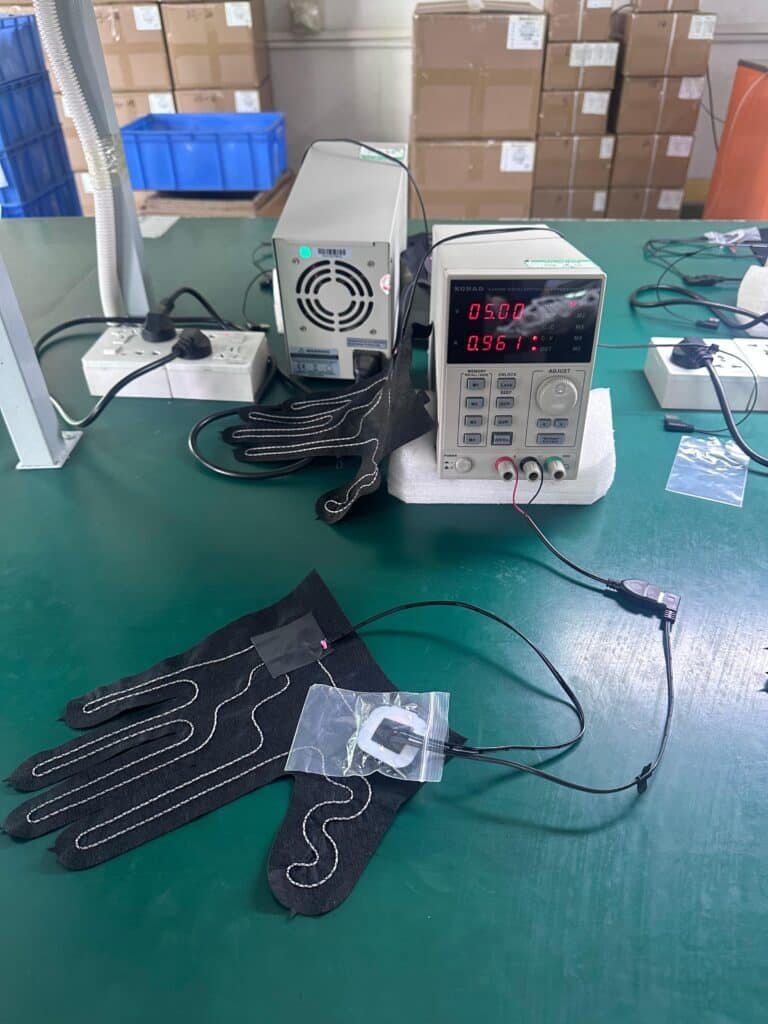
Every custom heating element undergoes rigorous performance testing before assembly. Using a precision power supply, we verify current draw, heating efficiency, and temperature stability to ensure consistent warmth and safety for your heated gloves.
rwork.
The Tests That Reduce Liability Risk
Testing does two jobs. It finds defects before they ship, and it produces the documented evidence that a reasonable process was followed. Both matter when a claim is made. The tests below are the ones that map directly onto the risks above.
Test area
What it verifies
Relevant standards
Cell and pack safety
Over-charge, over-discharge, short circuit, abnormal use
UN 38.3 for transport; UL 1642 for lithium cells; the destination market electrical safety standard
Battery management
That the BMS actually cuts off at the designed limits
Design review plus functional verification of the protection circuit
Electrical safety of the appliance
Insulation, temperature rise, fault conditions
IEC 60335 series and its regional equivalents
Temperature control
That the element holds its designed output and shuts down safely
Governing safety standard plus an in-house temperature profile
Water resistance
That moisture cannot reach a live circuit in normal use
IP rating testing (IPX4 as standard, IPX5 where the product is specified for it)
Flex and abrasion
That conductors survive repeated bends and washing
In-house cyclic tests on wiring, connectors and wash durability
Material compliance
That restricted substances stay within limits
CE and RoHS for the EU; FCC where radio or electronics apply; UKCA for the UK
Two points about this table are worth stating plainly. First, a certificate name and a test report are different documents: the certificate records that a standard applies, while the report records the actual results. A serious supplier holds both and can produce them for a product it already sells. Second, the standards that matter depend on your destination market — our overview of certifications for the US and EU market maps them market by market, and the heated clothing certification page lists what we hold.
One distinction that catches buyers out: a REACH declaration and a RoHS report are not interchangeable, because the two are measured against different things. Our breakdown of REACH versus RoHS for heated apparel shows which document covers which component.
Contracts and Insurance: What to Agree Before Production
Liability is managed by paperwork as much as by engineering, and the paperwork has to be agreed before the first order, not after the first incident.
A written specification. The bill of materials, the cell and PCBA source, the heating element and the control logic should be frozen in a document, with a change-control process for any substitution. Most disputes are really disagreements about what was agreed.
Test obligations and record keeping. State which tests the supplier runs, at what frequency, and how long records are retained. Ask for the report format up front so you know what you will receive.
Warranty terms. The warranty period and what it covers — element, battery, control board and labour — should be explicit. Our own products carry a 12-month warranty, and the scope is defined in writing.
Recall and field-failure procedure. Agree in advance who investigates a failure, how replacement parts are supplied, and how a batch is traced if a problem appears in the field.
Traceability. Batch and date codes on the pack and the garment are what make a targeted recall possible instead of a blanket one.
Insurance. Confirm what product liability cover each party holds, in which territories, and at what limit. A supplier that cannot state its cover clearly i
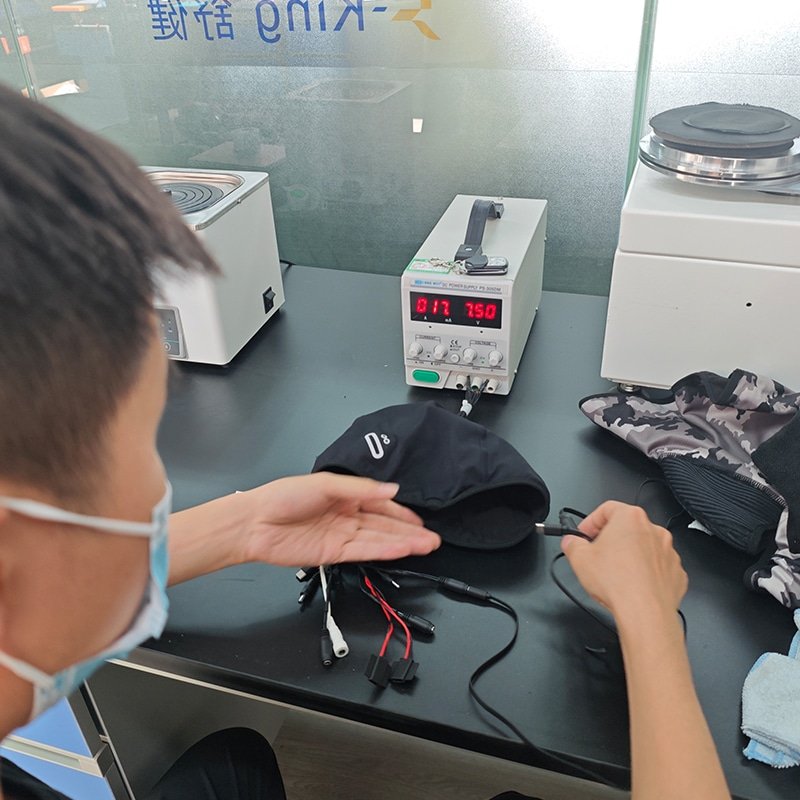
This image shows a technician conducting quality testing on heated clothing in a laboratory environment. The testing process evaluates electrical performance, temperature stability, and safety of heating elements and control systems. This step ensures that heated apparel such as heated gloves, heated hats, and heated jackets meet strict quality standards. It highlights OEM and ODM heated clothing manufacturing capabilities with reliable testing procedures, supporting durable and washable heated clothing solutions for long-term use.
a question mark, not an answer.
Preventing a Recall Before It Happens
Most recalls are the end of a process that was visible months earlier. The controls that keep a product out of that position are unglamorous and effective: incoming inspection on cells and electronics rather than trusting a supplier certificate; in-process checks at the assembly and wiring stages; a full functional test of every unit rather than a sample; and a documented record of the result against the batch code.
A brand can also verify the supplier directly instead of relying on documents alone. Our guide to how to audit a heated apparel factory covers what to look for on site, including whether the lab equipment a supplier describes is actually installed and in use.
A Practical Order of Work
If you are planning a heated wearable programme, the sequence below keeps liability manageable:
Define the destination markets first, because they determine which standards apply.
Freeze the specification and the bill of materials, including the cell and PCBA source.
Confirm which tests will be run, by whom, and in what format the results will be recorded.
Agree warranty, recall procedure and insurance in the supply agreement.
Require batch traceability on the pack and the garment.
Inspect and test before shipment, and keep the evidence for the life of the product.
Dr. Warm has manufactured heated wearables since 2013, and our heating elements, control systems and battery packs are designed and tested in-house — battery ageing, high and low temperature cycling, IPX water resistance, wire flex testing and thermal imaging are part of our standard process, with records kept per batch. We can provide the test documentation and product information your market requires, and where a programme needs a certification we do not yet hold, we will say so before you commit.
Planning a heated wearable product? Send the destination market and the specification through our OEM and ODM services page, and we will come back with the testing and compliance position for your exact product.
Frequently Asked Questions
Who is liable if a heated wearable injures a customer?
Liability can reach every party in the chain, but the brand whose label is on the product is usually the most visible target, and in many markets the importer is treated as the responsible entity for compliance. The practical answer is to assume the risk is shared and to document the specification, the tests and the traceability of every batch.
What testing should a heated apparel supplier provide?
At minimum, safety testing of the battery pack, verification that the protection circuit works as designed, electrical safety testing of the appliance, temperature control verification, water resistance testing to the specified IP rating, and material compliance for your destination market. Ask for the test report, not only the certificate, and ask which batch the results belong to.
Does product liability insurance cover a recall?
Not necessarily. Product liability cover and recall cover are often separate, and the scope and territory limits vary by policy. Confirm in writing what each party holds, in which markets, and at what limit, before the first production run rather than after a problem appears.