FOR IMMEDIATE RELEASE
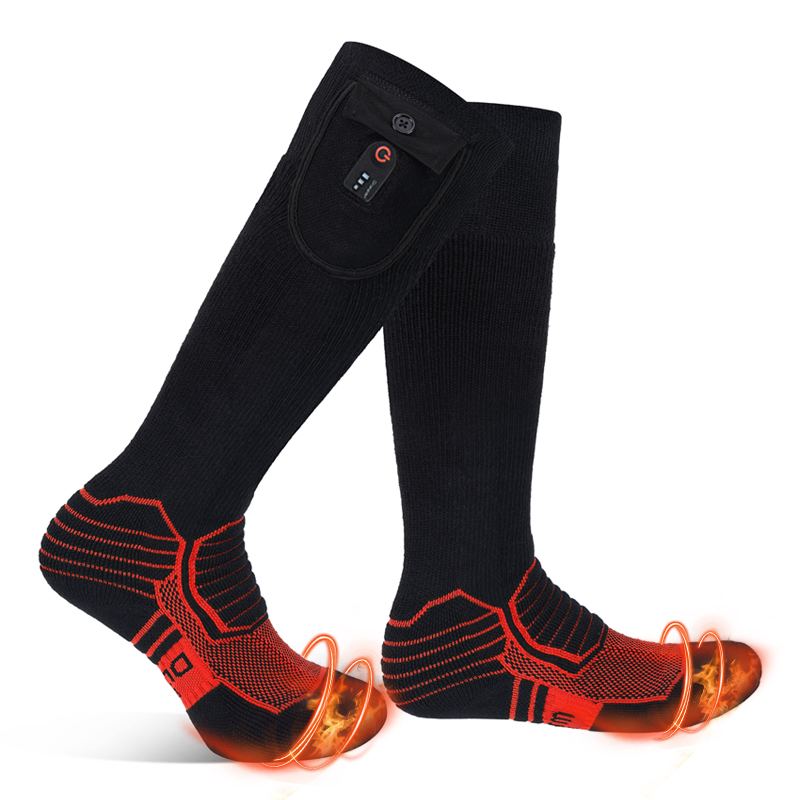
Dongguan, China — 3 November 2026 — Dr. Warm, the heated-apparel brand manufactured by Dongguan Ditewang for certificate holder Dongguan S-KING Limited, confirmed that the lithium battery packs it supplies with heated jackets, vests, gloves, socks and insoles are already built and tested to GB 47372-2026, China’s new mandatory safety standard for portable power supplies. The standard takes effect on 1 April 2027 after a 12-month transition period, and applies to power banks and portable power stations sold in China.
For brands sourcing heated apparel from Asia, the deadline matters more than the domestic market it regulates. Battery packs in this category double as power banks: the 5V packs in the Dr. Warm range carry USB output and are charged by the same supply chain that serves consumer power banks. “A buyer in Germany or Ohio is not going to read a Chinese standard,” said Mark Huang, R&D Manager at Dr. Warm. “But they will ask what happens to a pack that has been crushed in a shipping carton or left on a dashboard. GB 47372-2026 answers that question with test requirements, not with adjectives.”
Five requirements, and how they are met
The standard is built on top of GB 31241 and GB 4943.1 and adds five layers of protection:
- Cell-level abuse testing, including nail penetration. A steel nail is driven through the cell to force an internal short. Neither IEC 62133-2 nor UL 2054 requires this test for battery packs, which is why it is the most demanding addition in the new standard.
- Lithium-plating detection after cycling. Ageing cells can plate metallic lithium and short internally long after the product has shipped. The standard requires the check after cycle ageing rather than only on fresh cells.
- Real-time monitoring of voltage and temperature, plus on-board storage of abnormal-event data so a failure can be traced to a cause instead of guessed at.
- A unique product code on each pack, allowing the cell supplier and production batch to be traced from the unit in a customer’s hand.
- Incoming-material and in-process controls, moving quality control upstream from final inspection to the raw material and production stages.
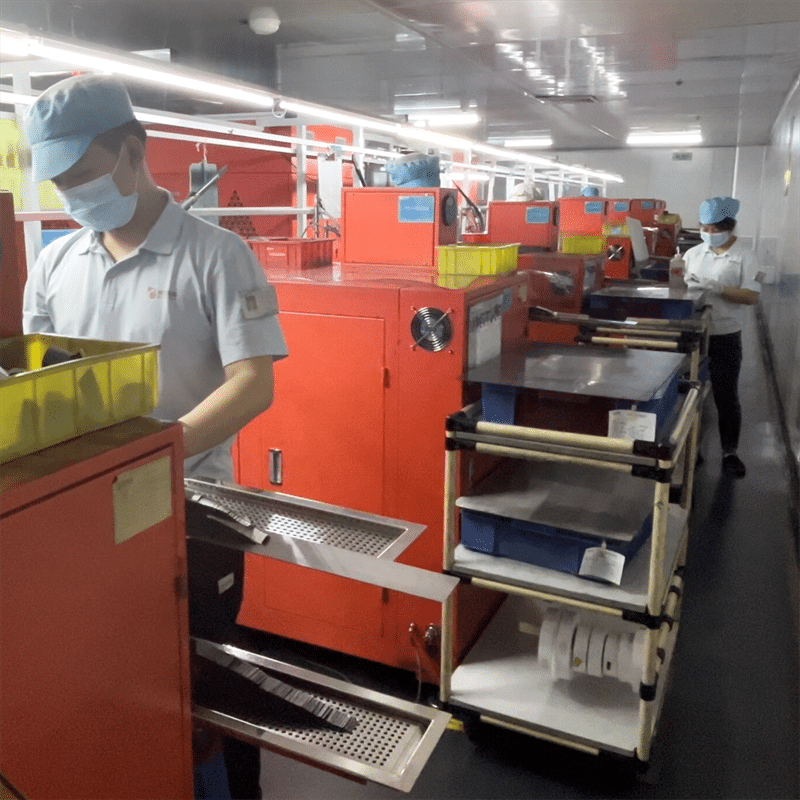
Dr. Warm’s packs are assembled in a dedicated 2,074 m² electronics workshop alongside the company’s 6,000 m² main plant in Dongguan, both under ISO 9001:2015 (certificate 11724QU0181-09R1S, valid to September 2027). Battery cells carry a TUV Rheinland safety mark (UL 1642, certificate US 72504115), and packs are additionally CE, UKCA, UL, FCC, RoHS, Reach, DOE and UN 38.3 compliant — certificate details are published here. A UN 38.3 test summary and an SDS accompany every shipment.
What it means for OEM and ODM programmes
Capacity, cell format, connector type and enclosure are specified per project rather than fixed to a single catalogue pack, so a brand can move a programme onto the new requirements without re-tooling the garment. OEM orders start at 100 units and ODM projects built on existing platforms at 500 units per style; samples typically ship in 7 to 30 days, OEM production runs 20 to 25 days, and ODM builds 50 to 60 days.
The company produces more than 1,000,000 heated products a year across three production lines and 12 main machines, with eight R&D engineers covering heating elements, control electronics and battery packs in-house. Dr. Warm has manufactured heated wearables since 2013. Pack options, voltage tiers and connector types are listed in the battery solution section.
“Standards like this one usually reach us as a customer question two years later,” Huang added. “We would rather answer it now, with a test report.”
About Dr. Warm
Dr. Warm is a heated-apparel brand and OEM/ODM manufacturer based in Dongguan, Guangdong, China. Its range covers heated jackets, vests, gloves, socks, insoles and heated accessories for outdoor, workwear and winter sports markets in North America and Europe. Products are developed, tested and assembled in-house, with battery packs built to GB 47372-2026 and CCC requirements as well as CE, UKCA, UL, FCC, RoHS, Reach, DOE and UN 38.3.
Manufacturing site: drwarmheated.com
Brand site: drwarm.com
Press contact: allen@drwarm.com
# # #
Note to editors: GB 47372-2026, Safety technical specification for portable power supplies, was released on 31 March 2026 by the State Administration for Market Regulation and the Standardization Administration of China, and takes effect on 1 April 2027. Battery specification tables, connector and plug options, and compliance documentation are available on request.
Which packs actually fall inside the standard is a separate question from how they are tested. We set out the boundary — 5V packs with a USB output versus 7.4V and 12V packs that only power a garment — in which heated batteries fall under GB 47372-2026.
Frequently Asked Questions
When does GB 47372-2026 take effect?
GB 47372-2026 takes effect on 1 April 2027, after a 12-month transition period from its release on 31 March 2026.
Which heated apparel battery packs fall under GB 47372-2026?
The 5V packs in the Dr. Warm range carry a USB output and can serve as power banks. The 7.4V and 12V packs that only power a garment sit outside that boundary.
Are Dr. Warm battery packs already tested to the new standard?
Yes. The lithium battery packs supplied with Dr. Warm heated jackets, vests, gloves, socks and insoles are already built and tested to GB 47372-2026.
What should OEM and ODM buyers request before an order?
Ask for the battery specification table, the test summary and the compliance documentation for the exact pack in your order, plus the connector and plug options for your market.