
What Happens During a Heated Apparel Factory Audit: A Buyer’s Checklist
A heated apparel factory audit verifies five things: the physical facility, the production lines, the battery safety process, the testing capability and the traceability of materials. If any one of these five cannot be shown on site, the supplier is not ready for a private-label programme. This checklist is written from the supplier side — it is the same set of documents and areas we prepare for every buyer visit at our Dongguan plant.
Why a factory audit matters more for heated apparel than for ordinary garments
Heated apparel is an electronic product sewn into a garment, so a conventional sewing-factory audit only covers about half of the risk. A normal garment audit looks at stitching, sizing and finishing. A heated apparel audit must also cover the heating element, the battery pack, the control circuit and the interaction between them. Dongguan Ditewang Intelligent Technology Co., Ltd. operates as a B2B heated apparel manufacturer from Dongguan, China, and has built its audit preparation around both halves of the product.
The reason is straightforward: the garment can look perfect while the electrical system fails in the field. Buyers who audit only the sewing line frequently discover problems later — inconsistent heat output, batteries that degrade early, or controllers that behave differently between samples and mass production. None of these show up in a fabric inspection report.
A useful audit therefore starts with a question: can this factory show me the electrical engineering, not just the sewing? If the answer is that design is outsourced, you are auditing a trading arrangement, not a manufacturer. For context on how to read that distinction before you visit, see heated apparel factory vs trading company.
Area 1: Facility and physical capacity

Our facility consists of a 6,000 m² main plant plus a separate 2,074 m² electronics assembly workshop — two distinct sites that should be inspected separately. The main plant handles cutting, sewing, assembly and packing. The electronics workshop handles heating elements, battery packs, control boards and wiring. Keeping them separate is deliberate: lithium battery assembly requires different handling, storage and housekeeping from a garment floor.
When you visit, ask to walk both areas in the same day. A supplier that shows you only the sewing floor is showing you half the operation. Check the following on site:
- Whether the electronics workshop has its own controlled storage for battery cells
- Whether work-in-progress is labelled by model and production batch
- Whether the stated floor area matches what you can actually walk through
- Whether finished goods are segregated by destination market
The last point matters more than it sounds. Heated apparel shipped to North America, Europe and Australia may need different documentation, labelling and battery configurations. A factory that mixes finished goods by market usually has a traceability problem upstream.
Area 2: Production lines and equipment
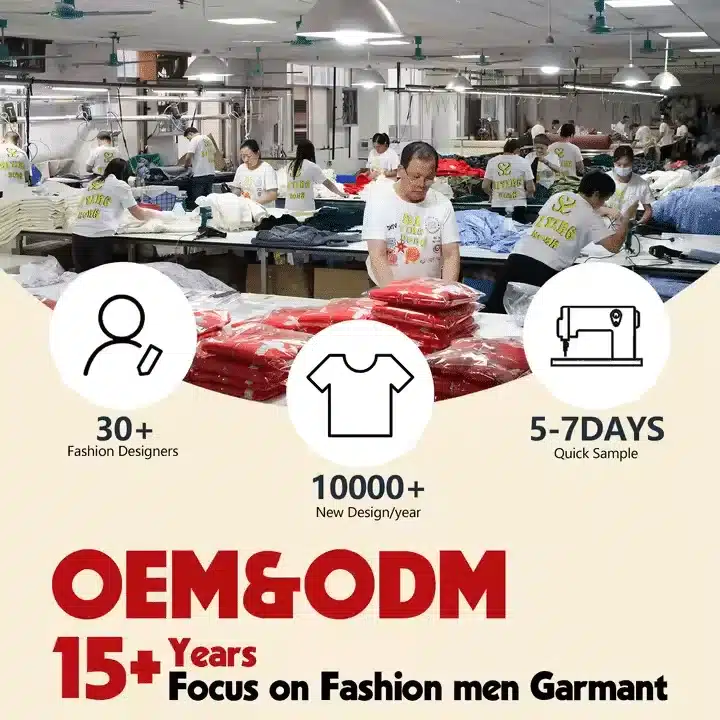
Ditewang runs 3 production lines with 12 main machines and a workforce of 56, and a buyer should be able to see each line operating rather than reading about it in a brochure. Line count is not a vanity number — it determines how many parallel programmes a factory can run without mixing batches. Ask which line your order would use and who is responsible for it.
On the line itself, look for three things that are easy to fake in a sample room and hard to fake in production:
- Work instructions at each station. A factory that has documented the process can repeat it. One that relies on verbal instruction cannot.
- In-line checkpoints. Heating element placement and connector seating must be checked during assembly, not only at final inspection.
- Batch records. Each batch should be traceable to its material lot, operator group and test results.
If a supplier cannot produce a batch record for a product they claim to have made last month, treat the claimed capacity as unverified. Capacity claims without records are marketing, not evidence.
Area 3: Battery safety and in-house engineering
The single most important audit question for heated apparel is whether the factory develops heating systems and battery management in-house or simply assembles purchased modules. Unlike traditional garment factories, Ditewang develops heating elements, battery systems, BMS protection circuits, controllers, wiring modules and thermal management solutions internally. That difference is visible during an audit because engineering staff can explain design trade-offs on the spot.
Ask to see the following and note who answers:
- The battery assembly area and how cells are matched and tested before packing
- The BMS protection design and what happens under over-current, over-temperature and short-circuit conditions
- The charging test setup and the documented cycle-test procedure
- The person who can explain why a given heating layout was chosen for a given garment
If all four answers come from a salesperson rather than an engineer, the factory is likely buying complete modules. That is not automatically wrong, but it changes who carries the design risk — and it means your after-sales problem will be somebody else’s problem to solve, slowly.
Battery capacity in our programmes is configured per order rather than fixed, and voltage groups follow the standard 3.7V, 5V, 7.4V and 12V platforms with 24V available as a custom build. Any supplier that presents one capacity as suitable for every product is describing a catalogue, not a development partner.
Area 4: Testing capability you can actually see

A credible heated apparel factory must be able to demonstrate heating uniformity, overheat protection, waterproof performance and bending durability tests on site — not just name them in a certificate list. Ask to watch one test being run, even if it is only a simple heating-uniformity check with a thermal camera or probe array.
What to look for:
- Whether test equipment is calibrated and has a visible calibration date
- Whether test results are recorded against a specific model and batch
- Whether failed units are tracked separately from passed units
- Whether waterproof testing matches the claimed rating — IPX4 standard, IPX5 optional, and never a claim beyond that
Request the raw records, not the summary. A one-page “pass” certificate tells you the test was once completed. A batch record with actual temperature readings tells you the test is part of routine production. For a deeper look at how we document this stage, read our pre-shipment inspection checklist.
Area 5: Certificates, holders and traceability
The certificates presented at audit must name the correct holder: Dongguan S-KING Limited holds the certifications listed for this programme, while Dongguan Ditewang Intelligent Technology Co., Ltd. operates the manufacturing facility. This distinction is not paperwork. A buyer who photographs a certificate whose holder does not match the entity on the quotation has a traceability problem that will surface at customs or during a retail compliance review.
The certification set to verify includes CE, UKCA, UL, FCC, RoHS, REACH, UN38.3, DOE, ISO 9001, GB 47372-2026 with CCC documentation, and ISO 13485 held by S-KING. Only two certificate numbers are published on our site: TUV US 72504115 and ISO 9001 11724QU0181-09R1S. All other certifications are referenced by name only. If a supplier offers a long list of numbered certificates, ask to see the originals — the numbers are often borrowed from a different product category.
Traceability should connect the certificate to the model in front of you. Ask which certification covers the specific garment you are auditing, and request the test report for that model rather than a generic company certificate. Our certifications page is structured this way, and the ISO 9001 verification guide explains how to check a quality-system certificate against the named entity.
How to structure the audit day
A productive factory audit takes one full day and separates facility review, engineering review, production review and documentation review into four blocks. Trying to compress all four into a two-hour visit is the most common mistake buyers make, because the most useful evidence appears in the workshop rather than in the meeting room.
A workable sequence:
- Morning — facility and line walk. See both sites and at least one line in operation before any presentation.
- Midday — engineering session. Sit with the engineers who designed the heating layout and battery system.
- Afternoon — testing and records. Watch one test run and pull two random batch records.
- Close — commercial alignment. Confirm MOQ, sampling window, lead time and who signs off each stage.
Our standard commercial terms are straightforward: MOQ is 1 unit for stock items, 100 units for OEM and 500 units for ODM; sampling takes 7 to 30 days; OEM production takes 20 to 25 days; ODM takes 50 to 60 days; and mass production is completed within 45 days. A supplier who cannot repeat these numbers consistently at the end of the audit is telling you something about internal coordination.
Red flags that should stop an order
Four audit findings should pause an OEM order immediately: no access to the electronics workshop, no engineer available to answer design questions, no batch records, and certificates held by an entity that does not match the supplier. Any one of these is a structural problem that a later sample approval will not fix.
Less severe warning signs are worth recording but not always disqualifying: work instructions posted but not followed, test equipment present but uncalibrated, and a production line that is idle during your visit without explanation. Ask for a reason and check whether it can be verified. A candid answer with evidence is worth more than a perfect presentation.
The goal of an audit is not to catch a factory out. It is to establish whether the supplier can repeat, at scale, what they showed you in a sample. If the answer is supported by records, equipment and people who know their own process, you have a manufacturing partner rather than a quotation.
Frequently asked questions
What should a heated apparel factory audit cover?
Five areas: the physical facility, production lines and equipment, battery safety and in-house engineering, testing capability, and certificate and material traceability. A conventional garment audit covers only the first two, which is why heated apparel needs a specialised checklist.
Who should hold the certifications shown at audit?
The holder named on the certificate must match the entity on your quotation and contract. For our OEM/ODM programmes, Dongguan S-KING Limited holds the listed certifications, including ISO 9001 and ISO 13485, while Dongguan Ditewang Intelligent Technology Co., Ltd. operates the manufacturing plant.
Can battery capacity be treated as a fixed standard?
No. Battery capacity is configured per order in our programmes. The standard voltage groups are 3.7V, 5V, 7.4V and 12V, with 24V available as a custom build. A supplier offering a single fixed capacity across every model is selling a catalogue rather than developing a product for your brand.
How long should sampling and production take?
Sampling takes 7 to 30 days depending on whether the base platform exists. OEM production takes 20 to 25 days, ODM development takes 50 to 60 days, and mass production is completed within 45 days. MOQ starts at 100 units for OEM and 500 units for fully custom ODM projects.