
Heated Gear for E-Bike Commuters: An OEM Specification Guide
E-bike commuting is a different cold-weather problem from skiing or hunting: the rider generates little body heat, faces constant wind chill, and needs to keep one hand free for a phone or map. That combination changes what a heated product has to do. This guide covers the specifications that matter when a brand builds heated gloves, insoles or a vest for the daily e-bike rider.
Why an e-bike rider is not a skier
A skier moves their whole body and generates heat; an e-bike commuter sits upright in moving air for twenty to forty minutes with almost no muscular warmth. Wind chill strips heat from the hands and feet first, because extremities have the least blood flow to spare. A product designed for a skier — heavy insulation, big battery, high heat settings — is often too bulky and too slow to charge for someone who rides to work every day.
For brands, this means the specification sheet should start with the ride itself: typical trip length, how often the rider charges, and whether the product is worn over a work outfit. Those three answers drive every other decision.
Four specifications to lock before sampling
The four decisions that shape an e-bike heated product are glove touchscreen function, insole thickness, vest heating zones and charging time. Fix them together so the battery and control system can be matched as one set.
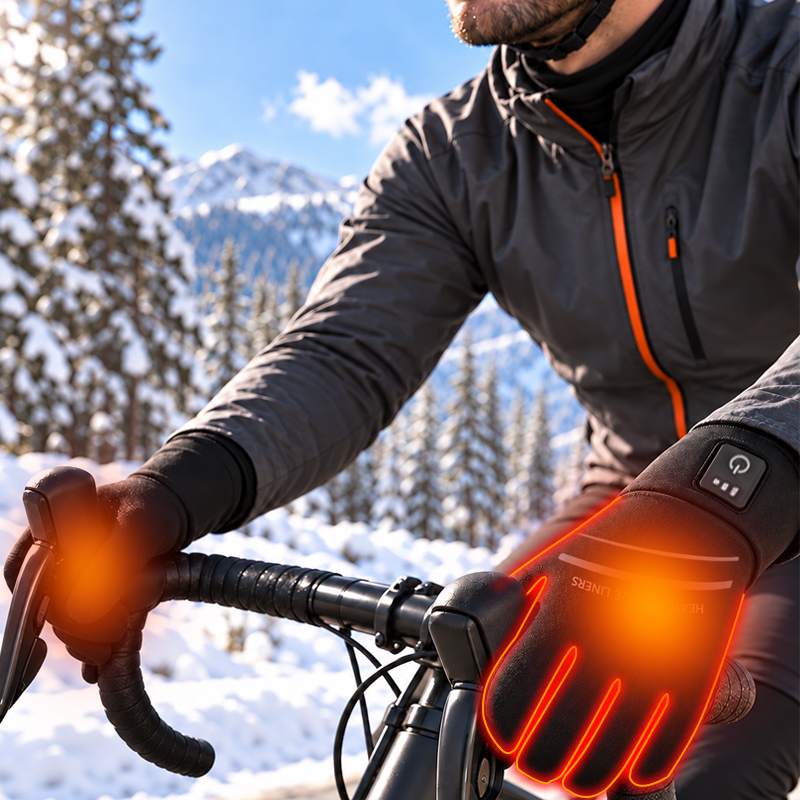
- Touchscreen gloves. A commuter checks a phone or navigation while stopped. Conductive fingertips on the index finger and thumb let the rider do that without removing a glove.
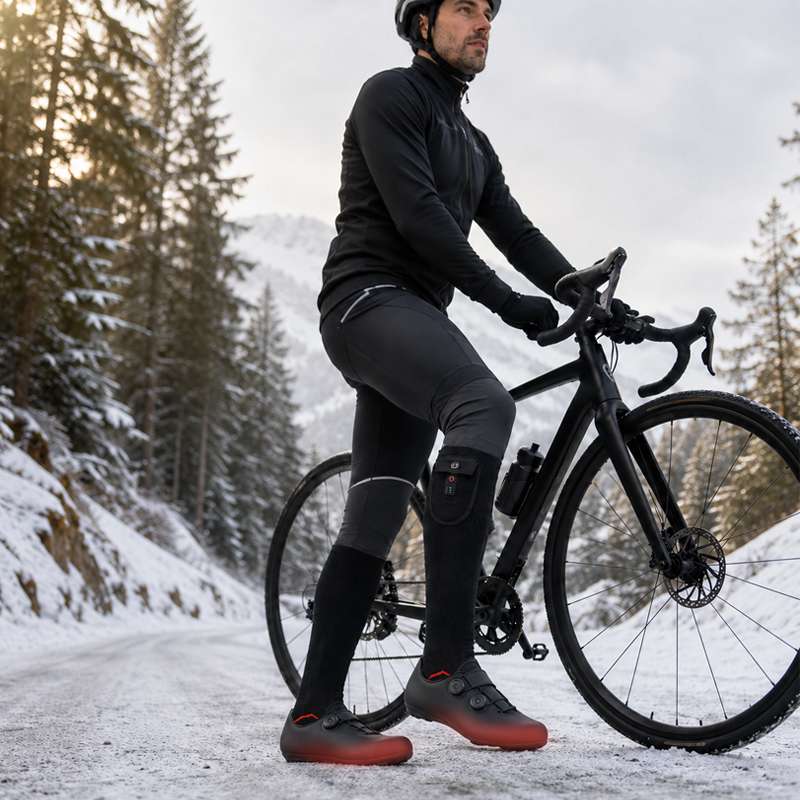
- Thin heated insoles. The insole has to fit inside an ordinary shoe or cycling shoe, so the battery and element sit below the foot without raising the heel. A thick insole that needs a larger boot is a deal-breaker for daily use.
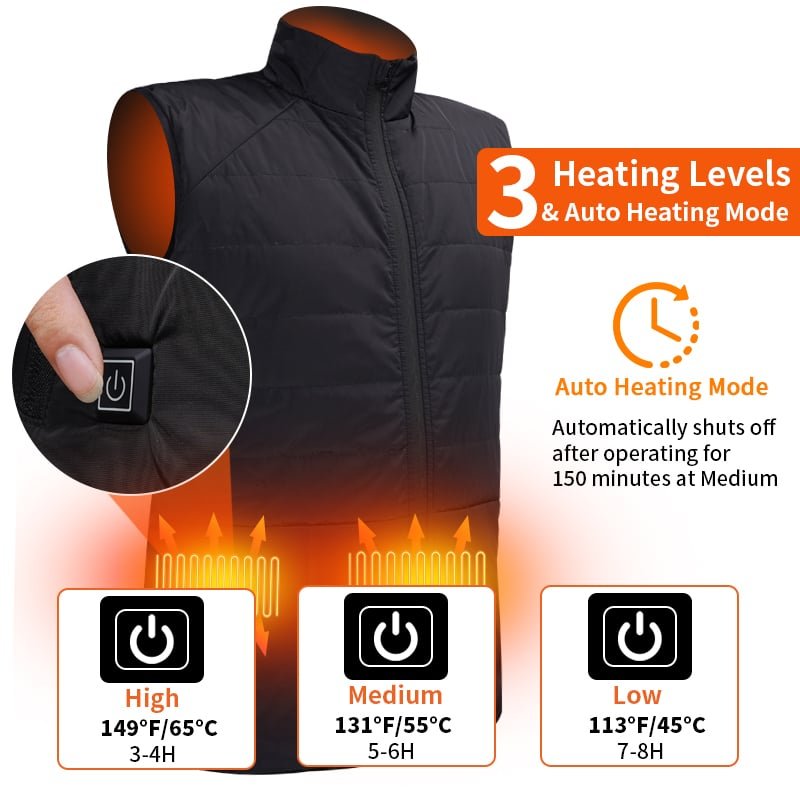
- Focused vest zones. A vest with heat across the chest and upper back works better than one with many small zones, because it keeps the core warm with fewer watts drawn from the battery.
- Charging time. A commuter charges overnight or at the office. Specify a pack and charger that fit that window, and confirm the connector is easy to handle with cold hands.
Battery configuration for a daily rider
Battery capacity for a commuter product is configured to the order, based on trip length and the number of heating zones — it is not taken from a fixed catalogue value. Voltage is specified per project across the 3.7V, 5V, 7.4V and 12V platforms, with 24V available as a custom build.
The supplier should confirm that the pack, controller and heating elements were tested together as a matched system. A pack that performs well in a weekend ski jacket may not suit a product charged every night and used in stop-start city traffic. For the platform options, see our battery solution page.
How to position the product to buyers
The strongest message for this segment is convenience, not extreme warmth: a product that fits under normal work clothing, charges with the rider’s routine and works at a traffic light. Long-tail keywords such as heated gloves for e-bike commuters and heated insoles for winter cycling reflect that intent — buyers are looking for a solution to a specific journey, not a general snow sports product.
Show the product in a real commute: a bike, a city street, a work bag on the shoulder. A studio photo on snow does not answer the questions this buyer has. If you are building the range with a factory partner, the OEM/ODM page explains how platforms are adapted for a new use case.
Compliance and market documents
The certification file has to match both the market and the battery configuration shipped with the product. Dongguan S-KING Limited holds CE, UKCA, UL, FCC, RoHS, REACH, UN38.3, DOE, ISO 9001 and GB 47372-2026 with CCC documentation, with ISO 13485 also held by S-KING. Lithium packs travel with UN38.3 test summaries and an SDS for freight.
Ask for the model-specific documents rather than a general company folder. retailers and customs agents check the file against the goods in the carton. Our certifications page sets out which approvals belong to which market.
Specification checklist for a commuter range
Use this six-point checklist when you brief a supplier on an e-bike heated product. It keeps the conversation on the decisions that affect daily use rather than on catalogue options.
- Confirm the typical ride duration and the charging interval.
- Specify touchscreen fingertips on gloves if navigation is part of the journey.
- Keep insoles thin enough for the rider’s existing footwear.
- Choose core-focused heating zones rather than a high zone count.
- Match pack, controller and elements as one tested system.
- Request the model-specific certification and transport file.
Layering: how the heated piece fits the commute
A commuter’s heated layer has to work under a jacket or over a shirt without adding the bulk that makes cycling uncomfortable. Most riders wear a thin heated base layer or vest under a windproof shell, then rely on heated gloves and insoles for the extremities. The heated piece should sit close to the body so the elements transfer warmth efficiently, but not so tight that it restricts movement across the shoulders.
Ask the supplier for a worn fitting, not a flat measurement. A vest that looks correct on a table can ride up when the rider leans forward over the handlebars, leaving the lower back exposed. Check that the hem stays in place and that the battery pocket does not press against the frame or the bag strap.
This is also where market differences matter. A northern European commuter rides in sustained cold and wet, while a North American rider may face shorter but sharper cold snaps. The same platform can serve both, but the layer count and the heating levels around the core will differ. Document the intended use in the product brief before sampling begins.
Common mistakes when specifying a commuter product
Three mistakes recur in commuter briefs: choosing a battery from a different product family, specifying too many heating zones, and treating touchscreen function as an afterthought. Each one is easy to avoid at the specification stage and expensive to correct after tooling.
- Reusing a battery from another product. A pack sized for a ski glove may not fit the slim cuff a commuter needs, and its charge routine may not match a daily rider.
- Adding zones for the sake of a higher number. More zones draw more current and need thicker wiring. Core-focused heating with fewer zones often performs better on a short ride.
- Leaving touchscreen until the end. Conductive fingertips affect the fabric, the pattern and the cost. Decide at the start if the rider will use a phone for navigation.
A supplier who asks about journey length and charging routine before quoting is thinking about the use case. A supplier who quotes from a catalogue without those questions is likely to propose a product built for a different rider.
Frequently asked questions
Can a standard heated glove be used for e-bike commuting?
It can, but a commuter benefits more from touchscreen fingertips, a slimmer cuff that fits under a jacket sleeve, and a battery that charges within an overnight window.
How is capacity decided for a commuter product?
Capacity is configured to the order against the target ride duration and heating layout. Tell the supplier the typical journey and charging routine, and a matched pack and platform will be proposed.
Can a commuter range use our existing brand and packaging?
Yes. OEM projects start from 100 units and ODM projects from 500, covering private labels, colourways and retail packaging.
Which documents should we request for an e-bike heated range?
Request the model-specific product approvals for your market — CE, UKCA, FCC and related files — plus the UN38.3 test summary and SDS for the lithium pack.