
Heated gloves are the most exposed heated product a brand can sell. They sit on the hands rather than on the body, and the hands are the first part of a wearer to feel the cold and the last part to warm up again. That is why two pairs that share the same headline specification can behave completely differently after an hour on a ski lift, a motorcycle or a cold loading dock.
This guide is written for two readers at once: buyers who want to choose well, and the brands, distributors and importers who need to write a heated glove specification a factory can build. Each section maps to a line you can put in a tech pack or a supplier brief.
What Is Inside a Heated Glove
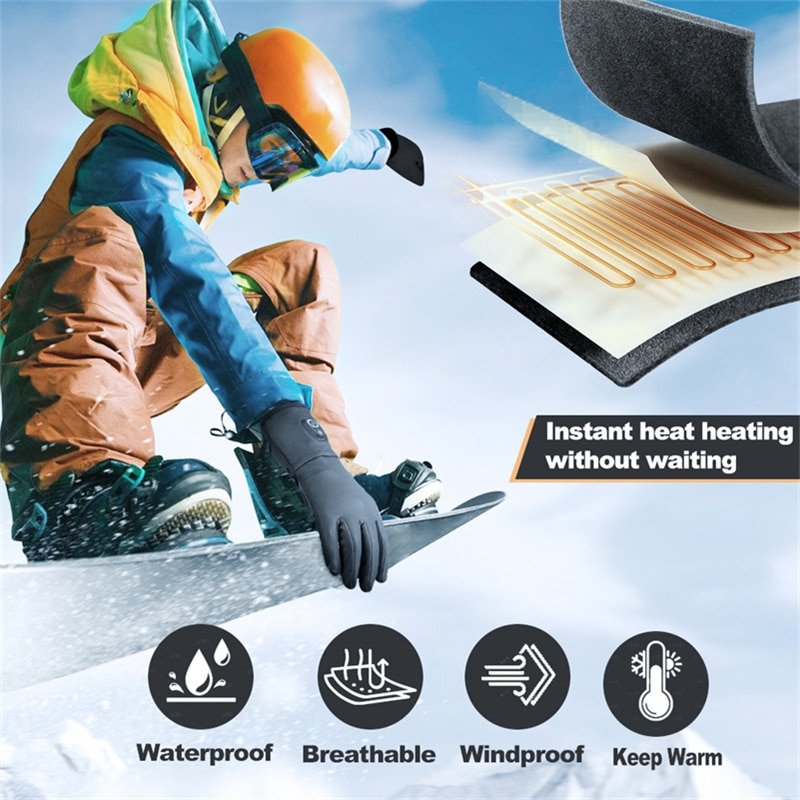
A heated glove is a glove with four extra systems built into it, and comparing them one by one is the fastest way to tell apart offers that look identical on a product page.
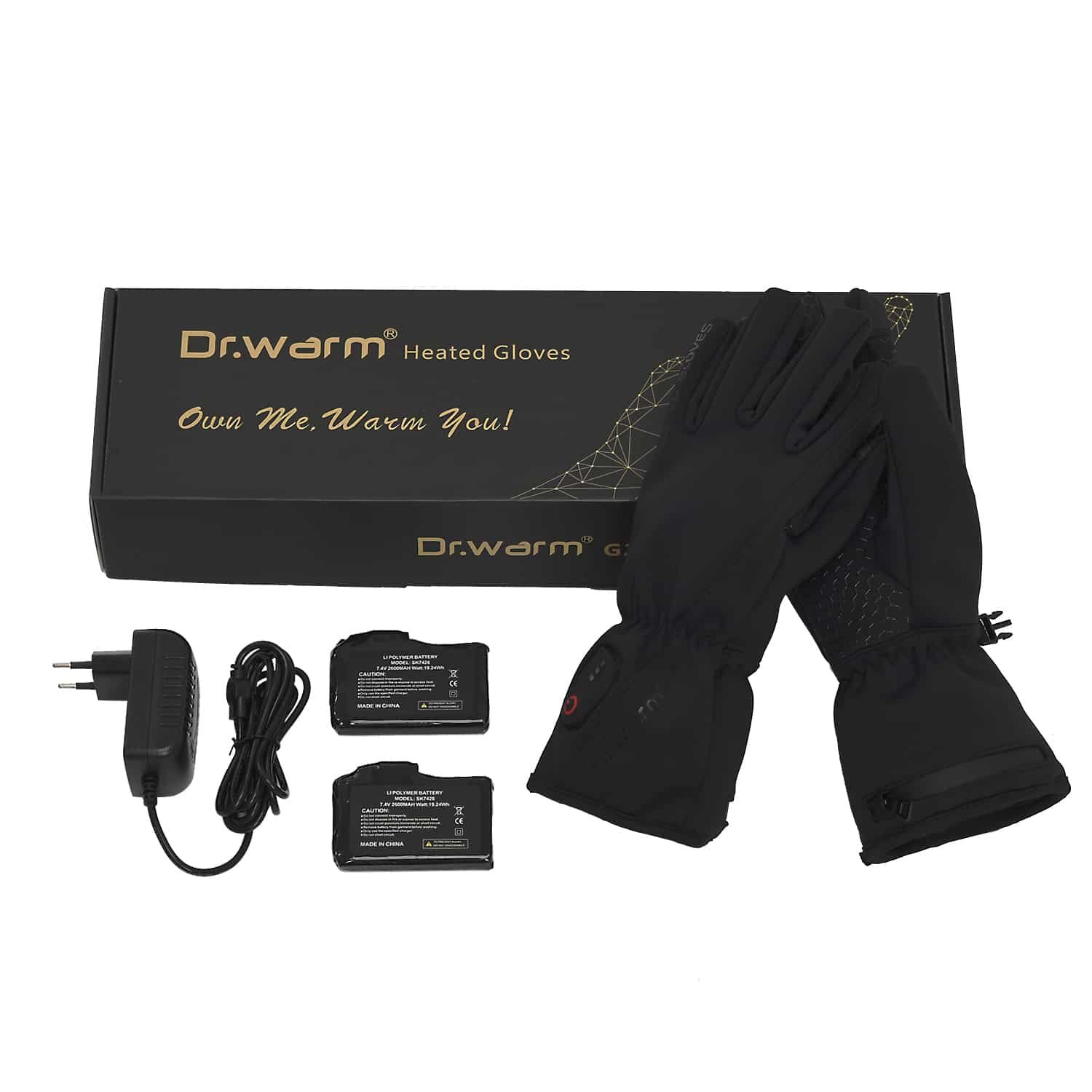
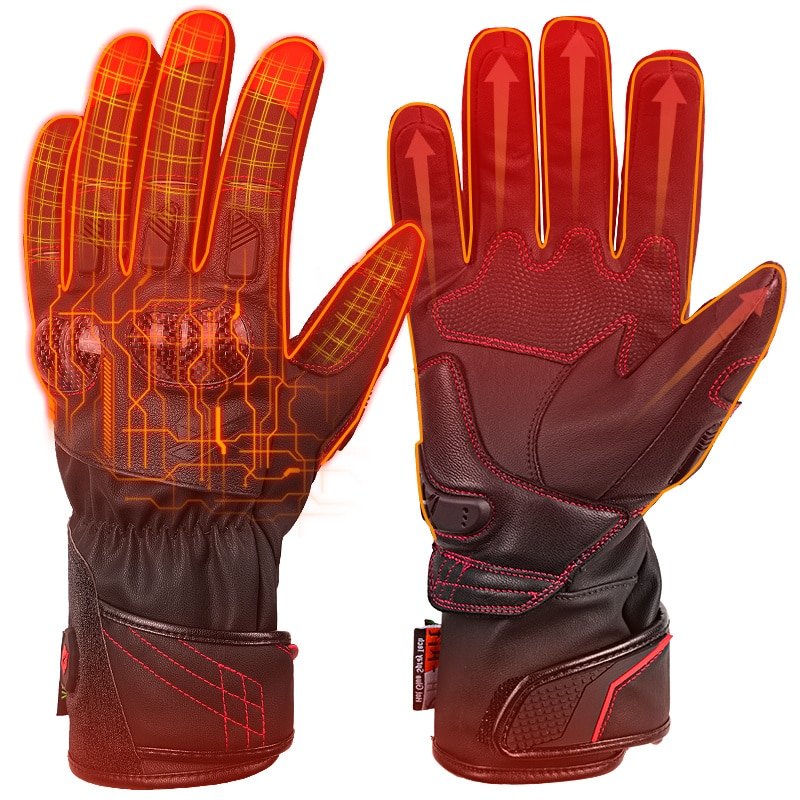
- Heating element. A carbon fiber, graphene or film element integrated between the shell and the lining. The material and the layout decide how evenly heat spreads and how well the glove tolerates being clenched around a tool, a pole or a handlebar. For the principle behind it, see our explainer on how electric heated gloves work.
- Battery and pocket. A small pack carried at the cuff or the wrist. Weight and position matter here more than on any other heated product, because the hand moves constantly and the cuff is the tightest part of a sleeve.
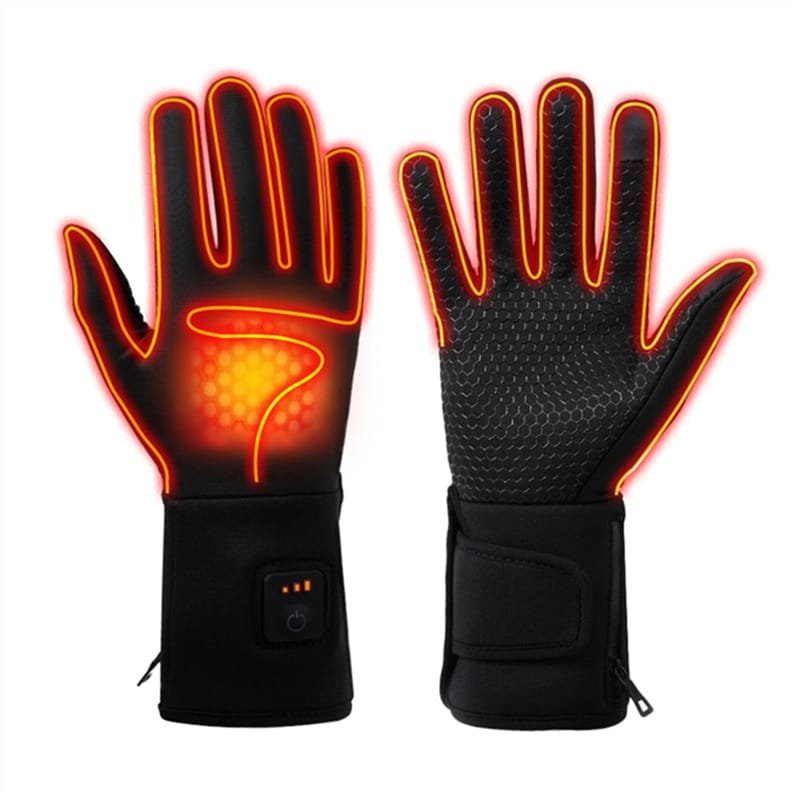
- Controller. A button on the battery, a wireless remote or a Bluetooth app. A button buried under a jacket cuff is hard to reach with the gloves already on, so a remote or an app is often worth the extra cost.
- Still on the fence? Are heated gloves worth it runs the numbers on real use cases and cost.
- Shell, membrane and lining. The outer shell, the waterproof membrane between the layers, the insulation and the inner lining together decide wind resistance, moisture handling and grip. The electronics inside deserve as much design attention as the textile, which is why we treat waterproof and sweat-resistant PCBA design as a glove feature rather than an afterthought.
The principle behind all four is the same: an element converts electrical energy into heat and the glove holds it around the hand. Everything else in this guide is about how well each part is matched to the others.
Key Specs to Compare: Voltage, Battery, Warmth and Waterproofing
The comparison narrows to a short specification list. The table below shows the values we build to at Dr. Warm: if a supplier cannot state these clearly for a heated glove, that is already an answer.
| Voltage options | 3.7V / 5V USB / 7.4V / 12V / 24V (customizable) |
|---|---|
| Battery capacity | 2200, 2500, 3200 or 5000mAh at 3.7V, and 2200, 3000 or 4000mAh at 7.4V (configured to your order) |
| Heat levels | 3-level adjustable |
| Heating element | Carbon fiber / graphene / heating film (model dependent) |
| Heating coverage | Back of hand / fingers / fingertips / palm / full glove (customizable) |
| Working temperature | 40–70°C, model specific (see product spec sheet) |
| Waterproof rating | IPX4 standard / IPX5 optional (where applicable) |
| Charging | Magnetic / USB / DC (model dependent) |
| Warranty | 12 months |
| Certification | CE / RoHS / FCC / UKCA / UL1642 / UN38.3 / IEC60335 / CCC / TUV / ETL |
Voltage is the line buyers misread most often. A USB system and a dedicated higher-voltage pack can both produce comfortable warmth, because element resistance, wattage and controller programming do most of the work; voltage describes the architecture of the power system more than it describes warmth. What it changes in practice is warm-up speed, how large a heating zone the glove can sustain and how much weight sits at the cuff. A USB design tends to suit lightweight gloves and moderate cold, while a dedicated higher-voltage pack is the better platform for thick insulated gloves, broad finger heating and long exposure.
Capacity should be read together with voltage rather than on its own, because the two together define the energy a pack actually carries. A supplier who quotes milliamp-hours without stating the voltage, the heating-zone size or the test conditions is quoting a number, not a specification. Heating coverage and waterproof rating are the other two lines worth fixing early. Finger and fingertip heating is the layout buyers ask for most, because fingers feel cold before the back of the hand, and it draws more power than a back-of-hand zone; broader coverage warms more of the hand but asks more of the battery. Waterproof rating describes the whole structure — membrane, seams, cuff, battery pocket and connectors — not just the outer fabric, and a supplier who blurs that line is likely to blur others.
Heated Gloves or Regular Winter Gloves?
Buyers usually ask whether the electronics are worth it at all, so it is worth answering plainly.
Regular winter gloves rely on insulation — fleece, synthetic loft or layered fabrics — and trap the heat the hands already produce. They are light, inexpensive, need no charging and wash without ceremony, but they cannot add warmth: once the hands are cold, an insulating glove only slows the loss.
Rechargeable heated gloves add a battery, a heating element and a controller. They generate warmth on demand, hold a set temperature and target the fingers, in exchange for charging, a little extra weight at the cuff and more specific care.
The choice comes down to exposure time and how much the wearer moves. For short errands in moderate cold, regular gloves are the sensible answer. For skiing, winter hunting, motorcycling, work sites and long shifts outdoors — wherever the wearer is standing still or exposed for hours — active heating is the difference between finishing the day outside and leaving early. Many brands carry both and position them by scenario rather than by price.
How Long the Heat Lasts in Freezing Conditions
Runtime is the number buyers ask about first and the hardest to state honestly, because it depends on how the gloves are used rather than on the pack alone.
- Heat level. The lowest setting always runs longest; a wearer who warms up on high and drops to low gets far more hours than one who stays on high all day.
- Heating coverage. A back-of-hand zone draws less power than full-finger or palm heating from the same pack.
- Ambient temperature. Cold reduces the usable capacity of any lithium pack, so an indoor bench test tells a buyer nothing about a morning well below freezing.
- Glove insulation. Good insulation holds the generated warmth and lets the gloves run at a lower setting; a thinly insulated glove forces a higher setting and shortens the shift.
- Wind and moisture. Wind strips heat from the surface of the glove, especially on a motorcycle or a snowmobile, and wet materials make the system work harder for the same comfort.
- Battery weight against capacity. A bigger pack adds hours and cuff weight at the same time, and the pack still has to sit comfortably inside a sleeve, so the ceiling is set by comfort as much as by energy.
Wearers can stretch a pack without changing the specification: charge both packs fully before going out, warm up on high and then drop a level, keep the battery pocket closed, switch off indoors and carry a matched spare set for long days rather than a larger pack. A spare set can be swapped without changing how the glove fits and without pulling a warm glove off in the cold.
For sourcing decisions, ask for runtime measured at every heat setting, with the battery voltage and capacity, the heating-zone size, the ambient test temperature and the left-right consistency stated alongside — a short request whose answer tells you a great deal about the supplier.
Fit, Dexterity and Touchscreen Use
Fit is the specification most often left to the last minute, and the one that generates the most returns. A heated glove has to fit closely without compressing the fingers or cutting circulation at the wrist.
Size and hand shape. One that is too small stretches the internal wiring and crowds the hand; one that is too large folds and puts repeated pressure on the same part of the element. Hand length, palm width and finger length all vary between wearers, which is why a proper sizing table in centimetres matters more on gloves than on any other heated product. Our heated glove sizing guide covers how to measure.
Pre-curved fingers and dexterity. A natural curve through the fingers, a flexible joint and a mobile thumb decide whether the wearer can hold a ski pole, work a tool or grip a throttle. A very thick glove can feel warm on the shelf and be useless in the hand, so the best designs balance insulation and heating against practical dexterity rather than maximising either.
Wrist closure and cuff style. A gauntlet cuff keeps snow out of a sleeve, while a short cuff suits a jacket worn over the glove. Whichever is used, the closure has to keep the glove seated without pressing on the wrist or trapping the battery wire.
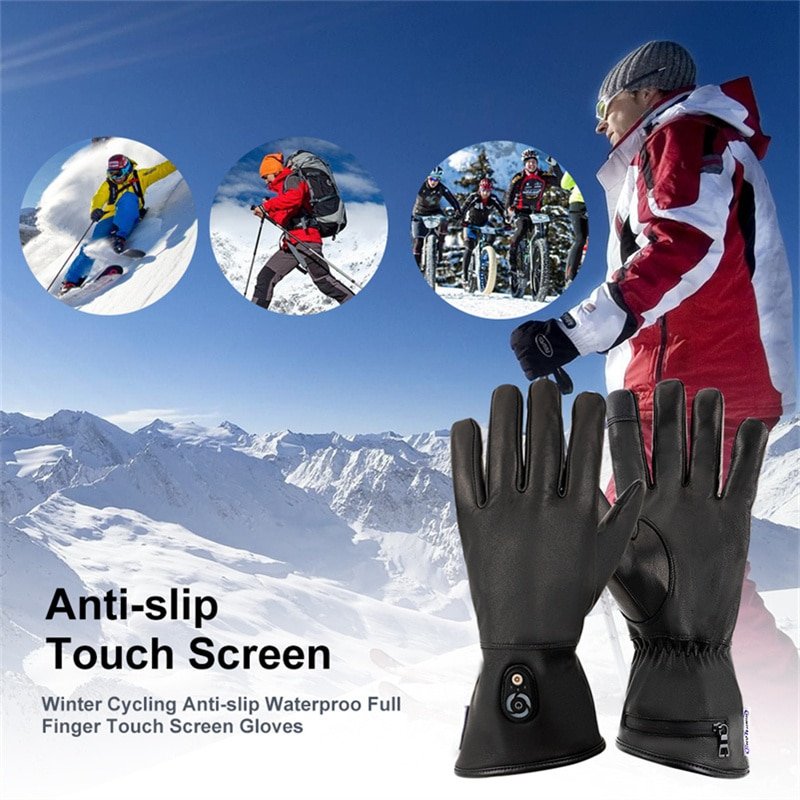
Touchscreen use. Most phones use capacitive screens that respond to conductivity, so touchscreen gloves add conductive material to selected fingertips — most often the index finger, the thumb or both. The feature is reliable only when the fingertips fit closely, because a loose tip keeps the conductive area away from the screen, and thick insulation reduces precision on small icons. Dirt, wear and moisture also degrade performance over time, so a brand should test tapping, swiping, map operation and simple typing rather than a single screen tap.
Which Model Suits Which Use Case
Heated gloves sell across buyer groups with very different priorities, and the specification that wins one group can lose another.
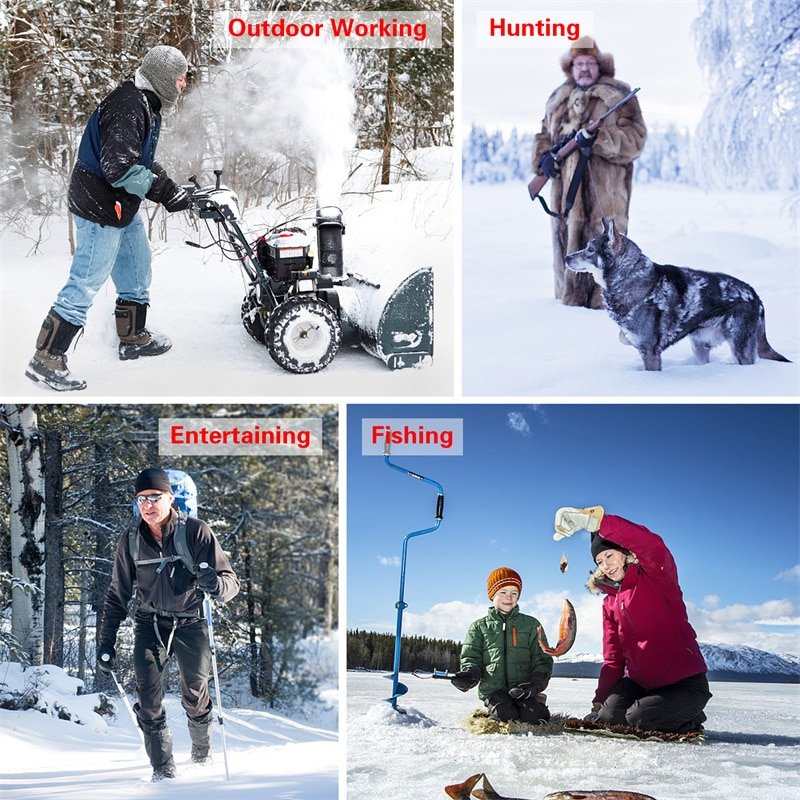
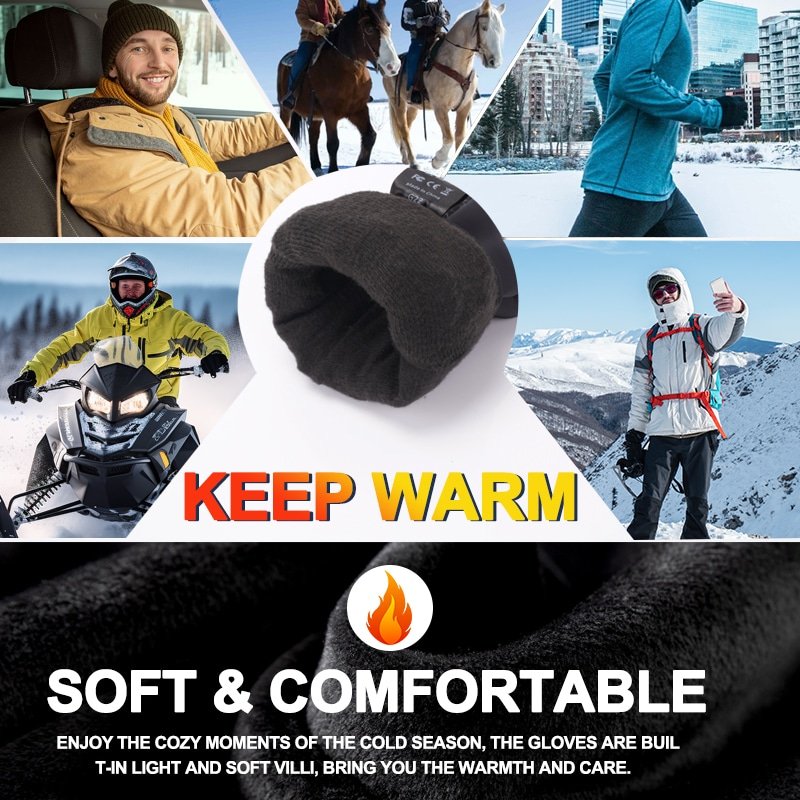
- Skiing and snowboarding. Strong insulation, windproof and waterproof construction, finger heating and a long gauntlet cuff, with enough flex to grip a pole. Peak temperature matters less than steady warmth across a full day on the lifts.
- Motorcycle riding. Rapid heat loss from wind. Wind-resistant construction, secure grip, flexible fingers, a wrist closure that stays put and a battery pocket that does not interfere with the controls; knuckle protection is often part of the brief.
- Winter hunting. Long sessions standing still with little body heat. Long runtime on the low and medium settings, quiet materials, and a remote or app that can be used without taking a hand out of a pocket.
- Outdoor work. Reinforced palms, abrasion-resistant fingertips, tool grip and protected wiring, plus controls that can be reached with the glove already on. A glove that cannot hold a tool is not warm enough to matter.
- Daily commuting and everyday winter use. Lightweight construction, touchscreen fingertips, anti-slip palms and simple controls, with neutral colours that work with ordinary winter clothing.
There is no single best model for every activity: the strongest product is designed around one clearly defined scenario, and a range is built by varying heating coverage, shell, insulation, battery and control rather than by chasing a headline temperature. For a scenario-by-scenario shortlist, see our guide to the best heated gloves for skiing, hunting and commuting, and for the range we manufacture see the heated glove collection.
Waterproofing, Washing and Care
Care instructions decide whether the second winter is as good as the first, and the word most often misused on a glove page is waterproof.
What waterproof actually means on a glove. Protection depends on the complete structure: the outer shell, the waterproof membrane, the seam construction, the cuff closure, the battery pocket, the cable openings and the electrical connectors. Even a waterproof heated glove should not be submerged unnecessarily unless the manufacturer specifically allows it, and product copy should distinguish clearly between water-resistant, splash-resistant and waterproof.
- Remove the power first. Switch off, disconnect the batteries, remove any detachable controller and close the pockets. Never put a battery, a charger or an unprotected connector in water.
- Follow the care label. Some models take a gentle machine wash inside a laundry bag and others are hand wash only; the method depends on the shell, the membrane and the connector construction.
- Avoid excessive twisting. Elements and internal wiring are designed to flex in normal use, but strong twisting, wringing or pulling stresses the circuit. Press excess water out gently instead of twisting the glove.
- Air dry completely. Dry the gloves naturally in a ventilated spot, away from radiators, open flames and high-temperature drying equipment, and do not reconnect the power until the gloves and connectors are fully dry.
- Inspect before each season. Check the battery pockets, connectors, charging cables, control buttons, the areas around the fingers and the seams and membranes, and look for hot spots or uneven heating. Stop using a glove that shows one small area of unusual heat.
- Store correctly between seasons. Clean and dry, batteries disconnected, no sharp folds, and the packs kept in a dry, moderate-temperature place at partial charge.
Maintenance begins with the original design, which is why we treat membrane bonding, protected battery pockets, connector sealing and flex-tested wiring as manufacturing decisions rather than after-sales ones. See how we build and test on our factory page.
Safety and Avoiding Overheating
A heated glove is a low-voltage product, and the safety rules are simple enough to print on the care card.
- Use only the specified battery and charger. Do not connect a pack just because the plug appears to fit; the voltage, connector polarity, capacity and controller have to match the heating system.
- Inspect before every use. Check the battery casing, charging cable, connectors, battery pocket and control button, and do not use a pack that is swollen, leaking, cracked or physically damaged.
- Start at a moderate temperature. It is not always necessary to use the highest level. Begin on low or medium and increase only when required, then drop back once the hand is comfortable.
- Avoid prolonged pressure on one heating area. Do not place heavy objects on powered gloves or compress them tightly while heating, and never leave them powered on while folded in a bag, a drawer or a sealed container.
- Keep the electrical connections dry. Remove the batteries before charging, confirm that the connectors are dry, inspect the charging port and charge in a dry, ventilated place.
- Recognise the warning signs. Stop using the gloves immediately if you notice burning or chemical odours, a swollen pack, a melted connector, sudden temperature spikes, one small area becoming excessively hot, intermittent heating or visible wiring damage.
For brands, the safety case is a design case. Over-temperature protection, short-circuit protection, over-charge and over-discharge protection, stable controller output, heating-uniformity testing, thermal imaging and connector durability tests are the items to confirm before the first order rather than after the first return.
Troubleshooting: When They Stop Heating
Most dead-glove complaints turn out to be one of a handful of causes, and a support script that works through them in order resolves the majority without a return.
- The battery is not fully charged. A partly charged or deeply discharged pack may not power the system. Use the matched charger, charge both packs fully and check the charger indicator. If one glove works and the other does not, swap the left and right packs: if the fault follows the pack, the pack is the problem.
- The connector is loose. A plug can work partially loose during wear, storage or a battery change. Check that it is fully inserted, that the connector is clean and dry and that the pocket is properly closed, and never force mismatched connectors together.
- The controller is in protection mode. A battery-management system stops output when it detects an abnormal condition. Disconnect the pack, wait briefly and reconnect according to the instructions; if the problem continues, contact the supplier rather than repeatedly resetting the system.
- The gloves are wet. Moisture around a connector or an internal component interrupts operation. Remove the packs and air dry completely; do not test, charge or reconnect a damp system.
- The element or the wire is damaged. Repeated sharp folding, pulling or twisting can break an internal connection. Only one finger heating, heat that stops when the hand moves, a large left-right difference or heat in a single small area all point to internal damage, which needs inspection by the manufacturer or a qualified technician.
- The wrong battery or charger is in use. A pack or charger with the wrong voltage or connector can damage the system or create a safety risk, even when the plug fits.
Stop using the gloves immediately and seek professional inspection if you notice a burning smell, an unusual hot spot, a damaged battery or a melted connector. Designing for fewer failures is the better answer, and it is mostly a matter of element integration, sealed connectors and a wiring route that survives flexing.
OEM, ODM and Private-Label Options
For brands and distributors the decision usually ends with a custom programme rather than a catalogue order, and the parts that can be specified are broader than most first-time buyers expect.
- Heating system. Finger, fingertip, palm, back-of-hand or full-glove coverage, the element material, output levels and the temperature-control logic.
- Construction. Leather, ripstop nylon or softshell outer, membrane type, insulation and lining, pre-curved finger construction, cuff style, reinforced palms and abrasion-resistant fingertips, in a custom size range.
- Battery and control. Capacity, pack shape, pocket position, charging interface, and button, remote or app control with custom controller programming.
- Features and branding. Touchscreen fingertips, anti-slip palms, knuckle protection, knitted or printed logos, labels, instruction sheets, colour boxes, carry bags and gift packaging.
Our standard terms are straightforward: stock from 1 unit, OEM from 100 units and ODM from 500 units, sampling in 7 to 30 days and mass production within 45 days, and a standard manufacturer warranty. A useful enquiry states the target country, the intended activity, the estimated quantity, the required heating areas and runtime target, the preferred control method, the materials and sizes, the logo files, the packaging requirements, the compliance documents needed and the target delivery date. Battery development and certification support are handled in house — see the battery solution page — and the full service scope starts with OEM and ODM services.
Frequently Asked Questions
Can heated gloves run from a power bank instead of their own battery?
Some do, because a USB-compatible glove takes power from any matched USB source, which is convenient for commuting and indoor-outdoor work. The trade-off is real: a general power bank is rarely matched to the element, so warm-up is slower, the usable heating area is smaller and the pack usually has to sit in a pocket rather than at the cuff. A dedicated rechargeable pack is engineered together with the element and the controller, which is why it is the better choice for thick insulated gloves and long exposure.
Can heated glove liners be worn under another pair of gloves?
Yes, and it is a common layering choice for riders and workers who already own a shell glove they trust. A liner works best when it is slim enough not to crowd the hand, when the outer glove has enough room for the extra thickness and when the liner battery pocket stays accessible. The risk is compression: a tight outer glove can press the liner element against the skin and restrict circulation, so the combination should be tested together rather than assumed to work.
Are heated gloves worth it compared with disposable hand warmers?
They solve different problems. Disposable warmers are cheap, need no charging and are easy to carry, but they give one fixed level of heat, a single short session and no control once they are started. Heated gloves cost more up front and need charging, but they are reusable across seasons, offer adjustable levels and warm the fingers where the cold is felt. For occasional short outings a warmer is often enough; for regular long exposure the reusable system pays for itself and is more consistent.
Can heated gloves be worn in rain or wet snow?
They can be worn in rain and wet snow, but the waterproof rating describes the whole structure rather than the shell alone, and it is not a licence to submerge the gloves. Snow that sits on a warm glove melts, so seams, cuffs, battery pockets and cable openings are what decide whether water reaches the electronics. After a wet outing, dry the gloves fully before reconnecting the power, and treat a glove that has been soaked beyond its rating as a glove that needs inspection rather than a glove that failed.
How can I stop the battery from feeling bulky around the wrist?
Position matters more than size. A pack shaped to follow the cuff, worn on the outer side of the wrist rather than the palm side, and secured by a closure that does not press on the joint, is far less noticeable than a large flat pack pushed against the wrist. A slim pack with a lower capacity can be the better engineering choice for light gloves, while a heavier pack belongs on thicker gloves where there is room to carry it. Brands should test the glove worn inside the actual jacket sleeve, not on a bare arm.
Do heated gloves need an app, or can they be controlled with a button or remote?
All three work, and the right choice depends on how the gloves are worn. A button on the battery is the simplest and most robust option, but it is hard to reach once the glove is inside a sleeve and a jacket cuff. A wireless remote lets the wearer change levels with the gloves on, and an app adds finer control and battery status at the cost of needing a charged phone. For riders and skiers a remote is usually the best compromise, while an app suits buyers who want to tune settings and monitor runtime.
Heated gloves are judged in the hand rather than on the shelf, so the discipline is simple: define the scenario, fix the heating coverage and the power system, test the glove with the tools or controls the wearer actually uses, and publish care and safety rules that a wearer will follow. If a specification review would help before your next order, our engineering team can work from your tech pack or from scratch.
If you are narrowing this down in person, the glove range was on display at ISPO 2026 in Amsterdam, where riders and buyers tested coverage and controllers against physical samples. Our recap covers the questions they asked most.