
Construction sites expose jackets to constant mechanical stress from tools, equipment impacts, and abrasive surfaces, while cold storage facilities require continuous thermal stability in sub-zero temperatures with high humidity and minimal movement variation. Standard consumer heated jackets, built primarily for intermittent outdoor leisure use, fall short in these industrial settings where gear must endure daily heavy-duty cycles without compromising worker safety or performance.
Heated jackets designed for construction and cold storage applications must integrate reinforced structure, stable heating systems, and battery safety mechanisms to ensure safe long-term operation in demanding industrial environments.
Custom heated jackets for industrial use differ fundamentally from retail models because they prioritize engineering reliability under prolonged stress rather than casual comfort. Manufacturers with experience in OEM production understand that these garments serve as essential performance equipment, directly influencing worker productivity, compliance, and risk management.
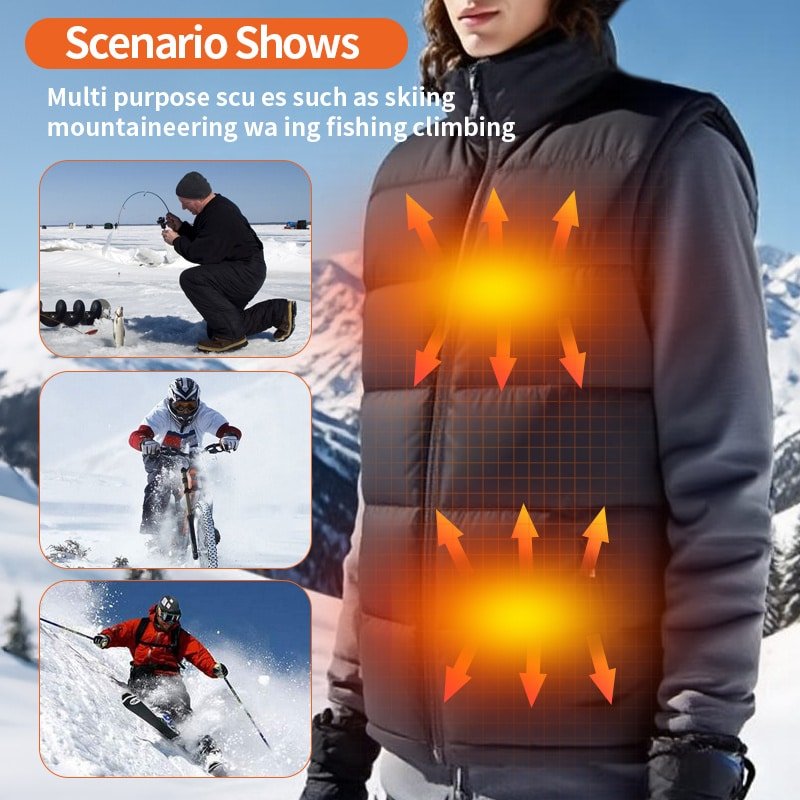
Environmental Challenges in Construction & Cold Storage
Industrial heated jackets must address distinct environmental stressors that accelerate wear and impact heating reliability far beyond typical winter consumer scenarios.
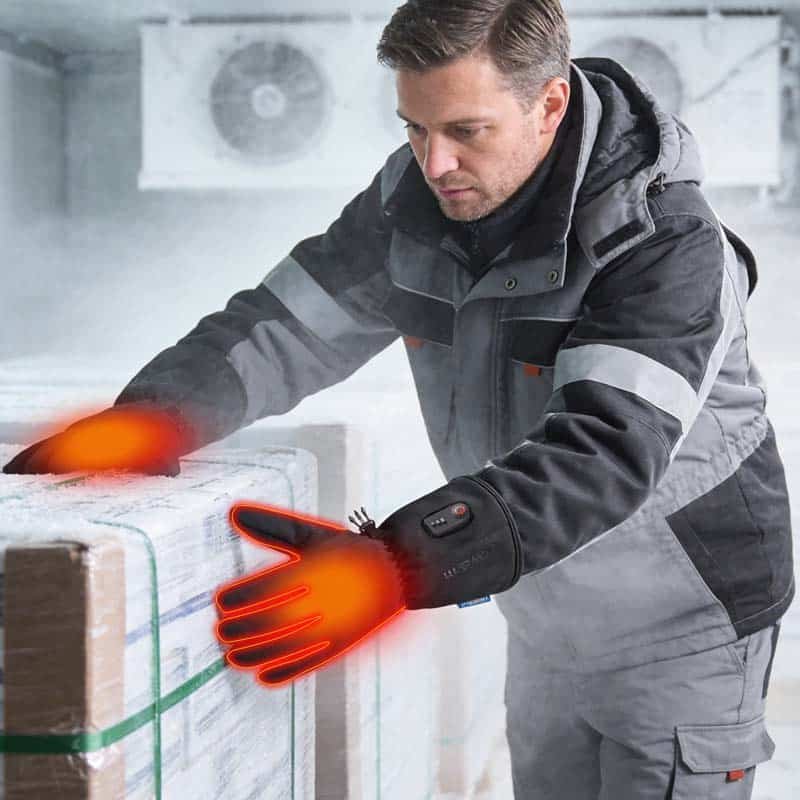
Construction sites subject jackets to mechanical abrasion and impact from handling materials, climbing scaffolding, and contact with rough surfaces, combined with wind chill and variable outdoor exposure. Cold storage facilities, by contrast, impose continuous sub-zero temperatures—often between -10°C and -30°C—along with elevated humidity from condensation and temperature fluctuations during door openings or product movement. Both environments involve long-duration shifts of 8–12 hours, where inconsistent heat output or premature battery failure can reduce focus and increase cold stress risks.
| Environment | Key Challenge |
| Construction site | Mechanical abrasion & impact |
| Outdoor building work | Wind chill & exposure |
| Cold storage facility | Continuous sub-zero temperature |
| Logistics warehouse | Temperature fluctuation |
These conditions demand jackets engineered specifically for sustained industrial operation rather than short bursts of activity.
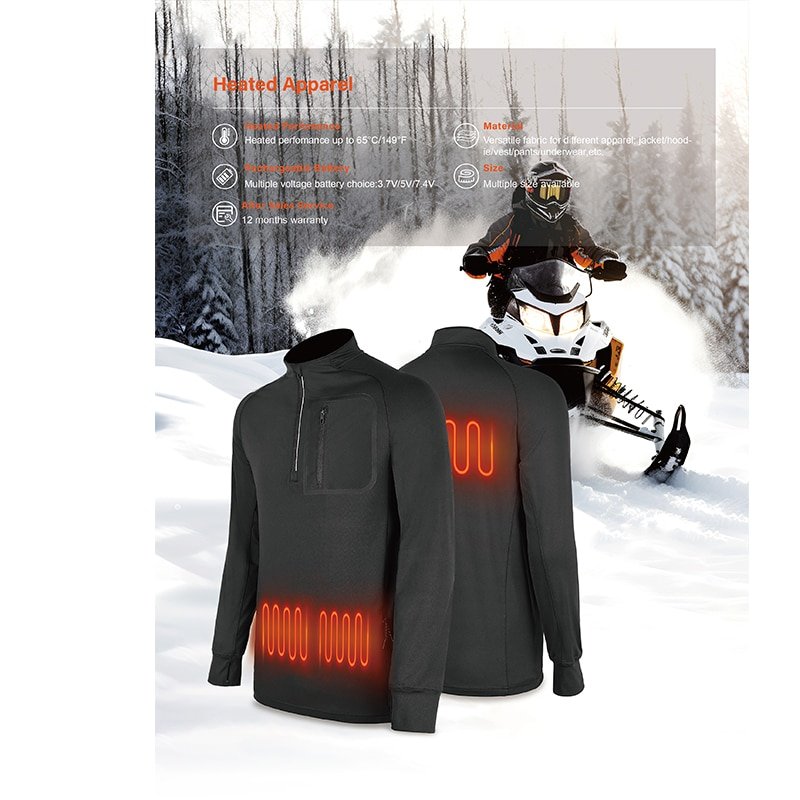
Structural Reinforcement for Industrial Use
Industrial heated jackets require robust structural design to maintain integrity under repeated mechanical abuse and environmental exposure.
Heavy-duty outer fabrics, such as high-denier polyester or ripstop blends with durable water-repellent (DWR) treatments, resist tearing and abrasion from tools, concrete, or metal edges. Reinforced seam stitching—often double- or triple-stitched with heavy-duty thread—prevents seam failure at high-stress points like shoulders, elbows, and pockets. Abrasion-resistant panels in impact zones extend service life, while secure battery compartment positioning protects power sources from direct hits or crushing.
Industrial-grade zippers and closures ensure reliable operation even when gloves are worn and after repeated use in wet or dusty conditions.
| Structural Feature | Purpose |
| Reinforced stitching | Prevent seam failure |
| Heavy-duty shell fabric | Abrasion resistance |
| Protective battery pocket | Reduce impact damage |
| Industrial-grade zippers | Long-term durability |
These reinforcements transform the jacket from apparel into reliable work equipment capable of withstanding daily industrial demands.
Heating System Design for Long Shifts
Stable heat delivery over extended shifts forms the core requirement for heated jackets in construction and cold storage applications.
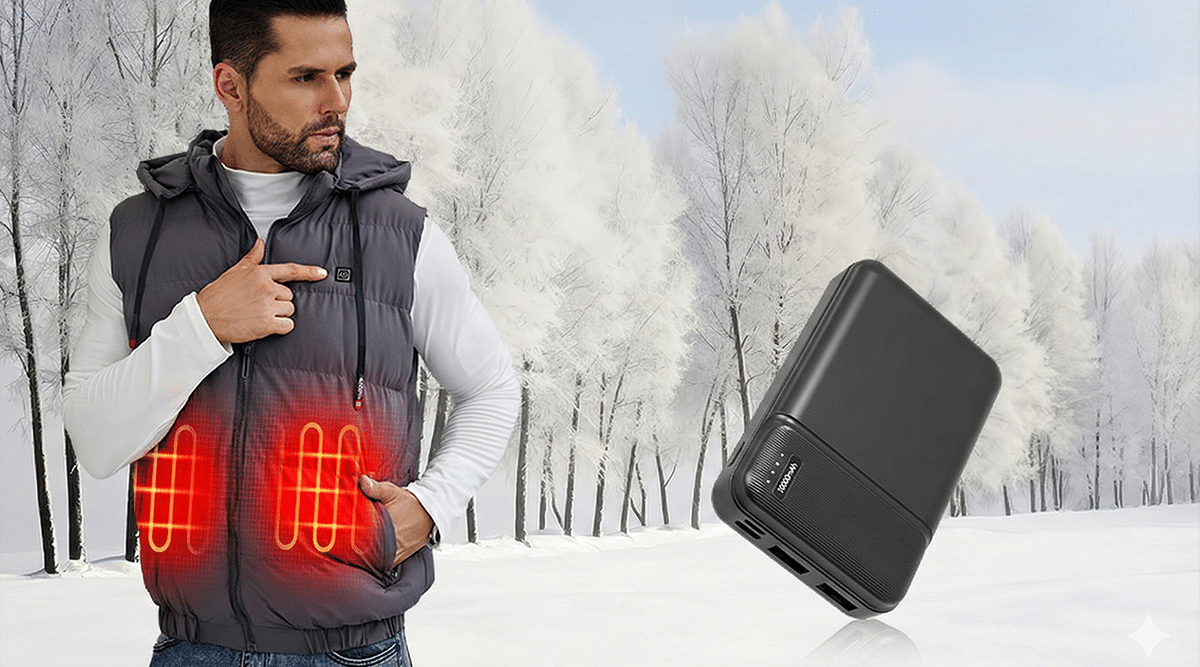
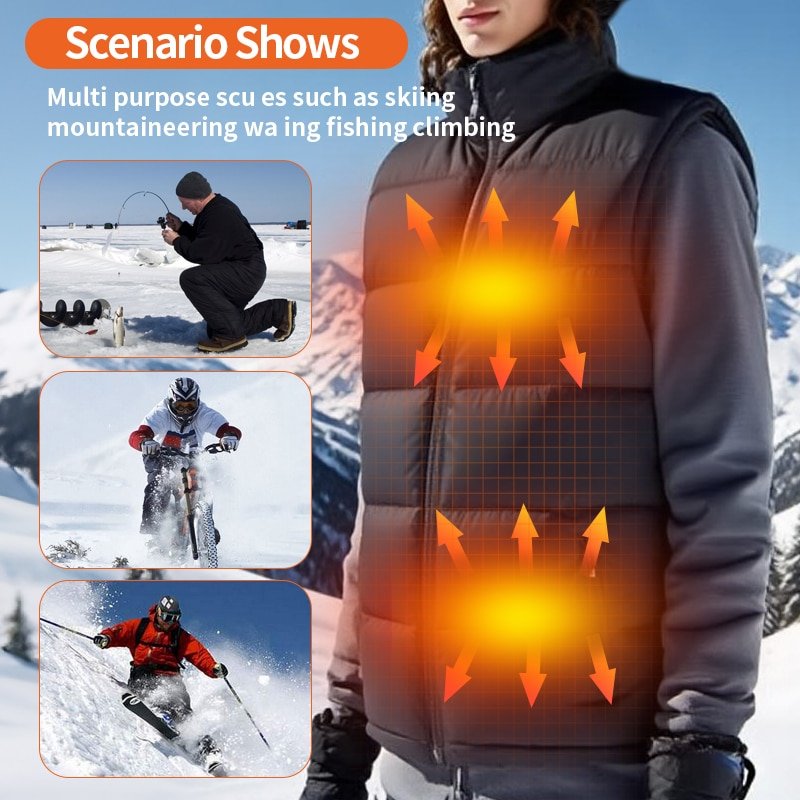
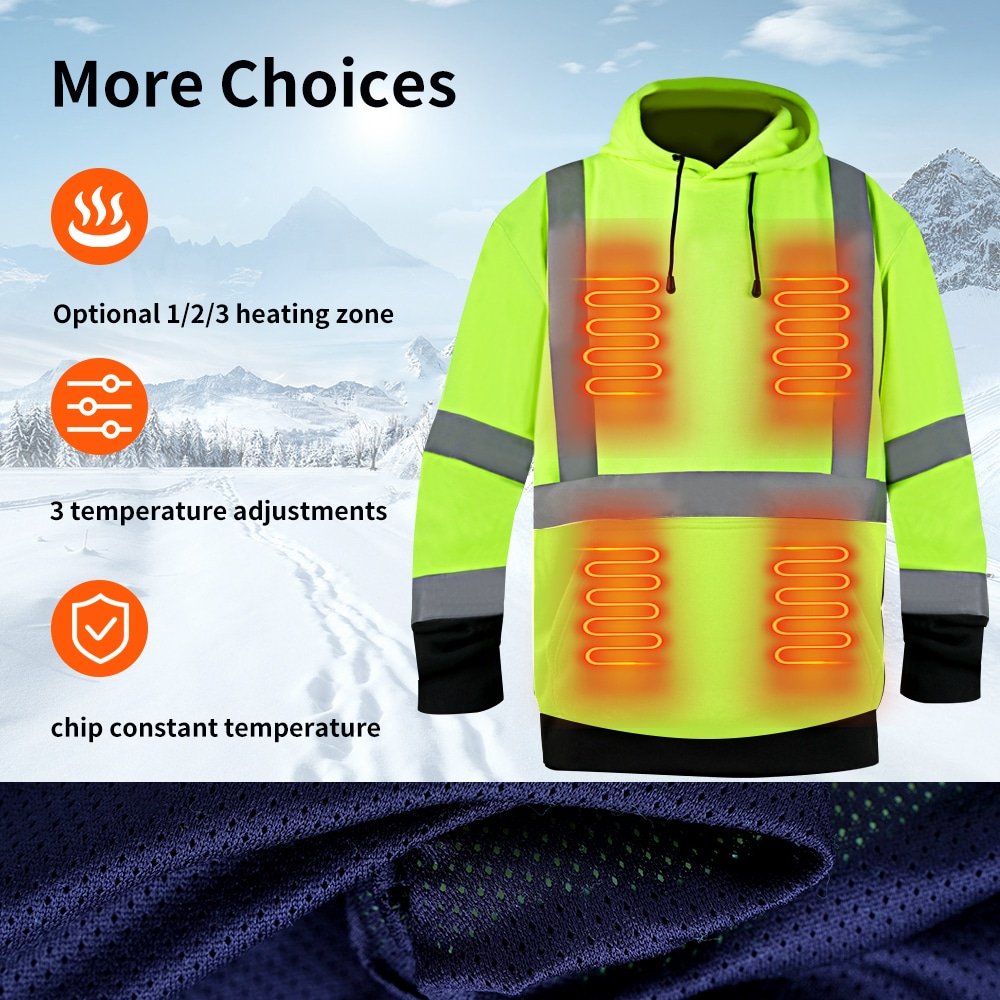
Multi-zone heating systems concentrate warmth in core body areas—chest, back, and lower back—to maintain core temperature efficiently without wasting power on less critical zones. Power efficiency optimization through intelligent controllers adjusts output based on ambient conditions and body heat, extending runtime during 8–10 hour shifts. Overheat protection circuits prevent excessive temperatures, reducing burn risks even during prolonged high-output use.
For more on engineering these systems to meet industrial demands, explore custom heated jackets for industrial use.
Battery Performance Under Sub-Zero Conditions
Battery reliability drops significantly in low temperatures, making specialized design essential for cold storage and winter construction work.
Standard lithium-ion batteries experience reduced efficiency below freezing due to slowed chemical reactions and increased internal resistance. Capacity can drop noticeably from 0°C to -5°C, become more pronounced between -5°C and -15°C, and require additional protection below -15°C to avoid severe performance loss or safety issues.
Insulated battery compartments maintain internal warmth, while cold-start power management ensures reliable activation. Advanced protection circuits guard against over-discharge and potential plating risks during low-temperature operation.
| Temperature Range | Battery Performance Impact |
| 0°C to -5°C | Minor efficiency reduction |
| -5°C to -15°C | Noticeable capacity drop |
| Below -15°C | Requires insulation & protection |
Proper battery engineering prevents unexpected power failure during critical shifts.
Safety & Compliance Considerations
Safety remains non-negotiable in industrial heated apparel, where electrical components interact with demanding work environments.
Jackets must align with workplace PPE standards, including electrical safety requirements for powered garments. Compliance with international certifications—such as CE, RoHS, and relevant low-voltage directives—ensures components meet basic safety thresholds. Over-temperature and short-circuit protection, combined with proper labeling of voltage, battery specs, and usage instructions, support traceability for audits.
Industrial clients require documentation for risk assessments, confirming the equipment suits specific hazards like arc flash potential or cold stress under OSHA-equivalent guidelines.
Customization Options for Industrial Brands
Industrial brands benefit from tailored specifications that match exact workplace needs without unnecessary features.
- High-visibility reflective integration for ANSI/ISEA 107 or EN ISO 20471 compliance in low-light construction zones
- Company logo placement and color matching for uniform branding
- Reinforced pocket layout to accommodate tools, radios, or additional PPE
- Battery capacity selection for shift-specific runtime requirements
- Adjustable heating zones and controller interfaces suited to gloved operation
These options allow procurement teams to specify gear that integrates seamlessly into existing safety protocols and workflows.
Conclusion — Industrial Heated Jackets Are Performance Equipment
In construction and cold storage settings, heated jackets function as working tools rather than optional comfort items. Their engineering reliability—through reinforced structures, stable heating, and cold-tolerant batteries—directly defines operational credibility and worker protection.
Customization must precisely match the intensity of the target environment, ensuring compliance, durability, and consistent performance across long shifts. Only through deliberate design focused on these industrial realities can such garments deliver the safety and productivity required in these demanding sectors.
Frequently Asked Questions
What fails first on a construction site?
The wiring, not the element. Abrasion at the shoulder where a harness rubs, crushing at the hip where material is carried, and fatigue where the lead crosses the elbow. The element survives because it is flat and supported. The lead fails because it is a thin conductor asked to bend in the same place a thousand times a week.
Why can a retail winter jacket not simply be used in a cold store?
Because a cold store is a continuous condition, not a commute. The garment sits at a stable low temperature for a whole shift, so the pack never warms back up, the shell is repeatedly flexed in the same places, and the wearer is moving stock rather than generating body heat through exertion. That combination needs a different runtime target and a different sealing standard.
How should heating be zoned for a full shift?
Lower output over more area beats a hot patch. A worker who is warm but not sweating keeps the garment on; a worker who overheats at the chest takes it off and never puts it back. Zoning core areas at a moderate level, with the option to switch off the back when the work becomes physical, is more useful than a maximum setting nobody can leave running.
Can an industrial heated jacket be washed or cleaned?
Specify it explicitly, because industrial buyers will clean garments whether or not you planned for it. The workable design is removable electronics and a shell that tolerates commercial laundering, with the connector and port the only parts that need real protection. Our standard sealing is IPX4 with IPX5 available as an option — anything sold as IP65 on a flexing jacket is a claim worth questioning.