

Heated socks look similar to ordinary winter socks, but they contain a small electric heating system designed to provide active warmth around the feet.
Instead of relying only on thick fabric and insulation, heated socks use rechargeable batteries to power flexible heating elements built into the sock. These elements convert electrical energy into heat and distribute warmth to areas that lose heat quickly, especially the toes and soles.
What Is Inside a Pair of Heated Socks?
A typical pair of rechargeable heated socks includes four main parts:
1. Heating Elements
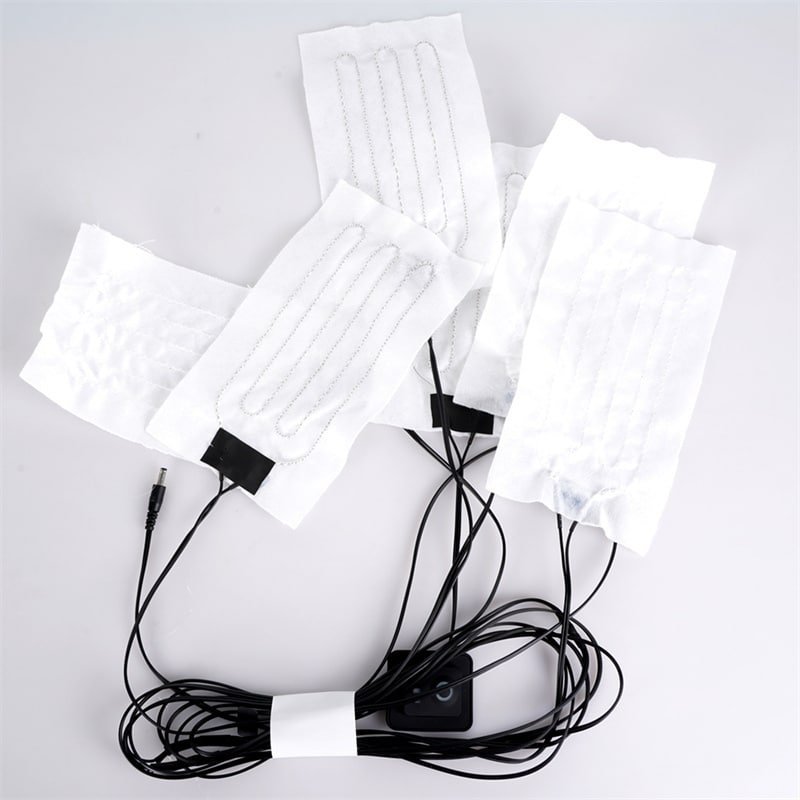
Thin and flexible heating elements are integrated into the sock structure. Depending on the design, the heating zones may cover the toes, the sole, or a larger area of the foot.
Dr. Warm supports customized toe-heating, sole-heating, and full-foot heating layouts for different outdoor and cold-weather applications.

2. Rechargeable Batteries
Each sock connects to a compact rechargeable battery, usually stored in a pocket near the upper cuff.
When the socks are switched on, the batteries send electricity through the heating elements. The operating time depends on the battery capacity, heat setting, heating coverage, and outdoor temperature.
Dr. Warm heated-sock systems can typically provide approximately 4–10 hours of warmth, depending on the selected configuration and temperature level.
3. Temperature Controller
Most heated socks provide several temperature settings. Users can start with a higher level for faster warmth and then switch to a lower level to extend battery runtime.
Control options may include:
- A button on the battery
- A wireless remote control
- Bluetooth APP control
Dr. Warm can develop button, remote, or APP-controlled heating systems according to the needs of the product and target market.
4. Insulating Sock Materials
The fabric also plays an important role. Breathable, moisture-wicking, elastic, and insulated yarn structures help retain warmth while keeping the socks comfortable.
The heating system and sock materials must work together. A well-designed product should provide stable warmth without feeling excessively bulky or restricting foot movement.
Where Do Heated Socks Provide Warmth?
Most heated socks focus on the toes because they are often the first part of the foot to feel cold.
Some designs extend the heating element across the sole, while others use broader heating coverage for extremely cold environments. The best layout depends on the activity, footwear, battery size, and desired runtime.
Heated socks are commonly used for:
- Skiing and snowboarding
- Motorcycling and snowmobiling
- Hiking and camping
- Hunting and fishing
- Outdoor construction and work
- Winter commuting and everyday wear
Dr. Warm develops heated socks for winter sports, outdoor work, motorcycling, and daily cold-weather protection.
Are Heated Socks Safe?
Properly designed heated socks use low-voltage batteries, temperature-control systems, and battery-protection circuits to maintain stable operation.
Reliable products should be tested for heating uniformity, battery safety, flexibility, washability, and long-term heating performance. Dr. Warm applies heating endurance tests and battery safety checks and supports compliance requirements such as CE, FCC, RoHS, UKCA, and ISO-aligned quality processes.
Users should always remove the battery and detachable electronic components before washing the socks and follow the manufacturer’s care instructions.
Final Thoughts
Heated socks work by combining rechargeable batteries, flexible heating elements, temperature controls, and insulating fabrics.
The battery supplies power, the heating elements generate warmth, and the controller allows the user to adjust the temperature. When properly designed, heated socks provide targeted warmth without requiring excessively thick layers.
For brands developing heated socks, heating-zone placement, battery capacity, material selection, comfort, safety, and control method should all be considered during the product-development stage.
Develop Custom Heated Socks with Dr. Warm
Dr. Warm provides complete OEM and ODM services for custom heated socks, including heating-system design, battery integration, temperature controls, materials, private labeling, packaging, sample testing, and mass production.