

Quick Answer
The best heated jacket depends on the activity.
Ski jackets need waterproofing and freedom of movement. Camping jackets need adjustable warmth and practical battery life. Outdoor-work jackets require durable fabrics, secure electronics and easy controls.
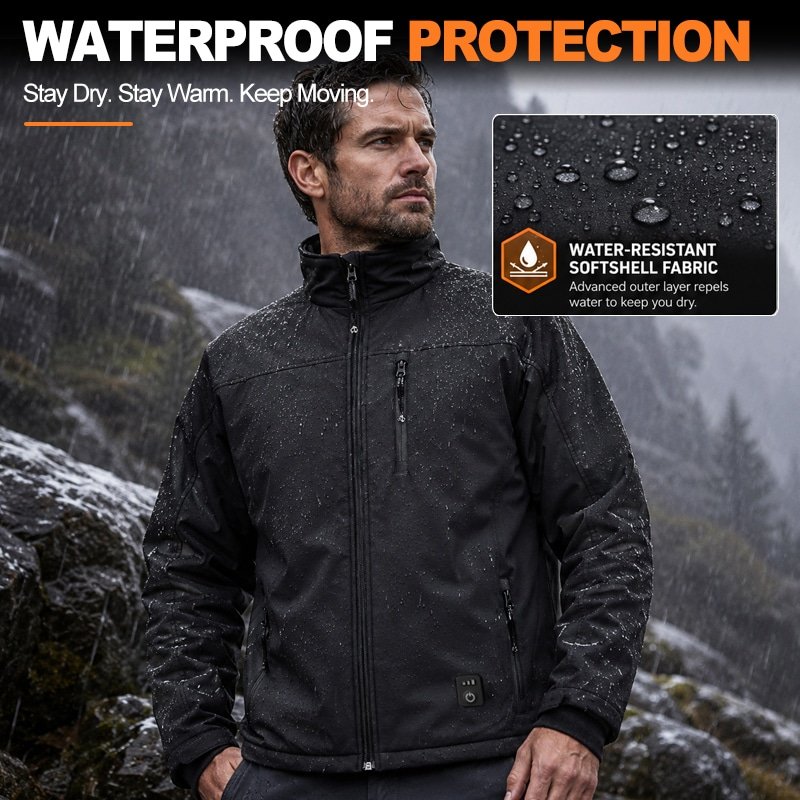
Best Heated Jackets for Skiing
Look for:
- Waterproof and wind-resistant construction
- Chest and back heating
- Breathable materials
- Adjustable cuffs and hood
- Slim battery placement
- Controls that work with gloves
- Comfortable shoulder movement
- Effective passive insulation
The jacket should remain warm even when the battery is switched off.
Best Heated Jackets for Camping
Camping includes both active movement and long periods of sitting.
Useful features include:
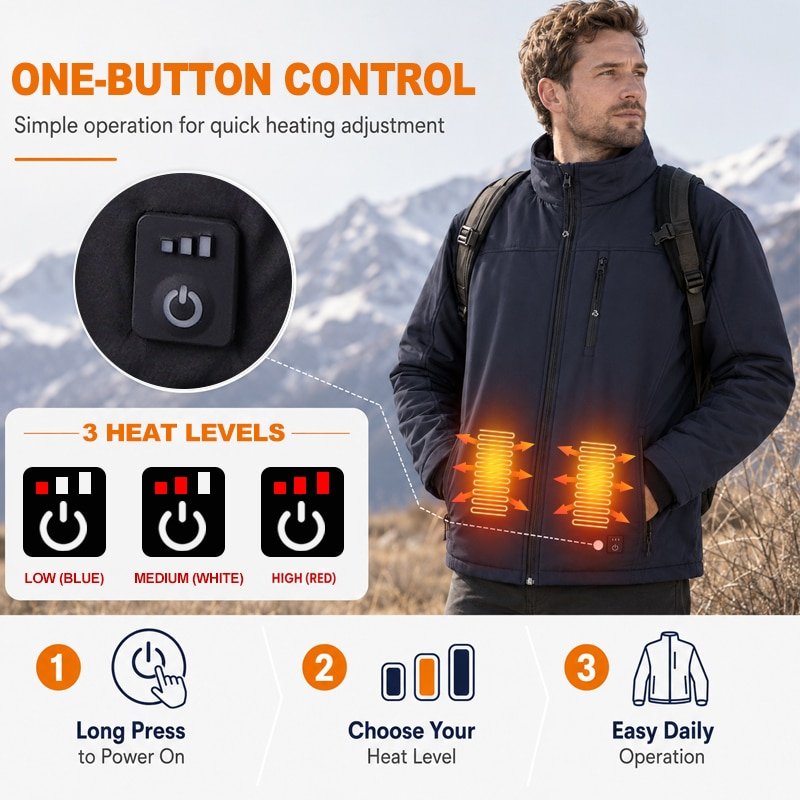
- Multiple heat levels
- Replaceable rechargeable batteries
- Insulated lining
- Large pockets
- Weather-resistant shell
- Easy charging
- Stable low-level heating
Users can begin with high heat and switch to a lower level after warming up.
Best Heated Jackets for Outdoor Work
Workwear products should prioritize:
- Abrasion-resistant fabrics
- Reinforced seams
- Secure battery pockets
- Easy-to-press control buttons
- High-visibility details when needed
- Chest and back heating
- Long-shift battery options
- Impact-resistant battery housing
Dr. Warm supports four battery voltages for heated jackets and vests — 5V USB, 7.4V, 12V and 24V — with 24V reserved for rugged industrial workwear that needs sustained output through a full shift.
Skiing, Camping and Outdoor Work: What Each Use Case Demands
The three scenarios are often sold with the same marketing language, but they diverge sharply at the specification stage. If one jacket is being developed for more than one of these users, decide which requirement wins before tooling starts — a jacket that has to serve everyone usually ends up serving no one well.
| Requirement | Skiing | Camping | Outdoor work |
|---|---|---|---|
| Heating zones | Chest and back, with warmth under the shoulder straps | Chest, back and lower back for long sitting periods | Chest and back, reinforced against pressure points |
| Waterproofing | Highest priority — persistent snow contact | Weather-resistant is usually enough | Wind and rain resistance across a full shift |
| Battery position | Slim, close to the body under a shell | Accessible pocket for swapping on site | Secure, impact-protected pocket |
| Control access | Operable with gloves on | Simple controls that work in low light | Large buttons that work through work gloves |
| Insulation priority | Warmth retained during lift rides and stops | Comfort across sitting and moving | Durability ahead of maximum loft |
| Fabric priority | Breathability and stretch | Packability and weight | Abrasion and tear resistance |
What the Three Heat Levels Mean in Practice
Heated jackets use the same three-level structure across the market, but the useful question is not how hot the top setting gets — it is which level a wearer will actually leave the jacket on.
| Heat level | Typical temperature | When it is the right setting |
|---|---|---|
| Low | 38 °C | Long active days or full work shifts, where warmth is background comfort rather than the main heat source |
| Medium | 45 °C | General winter use — commuting, walking and everyday outdoor activity |
| High | 55 °C | Stationary cold such as camping stops, lift rides or waiting on site |
Two things decide whether those levels feel right in the field: where the heating elements sit, and how well the garment holds passive warmth. A jacket with efficient insulation stays comfortable on a lower setting for longer, and that matters more to the wearer than a higher maximum.
What Should Brands Consider in 2026?
Develop separate products for clearly defined users rather than promoting one generic jacket for every winter situation.
Dr. Warm can customize garment construction, heating areas, batteries, insulation, controls, reflective features, colors, branding and packaging.
Final Answer
For skiing, choose a waterproof and breathable heated jacket. For camping, prioritize adjustable warmth and runtime. For outdoor work, focus on durability, safety and secure battery integration.
The best heated jacket is the one engineered around its actual use environment.
Develop Custom Heated Jackets with Dr. Warm
Dr. Warm provides complete OEM and ODM support for rechargeable heated jackets, including garment design, waterproof fabrics, custom heating zones, carbon-fiber and graphene heating systems, battery solutions matched to the garment’s heat output, button or App controls, private labeling, testing, packaging and bulk production.
Frequently Asked Questions
What battery voltages are available for heated jackets?
Four options are available: 5V USB for the lightest builds, 7.4V as the standard configuration for general jackets and vests, 12V for higher sustained output, and 24V for rugged industrial workwear. The right choice follows the garment’s heat output and how long it needs to run, not the price point.
How many heating zones can a custom heated jacket have?
Most custom jackets use chest and back zones, with additional options for the lower back, collar and sleeves. The practical limit is set by the battery capacity and the controller, so zone layout is usually decided together with the power supply. Our custom heated jacket range covers the layouts we build most often.
What is the MOQ for a custom heated jacket?
For ODM projects using an existing platform with your branding, 500 pieces per style is typical. OEM projects where you supply the design start at 100 pieces, and stock models can be tested from a single piece.
Do heated jackets stay warm without the battery?
Yes, if the insulation is specified correctly. A jacket that relies entirely on the heating elements feels cold the moment the battery is switched off, so we build passive warmth into the lining first and treat the heating system as an addition rather than a substitute.
Can heated jackets be machine washed?
Hand washing gives the longest product life. If machine washing is required, remove the battery first, place the jacket in a laundry bag and use a gentle cold cycle — never wring or tumble dry the heated areas. Full instructions are in our heated jacket care guide.