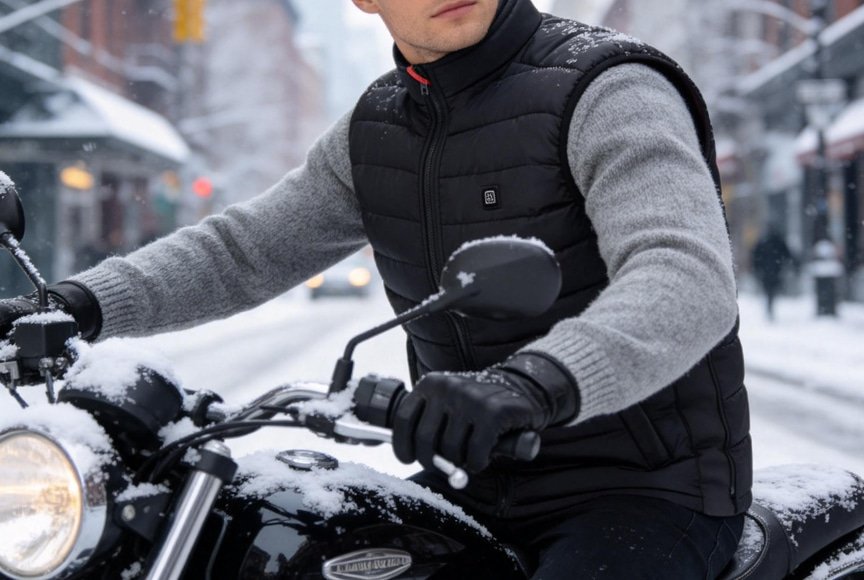

High-speed riding dramatically amplifies wind chill, turning a manageable 5°C ambient temperature into something far colder on exposed skin and through layers. Thermal stability becomes inconsistent when airflow strips heat constantly, and structural reinforcement is non-negotiable for rider safety amid vibration, impacts, and dynamic movement. Heated jackets engineered for riding applications must integrate aerodynamic design, wind-resistant materials, and stable heating systems to ensure consistent performance during high-speed exposure.
For motorcycle apparel brands, riding gear manufacturers, and outdoor adventure companies developing heated products, these factors separate functional performance gear from inadequate adaptations of consumer heated apparel.
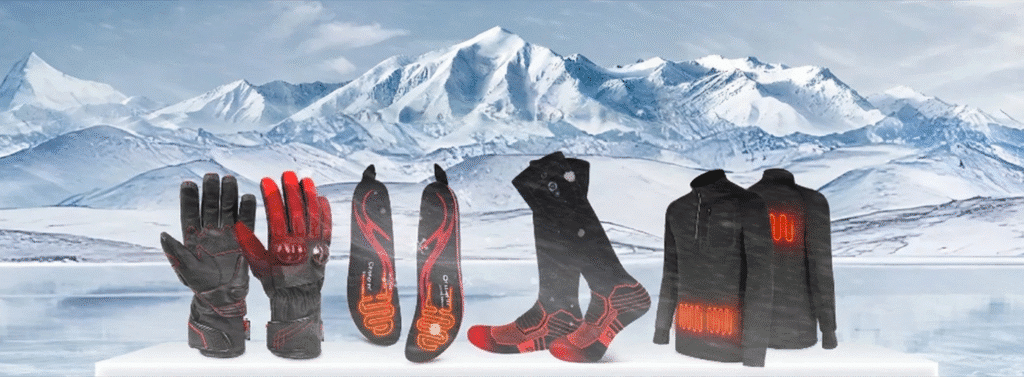
Why Motorcycle Riders Require Heated Jackets
Motorcycle and outdoor riding demand heated jackets because wind chill at typical speeds creates thermal challenges far beyond static cold exposure.
At highway speeds of 60–100 km/h (roughly 37–62 mph), the effective temperature drops sharply due to convective heat loss. For context, an ambient 5°C can feel closer to -3°C or lower at 80 km/h, based on adapted wind chill models that account for sustained frontal airflow rather than brief gusts. This effect compounds over long rides, reducing dexterity, increasing fatigue, and raising hypothermia risk in prolonged exposure.
Different riding scenarios present distinct thermal demands:
| Riding Scenario | Thermal Challenge |
| Highway touring | High wind chill from sustained speeds |
| Urban commuting | Short but intense exposure with frequent stops |
| Adventure riding | Variable weather and unpredictable conditions |
| Winter riding | Continuous cold impact over extended durations |
In each case, passive insulation alone often falls short against relentless airflow, making active heating essential for maintaining core temperature and focus.
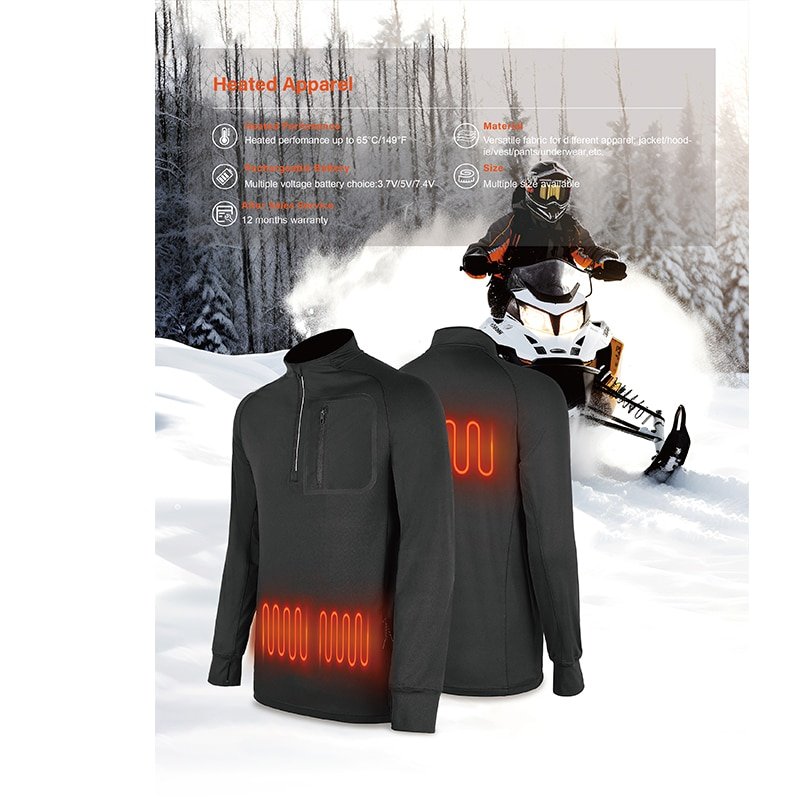
Structural Requirements for Riding Heated Jackets
Riding heated jackets require reinforced construction to withstand the mechanical stresses of motorcycling while preserving thermal efficiency.
A windproof outer shell is fundamental to minimize convective heat loss from high-velocity air. Without it, even powerful heating elements lose effectiveness as warmth escapes rapidly. Reinforced zones at elbows and shoulders protect against abrasion and impact, while secure battery placement prevents shifting that could disrupt connections or create pressure points during leans and bumps.
A slim, aerodynamic profile reduces drag and flapping, which otherwise exacerbates wind noise and heat dissipation.
| Structural Feature | Purpose |
| Windproof membrane | Reduce heat loss from airflow |
| Reinforced stitching | Withstand vibration and abrasion |
| Secure battery pocket | Prevent movement and connector strain |
| Slim fit profile | Improve aerodynamics and reduce bulk |
These elements ensure the jacket remains functional as protective riding apparel rather than just a warmth layer.
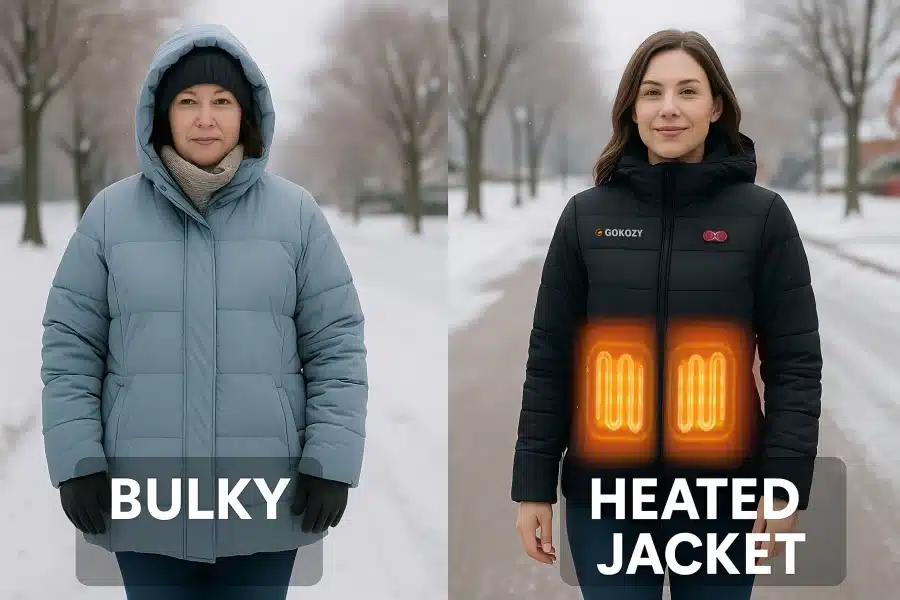
Heating System Adaptation for High-Speed Wind Exposure
Heating systems in riding applications must prioritize heat retention and delivery against constant high-velocity airflow.
Core-zone placement—focusing elements on the chest, back, and mid-torso—delivers warmth where blood circulation matters most for maintaining overall body temperature. Peripheral heating in arms helps preserve hand dexterity for controls, but the priority remains core stability.
Efficient power management becomes critical, as batteries deplete faster under sustained high output. Stable temperature regulation, often through multi-level controllers with feedback sensors, prevents hot spots while compensating for wind-induced cooling.
For brands developing these products, heated jacket OEM for riding brands capability allows tailoring heating layouts and power curves specifically to dynamic riding profiles, ensuring reliability where generic consumer designs fall short.
Battery Safety & Vibration Resistance
Battery systems in riding heated jackets face constant vibration, shock, and temperature swings that can compromise safety and performance.
Vibration loosens connectors over time, risking intermittent power or shorts. Impact from drops or crashes demands protective housing, while low temperatures reduce lithium-ion voltage output and capacity.
Engineered solutions include reinforced wiring harnesses, shock-absorbing compartments, and insulated battery pockets to maintain thermal stability around the cell.
| Risk Factor | Engineering Solution |
| Vibration | Reinforced wiring and strain relief |
| Impact | Protective housing with padding |
| Low temperature | Insulated compartment to stabilize voltage |
| Connector loosening | Locking mechanisms or secure clips |
These measures prevent failures that could leave riders without heat mid-ride or create electrical hazards.
Control System Preferences in Riding Applications
Control systems for riding heated jackets prioritize accessibility and minimal distraction while gloved and in motion.
Button controls on the sleeve or chest allow quick adjustments with gloved hands, avoiding the need to fumble inside layers. For longer tours, remote integration—such as handlebar-mounted switches—or wireless app control offers convenience without compromising focus on the road.
App-based systems suit touring riders who want preset profiles or monitoring, but glove-compatible physical interfaces remain essential for immediate response in variable conditions.
Customization Strategies for Riding Brands
Riding brands benefit from customization that aligns heated jackets with protective and performance needs.
- Reflective safety integration for low-light visibility
- Strategic brand logo positioning without compromising seam integrity
- Multi-zone heating layout to prioritize core vs. limbs based on riding style
- Compatibility with armored liners, back protectors, or adventure gear layering
These adaptations transform base heating technology into purpose-built riding equipment.
Conclusion — Riding Heated Jackets Are Performance Equipment
Heated jackets for motorcycle riders serve as functional performance gear, not fashion accessories. Stability under wind exposure, vibration resistance, and safety integration take precedence over aesthetics or generic warmth claims. For brands, thoughtful OEM planning delivers long-term reliability, helping riders stay focused and protected across demanding conditions.