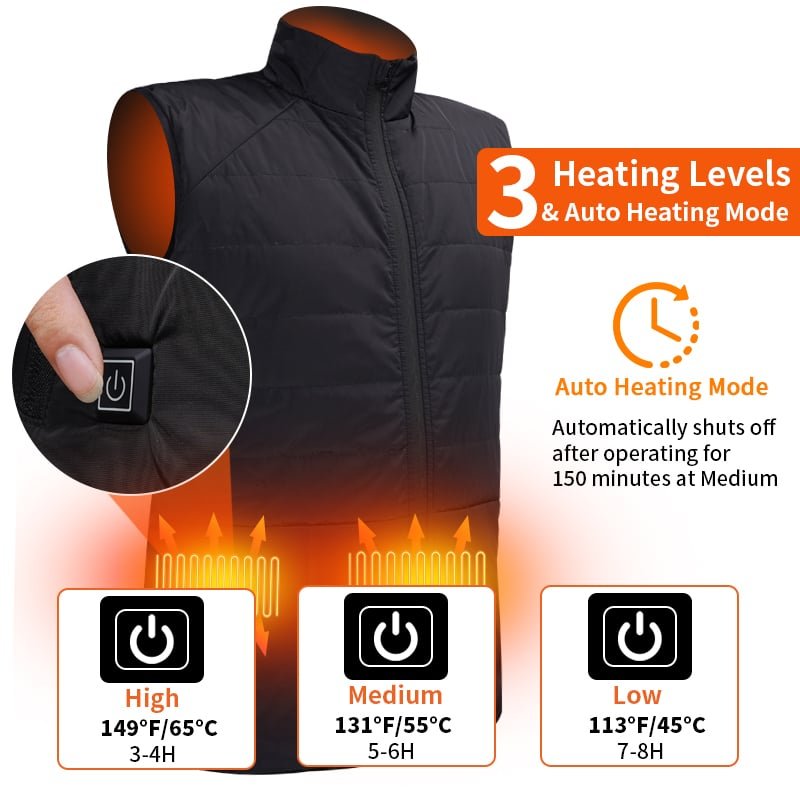
Buyers searching for a heated apparel manufacturer usually arrive at the same question: which heating element is better, carbon fiber or graphene? It sounds like a straight choice, but in production it is not. Both are carbon-based resistance heaters, and neither one wins across the board. The material is a design variable – it gets chosen to match the heating zones, voltage platform, bend requirements and cost target of your specific product.
We build both types in our own element line, and the honest answer we give every brand at the kick-off meeting is this: the better question is not “which material is best” but “which material matches this garment”. This guide explains how each type works, where each one performs well, and how OEM buyers can verify what a supplier actually ships.
How Carbon Fiber Heating Elements Work
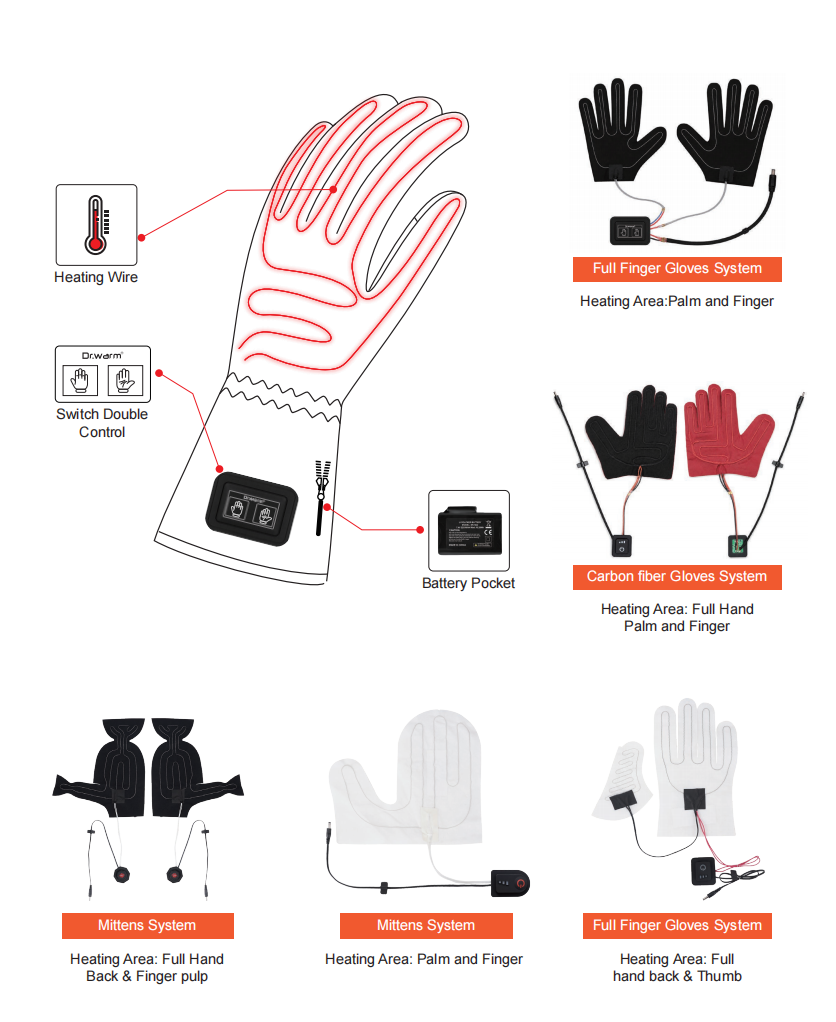
Carbon fiber elements are bundles of carbon filaments, woven or stranded into the garment and insulated along their length. Current passes through the filament path and generates heat by electrical resistance – the same Joule-heating principle behind every heated garment on the market. Because the heat source is a line rather than a sheet, hot-spot control comes down to layout engineering: strand spacing, zone width and insulation quality decide whether warmth feels even or stripey.
The format is mature and well understood in mass production. Carbon fiber flexes with fingers and joints without fatiguing – our standard qualification runs every glove element through 3,000-5,000 bend cycles before the design is released. That track record is why carbon fiber remains the default answer for compact, high-bend products.
How Graphene Heating Elements Work
Graphene elements use a carbon-lattice film instead of a filament path. The film is laminated between fabric layers and acts as a planar heat source: current spreads across the whole sheet, so warmth arrives as an even surface rather than along lines. The format is naturally thin, which suits garments where bulk is the enemy – lightweight vests, liner-style jackets and slim commuter pieces.
The trade-offs sit in the lamination. A well-built film handles folding and washing without hot spots, but lamination quality varies widely between suppliers, and a poorly sealed film will fail earlier than a decent carbon fiber element. That is why verification, not material marketing, should decide your purchase.
Carbon Fiber vs Graphene: Side-by-Side Comparison
| Dimension | Carbon Fiber | Graphene Film |
| Heat distribution | Line-based; evenness depends on layout engineering | Planar and even by nature |
| Heat-up feel | Fast | Very fast across large panels |
| Bend endurance | Excellent; 3,000-5,000 cycle qualification is standard | Good, but tied to lamination quality |
| Best-fit voltage platforms | Works across 3.7V / 5V / 7.4V / 12V (24V custom builds available) | Commonly paired with 5V and 7.4V low-voltage systems |
| Washability | Proven with sealed wiring and connectors | Depends on film sealing quality |
| Unit cost | Lower | Higher |
Values shift with construction details, so treat any table – including competitor tables – as a starting point. Ask suppliers for bench data on the actual construction you will be ordering.
Matching the Material to the Product Category
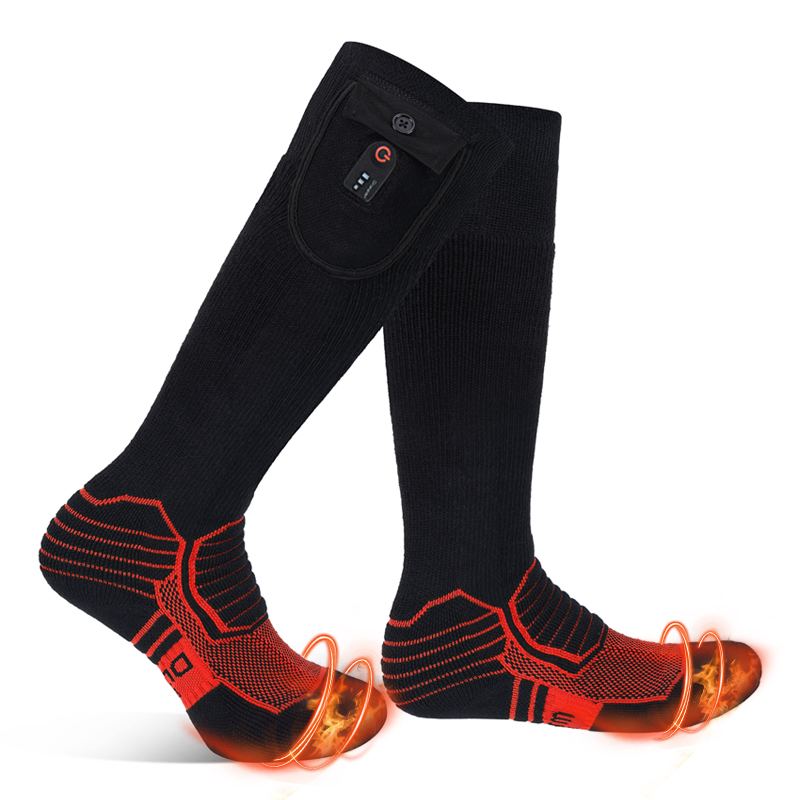
Gloves, socks and insoles. Fingers, toes and foot arches bend constantly, and the heated zones are small. Carbon fiber in a sealed wiring format is the workhorse here: it survives the flex cycles, targets warmth where the body needs it and keeps the bill of materials sensible. This is the configuration we build most often for custom heated gloves and heated socks programs.
Vests and jackets. Large torso panels change the math. A graphene film covers the chest and back as one even surface without strand hot spots, and pairs naturally with 5V or 7.4V platforms for slim garments. A well-engineered carbon fiber layout performs the same job with zoned warmth – many brands run both formats in parallel lines and let the market decide.
Workwear and extreme cold. Rugged programs usually prioritize serviceability and heat headroom over slimness: 12V platforms driving reinforced elements, whether fiber or film, with protective insulation layers specified at the design stage.
The decision is joint engineering – element material, voltage platform and battery capacity are chosen together. Our battery options cover the standard 3.7V / 5V / 7.4V / 12V range with 24V available for custom builds, and the heating element design page breaks down how layout and materials interact. For the power side, see our battery solution overview.
How OEM Buyers Should Verify Material Claims
Ask for four things before signing any heated apparel program, whatever material the supplier is promoting:
1. Construction spec – element type, insulation format and zone layout for your garment, not a generic datasheet.
2. Bend-cycle data – a credible factory qualifies elements against thousands of flex cycles, not just a temperature reading.
3. Wash and aging test reports for the finished assembly, especially if a film lamination is involved.
4. Battery documentation – a model-matched UN 38.3 test summary and SDS for every pack that will ship.
Our own thresholds are simple: OEM programs start at 100 units and full ODM development at 500, sampling runs 7-30 days depending on the design load, and mass production lands in 45 days or less. Any supplier who cannot put numbers like these in writing is selling a material story, not a manufacturing capability.
Frequently Asked Questions
What is the difference between carbon fiber and graphene heating elements?
Carbon fiber elements heat along filament lines and rely on layout engineering for even warmth, while graphene films heat as a planar sheet with naturally even distribution. Carbon fiber is the cost-efficient, bend-proven choice for gloves, socks and insoles; graphene film suits thin garments and large panels. Neither wins everywhere – the right choice depends on the garment design.
Which heating element is best for heated gloves?
Carbon fiber is the standard answer for gloves because the element must survive constant finger flexing – a format our line qualifies at 3,000-5,000 bend cycles. Graphene film can be used in the back-of-hand panel of some designs, but the finger zones remain carbon fiber territory.
Is graphene more durable than carbon fiber?
Not automatically. Durability depends on how the element is built and sealed, not the material name. A well-laminated graphene film and a properly insulated carbon fiber element both last for years; a badly laminated film fails sooner than a basic fiber element. Judge durability by bend-cycle and wash-test data.
Can I choose the heating element material for my OEM order?
Yes. Material, layout, voltage platform and battery capacity are all specified together during development. Tell us the garment type, target market and price point, and the engineering team recommends the element format that fits – with samples available in 7-30 days.
Related Reading
- How to Choose Battery, Heating Levels, Fabrics & Components for Your Heated Apparel Project
- OEM vs ODM in Heated Apparel: What’s the Difference for Global Brands?
- our OEM and ODM development service
The Bottom Line
Carbon fiber vs graphene is not a ranking – it is a matching problem. Compact, high-bend products run on carbon fiber; slim, large-panel garments favor graphene film; and many of the programs we ship use both in one garment. Bring us the garment and the market, and the material choice becomes an engineering answer instead of a guess. Request an OEM quote to get a construction recommendation with your sample plan.
Both element types were on the booth wall at ISPO 2026 in Amsterdam, where buyers compared them against physical samples — the same construction questions this guide covers. Our show recap collects the sourcing questions that came up most.