
Quick answer: Most comfort and overheating complaints trace back to five causes: an unmatched battery or charger, a damaged or wet connector, prolonged pressure on one heating zone, starting on the highest setting in mild conditions, and washing with the batteries still installed. Use the supplied power system, start on Low or Medium, keep connections dry, and stop using the gloves if one area becomes unusually hot or any warning sign appears.
This guide covers the physical and electrical checks that prevent localised heat build-up, plus what private-label buyers should verify before approving a bulk run. For the wider development process see our OEM guide for heated gloves.
1. Use Only the Specified Battery and Charger
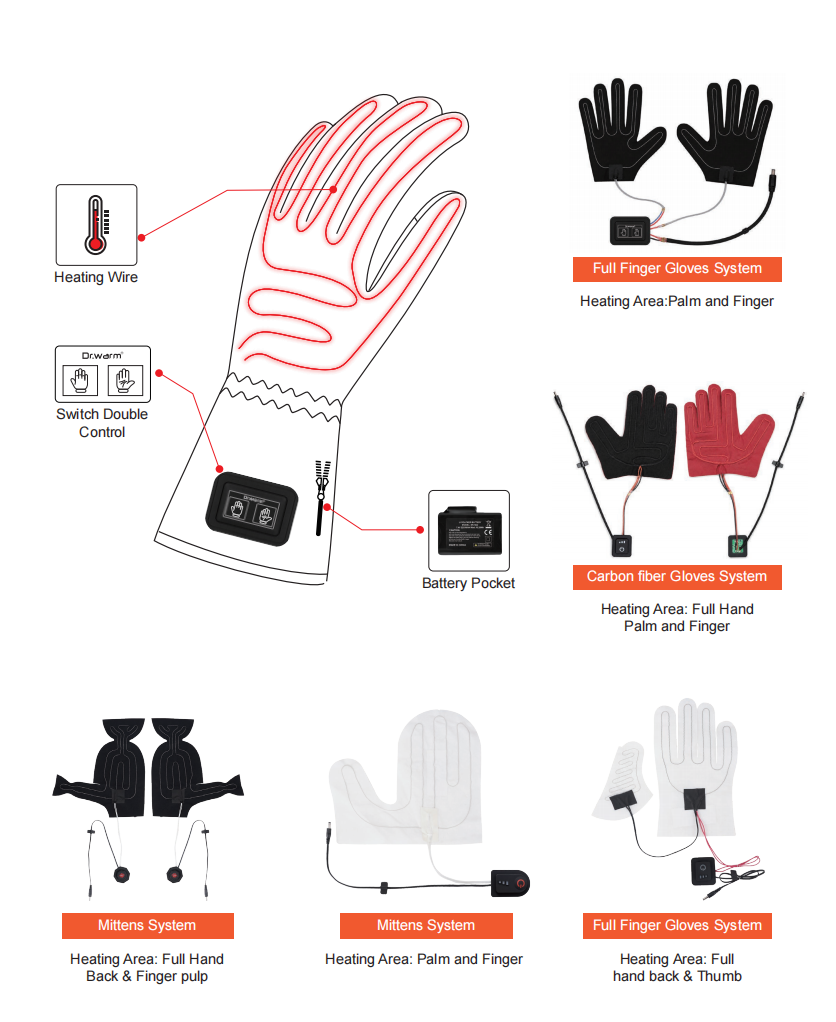
Battery, charger, controller and heating element are designed as one system. An incompatible power source can cause unstable output, underheating, connector damage or excessive heat at the terminals. Most heated gloves use a 7.4V platform with an 8.4V / 1.5A charger; some compact accessories use 3.7V with a 5V / 2A charger. Battery capacity is configured to the order rather than fixed, so a replacement pack must come from the same specification.
Do not mix chargers between product lines even when the plug fits. Connector types include USB, DC, Micro, Type-C and magnetic, and matching by shape alone is not enough.
| Platform | Common glove use | Charger output |
|---|---|---|
| 7.4V | Most full-finger heated gloves and liners | 8.4V / 1.5A |
| 3.7V | Compact heated accessories | 5V / 2A |
| 5V USB | Power-bank based accessories | 5V / 2A or 5V / 3A |
| 12V / 24V | High-output jackets or custom industrial builds | 5V / 3A or custom |
2. Inspect the Gloves Before Use
- Check the fabric over each heating zone for a hard lump, a fold or a displaced element.
- Look for exposed wiring, a cracked control button or a loose battery lead.
- Check the connector for corrosion, moisture or a bent pin.
- Do not use the gloves if the layers have separated or the battery shows swelling.
3. Start at a Moderate Temperature
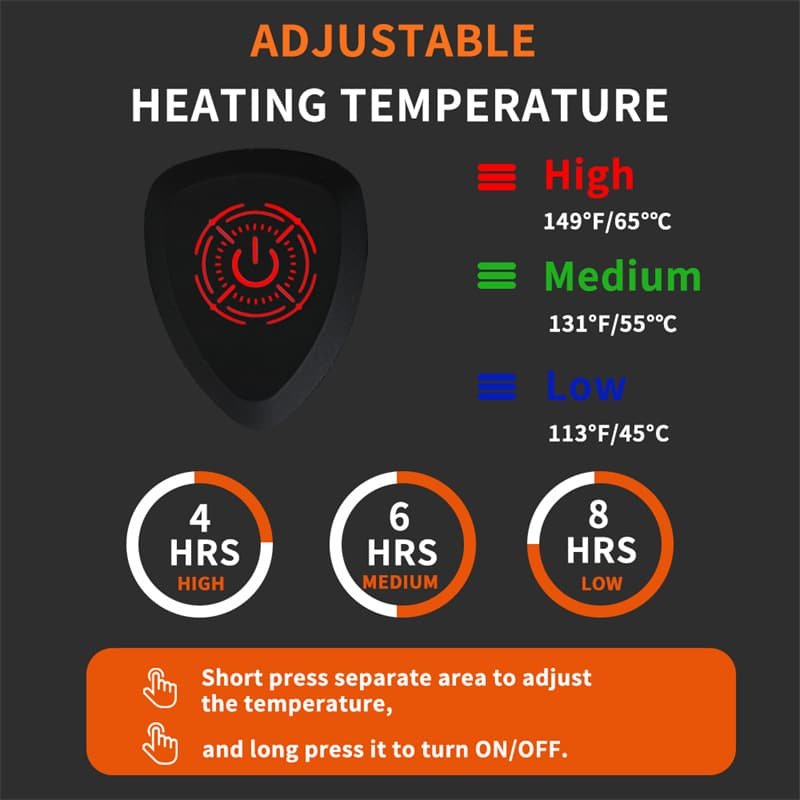
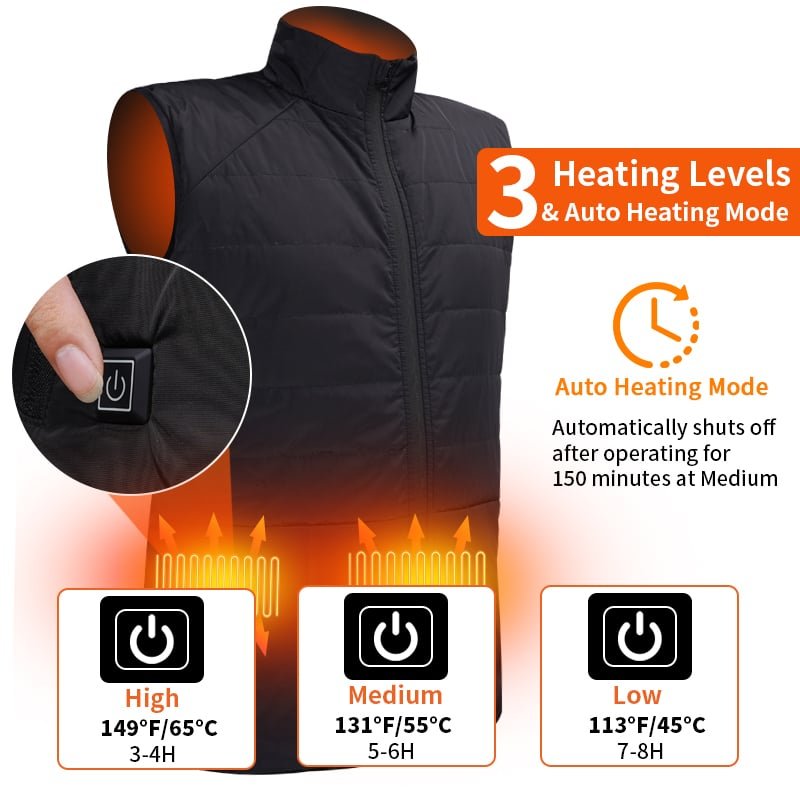
Heat settings are defined per model, not per category. On the common glove platforms three levels run Low 35-40°C, Medium 45-50°C and High 55-60°C; another group runs Low 40-45°C, Medium 50-55°C and High 55-60°C, and one high-output model reaches 60-65°C on High. Check the specification sheet for your model — all values are in degrees Celsius.
Begin on Low or Medium and let warmth build gradually. The highest setting is for rapid warm-up in severe cold, not continuous all-day use. It also draws more current, which shortens runtime. Once the hands are comfortable, stepping down is both more comfortable and more efficient.
4. Avoid Prolonged Pressure on One Heating Zone
A heating element pressed firmly against one spot — a tight grip on a handlebar, a ski pole strap or a tool handle — has less airflow around it and can feel much hotter than the same element in free air. Loosen straps, change grip periodically and make sure the glove fits without compressing the fingers. This is also why a glove that is too small is a comfort problem, not just a fit problem.

5. Keep Electrical Connections Dry and Remove Batteries Before Washing
IPX4 is the standard water-resistance rating for heated gloves, with IPX5 available as an option. Neither rating covers connecting power while the port is wet. After rain, snow or cleaning, allow the gloves and connector area to dry completely before charging. Always remove the batteries before washing, follow the care label, and never machine-dry a heated glove — heat and tumbling stress both the element and the wiring.
6. Recognise the Warning Signs
| What you notice | What to do |
|---|---|
| One localised hot spot | Switch off, remove the gloves, check for a fold or pressure point |
| Burning or chemical odour, melted connector | Stop using immediately, disconnect and keep the unit for inspection |
| Battery swelling | Stop using, do not recharge, dispose of under local battery rules |
| Sudden temperature change, exposed wiring, layer separation | Stop using; the circuit needs inspection or replacement |
Lithium cells can present overheating, fire and burn hazards when damaged or paired with unsuitable charging equipment. Treat any of these signs as a reason to stop using the product, not as something to monitor.
7. Safety Starts During Product Development
For retailers and brand owners, most overheating complaints are design or QC issues rather than user error. Before approving a bulk run, ask for evidence of overcharge, over-discharge and short-circuit protection, thermal monitoring and over-temperature cutoff, heating-uniformity testing, flexing tests at the finger joints, battery and charger compatibility and final aging inspection. UN38.3 documentation is required for lithium battery transport; the SDS is a shipping document, not a certification.
Buyers commonly request CE, UKCA, UL, FCC, RoHS, Reach, DOE and ISO 9001, plus GB 47372-2026 with CCC on the battery side; see what each certification covers. Certificate holder for the conformity documentation is Dongguan S-KING Limited, while production is carried out by Dongguan Ditewang Intelligent Technology Co., Ltd. Warranty is 12 months and cells are rated for 500+ cycles.
For OEM projects the MOQ is 100 pieces, full ODM 500 pieces and a single stock sample is available. Sampling takes 7-30 days and OEM production 20-25 days. For general comparisons, see heated gloves vs regular winter gloves or browse the heated glove range.
Frequently Asked Questions
Can heated gloves overheat?
A correctly matched system is designed to control output, but localised heat can build up when a glove is compressed against one spot, when an incompatible charger is used, or when a connector is wet or damaged. Start on a lower setting and stop using the product if one area becomes unusually hot.
How do I avoid overheating my hands?
Use only the specified battery and charger, inspect the gloves and connections before use, start on Low or Medium, avoid prolonged pressure on one heating zone, keep connections dry and remove the batteries before washing.
Are heated gloves safe for people with reduced sensation?
Anyone with reduced skin sensation should get medical advice before using a heated product and should not rely on the device alone to judge warmth. Check the glove and the temperature regularly, and stop use if the skin looks or feels unusual.
What should brands verify before a bulk glove order?
Overcharge, over-discharge and short-circuit protection, thermal monitoring and over-temperature cutoff, heating-uniformity testing, flexing tests at the finger joints, battery and charger compatibility, final aging inspection and UN38.3 transport documentation.
Reviewing a glove programme? Send us your market and specification and we will share the relevant test and documentation checklist.