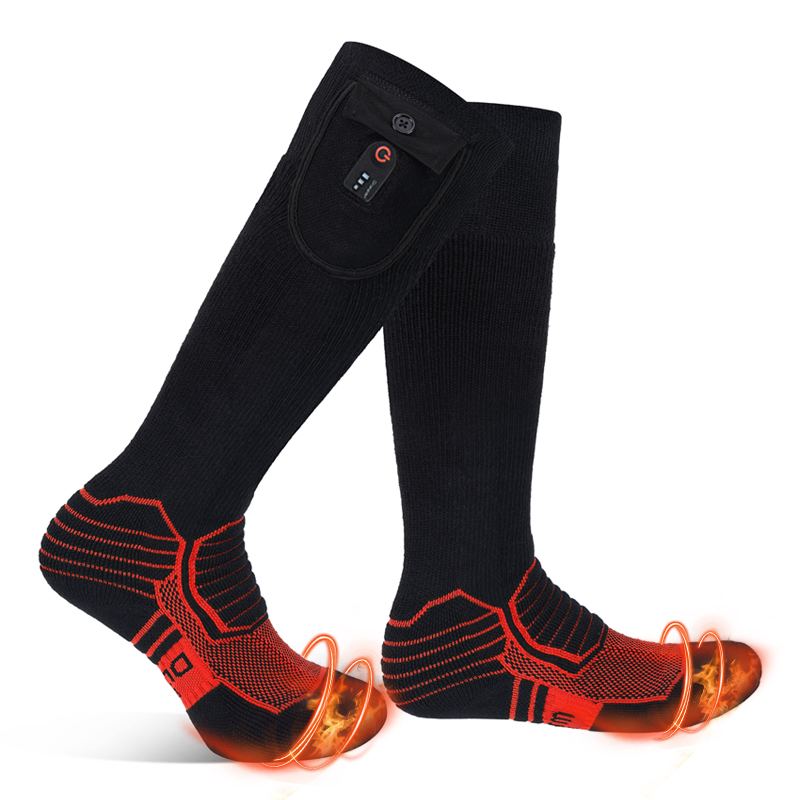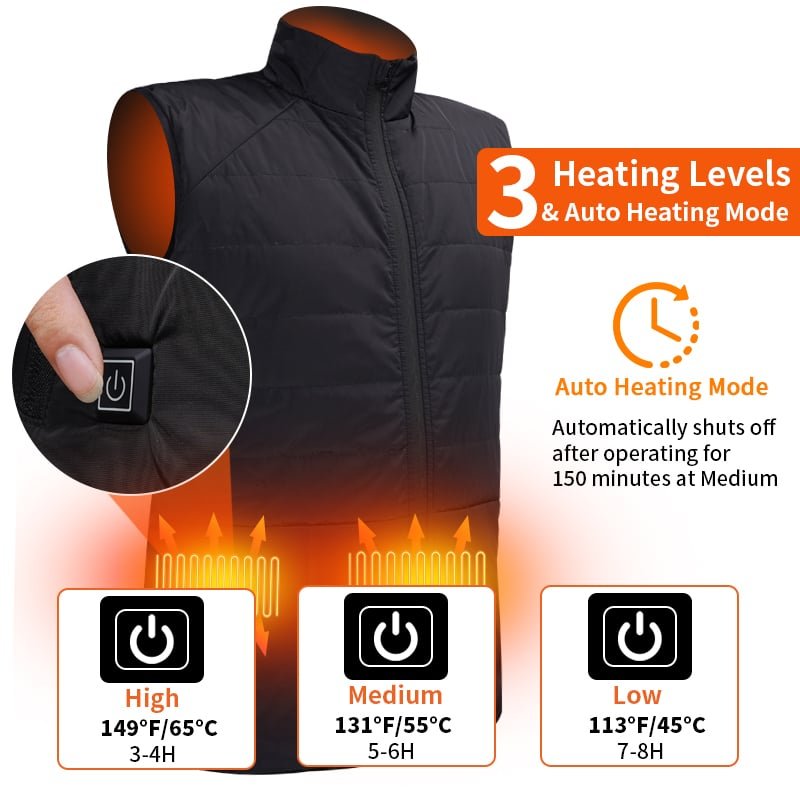
The other comparisons in this series are about where heat comes from. This one is about thickness, because a glove is the only heated product where flexibility is the function. A vest can be thick and nobody minds. A glove that is thick cannot do the job it was bought for — and that single constraint is what separates a heated glove from a good ordinary one far more than temperature does.
An ordinary glove can only buy warmth with bulk
Every passive glove works the same way: it traps a layer of still air against the skin so the hand’s own heat stays where it was generated. More warmth therefore means more trapped air, which means more insulation, which means a thicker glove. The curves are locked together, and there is no way around them with materials alone — better insulation buys a little more warmth per millimetre, but the direction never reverses.
Now put that curve against the work. A hand that has to turn a bolt, thread a nut, open a latch, work a touchscreen or pull a trigger needs the fingertips to feel and the knuckles to bend. Every millimetre of insulation that improves warmth makes those actions worse. This is why the same person who is warm enough on the walk to the site is useless with the same glove on the tools: they have traded dexterity for warmth and then discovered the trade does not cover the task.
Heating breaks the curve instead of moving along it
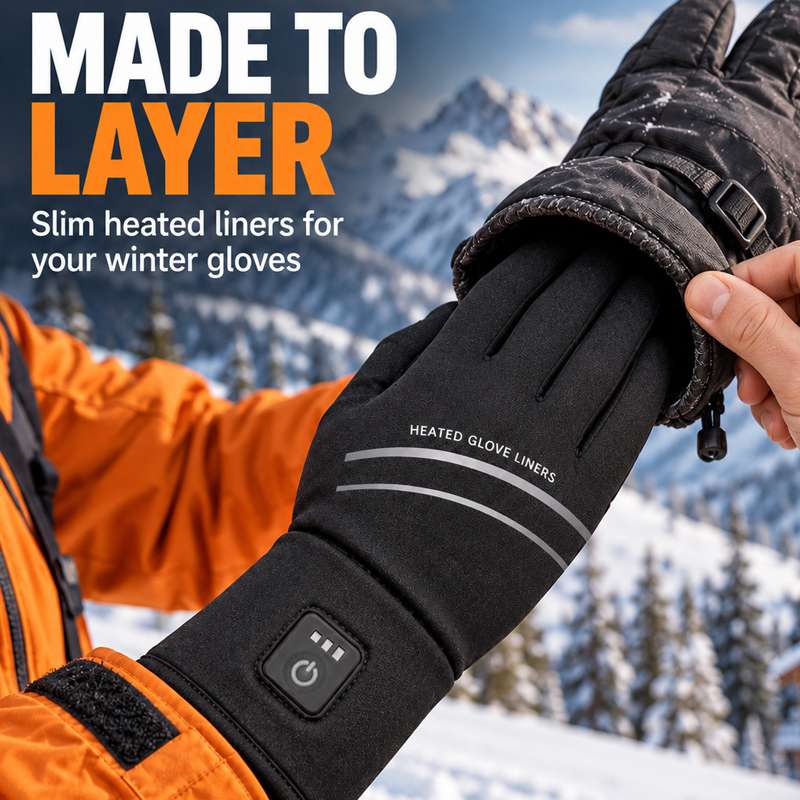
A heated glove supplies heat from a battery rather than from trapped air, so warmth no longer has to be paid for in millimetres. That is the real difference, and it is worth stating precisely: a heated glove is not necessarily warmer than the warmest ordinary glove. It is as warm at a thickness that still allows the hand to work — and for outdoor work, that is the requirement.
Two consequences follow, and both are practical. First, the correct comparison is not “heated glove versus the thickest glove on the shelf” but “heated thin glove versus ordinary thin glove” — against the ordinary glove a worker can actually work in, the heated version wins easily. Second, a heated glove that is built as thick as a ski glove has thrown away its own advantage: it is now a heavy glove with a battery in it.
Where the heat actually goes
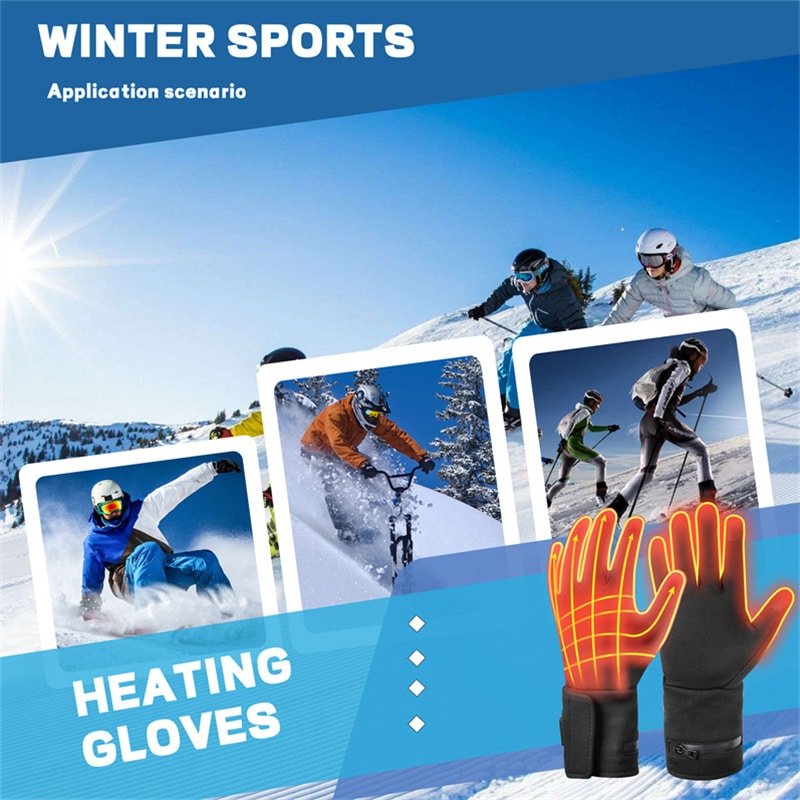
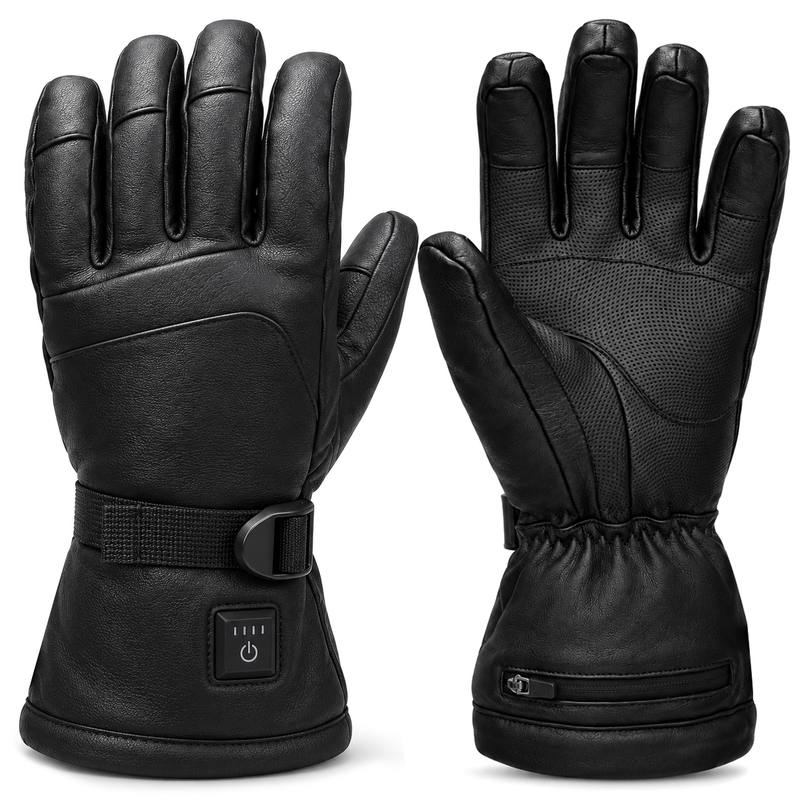
Heated gloves do not heat evenly, and the layout is deliberate. The back of the hand and the fingers carry the element, because that is the surface facing the wind, the metal and the cold, and it is where the blood vessels sit closest to the skin. The palm is usually left unheated or lightly heated, for two reasons: it is the side pressed against a grip, and it is the side that sweats.

This matters when choosing between the two products for a specific task. A worker who grips a cold metal bar all day is losing heat through the palm, and no glove in this comparison solves that — the fix is a barrier between the hand and the metal, or a break. A worker whose hands are cold because the wind is pulling heat off the back of the hand is exactly the case a heated glove is built for.
Five real differences, side by side
| Dimension | Ordinary winter glove | Heated glove |
|---|---|---|
| Warmth versus thickness | Locked together — warmer means thicker | Decoupled — warmth comes from the element |
| Dexterity at working temperature | Falls as the glove gets warmer | Held, if the build is thin |
| Reliance on the wearer | Needs the hand to be producing heat | Works while the hand is still |
| What fails | Compresses flat, lining wears through, gets wet and stays wet | Pack runs out, element fatigues at the knuckle, connector corrodes |
| Cost of ownership | Two or three pairs a season under heavy use | Higher up front, pack replaceable, one pair outlasts several |
The lining gets wet long before the hand gets cold
A working hand sweats, and a glove holds the moisture against the skin because it is designed to hold air in the same place. This is the failure that neither product solves by design and both suffer from: a damp lining conducts heat away from the hand instead of trapping it, so the same glove that was warm on Monday morning is cold by Wednesday, and the wearer blames the glove’s warmth rating.
The fix is not technical, and it is the same for both columns of the table above: two pairs, rotated. A glove lining needs most of a day to dry at room temperature and will not dry at all inside a cold vehicle overnight. Crews that swap gloves at lunch, and hang the first pair to dry, report fewer cold hands than crews with better gloves and one pair. For a heated glove this matters twice over, because the moisture sits against the element as well as the skin, and the cable or connector at the cuff is exactly where a wet glove fails first.
Match the glove to the task, not to the temperature
| Task pattern | What the hands need | Better buy |
|---|---|---|
| Frequent fine work (fittings, terminals, small fasteners) | Fingertip feel, over and over | Heated thin glove or heated liner |
| Intermittent handling (loading, driving, inspection) | Warmth during the standing-around parts | Heated, if the hand cools between tasks |
| Continuous heavy grip (spade, saw, sledge) | Abrasion resistance; the hand makes its own heat | Ordinary glove, plus dry spares |
| Static watching or guarding | Heat while nothing is being generated | Heated, clearly |
| Short tasks under fifteen minutes | Nothing the hand cannot handle itself | Ordinary glove is enough |
Where an ordinary glove is the better buy
Four honest cases. Short tasks under about fifteen minutes, in weather the hand can handle on its own, do not justify a battery and a charge cycle. Continuous heavy work — digging, sawing, carrying — keeps the hands warm through exertion, and a tough ordinary glove with a dry spare beats an expensive heated one. Sites where lithium packs are restricted need no explanation. And a crew that will not charge equipment overnight gets nothing from a heated glove on day two.
What all four have in common is not budget. It is that the hand is either warm already or cold for a few minutes only. Heating earns its cost when the hand is still, in the cold, for hours — the same dividing line as in every other comparison in this series.
The one thing batteries do not change
A heated glove is not personal protective equipment, and no battery changes that. Cut, abrasion, puncture and impact resistance are certified on the glove itself — the tests are physical, and adding a heating system neither adds to nor subtracts from them. What a heated glove does carry is its own electrical documentation: CE, UKCA, IEC 62133 for the cells, UN38.3 for air freight, RoHS, REACH, and GB 47372-2026 with CCC for the Chinese market. A supplier that presents a heating system as an upgrade to a glove’s protective rating has misunderstood both, which is worth knowing before a tender rather than after.
Custom heated work gloves for outdoor crews
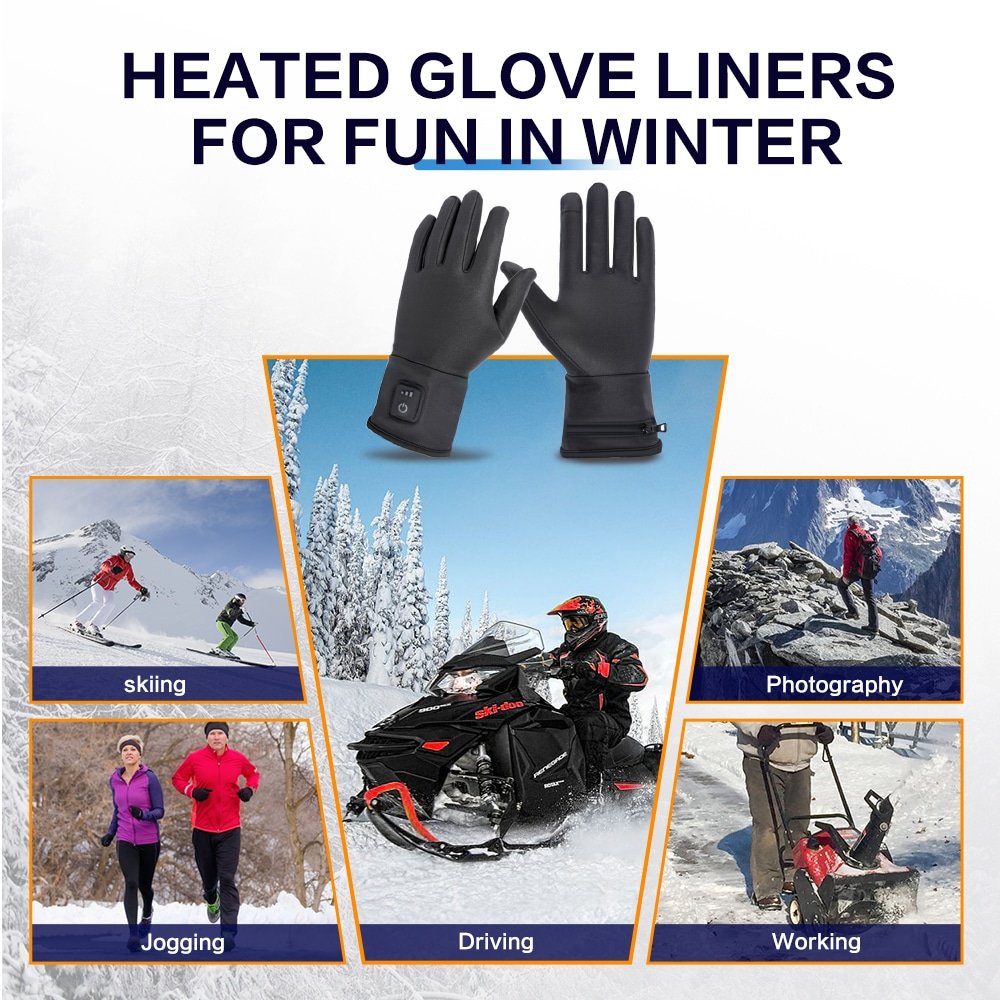
Dr. Warm builds heated work gloves and thin heated liners on the same electronics, in leather and textile faces, with touchscreen fingertips, IPX4 as standard and IPX5 optional, remote or cuff-button control, and packs from 3.7V to 7.4V. Documentation covers CE, UKCA, IEC 62133, UN38.3, RoHS, REACH and GB 47372-2026 with CCC; OEM from 100 pairs, ODM from 500, 12-month warranty.
Frequently Asked Questions
Are heated gloves warmer than regular winter gloves?
Not necessarily than the warmest ordinary glove — but that is the wrong comparison. The useful claim is that a heated glove is as warm at a thickness that still lets the hand work, which no ordinary glove can do. A heated glove built as thick as a ski glove has given away its only real advantage.
Can heated gloves be used for fine work like turning small fasteners?
Thin heated gloves and heated liners can, and that is their main case in outdoor work. A thick heated glove cannot, and no setting fixes it: the limit is the thickness at the fingertips, not the heat. If the task needs fingertip feel, specify a thin build or a liner under an ordinary work glove.
Do heated gloves protect against cuts, abrasion or impact?
Only as far as the glove itself is certified. Cut, abrasion, puncture and impact resistance are tested on the glove’s physical construction, and adding a heating system neither adds to nor subtracts from those results. A heated glove is not personal protective equipment because it has a battery; it is PPE only if the glove it is built on is certified as such.
How long does a heated glove last on one charge?
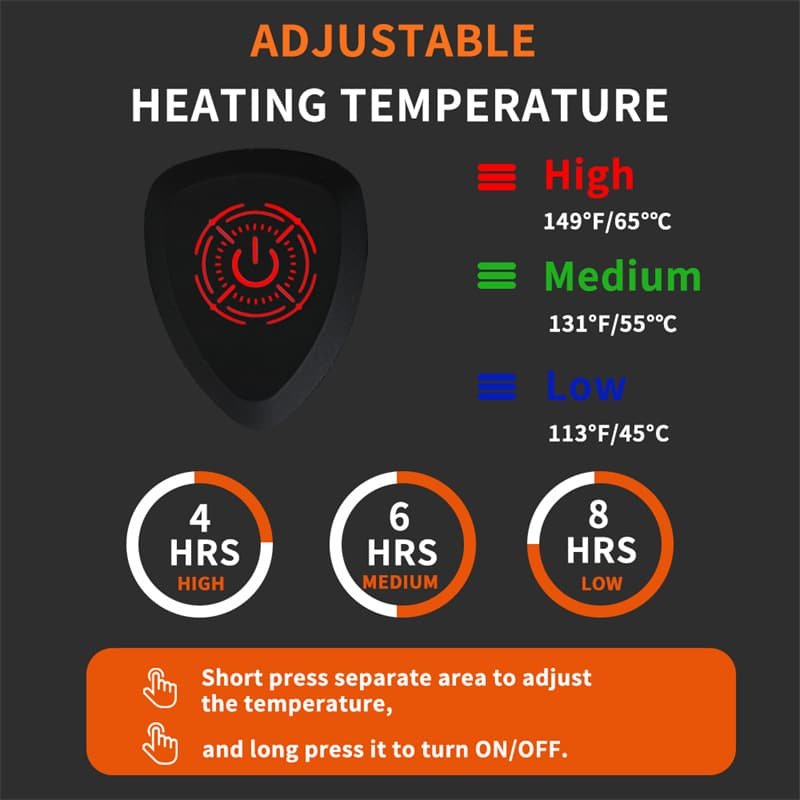
It depends on the model, the pack capacity and the heat level, and the figure for each level should be stated in the specification. For a full shift, plan on a second pack rather than the highest setting on one — and budget for a cold cell delivering less than a warm one.