
Short answer: a USB-powered glove and a 7.4V glove are not the same product wearing different labels — they draw from different battery architectures, and that difference shows up in heat-up speed, peak warmth and how long the glove stays warm. USB suits light, all-day wear where charging convenience matters more than maximum heat. A dedicated 7.4V pack is the better fit for skiing, motorcycling and long exposure in real cold.
The confusing part is that the marketing labels overlap. “USB heated gloves” can mean three different things inside the glove, and one of them is already a 7.4V system. This guide separates what the numbers actually mean, what runtime to expect, and which configuration suits which buyer.
What the two systems actually are
USB-powered gloves
A USB glove takes power from a 5V power bank through a USB connector. In our standard range that means a 5V pack of 10,000mAh or 20,000mAh, giving roughly 50Wh and 100Wh of stored energy. The appeal is that the power source is interchangeable: any reputable 5V bank with enough output works, so a dead battery is a shop purchase rather than a support ticket.
The trade-off is heat density. A 5V circuit at the same wattage needs higher current, which means thicker conductors and more loss along the wiring to the fingers. Gloves built this way are usually thinner, lighter and designed for moderate cold rather than deep winter exposure.
7.4V gloves
A 7.4V glove runs from a dedicated lithium pack — 2,200mAh, 3,000mAh or 4,000mAh in the standard range, which is about 16.3Wh, 22.2Wh and 28.1Wh. The higher voltage delivers the same heating power at lower current, so the element reaches temperature faster and the wiring to the fingertips stays manageable inside a glove that still has to bend.
This is the configuration we build for ski, motorcycle and work gloves, where the element has to hold warmth against wind and against a grip that constantly pulls heat out of the palm.
The case that confuses everyone: 3.7V packs with a USB charging port
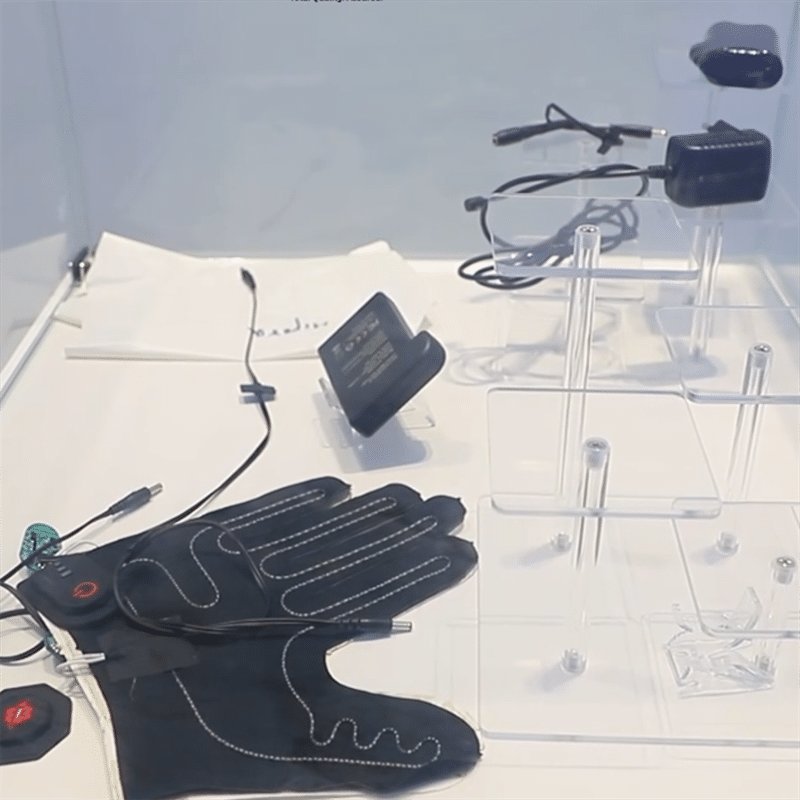
Many gloves sold as “USB heated gloves” are not 5V at all. Inside is a 3.7V lithium pack — 2,200mAh to 5,000mAh, about 8.1Wh to 18.5Wh — and the USB port is only the charging input, not the supply. The pack charges from a 5V 2A adapter, then powers a 3.7V heating circuit.
This matters when comparing quotes. Two gloves described as USB can differ by a factor of two in stored energy, and the connector type tells you nothing about which one you are looking at. Ask for the pack voltage and capacity, not the port.

The numbers that decide how warm it gets
Voltage is not a warmth rating. The figure that travels across systems is watt-hours — voltage multiplied by capacity — because that is the energy actually available to the element. It is also the number most often left off a quotation.
| System | Battery options | Watt-hours | Matched charger |
|---|---|---|---|
| 3.7V | 2,200 / 2,500 / 3,200 / 5,000mAh | 8.1 / 9.3 / 11.8 / 18.5Wh | 5V 2A |
| 5V USB | 10,000 / 20,000mAh | 50 / 100Wh | 5V 2A or 5V 3A |
| 7.4V | 2,200 / 3,000 / 4,000mAh | 16.3 / 22.2 / 28.1Wh | 8.4V 1.5A |
Read down the middle column and the marketing collapses. A 3.7V 3,200mAh pack carries 11.8Wh. A 7.4V 2,200mAh pack carries 16.3Wh with a smaller capacity number printed on it. Judging either by mAh alone compares nothing.
Runtime on a real glove
Runtime depends on how much heat the wearer asks for, and that is a bigger variable than any spec sheet admits. The table below is what we see on our own glove builds at three heat levels, with the pack at room temperature at the start — cold packs give less, which is covered in our guide to how long heated clothing batteries actually last.
| Glove build | Low | Medium | High |
|---|---|---|---|
| 3.7V liner, 2,200mAh | 4–6 h | 3–4 h | 1.5–2 h |
| 3.7V leather glove, 3,200mAh | 5–7 h | 3.5–4.5 h | 2–2.5 h |
| 5V USB, 10,000mAh bank | 8–12 h | 5–7 h | 3–4 h |
| 7.4V glove, 3,000mAh | 6–9 h | 4–6 h | 2–3 h |
| 7.4V heavy glove, 4,000mAh | 8–11 h | 5–7 h | 2.5–4 h |
Two things the table does not say: a 7.4V glove on high is noticeably hotter at the fingertips than a 5V glove on high, so the shorter runtime is buying something. And a glove with poor insulation loses its heat faster than the element replaces it, which is why a thicker glove can feel warmer on a smaller pack.
Charging: where the practical difference sits
A 3.7V pack charges from a 5V 2A adapter. A 7.4V pack needs an 8.4V 1.5A charger matched to it. A 5V glove can be topped up from the same power bank it runs on, which is genuinely useful on a multi-day trip and genuinely useless if you forgot the bank.
Charge time tracks pack size. A 7.4V 2,200mAh pack on its matched charger takes roughly 3.5 to 4 hours; larger packs take longer, and a 5V 20,000mAh bank can take most of a night. Quick-charge circuits shorten that but add heat during charging, so the slower charger is the gentler default for pack life.

One compatibility rule worth stating plainly: never run a 7.4V glove from a 5V power bank, and never charge a 7.4V pack from a phone charger. Both work only through a converter, and a converter costs 10 to 20 percent of the runtime because the heating circuit was not tuned around it.
Which fits which use
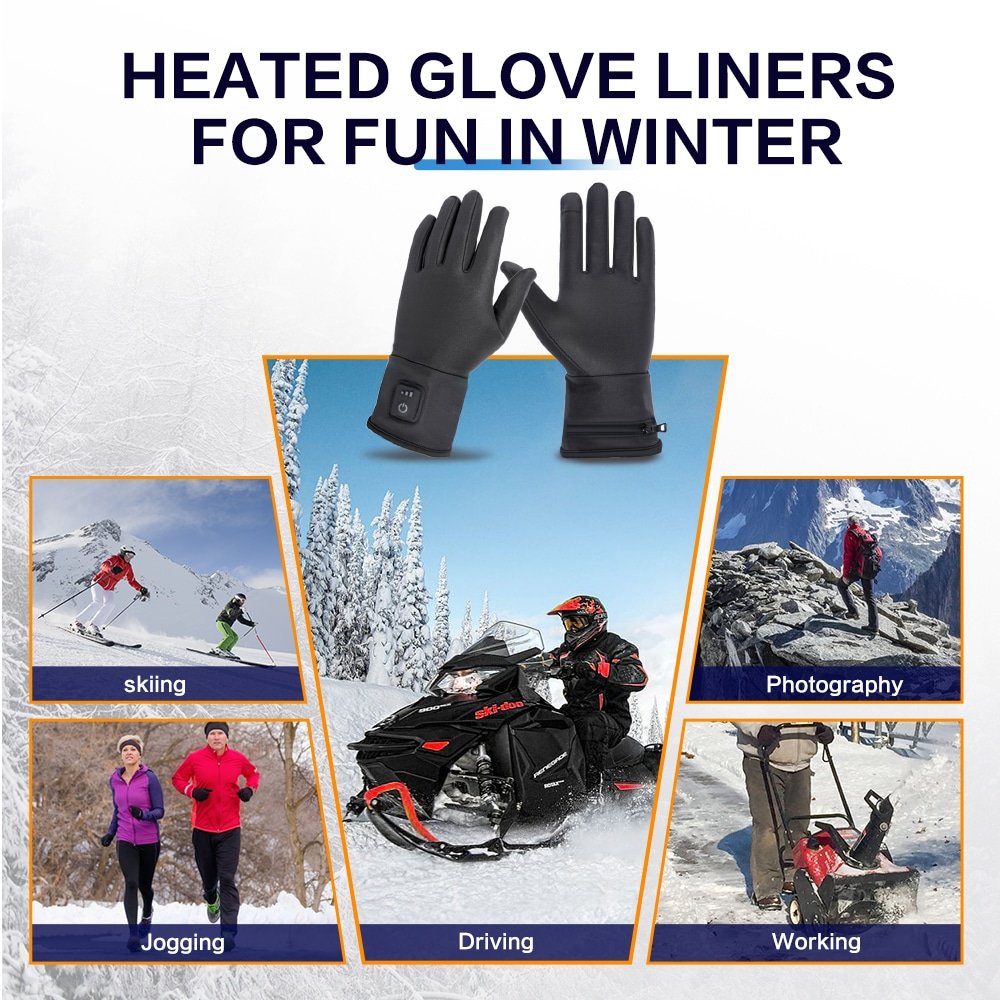
Skiing and snowboarding
7.4V, 3,000mAh or 4,000mAh. Fingers sit still in cold wind for hours at a time, and the element has to hold warmth rather than recover it. A single 5V bank in a jacket pocket also adds bulk where a skier least wants it.
Motorcycling
7.4V, usually 3,000mAh, in a glove that is waterproof and windproof. Windchill at speed removes heat far faster than ambient temperature suggests, and the glove needs the higher voltage to keep the fingertips above the point where grip and feel degrade.
Commuting and light daily wear
3.7V or 5V. A 3.7V 2,200mAh liner on medium covers a commute with margin, weighs little, and charges overnight. Paying for 7.4V here buys heat the wearer will not use.
Outdoor work and hunting
7.4V, and buy a spare pack. Sitting still in cold is the worst case for runtime, and a second pack costs less than ending a shift early. This is the use case where the 4,000mAh option earns its weight.
What buyers get wrong
Voltage as a warmth score. A 3.7V glove with a well-placed element and good insulation beats a 7.4V glove with a thin shell. Compare watt-hours, heating zones and the glove’s construction together.
Battery placement ignored. A pack in the cuff keeps wiring short but adds weight at the wrist. A pack clipped inside the jacket shortens the cable run only if the connector is positioned for it. Decide before tooling.
Assuming USB means universal. Connector, polarity and output agreement still matter. A 5V bank that drops below the glove’s draw on a cold morning is a warranty claim waiting to happen.
For OEM and ODM buyers: what to specify
The voltage decision locks in the battery platform, the charger, the connector and the wiring gauge, so it is worth settling before sampling rather than after. Our battery solutions are built around the three systems above, with charger and connector options across six interfaces and five plug types for different markets.
Projects typically start from 100 units for OEM customisation of an existing glove platform, or 500 units for ODM development from a new design. Sampling runs 7 to 30 days, OEM production 20 to 25 days, ODM 50 to 60 days. Heating output is set per model between 30°C and 100°C rather than as one figure across a range, and waterproofing is IPX4 as standard with IPX5 available as an option.
Compliance is documented per configuration and destination market — CE, UKCA, UL, FCC, RoHS, Reach, UN38.3 and DOE, with battery packs also covered against GB 47372-2026. What is shipped with each pack is a material safety data sheet, which is a transport document rather than a certification. Full documentation sits on our certifications page, and the finished range is on the heated gloves product page.
Develop Custom Heated Gloves with Dr. Warm
Dr. Warm builds rechargeable heated gloves in Dongguan for brands, distributors and retailers, covering heating-system design, battery selection, glove construction, private labelling and retail-ready packaging. If you are deciding between a 3.7V, 5V and 7.4V platform for a new glove programme, send the target market, price band and runtime expectation and we will specify the configuration around it through our OEM and ODM service.
Frequently Asked Questions
Can I run 7.4V heated gloves from a USB power bank?
No. A 7.4V glove needs a 7.4V pack and its matched 8.4V 1.5A charger. A 5V bank can only drive it through a converter, and the converter loses 10 to 20 percent of the runtime because the heating circuit was not tuned around it.
Are USB heated gloves warm enough for skiing?
Usually not. Skiing holds the fingers still in wind for hours, so the glove has to retain heat rather than recover it. A 7.4V build with 3,000mAh or 4,000mAh is the configuration that holds fingertip warmth in that condition.
Which system is better for all-day commuting?
A 3.7V pack of 2,200mAh or a 5V glove. On medium heat a 3.7V liner runs 3 to 4 hours and recharges overnight from a 5V 2A adapter, which covers a commute with margin and adds little weight at the wrist.
How long does a 7.4V glove battery take to charge?
About 3.5 to 4 hours for a 2,200mAh pack on its matched 8.4V 1.5A charger, and longer for the 3,000mAh and 4,000mAh versions. Quick-charge circuits shorten that but add heat, so the slower charger is the gentler default for pack life.