This is not a ranking, and the reason is the same one that applies to heated vests: the best insole is decided by the boot and by what the wearer is doing in it, not by a spec sheet. Hunting, motorcycling and winter hiking put three different boots on the same product under three different kinds of cold. One of the three, honestly, barely needs heating at all — and saying so is more useful than three lists of features.
Three scenarios, three different colds
The distinctions that matter are not temperature and not voltage. They are whether the body is producing heat, how long the exposure lasts without a break, and what the boot does to the foot while it is in there.
| Scenario | Where the cold comes from | The boot | The hard constraint |
|---|---|---|---|
| Hunting | Still air, frozen ground, and a body that has stopped moving | Insulated, often rubber-bottomed, roomy | Heat for hours at a low level, operated without looking and without sound |
| Motorcycling | Wind stripping the warm layer off the boot at speed, plus engine and road vibration | Close-fitting, stiff, with a gear-change pressure point | Vibration-resistant element, control reachable with gloves on |
| Winter hiking | Wet snow and sweat — the foot is usually warm, then soaked | Flexible, breathable, thin-soled at the forefoot | Moisture management first; heat only matters at rest |
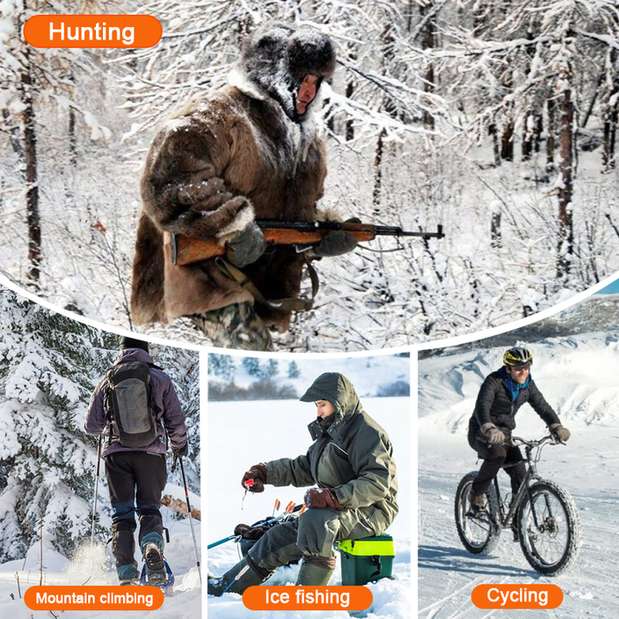
Hunting: the only scenario where heating is not optional
On a sit, the foot stops producing heat within a few minutes and the ground keeps drawing what is left. No passive insole can hold a temperature that is no longer being generated, which is why this is the one scenario in the article where a battery is genuinely required rather than a comfort upgrade. Three specifications follow from the sit itself.
- Low level for a long time, not high for a short time. A cold boot at hour four is a dead hunt. Size the pack for the duration of the sit, not for the walk in — the walk in is when the feet are warm anyway.
- Operable without looking or listening. Gloves, a blind, and an animal within earshot: the control has to be findable by touch and silent in use. This is where a small remote earns its place, and where a bright indicator light is a defect.
- Roomy boots are forgiving; tight ones are not. Most hunting boots have the volume for an insole, which makes this the easiest of the three scenarios to fit. The risk here is not the toe box — it is trimming once and wearing the insole in a second pair of boots.
The related trade-off is capacity against weight. A larger pack runs longer and sits heavier in the boot or on the calf. For a sit, the right answer is a large pack on a low setting plus a spare in the pack, not a mid-size pack on high.
Motorcycling: an engineering problem more than a warmth problem
Riding differs from the other two because the cold is not only ambient. At speed, moving air strips the insulating layer of still air off the boot, so the foot is colder than the air temperature suggests — and it stays that way for the whole ride. On top of that, the element is being vibrated thousands of times per hour and the gear-change foot presses the same spot on every shift. Those two loads, not temperature, are what break insole elements in riding boots.
That engineering side — reinforced elements, vibration durability, battery endurance for long-distance riding, control accessibility with gloves — is covered in detail in heated insoles for motorcycle riders. What belongs here is the cross-scenario point: a riding boot is the tightest of the three, so a riding build should be specified thinner than a hunting build, and the control has to work through a glove and a fairing.
Winter hiking: usually the wrong purchase, honestly
Hiking is the scenario where a heated insole is most often bought and least often needed. A walking body produces heat continuously and the foot is well supplied with it; what ruins a winter hike is moisture, not temperature. A foot that sweats inside a waterproof boot ends up colder at the halfway point than it was at the start, and adding heat to a wet insole adds nothing — the water conducts it away.
Where heating does earn a place on a hike is at rest: the lunch stop, the summit, the wait for a partner. That is a fifteen-minute requirement, not a five-hour one, and a small pack on a low setting covers it. For a brand, that argues for a hiking SKU with the emphasis on a breathable top sheet, a slim base and a pack small enough to forget — not on capacity, and not on maximum temperature.

The same specification, chosen three ways
| Spec | Hunting | Motorcycling | Hiking |
|---|---|---|---|
| Voltage and capacity | 7.4V, large pack, plus a spare | 7.4V or 5V, mid pack sized to the ride | 3.7V, small pack, rest stops only |
| Heat level | Low, held for hours | Medium, steady for the ride | Low, on demand |
| Control | Remote, silent, blind-operable | Glove-operable, reachable at speed | Button on the insole is enough |
| Profile | Standard; the boot has room | Slim; the boot is close-fitting | Slim, breathable top sheet |
| What breaks first | Running out of charge | Element fatigue under vibration and pressure | Wet insole, not a cold one |
Sizing a pack by the hour, not by the headline
Almost every insole box quotes a single runtime, and that number is the least useful figure on it — it is the runtime at the lowest level, in a warm room, with a fresh cell. The working method is three steps: count the hours the wearer will actually need heat, read the runtime stated for that specific level in the specification, then budget seventy to eighty per cent of it, because a cold cell delivers less than a warm one.
For a brand, that is also a packaging decision. A claim of one maximum figure invites a complaint the first time a customer uses the middle setting in real cold, while a table that states runtime per level is both honest and harder to argue with. The same principle applies to capacity: two mid-size packs cover a longer day more reliably than one large pack, because the second one starts warm and the first one is not being deep-discharged in the cold.
Why one pair cannot cover all three
Cut-to-fit insoles are trimmed to a specific boot, and the trim is irreversible. A pair cut for a roomy hunting boot will fold inside a close-fitting riding boot, and that fold is exactly where the conductor creases. Beyond fit, the three scenarios disagree on thickness and control: the thin build a riding boot needs is not the thick, long-runtime build a hunting sit wants. The measurement logic behind that is in heated insoles in ski boots vs work boots, and the comparison against passive insoles in heated vs thermal insoles.
For a brand, that is an argument for three SKUs built on one platform rather than one SKU sold three ways. Shared electronics, shared certification, three builds differentiated by base thickness, pack size and control — the cheapest way to cover the range without shipping a product that disappoints two of its three uses.
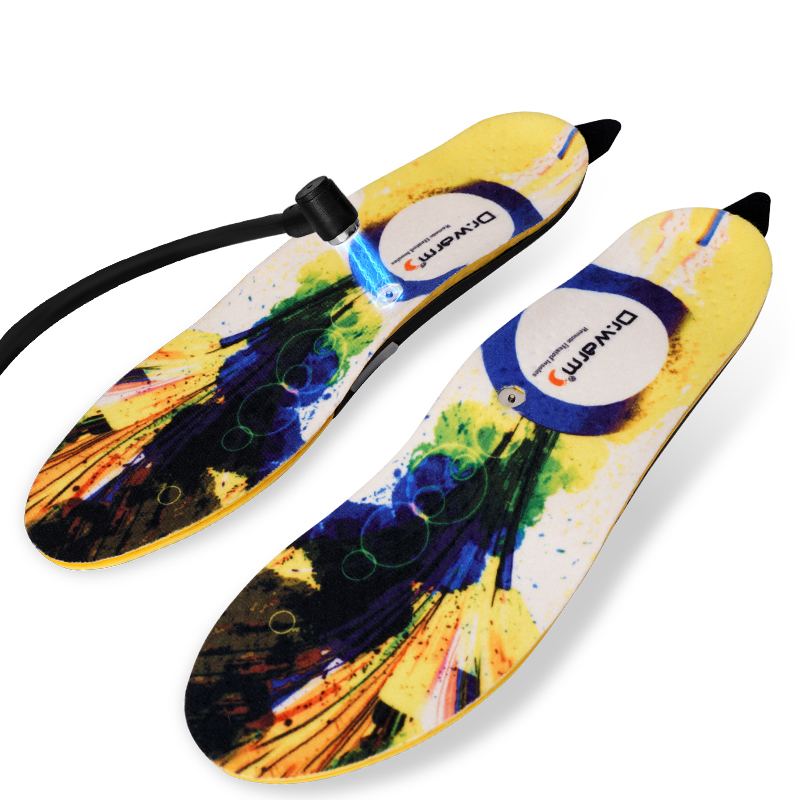
Custom heated insoles for hunting, riding and hiking ranges
Dr. Warm builds 3.7V, 5V and 7.4V heated insoles on shared electronics, in cut-to-fit and fixed-size versions, with magnetic or USB charging, remote or app control, IPX4 as standard and IPX5 optional. Documentation covers CE, UKCA, IEC 62133, UN38.3, RoHS, REACH and GB 47372-2026 with CCC for the Chinese market; OEM from 100 pairs, ODM from 500, 12-month warranty. The insole range for these builds is listed on drwarm.com.
Frequently Asked Questions
Which heated insoles are best for hunting?
The ones sized for the sit rather than for the walk in: a large pack run at a low level for hours, a control that is silent and operable by feel with gloves on, and no bright indicator light. Most hunting boots have the volume for an insole, so fit is the easy part of that scenario — capacity and control are where the wrong choice shows up at hour four.
Are heated insoles worth it for winter hiking?
Usually not for the walking itself. A moving body produces heat continuously, and what ruins a winter hike is sweat and wet snow, not a lack of heat — adding heat to a wet insole adds nothing. They earn their place at rest stops, where fifteen minutes of warmth at a low level is the actual requirement.
Can one pair cover hunting, riding and hiking?
Not once they are trimmed. Cut-to-fit insoles are trimmed to a specific boot and the trim is irreversible; a pair cut for a roomy hunting boot folds inside a close-fitting riding boot, and that fold is where the conductor creases. The three also disagree on thickness and control, which is why one platform with three builds works better than one pair used three ways.
How do I size a battery pack for a full day out?
Count the hours the wearer will actually need heat, read the runtime stated for that specific heat level, then budget seventy to eighty per cent of it — a cold cell delivers less than a warm one. Two mid-size packs cover a long day more reliably than one large pack, because the second one starts warm.