
Quick answer: A bulk heated jacket order can be customised at four levels — the garment (shell, fabric, fit), the heating system (zones, temperature control, wiring), the power system (voltage, battery capacity, connector, charger) and the brand layer (logo, labels, packaging, manuals). On this site the MOQ is 100 pieces for OEM, 500 pieces for full ODM and 1 piece for a stock sample. Sampling takes 7-30 days and OEM production 20-25 days.
This guide is written for resellers, distributors and brand owners who are putting together a first enquiry. It sets out what can actually be changed, which decisions affect tooling and lead time, and what a factory needs from you to quote realistically. For the manufacturing capability behind these programmes, see our OEM and ODM services and the factory where the work happens.
What Can Be Customised on a Bulk Heated Jacket Order?
Most first enquiries start with a logo. That is the easiest item to change and the one with the least effect on cost or timing. The decisions that actually shape the quote are the ones inside the garment: how many heating zones, what power platform, which controller and what compliance documentation the destination market requires.
| Layer | Options | Effect on the project |
|---|---|---|
| Garment shell | Softshell, puffer, parka, hoodie, work jacket, motorcycle jacket, ski shell; men’s, women’s or unisex patterns | Pattern work and fabric sourcing; adds sampling time |
| Fabric and trims | Waterproof membrane, insulated lining, reflective panels, reinforced zones, branded zippers, hood and cuff construction | Material minimums; IPX4 is standard, IPX5 is optional |
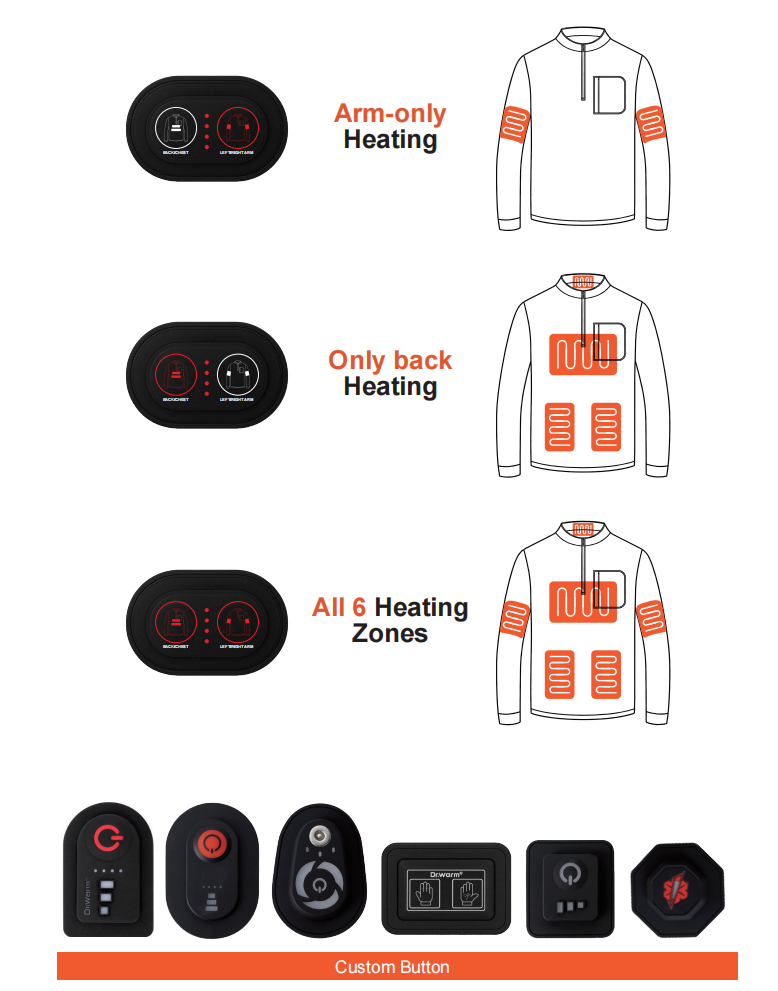
| Heating system | Chest, abdomen, upper or lower back, collar, shoulders, pockets; independent channels; button position | New element layout needs electrical validation and testing |
| Power and control | 3.7V, 5V USB, 7.4V or 12V platforms; button, remote or app control; connector and charger type | Determines battery capacity, runtime and certification path |
| Brand layer | Printed or embroidered logos, woven and care labels, zipper pulls, battery branding, manuals, retail boxes, barcode labels | Artwork approval only; usually the fastest change |
Temperatures Must Be Specified by Model, Not by Category
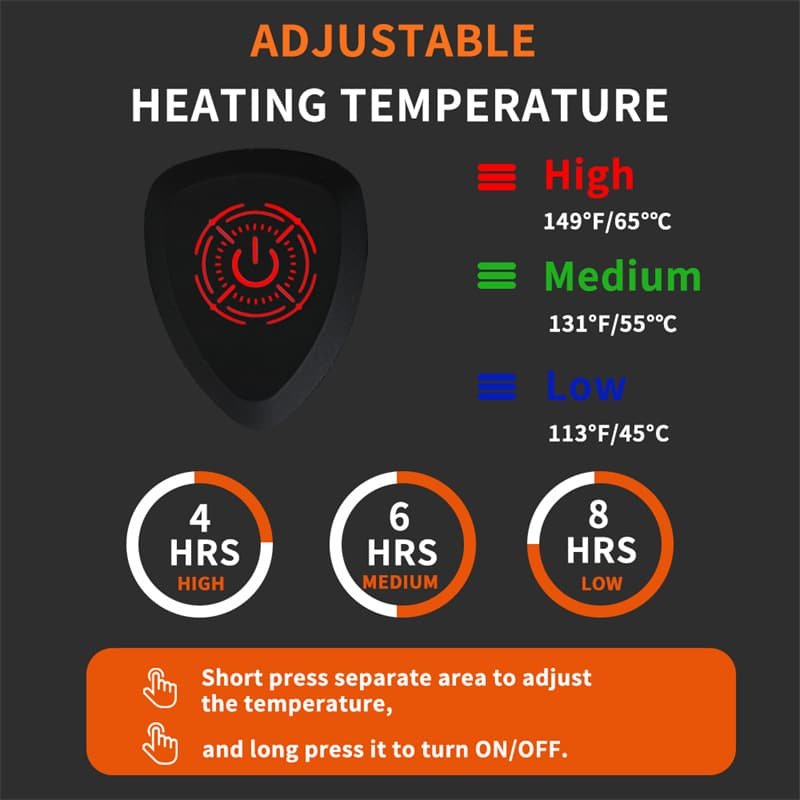
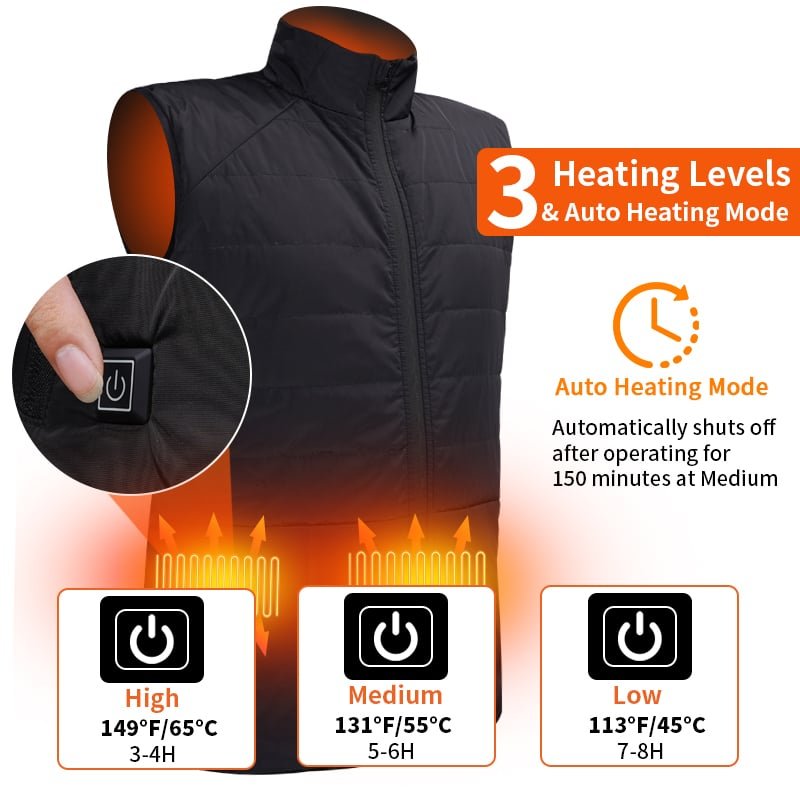
There is no single “heated jacket temperature”. Different platforms run different ranges. The standard garment platform used across jackets, vests, base layers and heated trousers runs three levels at Low 35-40°C, Medium 45-50°C and High 55-60°C. A high-specification jacket built with PTC and carbon-fibre elements runs Low 40-45°C, Medium 50-55°C and High 60-65°C. Blankets, hand warmers and heated insoles all use different ranges again.
For that reason a brief should name the target product and the intended use case rather than ask for “the hottest jacket”. If a specific temperature band is a requirement of your market, say so at the brief stage — it is far cheaper to select the right platform than to re-engineer a controller after tooling. All temperatures on this site are given in degrees Celsius only.
Batteries, Voltage and Runtime: Specify Them Together
Runtime is not a property of the jacket. It is the result of battery capacity, the number of active heating zones, the selected heat level and the ambient conditions. That is why battery life questions cannot be answered with one number for a whole product category.
| Platform | Typical use | Charger output |
|---|---|---|
| 3.7V | Insoles, slippers, compact accessories | 5V / 2A |
| 5V USB power bank | Selected vests, scarves, seat pads, blankets | 5V / 2A or 5V / 3A |
| 7.4V | Most gloves, socks and heated apparel | 8.4V / 1.5A |
| 12V | High-output jacket platforms | 5V / 3A |
| 24V | Industrial and special applications | Custom build on request |
Battery capacity is configured to the order, not fixed. Standard cells span compact 2200-4000 mAh packs at 7.4V up to 10,000-20,000 mAh 5V power banks for jackets and vests, with other capacities available as a custom option. Connector choices include USB, DC, Micro, Type-C and magnetic charging; plug standards cover US, EU, UK, AU and multi-chargers. Warranty on finished products is 12 months, and cells are rated for 500+ charge cycles.
A technical explanation of how the elements, controller and wiring work together is in our heating system guide.
Waterproofing, Care and Compliance Documentation
Water resistance is rated IPX4 as standard, with IPX5 available as an option. A waterproof membrane and sealed cable routing protect the heating elements in rain and snow, but the rating applies to the finished construction, not to fabric alone — it has to be verified on the sample. For riding and snow use, the design questions are covered in more detail in our waterproof jacket guide.
Care instructions matter for returns. A removable battery, a protected connector and a clear washing method should be agreed at the specification stage, then printed into the manual and care label in your own language. On the documentation side, buyers typically ask for CE, UKCA, UL, FCC, RoHS, Reach, UN38.3, DOE and ISO 9001, plus GB 47372-2026 with CCC on the battery. Certificate copies and the SDS (safety data sheet) accompany shipments; the SDS is a shipping document, not a certification. A fuller explanation of what each one covers is in our certifications guide.
Certificate holder for the conformity documentation is Dongguan S-KING Limited. Production is carried out by Dongguan Ditewang Intelligent Technology Co., Ltd., which operates this site. Keeping those two roles distinct matters if your compliance team checks the paperwork against the factory address.
MOQ, Lead Times and the Sampling Path
Three commercial tiers are available, and choosing the right one at the start avoids a quotation that has to be rebuilt later.
- Stock sample — 1 piece. An existing model for fit, heat output and controller evaluation. Usually dispatched shortly after the enquiry.
- OEM — 100 pieces. Branding or modification of an existing platform: logo, colour, fabric, heating zone count, packaging. Sampling 7-30 days; production 20-25 days.
- Full ODM — 500 pieces. A new garment and heating system developed from a brief. Development 50-60 days, with standard bulk production orders completed within 45 days.
A typical project runs: brief and target price → engineering proposal → sample → sample testing and approval → bulk production → inspection → branded packaging. The single most common cause of delay is artwork or specification changes after the sample has been approved. Freeze the logo files, size chart, heat-zone drawing and packaging dieline before the production order.
Why Work With a Factory That Builds Both the Garment and the Electronics
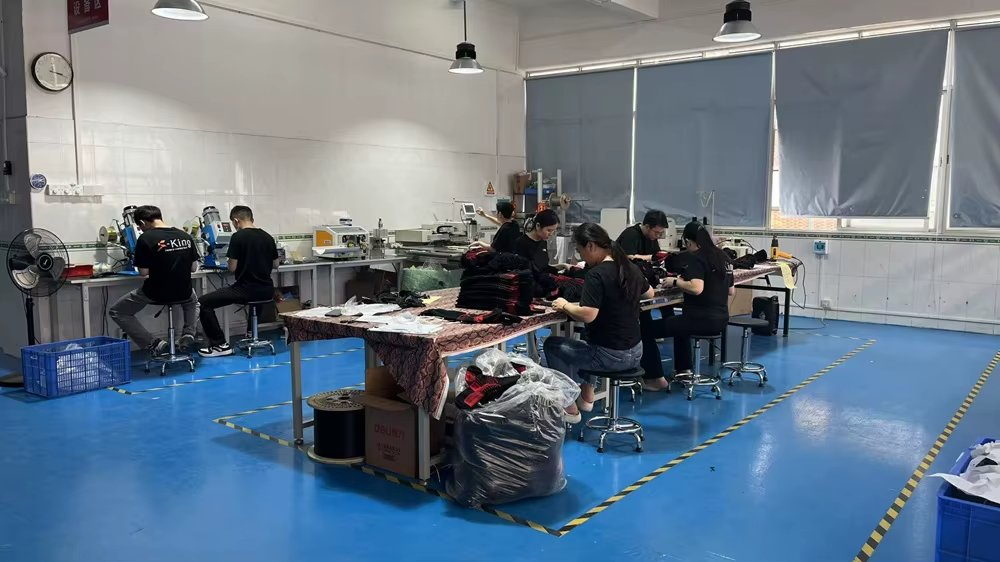
A heated jacket is two products in one: an insulated outer garment and a low-voltage electrical system. Suppliers who only assemble garments have to outsource the wiring and controller, which makes fault diagnosis slow and customisation shallow. Production here covers 3 lines in a 6,000 m² main plant plus a separate 2,074 m² electronics assembly workshop, with a team of 56 and 8 in-house R&D engineers. Annual capacity is over 1,000,000 pieces. Dr. Warm has supplied heated products Since 2013.
That structure is why heating zones, battery position, controller type and garment pattern can be changed in one project rather than negotiated between two vendors. It also means a sample that fails a wash test or a cable-flex test can be traced back to a specific station and corrected before bulk production.

What to Include in Your First Enquiry
The five inputs below are enough to produce a realistic development path and timeline instead of a catalogue answer:
- Target country and the compliance documents your channel requires
- Jacket type, intended use (riding, ski, workwear, commuting) and target retail price band
- Expected order quantity and whether this is OEM branding or full ODM development
- Preferred heat zones, control method and battery/runtime target
- Size range, logo/artwork files and packaging requirements
Browse the existing heated jacket range as a starting point, or send a reference product and we will map it to the closest platform before quoting.
Frequently Asked Questions
Can heated jackets be customised with our logo?
Yes. Logos, woven labels, zipper pulls, colourways, retail boxes and instruction manuals can all be branded. On the website the MOQ is 100 pieces for OEM branding of an existing design and 500 pieces for full ODM development; a single stock sample is available for evaluation before either.
What is the minimum order for custom heated jackets?
100 pieces for OEM orders that brand or modify an existing platform, 500 pieces for full ODM development of a new garment, and 1 piece for a stock sample. MOQ is set by the level of engineering work, not by the product category.
How long does a custom heated jacket project take?
Sampling runs 7-30 days depending on complexity, OEM production 20-25 days, full ODM development 50-60 days, and standard bulk production orders are completed within 45 days. These are quoted per project once the brief, artwork and target specification are confirmed.
Which battery and voltage options can be specified?
Standard platforms cover 3.7V, 5V USB, 7.4V and 12V, with 24V systems available as a custom build. Battery capacity is configured to the order rather than fixed, so runtime, connector type, charger output and controller are specified together for each model.
Building a heated jacket line for your market? Send us your brief with the five inputs above and we will come back with a development path, a sample plan and a realistic timeline.