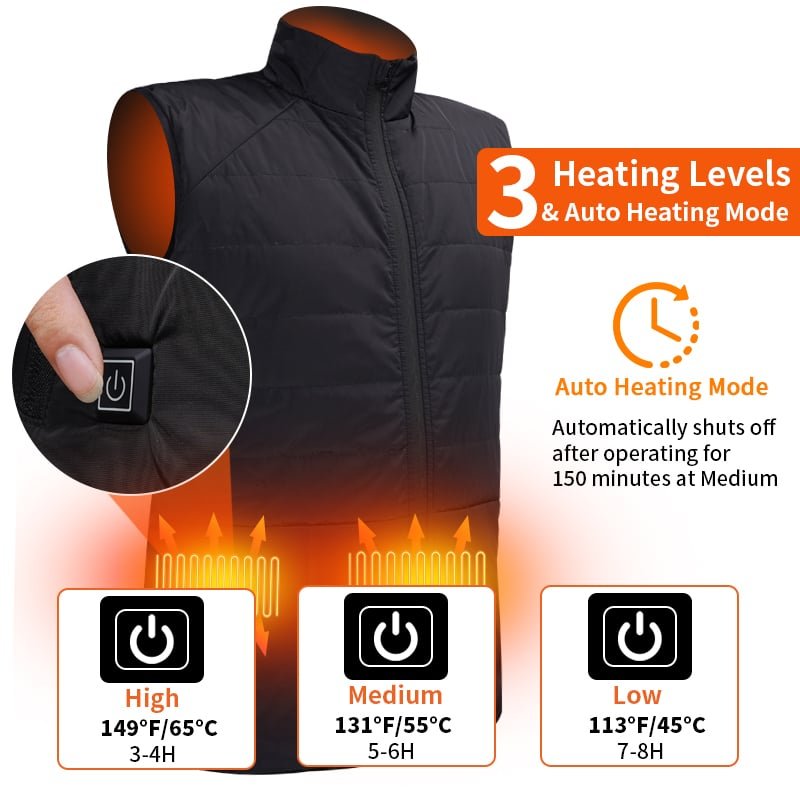

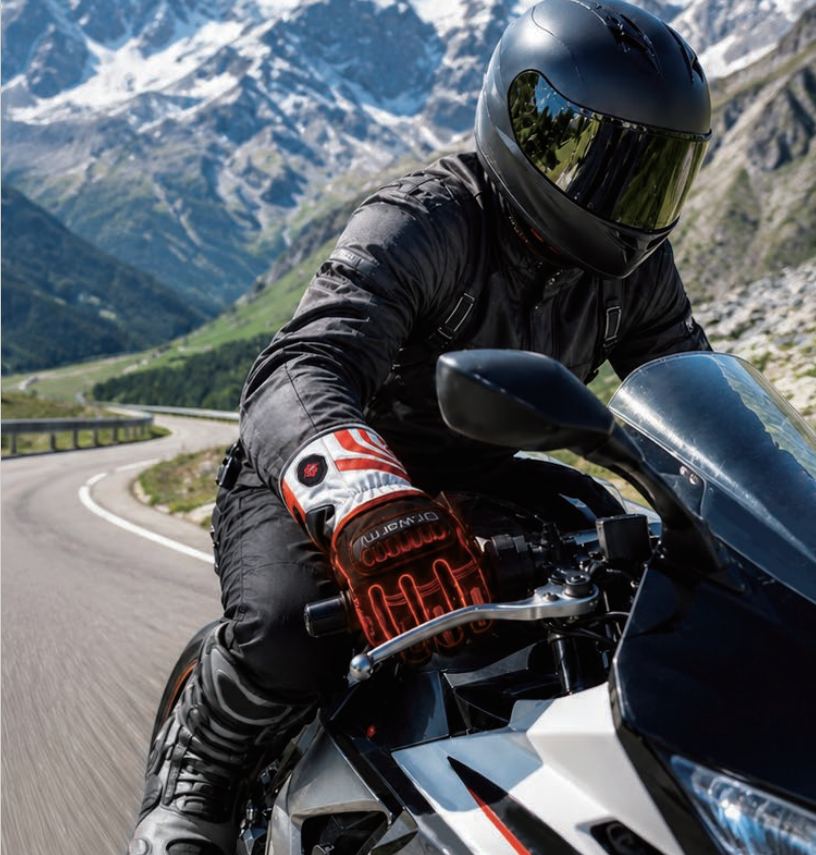
Quick answer: Yes — a heated jacket can be used for motorcycle riding and snowy weather, provided the shell is windproof and water-resistant (IPX4 standard, IPX5 optional), the cuffs and collar seal well, and the charging port stays dry. Riding calls for a windproof shell and a battery pocket that does not shift at speed; snow calls for sealed cable routing and a collar that keeps meltwater out.
This guide separates what the shell needs from what the electrical system needs, and sets out what a brand should specify for a riding or winter-sports range. For heat settings and control, see temperature control modes.
Requirements for Motorcycle Riding
| Requirement | Why it matters at speed | What to specify |
|---|---|---|
| Windproof shell | Wind chill strips heat faster than a static layer can replace it | Tightly woven outer fabric with a windproof membrane |
| Sealed cuffs and collar | Air entry at the wrist and neck defeats the heating zones | Adjustable cuffs, high collar, storm flap over the zip |
| Stable battery pocket | A moving pack pulls on the lead and distracts the rider | Inner pocket with retention, lead routed away from the hip |
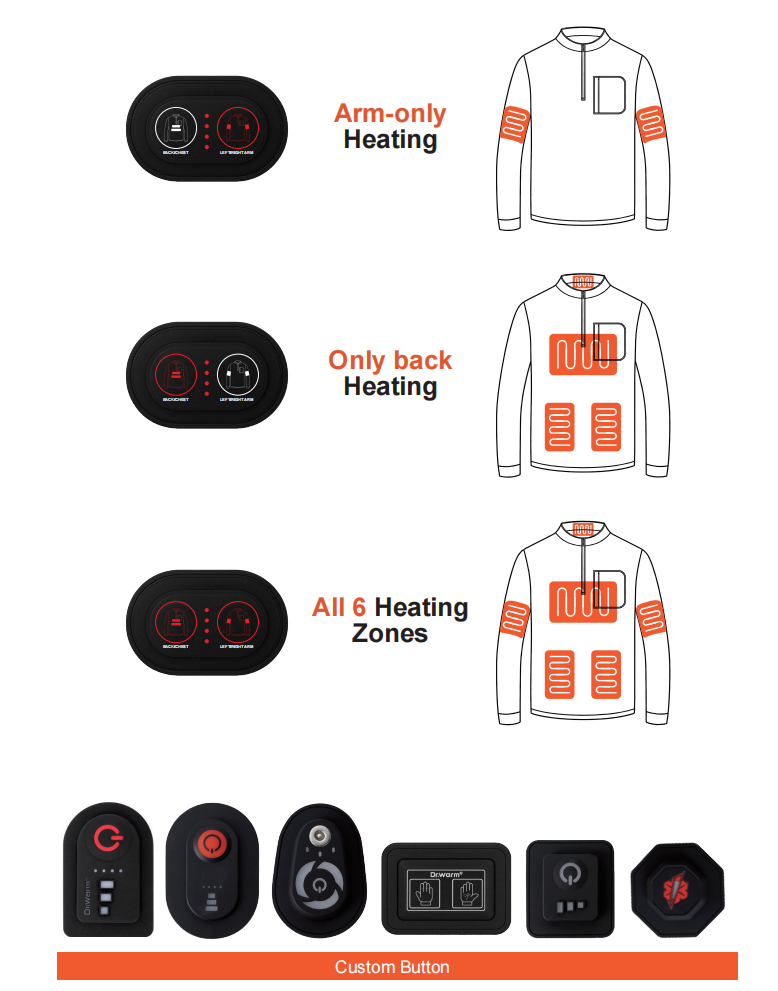
| Arm and back zones | Hands and torso are most exposed to airflow | Zone drawing with chest, back and optional sleeve elements |
| Glove-friendly control | The button must be operable without undressing | Chest or cuff button reachable with gloves on |
Standard platforms cover 3.7V, 5V, 7.4V and 12V, with 24V available as a custom build. Most heated apparel uses 7.4V with an 8.4V / 1.5A charger; a high-output 12V jacket is a separate platform with a 5V / 3A charger. Battery capacity is configured to the order, not fixed, so runtime depends on capacity, active zone count, heat level and ambient temperature.
Requirements for Snowy Weather
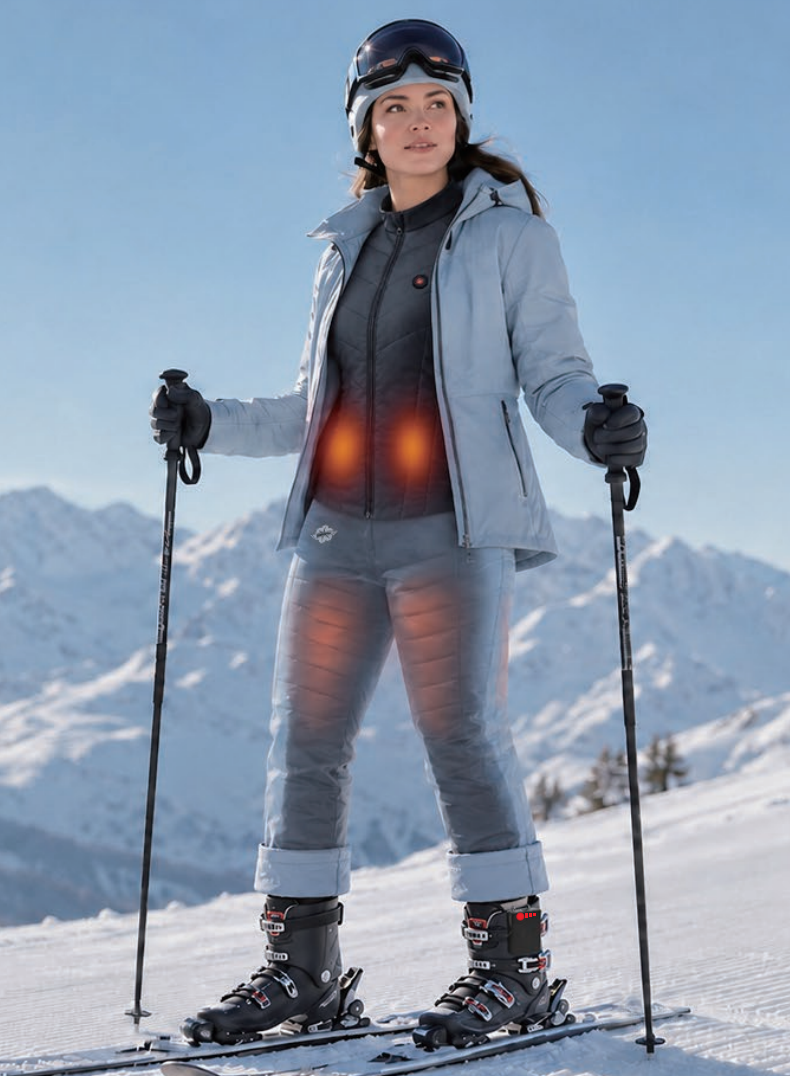
For skiing, snowboarding and winter work, the shell has to keep meltwater out of the connector and the cable route. IPX4 covers splashing water from any direction; IPX5 covers low-pressure jets and is available as an option. Neither rating covers immersion or connecting power while the port is wet.
A riding shell and a ski shell are not the same garment. Riding prioritises wind blocking at speed and abrasion resistance in a fall; skiing prioritises a helmet-compatible hood, a powder skirt and freedom of movement at the shoulders. If one jacket is meant to serve both markets, that trade-off has to be decided on the tech pack — trying to serve both with an unmodified pattern usually produces a garment that is heavy for skiing and poorly sealed for riding.
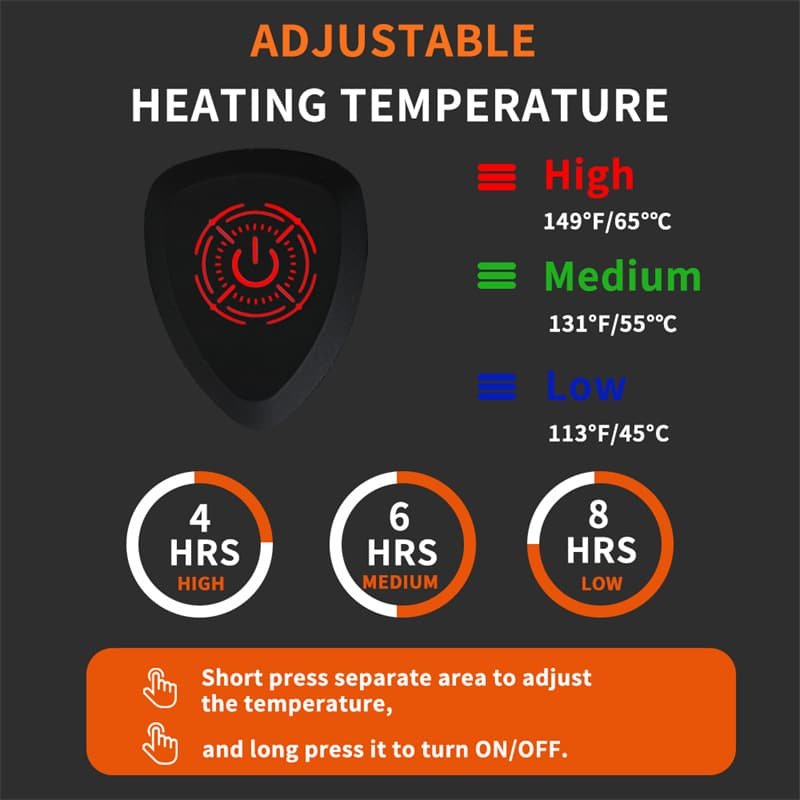
On the standard garment platform used across jackets, vests, base layers and heated trousers, three levels run Low 35-40°C, Medium 45-50°C and High 55-60°C; a high-specification PTC and carbon-fibre jacket runs Low 40-45°C, Medium 50-55°C and High 60-65°C. All values are in degrees Celsius and are specified per model. In snow, start on Medium and adjust from feel rather than leaving High on all day.
- Keep the charging port capped when not in use.
- After a wet day, let the jacket and connector area dry fully before charging.
- Remove the battery before cleaning; never wring or machine-dry the garment.
- Inspect the cuff lead and connector for moisture or corrosion before the season.
Can the Design Be Customised?
Yes — and for a riding range it usually should be. OEM starts at 100 pieces, full ODM at 500 pieces, and a single stock sample is available. Sampling takes 7-30 days, OEM production 20-25 days and full ODM development 50-60 days.
| Layer | Riding-specific options |
|---|---|
| Shell | Abrasion-resistant outer fabric, windproof membrane, taped seams, reflective panels |
| Closure | Storm flap, adjustable cuffs, high collar, helmet-compatible hood |
| Heating system | Chest, back, collar and sleeve zones; independent channels; glove-friendly button position |
| Power | 7.4V or 12V platform, retained battery pocket, protected connector, matched charger |
| Brand | Logos, care labels, manuals, retail packaging, barcode labels |
For private-label buyers, ask for IPX4 or IPX5 verification, seam and connector protection details, flexing and wash-cycle testing, overcharge/over-discharge/short-circuit protection, over-temperature cutoff, heating-uniformity testing and final aging inspection. UN38.3 documentation is required for lithium battery transport; the SDS is a shipping document, not a certification. Buyers commonly request CE, UKCA, UL, FCC, RoHS, Reach, DOE and ISO 9001, plus GB 47372-2026 with CCC on the battery side — see what each covers.
Production covers 3 lines in a 6,000 m² main plant plus a separate 2,074 m² electronics assembly workshop, with a team of 56 and 8 in-house R&D engineers. Annual capacity exceeds 1,000,000 pieces, and Dr. Warm has supplied heated products Since 2013. See our OEM/ODM development guide and the factory.
Frequently Asked Questions
Are heated jackets waterproof?
Heated jackets are water-resistant rather than submersible. IPX4 is the standard rating and IPX5 is optional. A waterproof membrane and sealed cable routing protect the elements from rain and snow, but the charging port must be dry before connecting power.
Are heated jackets suitable for motorcycle riding?
Yes, if the shell is windproof, the cuffs and collar seal well, and the battery pocket does not move at speed. A 12V high-output platform or a 7.4V jacket with arm and back zones is often chosen for riding, because wind chill is high and the body is relatively static.
Can I wear a heated jacket in snow?
Yes. Check the IPX4 or IPX5 rating, keep the connector dry, and let the jacket and port dry fully after a wet day before charging. Snow melting at the collar is a more common issue than the shell itself.
Can the design be customised for a riding range?
Yes. OEM starts at 100 pieces and covers shell fabric, membrane, seam sealing, cuff and collar construction, zone layout, battery platform, controller position and branding. Full ODM starts at 500 pieces, with sampling in 7-30 days.
Building a riding or snow range? Send your market and target price band and we will map the closest jacket platform before quoting.