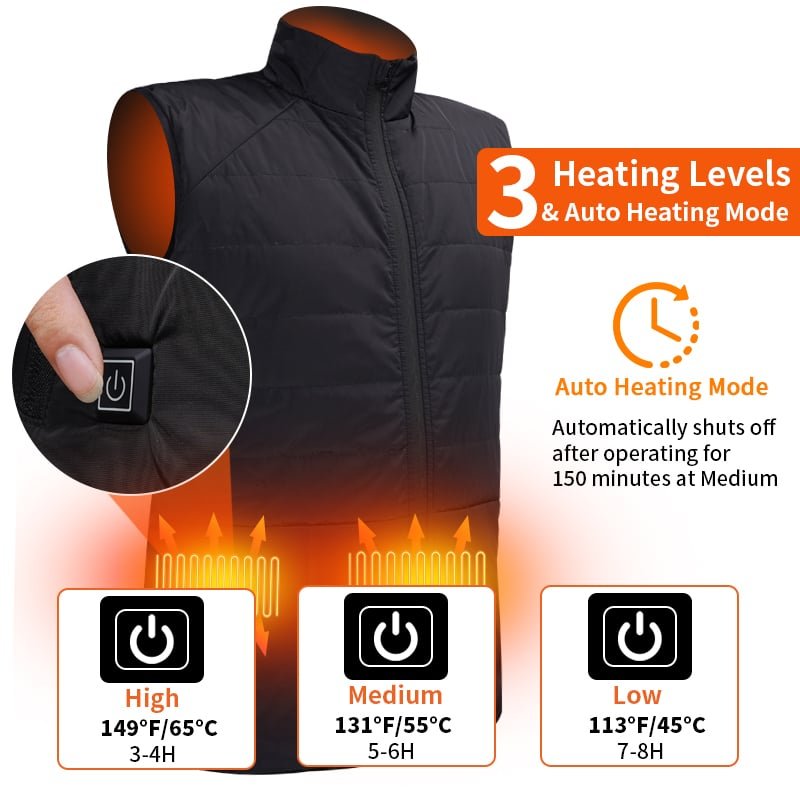
Men’s and women’s heated jackets are not the same jacket in two size runs, and the difference is not cosmetic. They are two patterns built around different proportions, and in a heated garment there is a third variable an ordinary jacket does not have: where the battery sits. Get that wrong and the jacket is uncomfortable for a reason the wearer cannot name.
Why scaling one pattern does not work
The usual shortcut — take the men’s block, reduce it by a percentage, call it a women’s fit — fails because the ratio between shoulder width, chest, waist and sleeve length is not constant between the two. A block scaled down keeps a man’s shoulder-to-chest relationship, which produces a jacket that is tight across the chest and loose at the shoulder, with sleeves that are too long for the arm they were cut for. In an unheated jacket this is a fit complaint. In a heated jacket it is also a thermal problem, because an element that does not lie flat against the body is heating air.
| Pattern element | What changes, and why it matters when heated |
|---|---|
| Shoulder slope and width | A different slope moves the shoulder seam, and the shoulder seam is where a jacket’s wiring passes. A pattern that ignores it puts the seam where the arm moves most |
| Chest to waist relationship | Darts and panel shaping change where the chest element can sit flat; a scaled block leaves the element bridging a curve instead of following it |
| Armhole depth | Decides whether the jacket can be worn over a mid layer. Too shallow and the jacket binds at the arm; too deep and the chest element hangs away from the body |
| Sleeve length and cuff | Sleeves carry elements of their own on multi-zone builds; a cuff that sits wrong leaves a cold band at the wrist |
| Hem length and shape | Determines whether the lower back zone stays covered when the wearer reaches or sits |
The variable that only exists in a heated jacket: the battery
In a women’s pattern the front is usually shaped, so a battery pocket placed where a men’s pattern puts it either sits on a curve or pushes the jacket out of shape. The common answer is to move the pack to the side or the back waist — which changes three things at once. It changes where the weight sits, it changes whether the pack is pressed when the wearer sits down, and it changes the length of the cable run to the chest element.
The back-waist position has a practical advantage that is easy to miss: it is the one place a wearer cannot reach without taking the jacket off, which makes it a poor choice for a control and a good choice for a pack. Side placement is easier to reach but adds bulk at the hip, which is where a harness, a belt or a bag strap already sits. Neither is wrong; the point is that the pocket has to be designed with the other layers in mind, not moved as an afterthought.
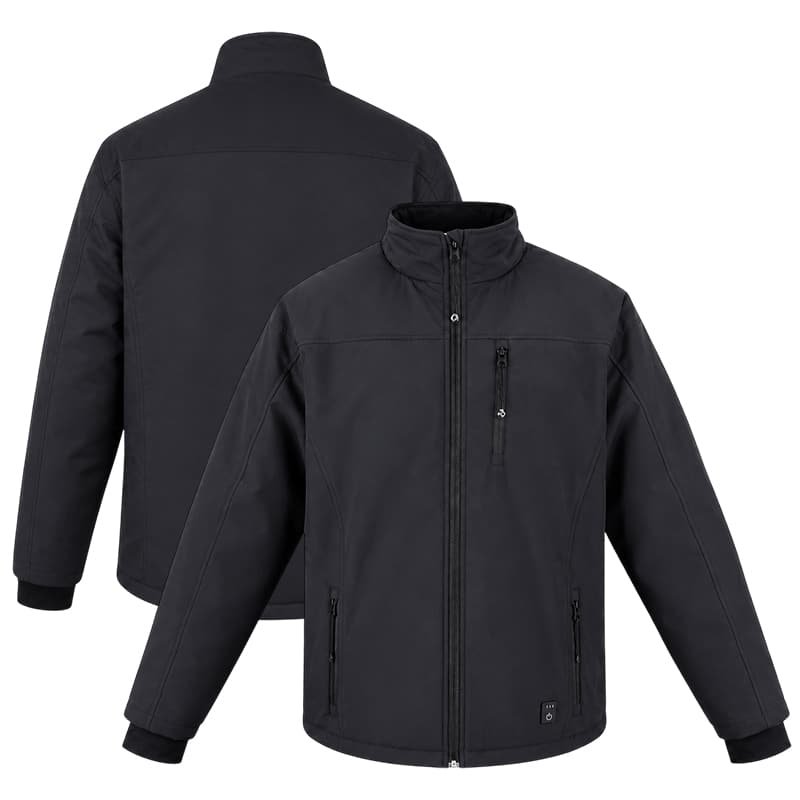
Do the heat zones move between patterns?
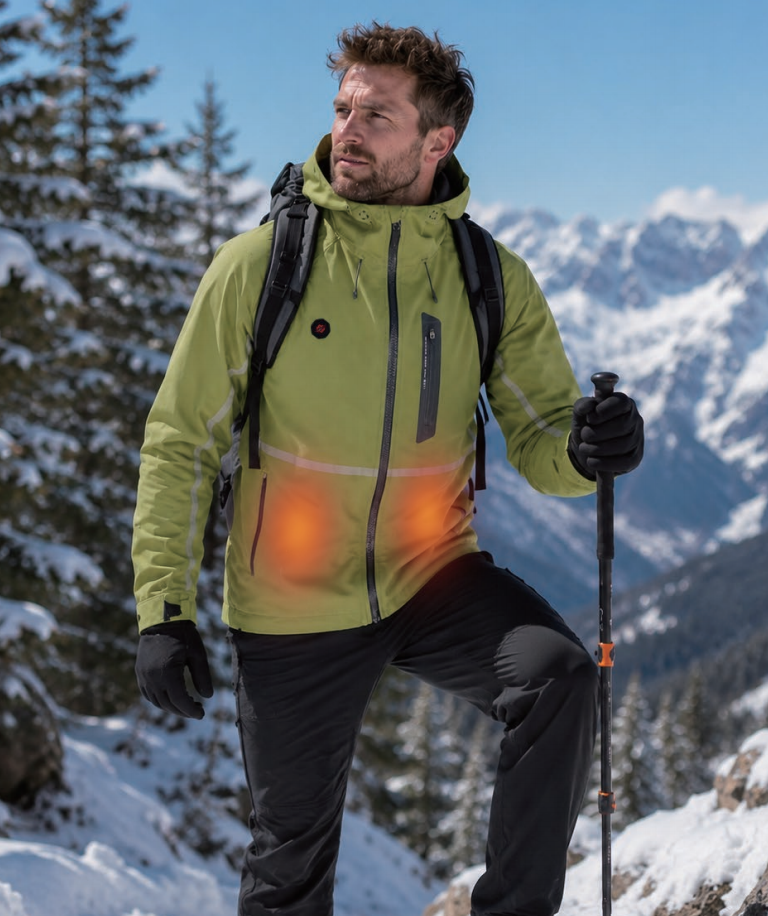
Less than buyers expect, and more than pattern makers would like. The back zone barely moves — the upper back is the same target on both patterns. Chest zones move because the chest surface does, and a zone positioned for a men’s block can end up sitting higher or bridging a curve on a women’s block. Shoulder zones follow the shoulder seam, so they move wherever the seam moves. What does not change is the logic: elements sit on the areas with the most surface exposure and the least movement, and that is a design constraint before it is a gender one.
Buying across the two: read measurements, not letters
Size letters do not translate. A women’s large is not a men’s medium in any reliable way, and between brands the same letter can differ by enough to change the fit of a heated jacket entirely. Anyone choosing across the two patterns should work from three numbers — chest circumference, shoulder width and sleeve length — and compare them with the garment’s own chart rather than with another brand’s label.
The fourth number that decides more than any of the three is the layer the jacket will be worn over. A heated jacket sized to fit over a base layer will bind when worn over a mid layer, and the binding shows up as a cold chest — the element is being held away from the body by the fabric underneath. Measure with the layers on, or accept that the jacket has one season of use rather than three.
Five checks before the tag comes off
| Check | What a failure looks like | Why it matters when heated |
|---|---|---|
| Shoulder seam sits on the shoulder point | Seam hangs off the edge or pulls in | The seam carries wiring; a misplaced seam is a flex point |
| Chest element lies flat | Fabric bridges away from the body at the chest | Heat with an air gap heats the gap, not the wearer |
| Sleeves cover the wrist with arms forward | A gap appears when reaching or gripping | A cold band at the wrist is where a glove cuff meets nothing |
| Battery pocket is comfortable seated | A hard lump at the hip or lower back when sitting | A pack pressed by a seat is a pack being asked to fail |
| Hem stays down when reaching up | Lower back is exposed when the arms go up | The lower back zone only works while it is covered |
What a brand should settle before the first sample
Three decisions, and they are cheaper to make on paper than in a sample room. First, whether the range is two patterns or one unisex block — two patterns cost a second set of graded sizes and a second fit session, while a unisex block costs conversion at retail. Second, where the battery sits in each pattern, because the pocket position drives both the cable routing and the grading. Third, how many zones each pattern carries: a six-zone men’s build scaled to a women’s pattern does not automatically have six well-placed zones.
What does not need to double is the electronics. Two patterns can share the same controller, the same pack family and the same certification — which is why the sensible structure is one platform with two blocks rather than two separate products. It also makes the certification file smaller: one set of cell and system documents covers both patterns, whatever the outer shell looks like.
Custom heated jackets in men’s and women’s patterns
Dr. Warm builds heated jackets in separate men’s and women’s blocks from one electronics platform, with two to six zones, configurable battery pocket positions, custom control panels and button designs, and IPX4 as standard with IPX5 optional. Documentation covers CE, UKCA, IEC 62133, UN38.3, RoHS, REACH and GB 47372-2026 with CCC for the Chinese market; OEM from 100 pieces, ODM from 500, 12-month warranty.
Frequently Asked Questions
Can a woman wear a men’s heated jacket?
She can, if the measurements work — and the measurements are chest circumference, shoulder width and sleeve length, not the size letter. A men’s block scaled to the right chest will usually be wider at the shoulder and longer in the sleeve, and the chest element may bridge away from the body instead of lying flat. Try it over the layers it will actually be worn with.
Do women’s heated jackets have different heating zones?
The back zone barely moves, because the upper back is the same target on both patterns. Chest zones move with the shape of the front, and shoulder zones move with the shoulder seam. The design logic stays the same — elements go where the surface is exposed and moves least — but the placement has to be re-checked rather than scaled.
Where does the battery go in a women’s heated jacket?
Usually the side seam or the back waist, because the shaped front does not take a pocket the way a men’s block does. A back-waist pack is protected but unreachable without taking the jacket off, and a side pack is reachable but sits where a harness, belt or bag strap already sits. Neither is wrong; the position should be chosen with the other layers in mind.
Is a unisex heated jacket a real option for a brand?
Yes, and it halves the development cost, but it moves the work to retail: the range needs a conversion chart and staff who can read it. Two patterns on one electronics platform cost a second set of graded sizes and a second fit session, and share the same controller, packs and certification.