A jacket that will not heat on a full battery is usually not a dead jacket, and it is not usually a dead battery either. What makes jackets different from vests and gloves is that they are the most complex heated garment: the longest wiring runs, the most heating zones, the most detachable parts, and a front opening that water and wind both aim at. That complexity is also the diagnostic advantage — the pattern of which zones are cold tells you where the circuit broke before you open anything.
Read the zones before you touch anything
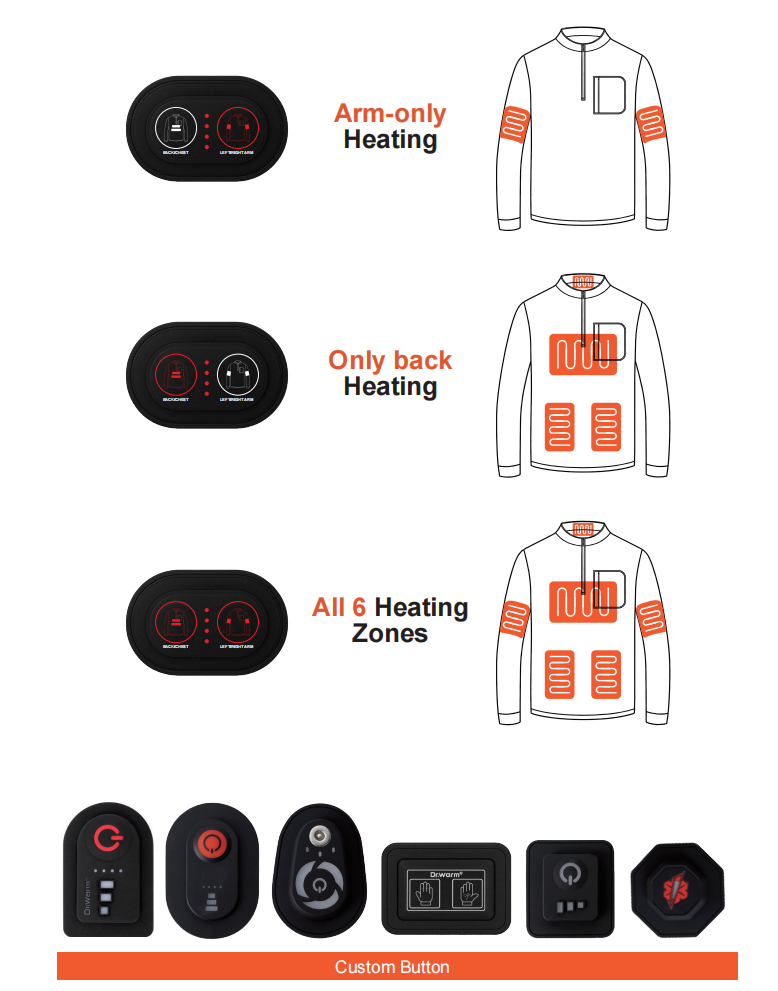
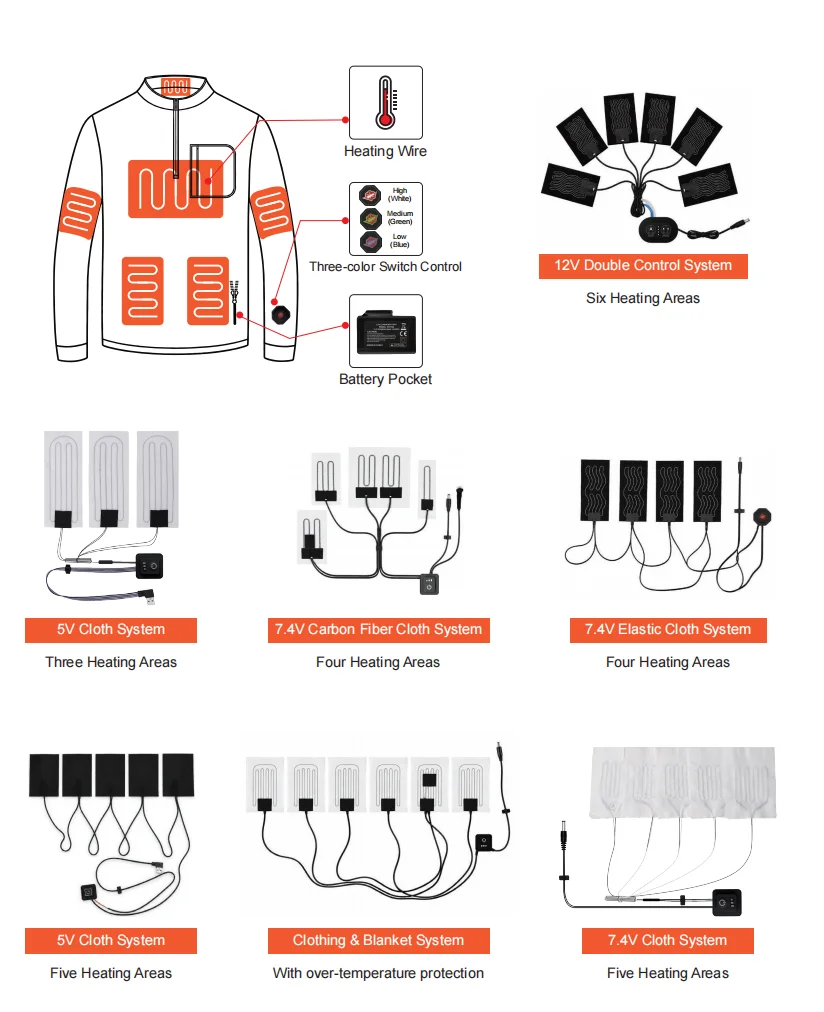
Most multi-zone jackets are wired as branches off a trunk: power enters at the battery pocket, runs up the side seam, and splits into the chest, back and shoulder elements. Because the branches are separate, a single cold zone is a branch fault, and two adjacent cold zones usually share a connector or a junction. A jacket that is cold everywhere is a supply fault or a controller fault — nothing else.
| What is cold | What that points at | First check |
|---|---|---|
| Everything, both sides | Supply or controller, not the elements | Pack on a second jacket, or second pack on this one |
| One chest zone only | One branch, or the junction it shares with its neighbour | Whether the zone next to it is warm — if both are cold, the junction is the suspect |
| Both shoulders, chest and back fine | The run through the shoulder seam | The seam where the sleeve meets the body — a flex point that carries wire |
| Back only, or a mode that never activates | Mode logic or a panel state, not a broken element | Cycle through every mode before assuming hardware |
| Works for minutes, then stops | Protection latch — current or temperature | Power off, disconnect, let it rest, restart at the lowest level |
| Works until the wearer leans or reaches | A wire under tension at a flex point | Reproduce it deliberately — reach, bend, sit — and note the exact position |
“The battery is full” is an assumption until it is tested
Three things are true at once on a jacket that shows no heat: the pack may not be as full as the light suggests, the pack may be incompatible with that controller, and the controller may be in a protection state that survives a full charge. Test them in that order.
- Swap the pack, not the jacket. A known-good pack on the same jacket splits the problem in one move. If the jacket heats, the pack or its charge is the fault and nothing else needs checking.
- Match the pack to the model. A pack from another model can fit the same connector and still drive the controller wrong — the symptom is weak heat or a controller that cuts out after a minute. Match the part number, not the plug.
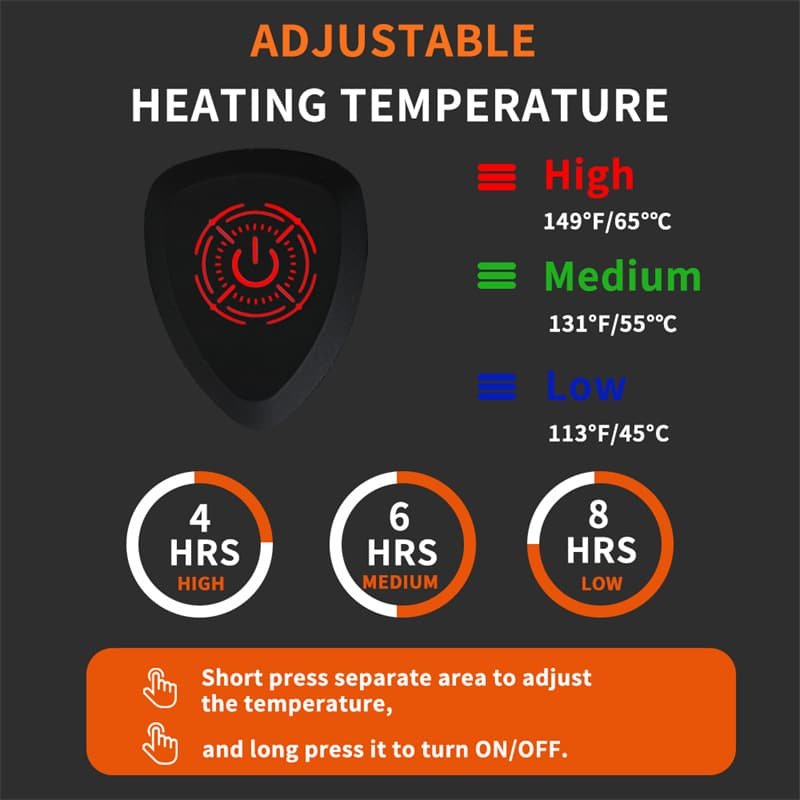
- Hold the button long enough. Many jacket controllers require a deliberate press-and-hold to power up, and a short press reads as nothing. Two seconds, not a tap — and check the manual for the model, because the press length differs between controllers.
- Clear the protection latch. Disconnect the pack, wait, reconnect, power up at the lowest level. A latch set by a current spike stays set until the pack is removed; charging the jacket does not clear it.
Four faults a jacket has and a vest does not
The shoulder seam carries wire. A jacket’s sleeve joins the body at the point that moves most: reaching, driving, lifting. Wire routed through that seam is being flexed all day, and the failure appears as shoulder zones that work until the wearer reaches forward. A vest has no such joint, which is why this fault is a jacket specialty.
The zone count multiplies the junctions. Six zones need more junctions than two, and each junction is a place where a connector can be loose, damp or strained. This is the practical argument for buying a jacket with the number of zones the wearer will actually use — a six-zone jacket that half works is worse than a two-zone jacket that always works.
The front opening is a water path. A zip, a storm flap and a collar are three ways for rain and snow-melt to reach the chest wiring, and the chest is exactly where the elements sit. Water there produces the intermittent heat that gets described as “it works, then it stops”. The protection rating sets the limit — IPX4 as standard, IPX5 where a buyer specifies it — and no rating makes a jacket safe to wear with water pooling inside the front.
Detachable liners and hoods add plugs. Every detachable part adds a connector, and every connector is a place where a jacket stops heating after a liner was removed for a milder day and put back in a hurry. If a jacket heats before the liner goes in and not after, the liner’s plug is the answer, not the battery.
What the evidence says about who fixes it
| What you can see | Where the fault sits | Who owns it |
|---|---|---|
| Cold zone starting at the shoulder seam, no external damage | Wiring under flex, inside the garment | Manufacturer — routing and strain relief |
| Corrosion or green deposit at the pack connector | Use environment | Shared — drying routine and the stated IP rating |
| Fault appears only after the liner is refitted | Connector, user side | Wearer — re-seat the plug |
| Burn mark, discoloured patch or swollen pack | Safety | Stop using it; do not charge; return for examination |
| No heat on any pack, any jacket of the same model | Controller batch | Manufacturer — check the production batch, not the customer |
The ninety-second bench test that settles most claims
A retailer or a brand’s support desk can answer most jacket complaints without a return, and the test takes ninety seconds. Full pack, jacket on a hanger, lowest level, three minutes. Then run the back of a hand across each zone in a fixed order — left chest, right chest, back, both shoulders — and write down warm or cold for each. Photograph the connector, and photograph the zone map if the jacket has one printed inside.
That record does two things. It separates “no heat at all” from “one zone” — which are different problems with different owners — and it gives a support agent the information they would otherwise spend three emails asking for. For a brand, putting this sequence on the care card costs nothing and removes the slowest part of every claim.
When to stop and send it back
Four conditions end the process: a swollen pack, a burn mark or discoloured patch on the lining, a repeat failure in the same zone after a replacement, and any smell of hot plastic. Everything else in this article is either a cheaper fix or a warranty conversation with evidence behind it. Saying which is which, plainly, is what keeps a support ticket from turning into a refund — and for a brand, publishing that distinction is cheaper than handling it case by case.
Custom heated jackets with configurable zones
Dr. Warm builds heated jackets with two to six heating zones, selectable zone configurations, custom control panels and button designs, removable packs and IPX4 as standard with IPX5 optional. Documentation covers CE, UKCA, IEC 62133, UN38.3, RoHS, REACH and GB 47372-2026 with CCC for the Chinese market; OEM from 100 pieces, ODM from 500, 12-month warranty.
Frequently Asked Questions
Why will my heated jacket not turn on with a full battery?
Check three things in order. Many controllers need a deliberate press-and-hold rather than a tap. A protection latch set by a current spike stays set until the pack is physically removed, so disconnect, wait, reconnect and start at the lowest level. And a pack from a different model can fit the connector while driving the controller incorrectly — match the part number, not the plug.
Only one heating zone works. Is the element broken?
Sometimes, but check its neighbour first. Zones are wired as branches off a trunk, so two adjacent cold zones usually share a junction while a single cold zone points at its own branch. If the zone next to it is warm, the fault is local to that branch; if both are cold, the junction between them is the suspect.
Can I use a battery from another heated jacket?
Only if it is the same model or the same platform. A pack can fit the plug and still drive the controller wrong, which shows up as weak heat or a controller that cuts out after a minute. Match the part number on the pack to the garment specification before assuming the jacket is faulty.
Should I wash a heated jacket that has stopped heating?
No — diagnose first. Washing a jacket with an unresolved fault adds moisture to whatever is already marginal, and the jacket will appear to fail again for a second reason. If the fault is a cold zone at a seam or a connector that will not seat, cleaning changes nothing and costs a drying cycle.