A heated vest that stops heating has one of five causes, and the order in which you test them matters more than the list itself. Tested in the wrong order, a five-second fix becomes a return, a warranty claim and a customer who no longer trusts the product. Tested in the right order, most cases close before anyone opens a support ticket.
Start with a swap, not a diagnosis
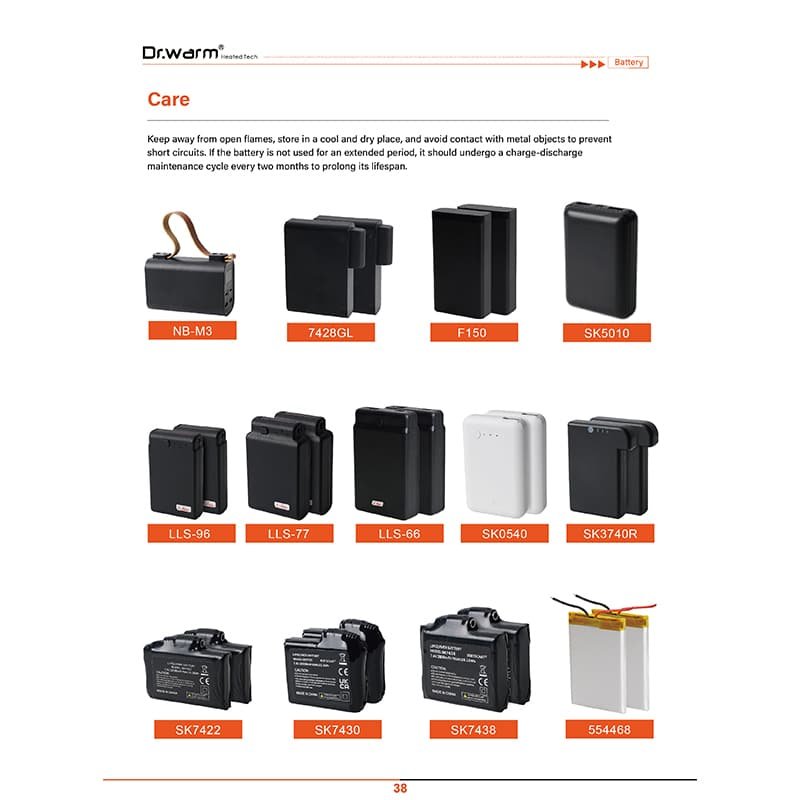
A vest is unusually easy to triage because the pack sits in a pocket. Swapping it takes seconds and immediately halves the problem space: if the fault follows the battery, the garment is fine; if the vest stays cold with a known-good pack, the garment is the problem. Nothing else on the list is worth doing first.
- Charge the pack to full and retest. Not “it was charged this morning” — a cold pack delivers less than its rating, so a full pack that spent the night in a vehicle can behave like a flat one.
- Swap in a second pack of the same model. Does the fault move with the pack, or stay with the vest? This one step decides everything that follows.
- Re-seat the main connector. Pull it out, look inside for green or white crystalline deposit, damp or debris, then push it back square and fully home.
- Cycle the power. Many controllers latch into a protection state after a fault and will not reset until the pack is disconnected and reconnected.
- Name the zones. On a four-zone vest, find out which zone is cold. One zone is a branch fault; all zones is a supply fault.
Read the symptom, then the cause
| Symptom | Most likely | 30-second check | Verdict |
|---|---|---|---|
| Nothing heats, indicator dead | Flat or cold pack, or a protection latch | Swap pack; then disconnect and reconnect | Supply side, not the garment |
| Heats for a minute, then cuts out | Protection tripping on a partial short or a loose plug | Wiggle the plug while running; look for damp | Connector or cable, treat as a fault |
| One zone cold, three warm | Branch wire or element damage, often the lower back | Press along the zone line; heat flickers? | Garment fault, not repairable in the field |
| Works until the wearer sits down | Cable creased in the pocket, or a branch pressed by a seat | Bend the lead gently at the pocket exit | Design or routing problem — see the fix below |
| Heats weakly on every setting | Wrong pack for the model, or a cold pack | Compare pack part number with the vest’s spec | Compatibility, not failure |
| Dead after a wash | Powered up damp; corrosion on the pins | Look inside the plug and the pocket for a tidemark | Care failure, not manufacturing |
| Feels warm to the hand, cold to the wearer | Zone placement against the body, or an outer layer holding it off | Wear it inside a shell and re-test | Not a fault |
Three failure points a vest has and a jacket does not
A sleeveless garment routes its main cable differently, and that routing is where most repeat faults live. First, the cable spine runs up the shoulder and across the upper back, which puts it under a rucksack strap or a harness all day — a point load applied thousands of times, in the same place. Second, the front closure: on vests that route power along the zip edge, the section that fails first is the one that bends every time the garment is opened. Third, the pocket. A pack in a pocket means the lead exits at a tight angle, and a wearer who sits down for a living bends that lead several hundred times a week.
None of those are wearer errors, and none of them can be fixed by the customer. They are decided at sampling: a strain relief at the pocket exit, a service loop where the spine crosses the shoulder, and a plug that is captured square rather than hanging on its pins. That is the difference between a garment that survives two seasons and one that comes back in January.
Whose fault was it: care, manufacturing or use
Before a return is authorised, the evidence usually says which conversation is the right one. This matters commercially, because a care failure replaced under warranty trains the customer to repeat it.
| Evidence | Most likely owner | Correct action |
|---|---|---|
| Green or white deposit inside the plug; water tidemark in the pocket | Care — powered up damp | Explain the drying routine; sell a replacement lead if available |
| Heat flickers when a specific zone is pressed or bent | Manufacturing — element or branch | Warranty replacement; feed the pattern back to the line |
| Pack swollen, plug melted or discoloured | Either — stop use immediately | Quarantine the pack, do not recharge it, escalate |
| Cold with a swapped pack, warm with the original | Use — wrong model pack | Match the pack part number to the garment spec |
| Weak heat only on very cold days, all zones | Neither — cold-weather capacity loss | Carry the spare inside a jacket, not in a bag |
The plug type decides how it fails
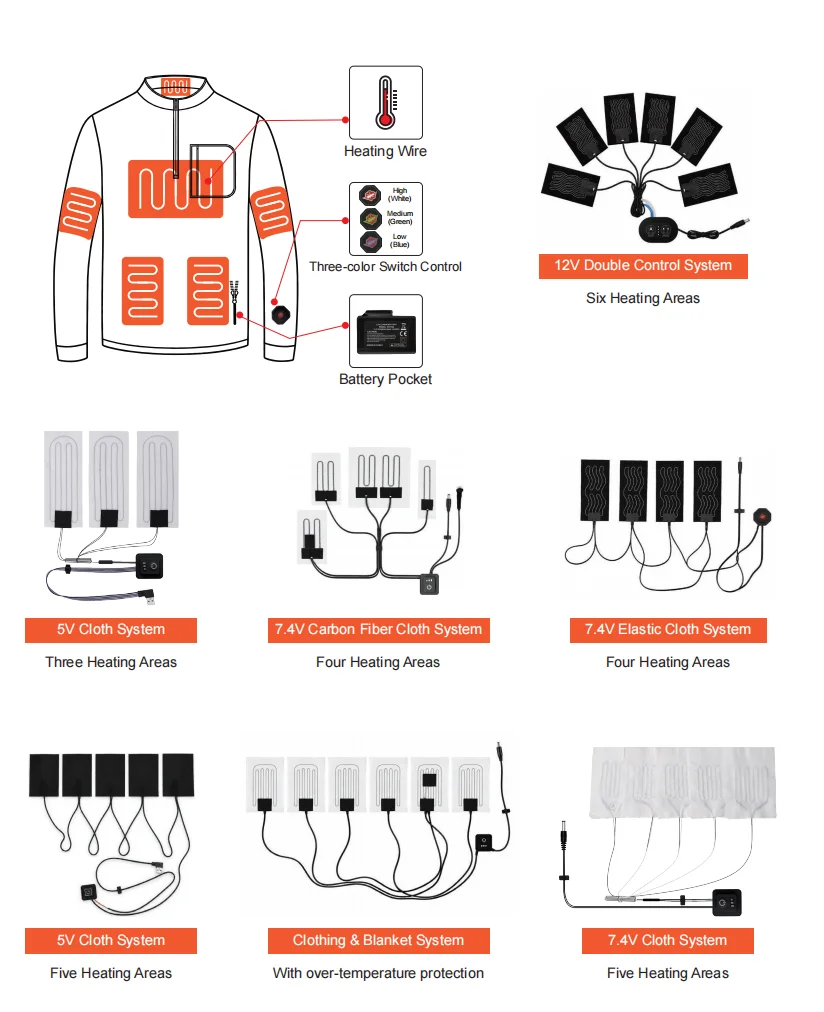
Heated apparel uses a small set of connector families — USB-A and USB-C, micro-USB, a DC barrel, a magnetic couple, and DC socket variants — and each one fails in its own way. That matters for triage, because the first thing to look at is which connector the garment uses.
- Magnetic couples release before they tear, which protects the cable, but the exposed contacts collect steel swarf, grit and snow. A magnetic vest that heats intermittently usually has a dirty contact face, not a broken controller.
- USB and micro-USB wear at the shell, not the pins. The socket loosens over hundreds of insertions and the plug starts sitting at an angle, which is exactly when “it works if I hold it” appears.
- DC barrel connectors bend pins. A bent centre pin still makes contact on one side, so the vest warms weakly and the fault is blamed on the battery.
- USB-C adds a negotiation step: a cable that only carries power will not wake a controller expecting a data handshake, and a damaged CC pin makes the pack look flat.
None of that is visible from a photograph, and all of it is settled by the connector choice made at sampling. It is also why a support script should ask for a close-up of the plug early, rather than asking the customer to describe the heat.
The support script: five questions, in order
Most of the value of a triage flow is in the questions, and five of them resolve the large majority of cases without a return. Ask them in this order and write the answers down; the pattern across a season is what tells a brand which component to redesign.
- Which model and which pack? Model and part numbers, not “the heated vest”. A mismatched pack explains a surprising share of weak-heat complaints.
- When did it start? First use, after a wash, after a specific day, or gradually. “After a wash” points at moisture; “gradually” points at a branch or a worn plug.
- Does the fault follow the pack? If the customer has not tried a second pack, that is the next instruction, not a return authorisation.
- Which zones are cold? One zone, one side, or everything. This separates a branch fault from a supply fault in one answer.
- Has it been powered up damp? Ask directly, and ask for a photo of the plug interior. Customers answer this honestly far more often than support teams expect.
When a restart is the wrong answer
Cycling the power clears a latch, and that is legitimate. But a vest that latches repeatedly is telling you something: a partial short, moisture in the connector or a pack that can no longer hold a stable output. Repeated resets hide the fault until it becomes a safety event. A burning or chemical smell, a pack that has swollen, a plug that is hot to the touch or a single point that stays hot whatever the setting are all stop-use conditions, with no second attempt. The same rule applies across the range — the sock version of this triage is in heated socks that fail to heat up, and the care side in waterproof heated sock care.

What brands should specify so the list gets shorter
Five lines in a specification prevent most of the returns described above: a captured connector that cannot be pulled sideways, a strain relief where the lead leaves the pocket, a service loop at the shoulder, a hardware over-temperature and short-circuit cut-out, and IPX4 electronics as standard with IPX5 available on request. Add a pack part number printed on the garment label — it removes the most common wrong-pack conversation in one line of print. Zone layout, capacity and fit trade-offs for the rest of the category are in the heated vest buying guide.
Frequently Asked Questions
Why is my heated vest not heating?
Work through it in order: charge the pack to full, swap in a second pack of the same model, re-seat the main connector and check for damp or crystalline deposit, then disconnect and reconnect to clear a protection latch. If the fault follows the pack it is the supply; if it stays with the vest it is the garment.
Why does only one heating zone work?
A single cold zone is a branch fault — the element or the wire feeding that zone. It is not repairable in the field and should go through warranty. The lower back is the usual suspect, because that is the zone a seat or a harness presses all day.
Can I use a battery from another heated vest?
Only if it is the same model or the same platform. A pack from another model can fit the plug and still drive the controller incorrectly, which shows up as weak heat or a controller that cuts out. Match the part number on the pack to the garment specification.
Why did my heated vest stop working after washing?
Almost always because it was powered up before the connector and the pocket were completely dry. Damp contacts corrode, and the fault appears weeks later as intermittent heating. Green or white crystalline deposit inside the plug, or a tidemark in the pocket, is the evidence that it has already happened.