A heated vest and an ordinary thermal vest are not competing for the same job. They both warm the torso, and neither warms the hands or the feet. Once a buyer sees that, the question stops being which one is warmer and becomes which kind of cold the crew actually has — and that answer changes from post to post on the same site.
Short answer: work has two kinds of cold, and a vest only owns one
Core cold is the torso losing heat faster than the body replaces it: standing still, wind on the chest, radiant loss to a cold surface. Peripheral cold is hands and feet going cold because the body has narrowed the blood vessels feeding them. A thermal vest slows the first. A heated vest reverses it. Neither touches the second directly.
That distinction is not a marketing split — it is how the body works. When core temperature starts to fall, the body protects the core by restricting flow to the extremities, which is why a worker can have a warm chest and numb fingers at the same time. It also explains the one genuinely useful side effect of torso heating: warm the core and the body stops defending it so aggressively, so the hands and feet often recover on their own. Reversing that logic is the expensive mistake — buying a vest to fix cold hands on a post where the hands are in the wind and the chest is already warm.
A vest has a structural quirk: the front and the back live in different conditions
The front panel faces wind, rain and whatever the worker is leaning into. The back panel spends the day against a seat, a rucksack or a harness. On top of that, a vest has no sleeves, so it has three open edges — two armholes and the collar — and heat leaves through an open edge far faster than it passes through fabric. That is why heating zones stacked on the torso outperform zones spread up to the shoulders, and why a heated collar is the cheapest useful addition on a sleeveless product.
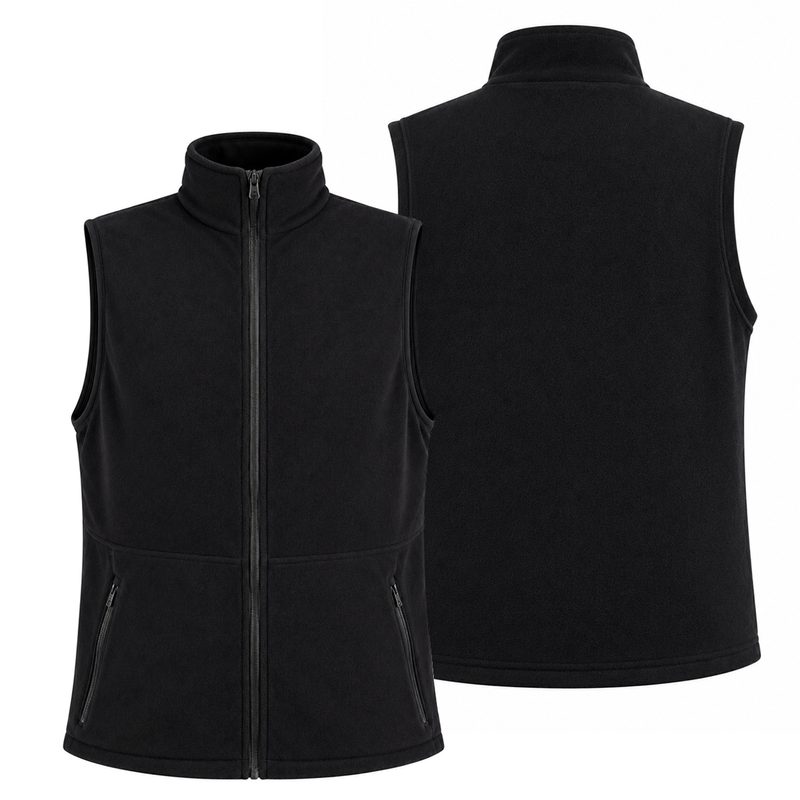
Workwear adds constraints that a consumer vest never meets. A full-body harness or a tool belt crosses exactly where the front panels sit, so the heating zone should be positioned to survive being pressed rather than to look symmetrical on a flat lay. Hi-vis tape is sewn on at fixed heights, and a heating element running underneath it creates a lump the wearer feels all shift. And on a multi-pocket work vest the battery pocket competes with the pockets the job actually needs — the pockets win, and the pack ends up in a chest pocket where it is uncomfortable.
Which post needs which: a duty-cycle table
The same site can contain both answers. Sorting the crew by duty cycle is more useful than sorting by job title.
| Post type | Dominant cold | Heated vest pays? | What to watch |
|---|---|---|---|
| Static outdoor post: gate, flagger, fire watch | Core | Yes — the clearest case | Low setting held all shift; pack reachable with gloves on |
| Cold store, chilled loading bay | Core, plus moisture | Yes | Condensation on every exit; drying routine matters more than capacity |
| Scaffold, steel erection, work at height | Core | Yes, with conditions | Harness pressure on the front panels; nothing loose to snag; fit close to the body |
| Maintenance and inspection, in and out of buildings | Core, intermittent | Yes, as a removable mid layer | Fast on and off; switch that does not need bare hands |
| Continuous movement: groundworks, forestry, loading | Peripheral, plus sweat | Poorly — a thermal or fleece mid layer wins | Wet insulation is colder than dry insulation |
| Fine hand work: electrical, welding, assembly | Peripheral | Secondary — the budget belongs in gloves | Torso heating helps indirectly, but hands need their own answer |
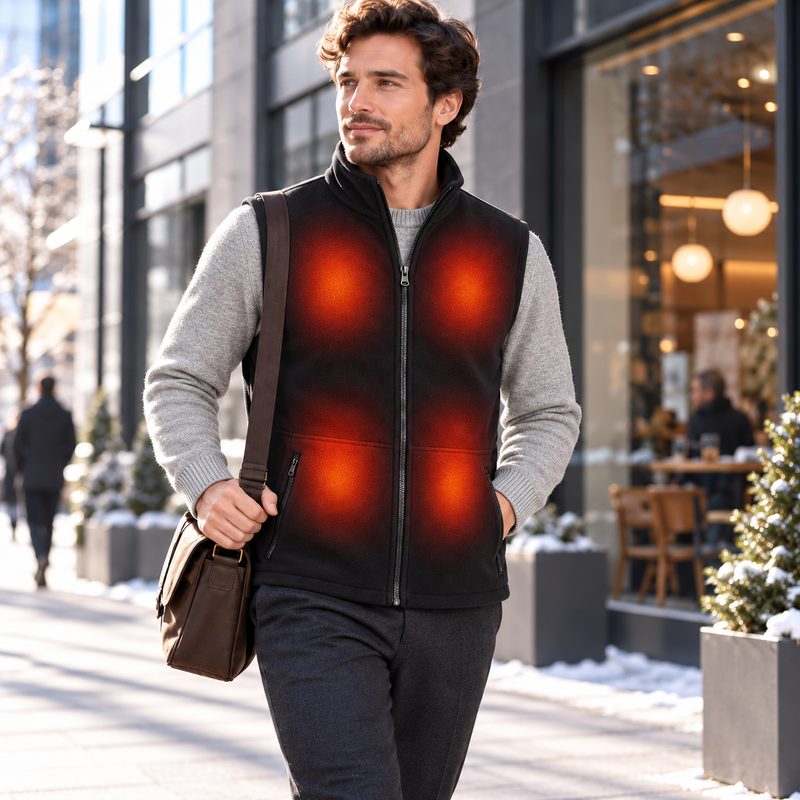
The kit maths: a vest is the easiest heated garment to buy for a crew
Procurement arithmetic is where the vest quietly wins. It has no sleeves, so there is no sleeve length to get wrong and no left-right pair to match; a crew needs a size distribution, not a fitting session. A glove or a sock is bought per hand or per foot and has to fit within a boot or a shell; a vest is bought per torso and sized like a jacket. For a buyer equipping thirty workers, that is the difference between one purchase order and three fittings.
It is also the easiest category to standardise on one battery platform, because the pack lives in a pocket rather than on a joint, and one voltage decision covers the whole order — see the heated vest buying guide for how the zones, capacity and fit interact. The counterweight is fit tolerance: a vest has to sit close enough for heat to reach the body and loose enough for the worker to move. A vest sized like a coat loses most of its output to the gap.
| Decision | Thermal vest | Heated vest |
|---|---|---|
| Cost per worker | One garment, one size range, no spares | Garment plus pack; a spare pack per crew is the realistic allowance |
| Laundry | Survives contract laundering | Pack out, plug capped, and out of industrial wash cycles |
| Failure mode | Loses loft, stops insulating, still wearable | Stops heating but still wears as a normal vest |
| Best evidence it was worth it | Crew keeps wearing it in mild cold | It gets switched on, and the packs come back on charge |
Where a thermal vest genuinely wins
Being straight about the other side matters more in workwear than in consumer content, because a bad specification is discovered by thirty people at once. Four situations belong to the ordinary vest.
- Contract laundering. A thermal vest survives an industrial wash cycle; a heated one does not. If the garment goes into a laundry contract, the electronics are out of the rotation by definition.
- Wind and wet as the dominant load. Heating adds heat but does not stop wind or rain. On an exposed post, a windproof shell over a thermal mid layer does more than a heated vest under a permeable jacket.
- Continuous sweat. A moving worker who is damp at the end of the shift needs dry loft, not more input; wet insulation loses more than a battery can add.
- Sites that restrict personal lithium devices. Some industrial and mining sites do, and that settles the argument before comfort is discussed.
In practice the sensible answer is usually mixed: thermal mid layers for the whole crew, heated vests for the posts that stand still, and heated gloves only for the jobs where the hands are the problem. That is the same budget logic that applies to footwear in construction and cold storage — heat is bought per body region, not per worker.
Hi-vis and heating are two separate claims — do not let them merge
Work vests are often specified for visibility, and visibility is a performance standard: EN ISO 20471 in Europe, ANSI/ISEA 107 in the US, based on fluorescent background material and retroreflective tape. Cold-weather performance is a different standard family again, and the heated function sits in a third place — battery and electronics compliance. Adding a battery does not make a garment hi-vis, and a heating system does not count towards the thermal resistance of a cold-weather garment. The two have to be specified, tested and claimed separately.
What a heated vest can actually document is the electrical side: CE and UKCA marking, IEC 62133 for the cells, UN38.3 for air freight, RoHS and REACH for materials, an ingress rating on the electronics (IPX4 as standard, IPX5 on request), and for the Chinese market GB 47372-2026 with CCC. Anything printed on the garment, the pack or the box becomes the importer’s claim the moment it clears customs, which is the same boundary that applies to workwear specs in the sock category.
Layering decides how often it gets washed
The layer a vest is worn in sets its wash frequency, and wash frequency sets its life. Worn against the skin, it collects sweat and has to be washed every shift. Worn as a mid layer over a base layer, it touches almost no sweat and can go weeks between washes. For workwear that is the strongest argument for the mid-layer position — and the same logic that governs choosing a heated vest by layering position.
What a mid layer has to get right is different, though: the armhole has to clear whatever shell goes over it, the battery pocket must not be buried under the outer layer, and the front zip has to be operable with gloves. Those three details decide whether a heated vest is worn or left in the locker.
Custom heated vests for workwear brands
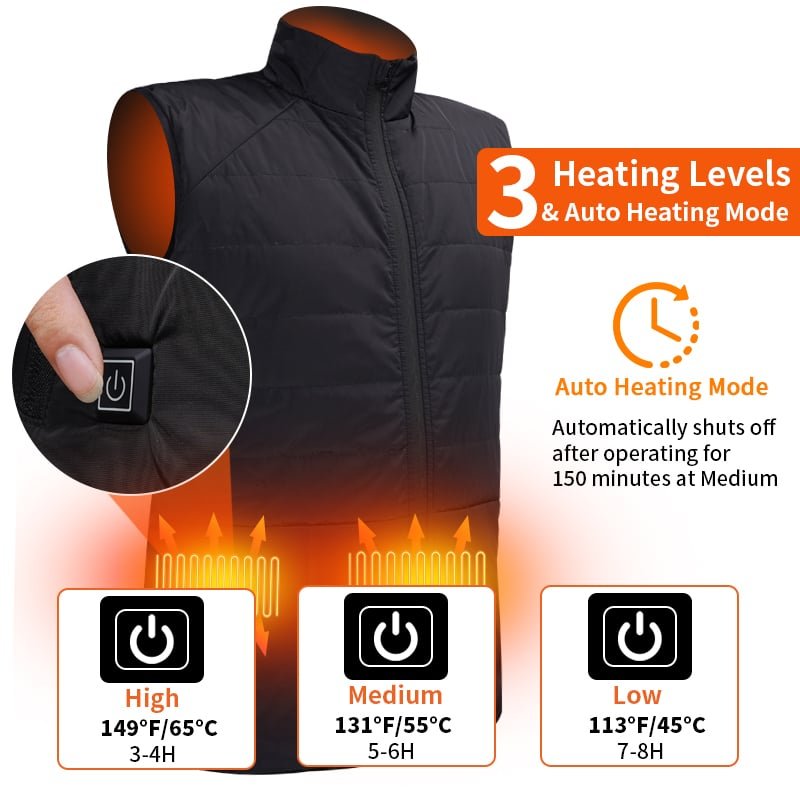
Dr. Warm develops heated vests on the same platform as the rest of the range: 3.7V, 5V, 7.4V and 12V battery options, chest, abdomen and back zones positioned for harness and tool-belt pressure, detachable packs, glove-operable switches, and hi-vis-compatible construction where the tape run is specified up front. OEM from 100 pieces, ODM from 500, with compliance documentation for CE, UKCA, UN38.3 and GB 47372-2026.

Frequently Asked Questions
Are heated vests better than thermal vests for cold weather work?
It depends on which cold the crew has. On a static outdoor post the torso loses heat faster than the body replaces it, and a heated vest is the only garment that adds heat back. On a post where the hands are in the wind and the chest is already warm, the budget belongs in gloves instead.
Do heated vests keep your hands and feet warm?
Sometimes, indirectly. Warm the core and the body stops restricting blood flow to the extremities, so hands and feet often recover without their own heat source. Where the hands face wind directly, they still need gloves.
Can a heated vest replace a thermal mid layer?
No. A heated vest adds heat but does not block wind or rain, and its most effective position is inside a windproof shell rather than instead of one. The practical combination is a thermal mid layer for insulation with a heated vest over it to top up.
Are heated vests hi-vis certified?
Not through the heating function. Visibility is certified against EN ISO 20471 or ANSI/ISEA 107, based on fluorescent material and reflective tape, while the heating side is battery and electronics compliance. The two are specified, tested and claimed separately.