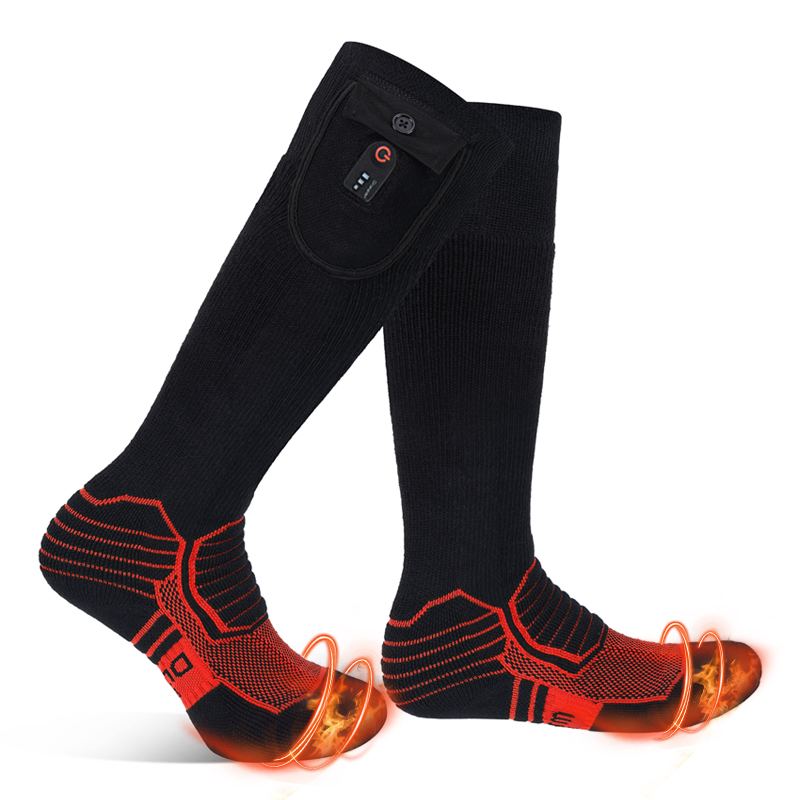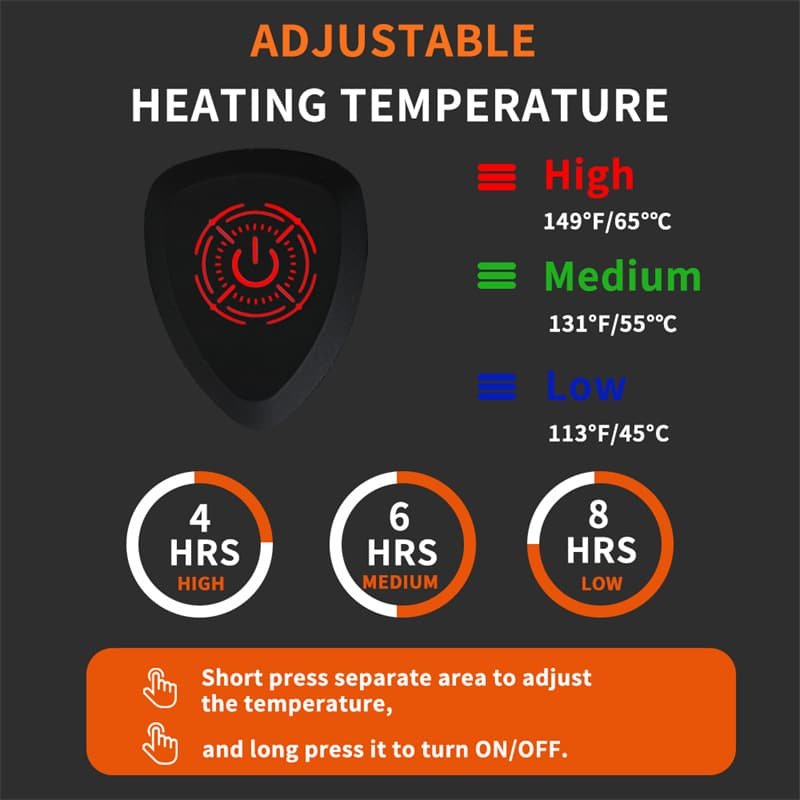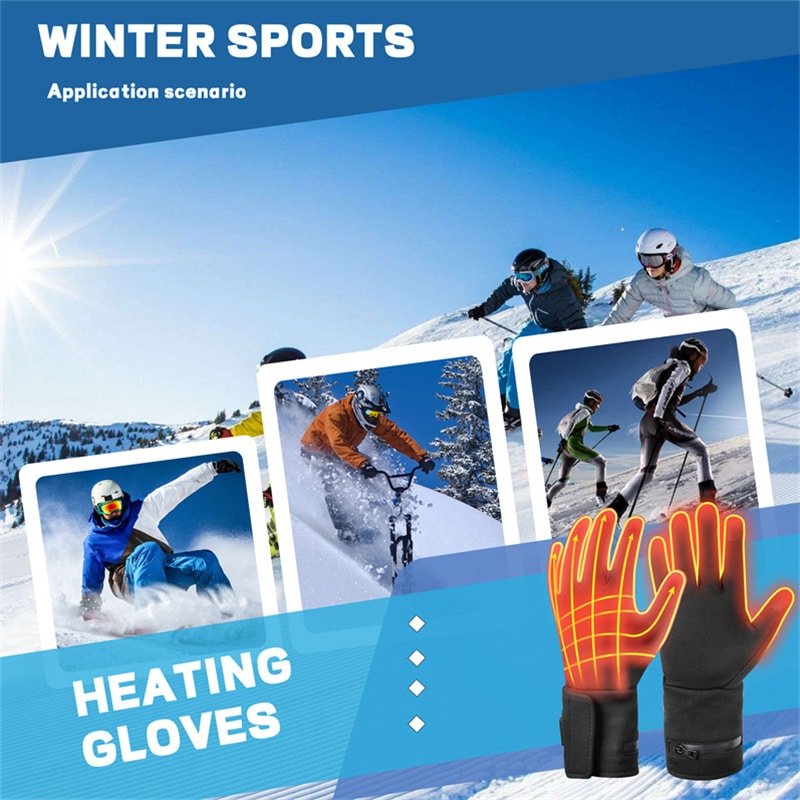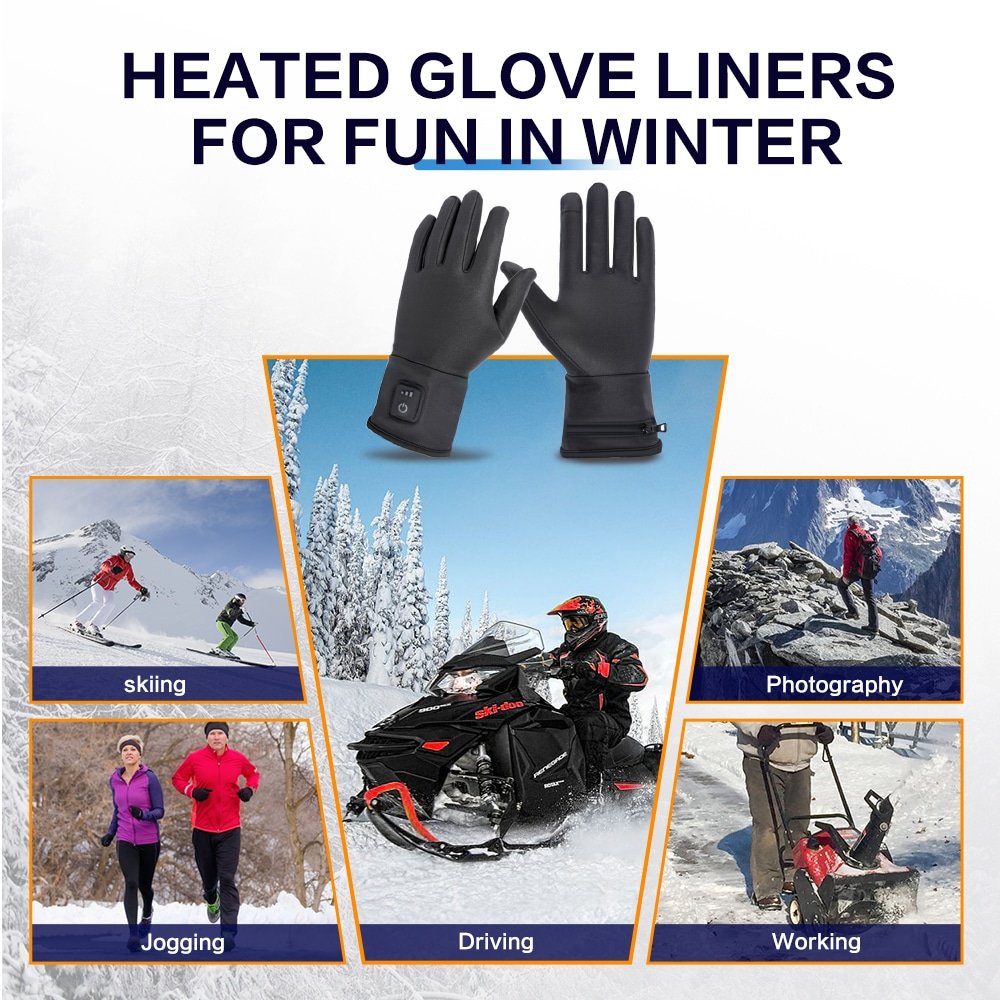

Short answer: a heated sock meets three kinds of water — snow and rain from outside, sweat from inside, and the wash — and no construction stops all three well. A waterproof membrane keeps the outside out and the inside in, so the most waterproof sock is also the dampest one after an hour of walking. Care is therefore about matching the sock to the wet it will actually meet, then protecting the two places that fail first: the cuff and the battery pocket.
This is the part a care label cannot explain, because the label describes the fabric and the problem is the physics. What follows is what each of the four waterproofing words on a retail box actually promises, where water really gets in, and the one mistake that quietly writes off more socks than a whole winter of snow.
A waterproof membrane is also a vapour barrier
Waterproofing a sock means laminating a membrane into it, and a membrane that stops liquid water from entering also resists water vapour leaving. The foot produces sweat continuously — more when walking, more again inside a boot, and most when the temperature swings between a heated element and cold air. So the sock that keeps out the deepest snow is the sock that holds the most moisture against the skin.
That single trade-off decides whether the waterproof version is the right product at all. For standing still in snow, ice fishing, snowmobile riding and long exposed work, the outside is the bigger threat and the membrane earns its cost. For walking to a station in slush, the inside is the bigger threat: a breathable knit with a water-resistant foot and a sealed battery pocket will leave the foot drier, and the user will describe it as warmer even at the same wattage.
The test is simple and does not need a lab. Wear the sock for an hour in the boot it is meant for, then feel the lining at the sole and the toe. Damp after an hour of ordinary walking means the sock is over-specified for that use, not that it leaks.
Four words on the box, four different promises
| Term | What it usually means | What it stops | What it does not stop |
|---|---|---|---|
| Moisture-wicking | A yarn that moves sweat away from the skin | Nothing external — this is a comfort property | Rain, slush, a wet boot |
| Water-resistant | A finish or a tight knit that slows absorption | A splash, damp grass, melting snow on the way in | Standing water, or pressure against a wet surface |
| Splash-resistant | A coating or a light membrane at the foot | Short contact, spray from a wheel or a wet deck | Immersion, long contact, water arriving at the cuff |
| Waterproof | A laminated membrane with taped or sealed seams | Snow, slush and long wet exposure at the foot | Water entering at the cuff, a soaked battery pocket, or a membrane worn through at the toe |
There is no harmonised definition of any of these four words under CE or UKCA, and a sock is rarely submitted for immersion testing because the cuff is an open edge — which means the claim has to be read as a description of construction rather than as a measured rating. Ask what the membrane is, which seams are sealed, and whether the cuff has a closure. Those three answers can be compared between suppliers; the word on the box cannot.
Three places water actually gets in

Almost no water gets through a membrane in the middle of the foot. It arrives at the edges, and there are three of them.
- The toe. The membrane and the element meet the inside of the boot at the point of maximum pressure and friction, so this is where a laminate wears through first and where a break appears as a cold toe rather than as a leak.
- The cuff. The sock opening faces upwards inside a boot or a trouser leg, and that is where snow sits when a wearer kneels, falls or wades. A waterproof foot with an open cuff is a bucket with a hole at the top — the same geometry as a glove gauntlet.
- The battery pocket and the plug. The lowest, coldest and most handled part of the system. Every insertion wears the seal slightly, and a pocket that does not close completely is a direct route for meltwater to the connector.
Washing is the biggest water risk, and it is entirely controllable

A sock is worn next to the skin every day, so it gets washed far more often than any other heated garment — and washing is the largest single cause of care-related failure in the category. The routine that works is short.
- Before washing: switch off, disconnect both packs, remove any detachable controller, tuck the cable into its pocket, close the pocket flap, and check the plug for damage. Never wash a pack or a charger.
- Wash: hand wash in cool water, or a delicate machine cycle inside a mesh bag only if the care label permits it. Mild liquid detergent, no bleach, no fabric softener where prohibited, no dry cleaning unless stated.
- Water out: press the water out between both palms or against the side of the basin. Do not wring, twist or pull — the element is laminated, and twisting is what separates a laminate.
- Dry: air dry in a ventilated place, out of direct sun, away from radiators, stoves, hot-air guns and heated cupboards.
The care label on the specific product governs, because the correct method follows the yarn, the laminate and the connector construction rather than the category. Our heated sock specification guide covers how those choices are made at the design stage, which is also the point at which washability is decided.
| What people do | Verdict | What it does to the sock |
|---|---|---|
| Hand wash, cool water, pressed dry | Best | Nothing — this is the method the construction is designed to survive |
| Delicate cycle in a mesh bag | Acceptable if the label allows it | Gentle agitation; the bag protects the laminate from other items |
| Normal cycle with a hard spin | No | Centrifugal force separates the laminate and works the element loose at the toe |
| Wringing or twisting by hand | No | The single fastest way to crease the heating layer |
| Radiator or heated cupboard | No | Local hot spots dry one area while the pocket stays damp |
| Tumble dryer, any setting | No | Heat plus tumbling is the worst combination for a laminated element |
| Reconnecting the pack while still damp | Never | Corrodes the connector pins — see the next section |
The one mistake that costs the most: powering up damp
A sock that is 95 percent dry will heat. It will also corrode the pins in its connector, slowly, invisibly, and permanently. Current passing through a damp contact drives electrolytic corrosion, which builds a resistive film on the pins; the symptom arrives weeks later as intermittent heat, a button that needs several presses, or one sock that works only when the plug is wiggled.
By the time it shows up, the cause is historical and the part is not repairable. Two checks settle it: look inside the plug for green or white crystalline deposit, and look inside the pocket for a tidemark. Either one means the sock dried incompletely before it was powered — which is a care issue, not a build issue, and worth distinguishing before a warranty claim is filed. Our fault guide for socks that will not heat separates that case from a genuine electrical failure step by step.
Storing them between seasons
Clean, fully dry, packs removed, no sharp folds across the foot, connectors kept away from metal objects, and the pack stored at partial charge in a cool dry place rather than flat or permanently full. Fold the sock along its natural curve instead of creasing it through the toe, because a crease held for six months becomes a stress point for the element in the first week of the next winter.
Dr. Warm builds heated socks for brands, distributors and retailers on 3.7V and 7.4V platforms, with laminate construction, membrane choice, cuff closure, pocket sealing and washability specified together rather than chosen separately. The compliance file behind a sock order covers CE, UKCA, UL, FCC, RoHS, Reach, UN38.3, DOE, ISO 9001 and GB 47372-2026 with CCC. If the wet conditions in your market are the deciding factor, send the use case and the boot type through our OEM and ODM service and we will specify the membrane and the cuff around them. The finished range is on our heated sock category page.
Frequently Asked Questions
Are heated socks fully waterproof?
Almost never fully, and the honest description is water-resistant at the foot with a sealed battery pocket. A sock has an open cuff, so it cannot be tested as a sealed product, and there is no harmonised definition of waterproof for garments of this type under CE or UKCA. Ask which membrane is used, which seams are sealed and whether the cuff has a closure instead of relying on the word.
Can heated socks be machine washed?
Only if the care label permits it, and then only on a delicate cycle inside a mesh bag with both packs removed and the plug left unconnected. Hand washing in cool water is the gentler option for any laminated construction. Never tumble dry, and never reconnect a pack until the sock and the connector are completely dry.
Why do my feet feel damp inside waterproof heated socks?
Because a waterproof membrane is also a vapour barrier. It keeps snow out and holds sweat in, and a heated foot sweats more because the temperature keeps swinging. For walking and commuting, a breathable knit with a water-resistant foot usually leaves the foot drier than a fully waterproof version at the same wattage.
What happens if I switch on a sock that is still damp?
Current through a damp connector drives electrolytic corrosion on the pins. The sock may still heat, then fail weeks later as intermittent heat or a button that needs several presses. Green or white crystalline deposit inside the plug, or a tidemark inside the battery pocket, is the evidence that it has already happened.
Related Reading
- How to Wear Heated Socks Without Discomfort
- Heated Socks Buying Guide: Specs, Warmth, Control and Care
- How Long Do Heated Socks Last? Battery Life Explained
- 3.7V vs 7.4V Heated Socks: Which Battery Version Matches Your Scenarios
- Are Battery Powered Heated Socks Suitable for Skiing and Winter Hunting
- our heated sock range