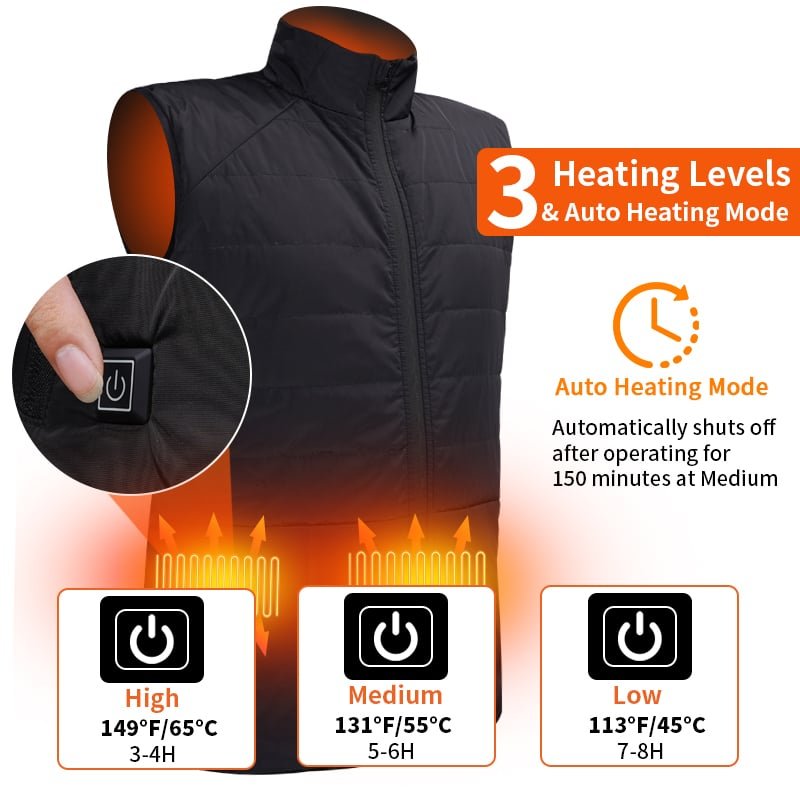
Quick answer: Choose a heated jacket when you need one complete outer layer with weather protection, sleeves and a hood. Choose a heated vest when you want core warmth, lighter weight, easier layering under a shell and unrestricted arm movement. Both can run the same electrical platform — the difference is the garment, how many heating zones it carries, and how you intend to layer it.
This comparison is written for buyers building a winter range and for end users choosing one product. It covers warmth, layering, battery and runtime, temperature settings by model, practical use cases and the OEM implications of offering both. If you are sourcing rather than buying a single garment, our OEM and ODM service explains how the two are developed on one platform.
Jacket or Vest: The Decision in One Table
| Buying factor | Heated jacket | Heated vest |
|---|---|---|
| Coverage | Core plus arms, hood and full shell | Core only: chest, abdomen, back |
| Layering | Worn as the outer layer | Base, mid or under a shell |
| Weather protection | Wind, snow and rain shell built in; IPX4 standard, IPX5 optional | Depends on the outer layer worn over it |
| Arm mobility | More fabric and insulation at the shoulders | Unrestricted; preferred for cycling, climbing, hunting |
| Typical heating zones | Chest, back, collar, shoulders, sleeves, pockets | Chest, abdomen and back, commonly four zones |
| Weight and packing | Heavier, needs more storage space | Lighter, packs small, easy to carry as a spare layer |
| Best fit for | Skiing, motorcycle riding, static outdoor work, long cold exposure | Commuting, winter cycling, hunting, indoor-outdoor work |

Which One Is Actually Warmer?
These are two different questions. A heavily insulated heated jacket gives better whole-body weather protection because it is a closed outer layer that also warms the arms. A close-fitting heated vest worn under a windproof shell can be just as effective at keeping the core warm, because the heat is held close to the body and the outer shell traps it.
In other words: warmth at the core is mostly a function of contact, fit and the outer layer, not of how many square centimetres of garment are heated. A loose jacket that lets cold air in at the hem can feel colder than a snug vest under a shell. This is why fit is the first thing to check on a sample.
Temperature Settings Are Specified by Model
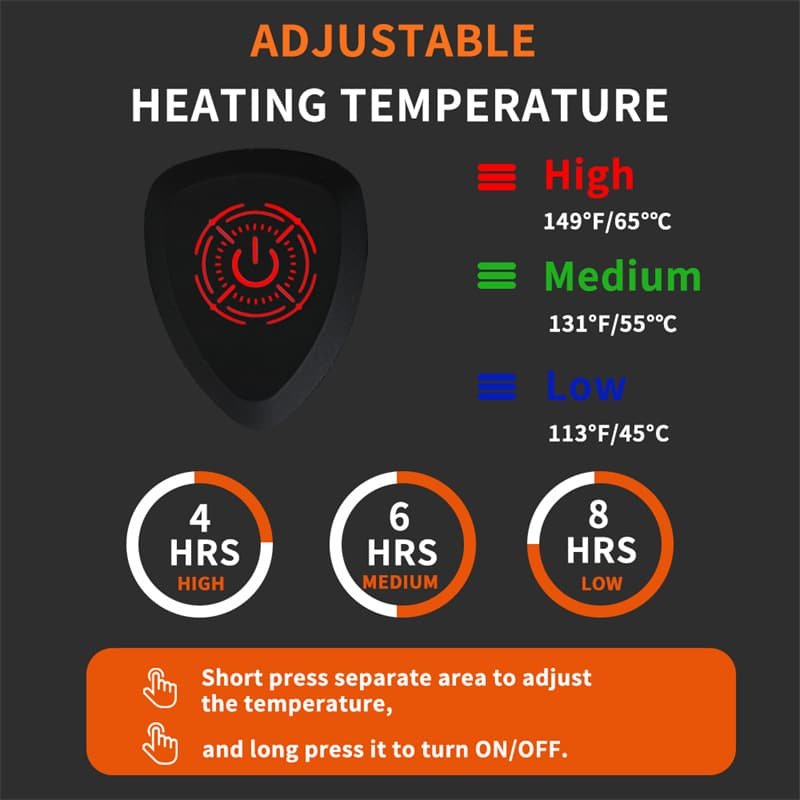
There is no single temperature for “heated jackets” or “heated vests”. On the standard garment platform used across jackets, vests, base layers and heated trousers, three levels run Low 35-40°C, Medium 45-50°C and High 55-60°C. A high-specification jacket using PTC and carbon-fibre elements runs Low 40-45°C, Medium 50-55°C and High 60-65°C. All values are in degrees Celsius; settings are matched to the specific model, so compare the specification sheet of the two products you are considering rather than the category.
A practical rule for users: start on Low or Medium and step down once comfortable. The highest setting is for rapid warm-up in severe cold, not for all-day wear. It also draws more current, which shortens runtime.
Battery, Runtime and Charging
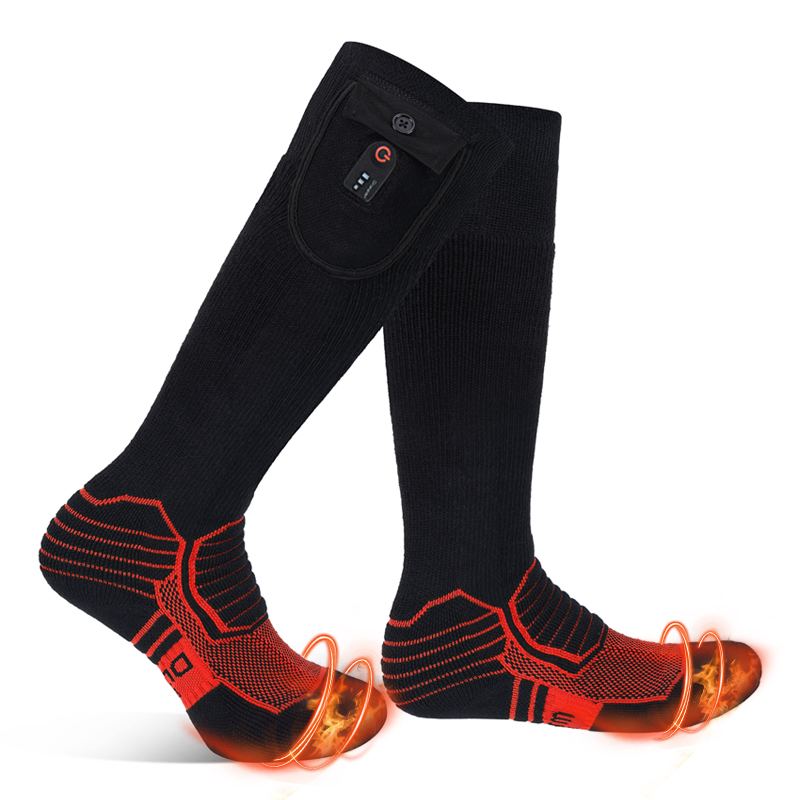
Both garments can be built on 3.7V, 5V USB, 7.4V or 12V platforms, with 24V available as a custom build for industrial use. Many vests use a 5V USB power-bank system, while most jackets and gloves use 7.4V; a high-output 12V jacket is a separate platform. Battery capacity is configured to the order rather than fixed, so runtime depends on four things together: capacity, the number of active zones, the selected heat level and ambient temperature.
| Platform | Commonly used for | Charger output |
|---|---|---|
| 5V USB power bank | Selected vests, scarves, seat pads | 5V / 2A or 5V / 3A |
| 7.4V | Most jackets, gloves, socks | 8.4V / 1.5A |
| 12V | High-output jacket platforms | 5V / 3A |
Fewer active zones generally mean lower draw, which is why a four-zone vest can run longer than a six-zone jacket on a comparable pack. But do not compare advertised hours across products without checking the heat level used — our battery runtime guide explains why those numbers are not comparable.

Choose by Use Case
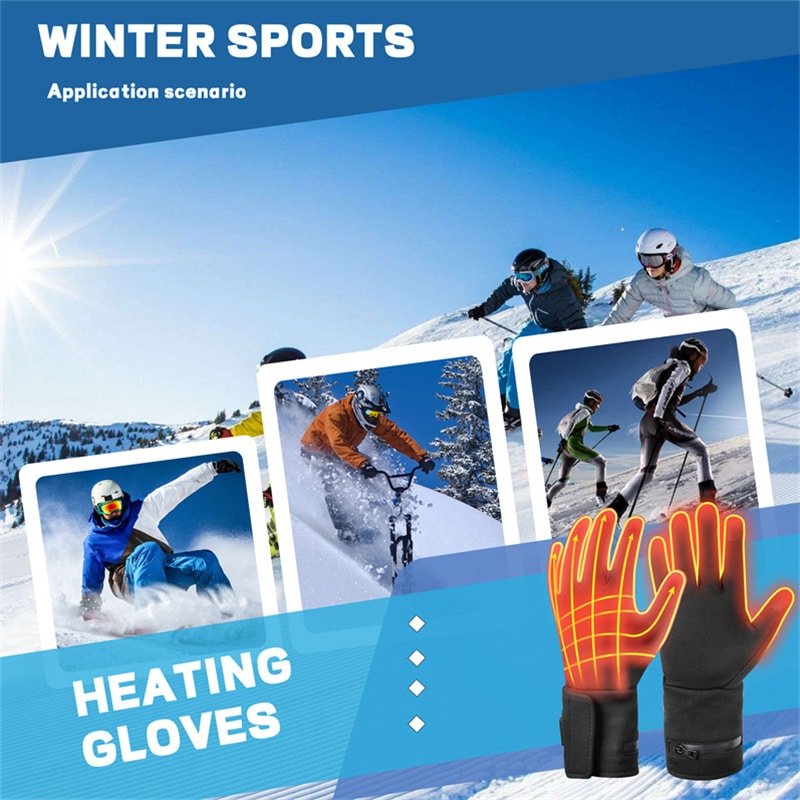
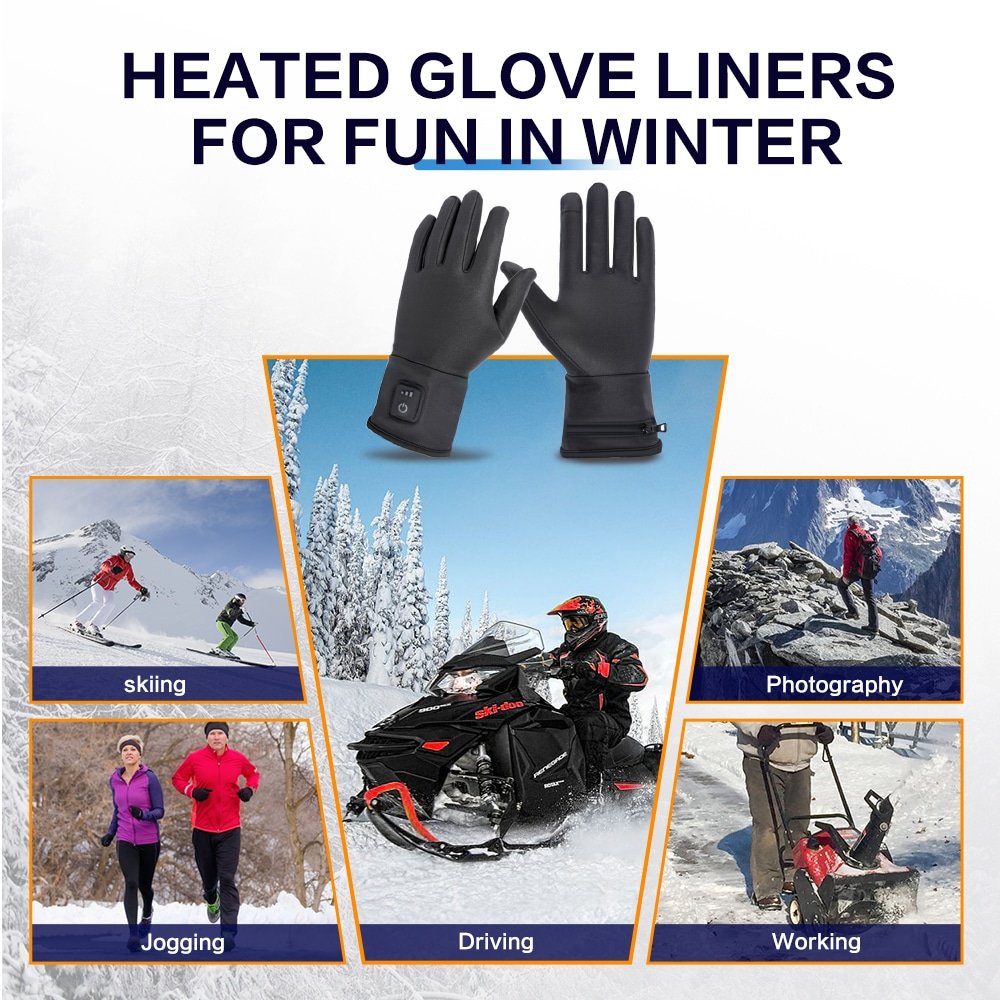
- Skiing, snowboarding, motorcycle riding: jacket — wind and snow protection plus arm coverage at speed.
- Static outdoor work, ice fishing, spectating: jacket — lower activity means less metabolic heat.
- Winter cycling, climbing, hunting: vest — shoulder mobility and easier ventilation during exertion.
- Commuting and indoor-outdoor work: vest — layers under a normal coat, packs away indoors.
For a wider view of vest selection by activity, see the heated vest buying guide; for troubleshooting a vest that is not heating, see common failure modes.
What This Means for a Private-Label Range
Most brands end up offering both, because the two products serve different customer groups and different price points. Developing them on one electrical platform keeps the controller, battery, charger and compliance documentation common, which reduces tooling and after-sales complexity. The variables that still need separate decisions are the pattern, fabric, number of heating zones and packaging.
On this site the MOQ is 100 pieces for OEM, 500 pieces for full ODM development and 1 piece for a stock sample. Sampling runs 7-30 days, OEM production 20-25 days and full ODM development 50-60 days. Warranty is 12 months. Browse the heated vest range or the heated jacket range to see existing platforms before requesting samples.
Building a winter range? Tell us your market and target price band and we will map the jacket and vest platforms to your brief.