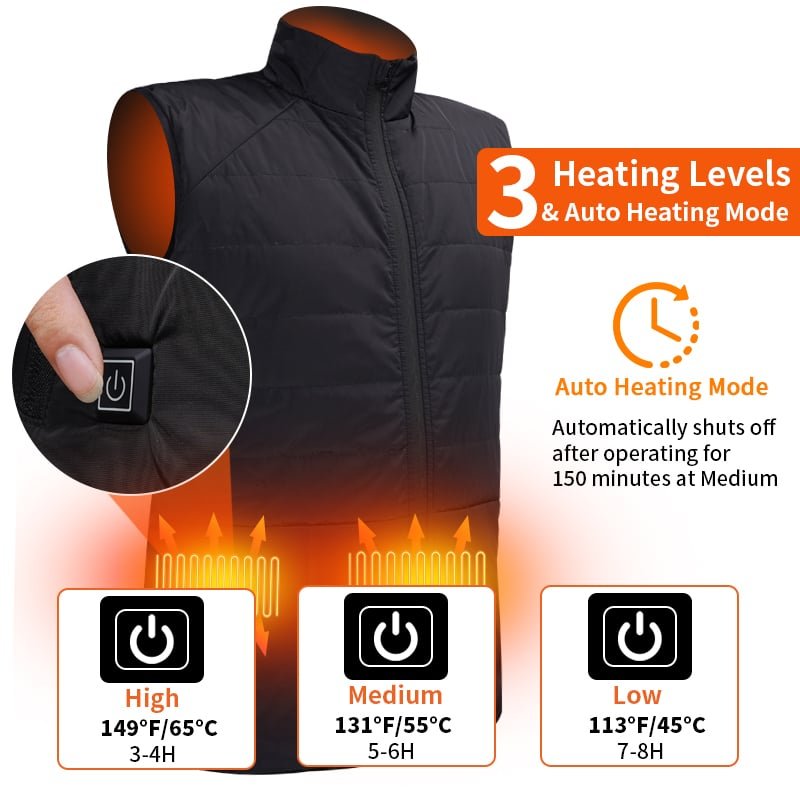

Most compliance questions from buyers are simple. This one is not, because heated apparel batteries are hybrids. A pack that warms a jacket for six hours may also charge a phone from the same USB port, and the moment it does, it stops being only a garment component.
The standard that created the question is GB 47372-2026, the Safety Technical Specification for Portable Power Supplies. It was released on 31 March 2026, takes effect on 1 April 2027, and applies to portable power banks and portable power stations placed on the Chinese market.
Why the boundary question comes up now
Two dates drive it. The first is 1 April 2027, when the standard becomes mandatory. The second is the CCC regime, which brought lithium-ion batteries under compulsory certification with enforcement phased in through 2025 and 2026.
Between those two, buyers who source heated apparel from China are being asked a question their suppliers may not answer precisely: is this pack a registered power bank, or is it a component inside a garment? The answer changes which tests apply, who holds the certificate, and what paperwork travels with the shipment.
What the standard actually covers
GB 47372-2026 is a product-level standard. It is built on top of two general mandatory standards, GB 31241 for cells and packs, and GB 4943.1 for the electronics, and adds five requirements on top:
- Cell-level abuse testing, including a nail penetration test that forces an internal short
- Lithium-plating detection after cycle ageing, not only on fresh cells
- Real-time monitoring of voltage and temperature, with on-board storage of abnormal-event data
- A unique product code on each unit, so the cell supplier and production batch can be traced
- Incoming-material and in-process controls, rather than final-inspection-only quality control
Note what it does not do. It does not replace GB 31241 for cells, and it is not a blanket rule for every lithium battery in every Chinese product. It is aimed at the portable power supply as a finished product that a consumer carries and uses to charge things.
That distinction is where heated apparel gets interesting.
Three configurations, three different answers
In practice the packs in this category fall into three groups.
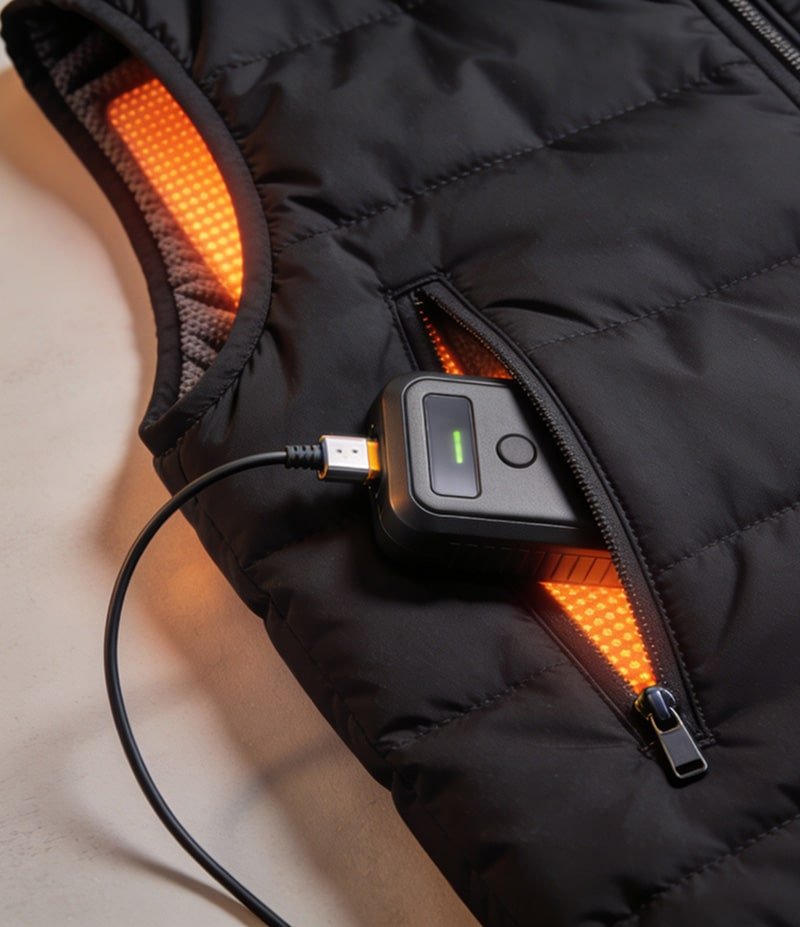
1. A 5V pack with USB output
This is the closest thing to a power bank inside a garment. It stores energy, outputs 5V through a standard port, and a customer can charge a phone from it. Functionally it duplicates a power bank, so the usual reading is that it sits inside the scope of GB 47372-2026 as a portable power supply.
2. A 7.4V or 12V pack with DC output only
These packs exist to drive a heating element through a dedicated connector. There is no user-facing charging port for other devices. On the usual reading, that is a battery pack for an appliance rather than a portable power supply, so GB 47372-2026 does not reach it, while the cell and pack requirements of GB 31241 still do.
3. A multi-output pack sold inside a garment
Here the power bank function travels with the product. A pack that ships inside a jacket but can charge a phone is still a portable power supply when it is used that way, so the documentation should treat it as one instead of burying the fact inside a garment specification sheet.
One caveat, and it is not a formality. Whether a specific model is in scope is a determination for the test laboratory or certification body, not for a website article. What the three configurations give you is a reason to ask a sharper question at the sampling stage, so you are not told “it’s fine” by someone who has not looked.
Seven questions to put to your supplier
These are the ones worth writing into a first call rather than a follow-up email.
- Does this pack have a USB output that can charge a third-party device, or is it DC-only?
- If it has USB output, has the pack itself been tested to GB 47372-2026, or have only the cells been tested to GB 31241?
- Is there a CCC certificate covering the pack as a portable power supply, and who holds it?
- Who is the certificate holder, and does that entity match the company signing your contract?
- Which abuse tests were run, and was nail penetration among them?
- Does the BMS log voltage and temperature and retain abnormal-event data that can be read back after a failure?
- Is there a unique code on the unit that traces back to a cell supplier and a production batch?
A supplier who can answer all seven without checking has done this before. A supplier who answers four and improvises the rest has not.
What to write into the purchase order
Compliance fails at handover more often than at design. Three lines prevent most of it:
- Name the standard and the scope. “Pack tested to GB 47372-2026 as a portable power supply” is a different instruction from “battery meets Chinese standards.”
- Name the certificate holder. If the pack carries a CCC certificate held by a supplier further up the chain, that relationship should be visible in writing.
- Name the shipment documents. A UN 38.3 test summary and an SDS per shipment, plus the test report and certificate copy at qualification.
Our own documentation set is published on the certifications page, and the pack options, voltage tiers and connector types are listed in the battery solution section.
What this means for a 2027 launch
If your pack is in scope, the transition period is the cheapest window you will get. Tooling, cell qualification and documentation can be changed while either standard is still allowed; after 1 April 2027 there is no such choice.
If your pack is out of scope, do not buy compliance you do not need. Specifying a power-bank-grade pack for a DC-only garment adds cost and weight without changing what the product has to prove.
The useful move now is classification, not procurement. Find out which of the three configurations you are buying, then spend accordingly.
In November 2026 we published the position our own packs are built to, including the five requirements above: Dr. Warm battery packs meet GB 47372-2026 early. For how this standard sits alongside CE, UL and DOE in a single compliance file, see battery safety standards for heated apparel. For what the tests themselves look like in practice, see battery safety compliance beyond CE, FCC and UN38.3.
FAQ
Does GB 47372-2026 apply to heated jackets sold outside China?
The standard governs products placed on the Chinese market. For export, CE, UKCA, FCC and UN 38.3 remain the baseline. Where the same pack is used across markets, building to GB 47372-2026 gives you one specification instead of two.
Is a 7.4V heated glove battery a power bank?
Only if it can output to charge another device. A DC-only pack that drives the glove through a dedicated connector is not a power bank on the usual reading, so GB 47372-2026 does not reach it, while the cell and pack requirements of GB 31241 still apply. Confirm the classification with your test laboratory.
Does CCC replace CE for heated apparel?
No. CCC is China’s compulsory certification regime; CE and UKCA cover the EU and UK. A pack sold in both markets needs both sets of approvals, and one does not substitute for the other.
If my supplier already meets UN 38.3, is that enough?
UN 38.3 is a transport test that allows the battery to be shipped. It is not a product safety approval, and it does not cover nail penetration, lithium plating after cycling, or BMS event logging.
Related Reading
If you are unsure which of your battery packs falls in scope, send us the spec sheets — our engineering team reviews them against GB 47372-2026 and the destination-market rules before quoting. See what buyers asked our engineers at ISPO 2026 in Amsterdam for the questions that came up most at the booth.