

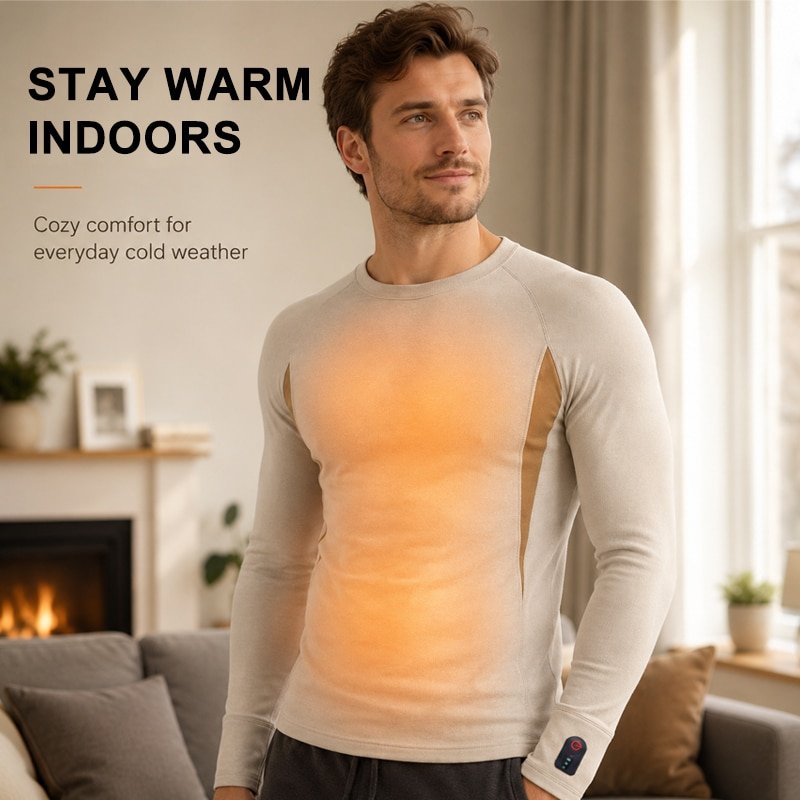
Choosing a heated clothing supplier is a bigger decision than choosing a garment factory. You are not just buying fabric and stitching – you are buying heating elements, electronic control systems, lithium battery packs and the compliance paperwork that lets your products clear customs. Get the partner wrong, and you inherit their quality problems, certification gaps and delayed seasons.
After years of working with brands across North America and Europe, we have seen the same failure patterns repeat. Here are the eight red flags we tell every buyer to check for – and what a reliable supplier looks like on each point.
Red Flag 1: Quotes Far Below the Market Floor
If one supplier quotes 30-40% below everyone else for the same specification, something has been removed. In heated apparel, the battery pack, heating elements and controller are the expensive parts. Low-ball quotes usually mean uncertified cells, thinner wiring, or heating zones that quietly disappear in production.
A credible supplier will explain its cost structure: cell brand and protection circuit, element type, and where the price moves if you upgrade or downgrade a component. Transparency here is a strength, not a weakness.
Red Flag 2: No Factory Audit, No Video Walkthrough
Trading companies and assembly brokers rarely refuse an audit outright – they just keep rescheduling it. If a supplier cannot offer an on-site visit, a third-party audit report, or at minimum a live video walkthrough of the production floor, ask yourself what they are hiding.
Established manufacturers welcome buyer visits and third-party inspections. Ours, for example, has been independently assessed on site by Intertek, and we walk buyers through the production lines, the electronics assembly workshop and the testing lab on request.
Red Flag 3: Missing or Vague Battery Certifications
The battery pack is the highest-risk component in any heated garment. If a supplier cannot show UN 38.3 test reports for transport, or talk specifically about cell protection circuits, overcharge and over-temperature cutoffs, walk away. In China, serious manufacturers also work to GB 47372-2026, a national standard for wearable heating products that is stricter than the European and American baselines.
Ask to see the certification scope, not just logos. A PDF of a certificate that names a different factory tells you the supplier is renting credibility.
Red Flag 4: Vague or Impossible Lead Times
Be careful in both directions. “We can do anything in two weeks” usually means someone is skipping prototyping and QC. And an answer like “it depends” with no range at all means the supplier does not control its own production calendar.
A real manufacturer will separate the stages: sampling in 7-30 days depending on customization depth, mass production around 45 days after approval, and a clear answer on what moves the timeline – fabric sourcing, battery supply, or certification paperwork.
Red Flag 5: Slow, Generic Communication
How a supplier answers your first ten questions predicts how it will handle your first quality problem. Template replies, answers that ignore half your questions, and salespeople who cannot connect you to an engineer are all warning signs.
Look for specific, technical answers within one working day, and direct access to the people who actually run production – not just a sales inbox.
Red Flag 6: No References, No Case Studies
A factory that has shipped real orders can show you something: product categories it has built for other brands (under NDA, without logos), export markets it serves, and reorder behavior. If everything is “confidential” and nothing can be verified, the track record probably does not exist.
Red Flag 7: Refuses to Share Test Documentation
Beyond certificates, ask for the working documents: incoming material inspection records, heating uniformity test data, battery cycle results, and the SDS (safety data sheet) for the cells used. A supplier that resists sharing test records is either hiding inconsistent quality or does not generate them at all.
Red Flag 8: One-Sided Contract Terms
Read the warranty and defect clauses before the price. Red flags include: no warranty commitment on electronics and batteries, rejection rates defined in the supplier’s favor, no tooling ownership for your custom molds, and payment terms that leave you with no leverage after deposit.
A balanced contract usually includes a 12-month warranty on finished goods, defined AQL standards, and clarity on who owns what was custom-developed for you.
The Quick Checklist
Before you shortlist a heated clothing supplier, confirm all eight:
- Quote explained component by component – not 30% below everyone
- Audit, third-party report or live video tour – offered without resistance
- Battery certifications shown with matching factory name (UN 38.3, GB 47372-2026, CCC)
- Lead times broken into sampling and mass production stages
- Technical answers within one working day, engineer access
- Verifiable product categories and export markets
- Test records and SDS shared on request
- Balanced warranty, AQL and tooling-ownership terms
Frequently Asked Questions
What is a reasonable MOQ for custom heated clothing?
For ODM development from an existing platform, 500 units per style is typical; for OEM customization of a proven product, 100 units; for ready-to-ship stock, single units. Anything far below this from a “factory” usually means they are sourcing from someone else.
How do I verify a heated clothing factory in China without visiting?
Combine a live video walkthrough of the production floor, a third-party audit report with a matching company name, and sample orders before any bulk commitment. Cross-check the business license, the certificate holder names and the bank account country.
Which certification matters most for heated clothing batteries?
UN 38.3 is mandatory for transporting lithium batteries, so it is non-negotiable for any import. For the product itself, look for CE and UKCA in Europe, FCC and UL/DOE in the US, and CCC plus GB 47372-2026 in China – the latter is currently stricter than the Western baselines for wearable heating devices.
Checking suppliers right now? Use our 9-point manufacturer checklist, or see how our OEM/ODM process works – sampling, certification and mass production under one roof since 2013.