
Introduction — Why Heated Gloves Are Becoming Standard Gear for Skiers & Snowboarders
Being an experienced ski teacher with more than 15 years working in the slopes of such resorts like Aspen and Whistler, I have personally experienced how the extreme cold, chilling wind and high altitude exposure to cold are the most devastating to hands. Fingers have a high surface area and a thin skin that is quickly lost to the cold in sub-zero conditions causing them to become numb so they have little control and enjoyment. It is at this point that heated gloves used in skiing and heated gloves used in snowboarding come in as both game-changers. Not the niche gadgets anymore, these best heated gloves in winter sports combine the high-tech features to provide a steady flow of warmth, and no winter sports enthusiast will want to go without the best hand protection.Traditional gloves cannot keep hands operating in places where the cold drops to -10degC to -25degC or below, but the use of heated ones guarantees keeping hands operational and minimizing risks and time spent on the mountain.
The Essential Reasons Heated Gloves Matter Most for Winter Sports
Regarding the reasons behind Skiers and Snowboarders wearing heated gloves, the priority of protection against cold-induced impairments that pose a threat to safety is the main concern.
Preventing Cold Hands That Reduce Control & Reaction Time
Cold fingers also become rigid after a short time and lose their ability to hold onto the ski poles or the snowboard sides and reduce the response time, which is very important when making a sharp turn or stopping in an emergency. Skiing gloves are heated in order to keep hands warm so that the blood flow is not impaired and skiers are able to brake at the speed of 60 mph. Having numb hands are causing unnecessary falls in my coaching experience; the adoption of battery heated ski gloves have made students more confident and precise again.
Protecting Against Frostbite in Extreme Conditions
Mountains intensify cold to cold wind chills reaching down to -30degC and below with effective temperatures that risk frostbite in exposed hands in as little as 30 minutes. Snowboard heated gloves deliver heat to the areas which are vulnerable, and this forms a barrier to the dangers. I have witnessed instances during backcountry excursions when bare hands got blistered- big safety alert: It is always best to look at equipment that will protect against extreme cold lest it becomes damaged forever.
Maintaining Dexterity for Poles, Bindings & Adjustments
Simple tasks such as clipping into bindings or snapping on goggles are dangerous and this exposes potential accidents with numb fingers. Skiing gloves with heating keep hands flexible so that they are handled without removing the gloves. This is critical to the dexterity of the snowboarders who frequently kneel to fit the straps lest they slip on the icy slopes.
Improving Overall Safety During High-Speed Descents
Cold slows down neural activity, decelerates reaction time by up to 20 percent and increases the risk of crashing in steep runs. This is reduced by snowboarding warm gloves that help to maintain heat to sharpen attention to avoid obstacles. Cold-related incidents recorded by ski patrols indicate that the use of heated gear greatly reduces cold-related incidents, which illustrates the importance of heated gear in ski performance during cold weather.
Key Advantages Heated Gloves Provide on the Slopes
In addition to the fundamental safety precaution, the heated gloves in extreme cold provide certain convenience benefits that make the experience more effective.
Stable Warmth in Changing Conditions
Slopes are all over the place–sunny mornings are followed by windy afternoons and cold magnified by wind chills. Ski heated gloves are adjustable to current conditions, which gives them the same coziness throughout changes compared to passive insulation, which does not work in wet snow.
Better Blood Circulation in Hands
Increased heat promotes vasodilation which enhances circulation to extremities and overcomes the natural response of vasoconstriction during cold. This implies long mobility, which is required in long downgrades where cold-weather gloves protection eliminates the development of fatigue.
Less Layering → More Flexibility
Bulky liners do not move easily, heated alpine skiing gloves do not need this, and provide slim profiles to allow the free movement of arms and poles. Skiers I have equipped state that they feel more agile, and they are able to turn difficult runs into smooth rides.
Longer Comfort During Full-Day Sessions
These gloves can be used on all-day adventures with the longest run times (8-10 hours), as they do not need mid-run warm-ups to enhance their endurance and enjoyment; and thus, they work best in resorts with long lift hours.
Why Hands Get Colder Faster When Skiing or Snowboarding
Knowledge on physiology and environment illuminates on ways to avoid cold hands when skiing.
High Wind Chill at 20–60 mph
Downhill skiing generates the wind, which is 10 times colder than standing still air, and makes winter sports hand protection more demanding in cold weather.
Hands Are Constantly Exposed
Instead of torsos wrapped in jackets, one can find hands holding poles or edges and enduring endless snow and air blasts.
Fingers Have Lower Blood Flow in Cold Weather
The core warmth is given a priority by the body decreasing peripheral circulation- first of the hands, and making the body rapidly chilled.
How Heated Gloves Work(Technical Breakdown)
Taking the technology, being a person who tried dozens of models on the mountain, one can understand why these gloves are the best ones.
Heating Elements
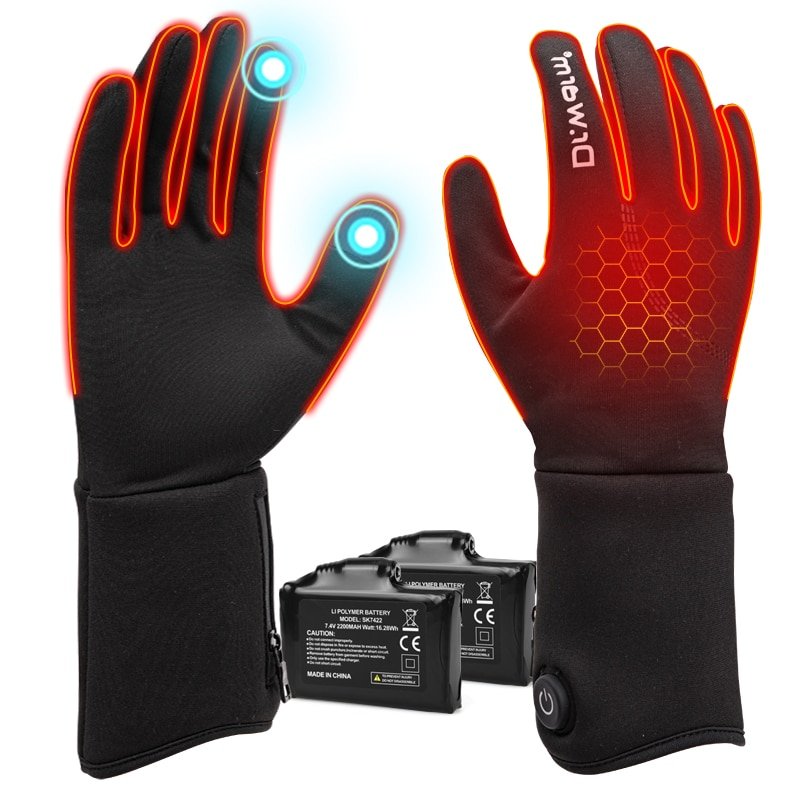
Heating Elements in contemporary designs incorporate carbon fiber, graphene film or heat wire within linings and are able to distribute infrared heat effectively and without volume.
Battery Systems
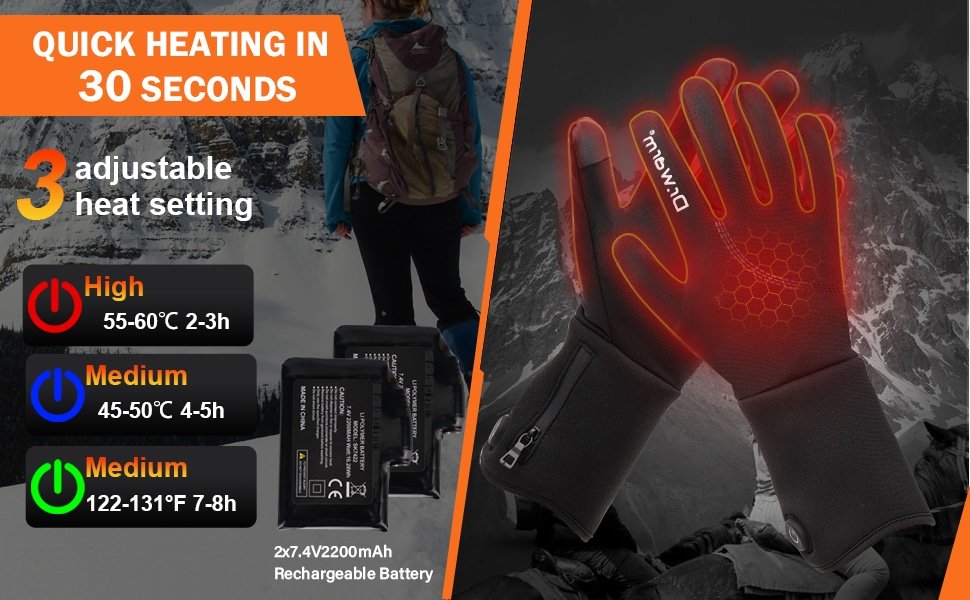
These are driven by 7.4 V or 12 V lithium-ion batteries, offer powerful output to the needs of alpine, and fit into cuffs.
Heating Zones
There is the possibility of finger heating tips or back-of-hand heating a larger area; hybrids will be the most versatile.
Waterproof & Windproof Materials
Waterproof & Windproof Materials such as IPX-rated membranes like Gore-Tex keep snow and melts out thus maintaining the insulation.
Temperature Control Options
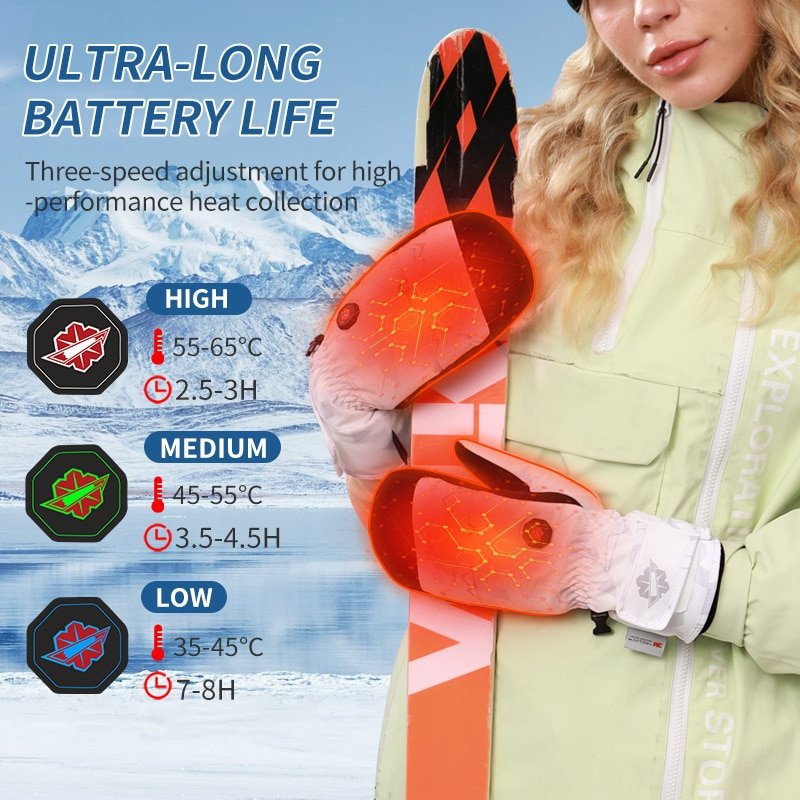
Temperature Control Options such as 3-level switches, remotes or even apps give the option to customize it to low (mild days) to high (blizzards).
Comparison — Heated Ski Gloves vs Regular Winter Gloves
Hot gloves are more brilliant than the regular ones in strenuous situations.
Heated Gloves Advantages
- Active heating, passive insulation: Provides energy, not just captures body heat.
- Extremely low temperatures: Works at -20degC and below, when regulars cannot.
- Maintains slewness: Heat makes fingers nim without additional layers.
- Better stamina on slopes: Be able to use battery hours.
Regular Winter Gloves Limitations
- Insulation alone; becomes useless when wet: Snow soaks through, and leaves hands chilled.
- Sensations remain numb in fingers: Prolonged exposure lacks active warmth.
- Low operation in harsh weather: Can be used in high winds or below zero temperatures.
Use-Case Scenarios (Real Skiing & Snowboarding Conditions)
Heated gloves will be very useful in diverse environments since I started working with groups.
High-Altitude Alpine Skiing
Thin air adds to cold at altitudes more than 10,000 feet, such as the Rockies, where a pair of heated gloves on skiing gloves can be used to avoid loss of grips on a steep black since I have skied in a Vail storm when it was -15degC.
Night Skiing
The night time lights sessions drop to -10degC, and the reheated models maintain hands and fingers ready to make mogul runs, a fact that prevents numbness at the end of the night.
Snowboarding (More Hand Contact with Snow)
Boarders lift their hands up on falls, and burying them in powder-heated gloves are fast drying, and warming, and so the amount of time that snowboarders spend on the ground is minimized in areas such as Jackson Hole.
Backcountry / Off-Piste Skiing
Nor are there lodge breaks in a remote tour; this is the glove that prevents the risk of hypothermia on a lengthy ascent in untracked snow.
Important Safety Considerations for Skiers & Snowboarders
Focus on features that are in accordance with mountain hazards.
Proper Waterproof Rating (IPX)
Get as high as IPX4 or more to cut through snowmelt–safety warning: The lower ratings may lead to electrical shorts.
Battery Safety Certifications
Battery Safety Certifications for explosion-proof packs can be found under UN38.3, CE, FCC, and RoHS.
Heat Levels Must Match the Environment
Programmable features allow the appliances to avoid overheating or the lack of enough heat in different climatic conditions.
Fit + Dexterity
Fit + Dexterity means flexible but snug fits will make sure of control–try to hold pole before making a purchase.
Common Mistakes Skiers Make When Choosing Heated Gloves
Eschew traps to performance destruction.
Buying gloves with finger-only heating (no palm heat)
Palms require warmth in general grip–warning: This produces an uneven protection of the hands.
Choosing non-waterproof gloves
They do not cope with wet snows, and cause chilly, wet, misery.
Underestimating battery runtime
Battery life of short ski gloves strands you in the middle of the run- calculate on 6+ hours.
Buying consumer-grade gloves instead of sports-grade gear
Normal models are not durable to impact and abrasion.
Buyer Recommendations — What to Look for in Heated Ski & Snowboard Gloves
Being a specialist, I recommend considering them as the most favorable.
Heat Zones Covering All Fingers
Coverage 100 per cent of cold spots–buyer suggestion: Focus on the models that have fingertip-to-palm heating features.
Waterproof + Windproof Construction
Vital to last–find strengthened seams.
Strong 7.4V or 12V Battery
The more the voltage, the sooner you warm up–according to the severity of your resort.
Adequate Runtime for Full-Day Riding
Target 8-12 hours on medium levels.
Reinforced Palm + Durable Fabrics
Grabs and falls are withstood by leather or synthetic palms.
Conclusion — Heated Gloves Are Now Essential for Modern Winter Sports
Essentially, skiing and snowboard heated gloves and skiing and snowboard frostbite gloves are an immense advantage that provides significant protection against frostbite, improved dexterity, and performance duration that turns the dangerous cold-outings into harmless, fun activities. They cover both extreme downhill and backcountry excursions with a high rate of cold-weather glove safety using the useful technology, supported by real-life experience on slopes across the globe. To the skiers and snowboarders who want the most time in the mountain, it is a great, safety-first step to buy these, taking into consideration the advantages of gloves heated to skiing such as improved blood flow and less layering, which makes every run that they take much more enjoyable.